The short answer
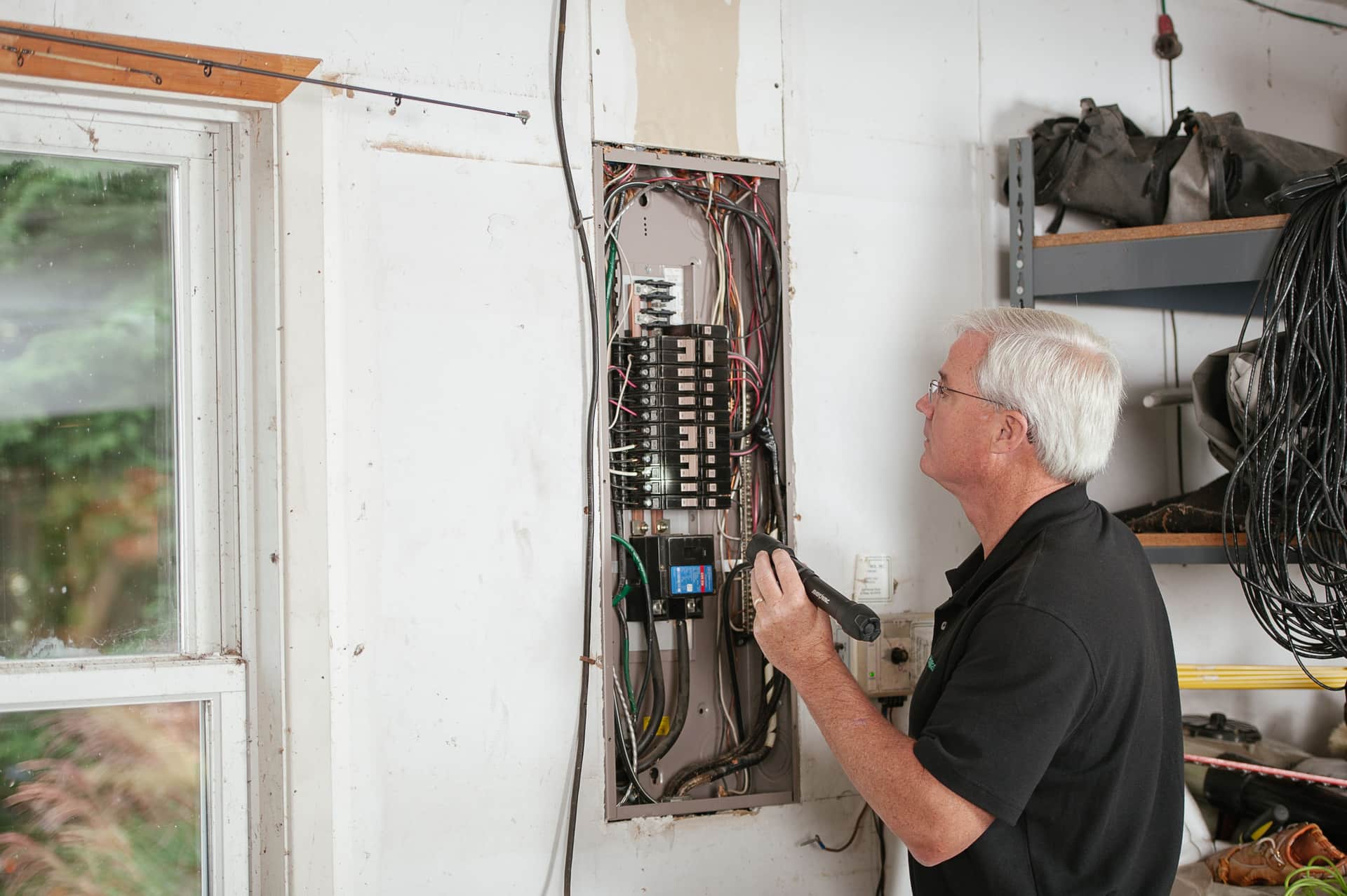
A panel or service upgrade is the most expensive way to add an EV charger and the one most often quoted first. Before accepting one, rule out three cheaper options: a smaller charger, a load-managed charger, and a panel rearrangement or subpanel. When an upgrade genuinely is required, the cost is driven by whether the utility service drop and meter base change too — not by the panel itself.
Three different jobs that all get called "a panel upgrade"
| Job | What changes | Utility involved? |
|---|---|---|
| Panel swap at the same rating | A new load center replaces an old or obsolete one; service size unchanged | Usually only for a disconnect |
| Subpanel addition | A second panel fed from the existing one, adding slots rather than capacity | No |
| Service upgrade (e.g. 100 A to 200 A) | Panel, main breaker, service entrance conductors, meter base, possibly the mast or lateral | Yes — and this is the cost driver |
What should be in a service upgrade quote
- The new load center and main breaker, by make and rating.
- Service entrance conductors, sized for the new service. On a 200 A residential service these are substantial conductors and a real material line.
- Meter base / meter socket, if it is being replaced — often required at the new rating.
- Mast, weatherhead or underground lateral work, if applicable. This is where unexpected cost lives.
- Grounding and bonding brought up to current code, including a ground rod or Ufer connection and water-pipe bonding. Older houses frequently need this and it is not optional.
- Circuit transfer labor — moving every existing circuit to the new panel, re-terminating and labeling.
- The EV charger circuit itself — breaker, conductors, run.
- Permit and inspection fees.
- Utility coordination and the disconnect/reconnect, including who schedules it and what the expected outage is.
- Surge protection, which is cheap at the moment the panel is open and expensive as a separate call later.
Two quotes that both say "upgrade service to 200 A — $X" are not comparable. Two quotes with the list above itemized are.
The three things to rule out first
A smaller charger
Going from 48 A to 32 A takes the circuit from 60 A to 40 A and removes a meaningful chunk of calculated load. If your car tops out at 32 A — every plug-in hybrid, the entry Model 3 RWD — this costs you nothing at all.
A load-managed charger
The option that most often makes the upgrade unnecessary. NEC 625.42 permits the installation's rating to be limited through controls, so a managed charger enters the load calculation at its managed figure. For the price of a charger rather than utility work, a marginal service frequently becomes adequate.
The cheaper answers, in hardware
A managed charger and a monitor cost a fraction of a service upgrade. If either removes the need for one, it is the best-value purchase in this entire project.
Most households, and anyone with a tight panel
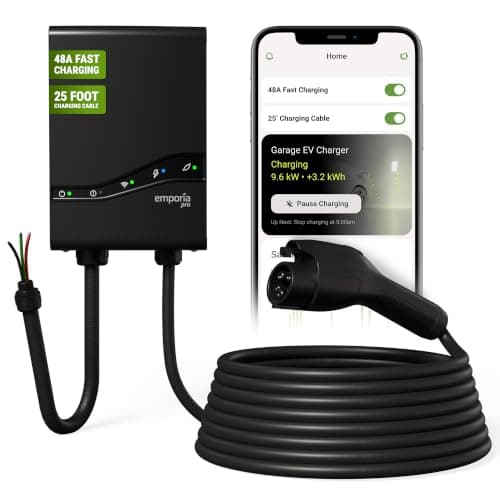
Emporia Pro Level 2 EV Charger
The best-balanced 48 A charger for a typical US house: full 11.5 kW hardwired, and the only unit at this price that ships with a whole-home energy monitor so its load management is reading your actual panel rather than guessing.
#ad Price as of October 5, 2026. How we make money

Knowing what your panel is actually doing
Emporia Vue 3 Home Energy Monitor
The cheapest way to replace a load calculation's assumptions with measurements. If your panel is marginal, a month of real data from this tells you whether a 48 A charger fits better than any rule of thumb will.
#ad Price as of October 5, 2026. How we make money
A house whose panel headroom is uncertain
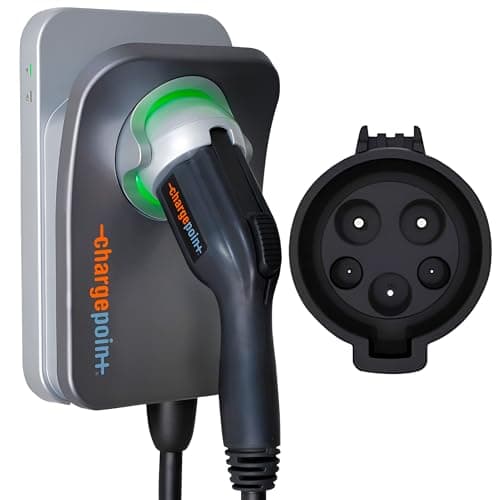
ChargePoint Home Flex (hardwired, 50 A)
The most adjustable charger on this page: output steps through 16, 24, 32, 40, 48 and 50 A in the app, so one unit fits almost any panel and can be turned up later if you upgrade the service.
#ad Price as of October 5, 2026. How we make money
We earn commission on qualifying purchases at no cost to you. Affiliate disclosure.
A subpanel or panel rearrangement
If the problem is physical slots rather than amps — no two adjacent free spaces for a two-pole breaker — a subpanel or a tandem rearrangement solves it for a fraction of a service upgrade. An electrician sees this the moment the cover comes off.
When the upgrade is genuinely the right call
There is a real case for it, and it is worth stating fairly. If your house has a 60 A or 100 A service with electric resistance heat and an electric range, you are near the limit before a car is involved. A managed charger will work but will spend much of its life throttled, and you will hit the same wall again the next time you want a heat pump, an induction range, or a second EV.
In that house the upgrade is not an EV charging expense. It is the electrical work the house needed, with the charger as the thing that finally forced the decision. Judge it on that basis and the economics look very different.
One practical note: if the panel is coming out anyway, this is the moment for whole-home surge protection. It costs a fraction of the job while the panel is open and a separate service call later.
Protecting a charger that is wired into the panel
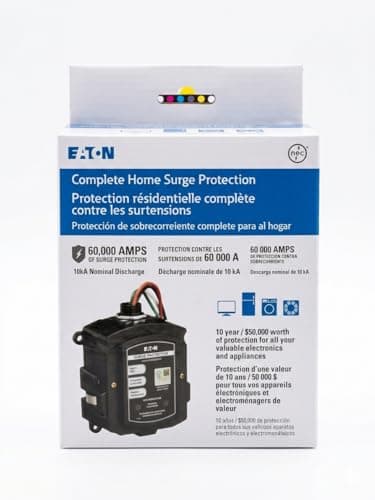
Eaton CHSPT2ULTRA Whole-Home Surge Protector
A panel-mounted Type 2 device. A hardwired charger has no plug to put a surge strip on, so this is where the protection has to live — and the marginal labor is near zero while the panel is already open.
A federal note worth being clear about: the Section 30C residential tax credit expired on June 30, 2026, so a panel upgrade or charger installed after that date receives no federal credit. State and utility programs may still apply. See EV charger rebates in 2026 for the sourced detail.