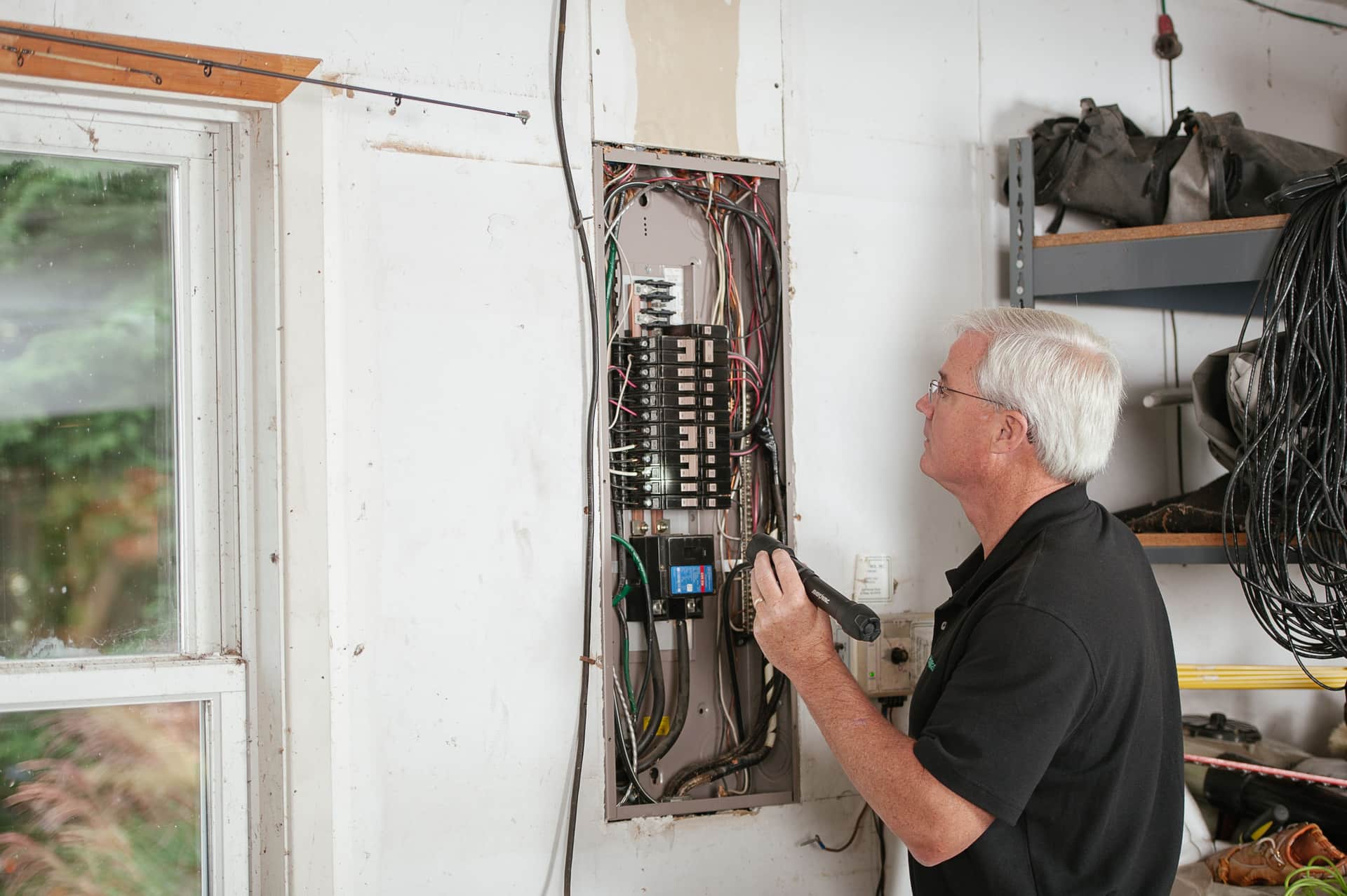
The short answer
It depends on what is already on the service, not on the panel's rating. The deciding test is a load calculation under NEC Article 220, which adds your existing fixed loads and shows what capacity is left. A 200 A service in a gas-heated house usually has room for a 48 A charger. A 100 A service with electric heat and an electric range usually does not — and then load management is normally far cheaper than a service upgrade.
This question gets answered badly in two directions. One camp says "you need 200 amps for an EV charger", which is simply false — plenty of 100 A services take a 32 A or 40 A charger comfortably. The other says "just put it on a 60 and you'll be fine", which is how a main breaker ends up tripping on a January evening with the oven on.
What a load calculation actually does
NEC Article 220 gives a method for estimating a dwelling's demand. It adds up the connected loads, applies demand factors (because you never run everything at once), and produces a figure in amps. Subtract that from your service rating and the remainder is your headroom.
The important thing to understand is that demand factors do a lot of work. The sum of everything in your house nameplate-for-nameplate exceeds your service rating by a wide margin, and that is normal and fine. The calculation is a statistical statement about simultaneity, not an inventory.
A rough self-assessment before you call anyone
This is not a substitute for an electrician's calculation, but it will tell you which conversation you are about to have. Find your service rating (the main breaker's number) and then count how many of these you have:
| Load | Rough demand | Note |
|---|---|---|
| Electric resistance heat | Very large | The single biggest consumer of headroom in a US house |
| Electric range / oven | Large | Gas instead is worth 20-30 A of headroom |
| Central air conditioning | Large | Seasonal, but the calculation takes the larger of heat or cool |
| Electric water heater | Moderate-large | A heat-pump water heater is substantially less |
| Electric clothes dryer | Moderate | Also the circuit people try to share with the car |
| Hot tub / pool equipment | Moderate-large | Frequently the load that closes the door |
| General lighting and receptacles | Moderate | Scales with square footage |
- 200 A service, gas heat, gas range, gas water heater. You almost certainly have room for 48 A. This is the easy case.
- 200 A service, electric heat or an electric range plus AC. Usually room for 40 A, often for 48 A. Worth the calculation.
- 100 A service, gas heat, gas range. Frequently room for 32 A or 40 A. This surprises people.
- 100 A service, electric heat and electric range. Usually no room for a conventional charger. This is where load management earns its money.
Measure instead of estimating
A load calculation is a conservative estimate built from nameplates. A home energy monitor measures what your house actually draws, which is nearly always less. If your calculation comes back marginal, a month of real data is the cheapest possible way to resolve it — and it gives your electrician something better than assumptions to work from.

Knowing what your panel is actually doing
Emporia Vue 3 Home Energy Monitor
Clamps onto the service conductors and logs whole-home and per-circuit draw. The point here is not the app: it is that a marginal load calculation becomes a measured fact for the price of a dinner out.
#ad Price as of October 5, 2026. How we make money
The four options when the answer is no
In rough order of cost, cheapest first. Note that a service upgrade — the option most often quoted first — is last.
1. Buy a smaller charger
Dropping from 48 A to 32 A takes the circuit from 60 A to 40 A, which is a meaningful reduction in calculated load. If your car tops out at 32 A anyway, this costs you literally nothing. If it does not, it costs you a bit of overnight charging speed — see 40 A vs 48 A for what that actually feels like.
2. Use a charger with load management
A charger that monitors whole-home draw can throttle itself when the oven and the dryer come on, and go to full output at 2am when nothing else is running. From the load calculation's point of view, a managed charger is a much smaller load than an unmanaged one — and NEC 625.42 explicitly allows the installation's overall rating to be limited through controls.
This is the option that most often turns a "you need a service upgrade" quote into a normal install.
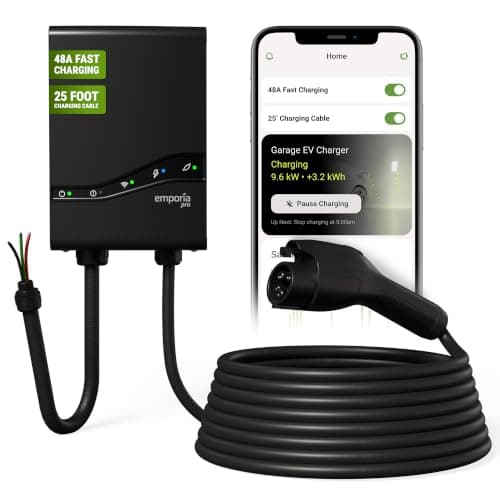
Most households, and anyone with a tight panel
Emporia Pro Level 2 EV Charger
PowerSmart load management with the whole-home energy monitor included, which is the combination that makes the throttling read your actual panel rather than a setting. The reason it is our top pick overall is precisely this: it is the charger most likely to avoid a service upgrade.
#ad Price as of October 5, 2026. How we make money
3. Rearrange the panel or add a subpanel
Sometimes the problem is not capacity but slots — you need two adjacent free spaces for a two-pole breaker and there are none. Tandem breakers on suitable circuits, or a small subpanel, can solve that for a fraction of a service upgrade. Your electrician will see this immediately when they open the panel.
4. Upgrade the service
The real answer in some houses, particularly older ones with 60 A or 100 A services and all-electric appliances. It is also genuinely expensive and involves the utility. Get the load calculation and exhaust options 1 through 3 before accepting this one — and when you do accept it, see panel upgrade cost for what should be in the quote.