Almost every home charger sold in the US does the same thing: it takes 240 volts from your panel, talks to your car about how much current it may draw, and then gets out of the way. The differences that matter are a short list — maximum amperage, cable length, how it attaches to the wall, and whether its load management can keep you out of a service upgrade. Everything else is app polish.
So the decision is not really "which charger is best". It is which charger matches the lower of two numbers: what your car will accept, and what your electrical panel will give up. Buy above either one and you have paid for amps that physically cannot reach your battery.
Decide in this order
- Find your car's onboard AC limit. A Jeep Wrangler 4xe tops out at 32 A. A Tesla Model Y takes 48 A. An F-150 Lightning Extended Range will take 80 A. Our onboard charger limits table lists every model we cover with its source.
- Find out what your panel can spare. A 48 A charger needs a 60 A breaker and 6 AWG copper. If a load calculation says your service cannot carry that, the answer is a 32 A or 40 A charger — or a charger with load management — not a $3,000 panel upgrade. Start at can my electrical panel handle an EV charger.
- Take the lower of the two. That is your amperage. Now you are choosing between three or four units instead of thirty.
- Then pick on cable length, install type and weather rating. Measure from the mounting spot to your car's charge port and add slack for the loop. A 24 ft cable and an 18 ft cable are a genuinely different product.
How this category divides
There are really four groups, and the price steps between them are larger than the performance steps.
| Group | Output | What you get | What you give up |
|---|---|---|---|
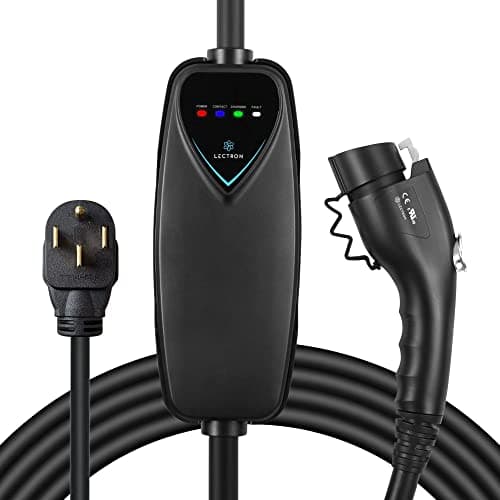
| Portable cordsets | 16-40 A | Plugs into a 240 V outlet, moves house with you, no electrician | No scheduling, shorter reach, a plug and receptacle in the current path |
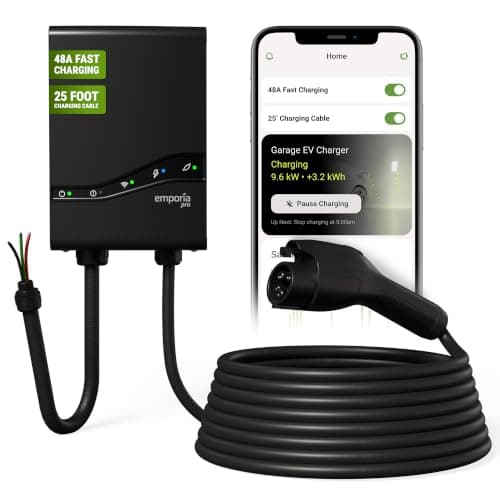
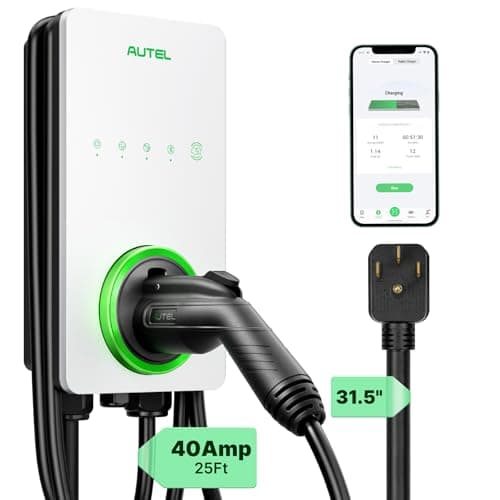
| Budget wall units | 40 A | 9.6 kW, a real UL or ETL listing, a 23-25 ft cable | No load management, thinner support, usually plastic enclosures |
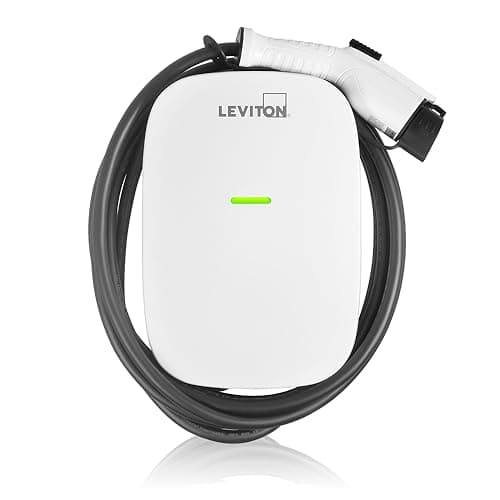
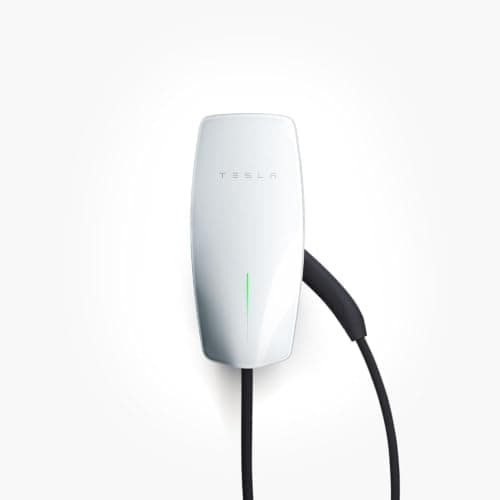
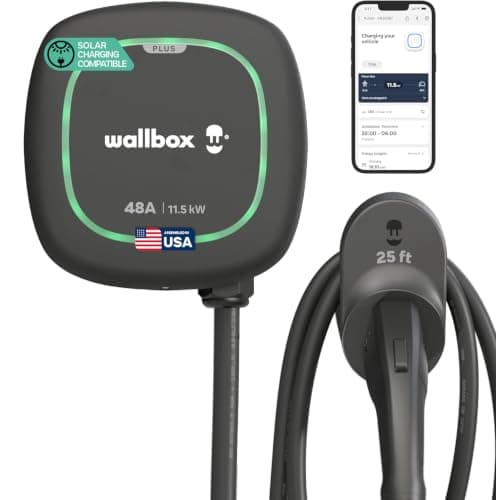
| Mainstream 48 A units | 48 A | The full 11.5 kW most BEVs accept, app scheduling, metal or NEMA 4 bodies | A 60 A breaker and 6 AWG copper, which is where install cost jumps |
| Specialist units | 48-80 A | Solar tracking, dual cables, whole-home load management, 80 A output | Price, and features that are worth nothing without the matching situation |
What actually sets the price
Not the charging electronics. A 40 A charger and a 48 A charger contain nearly the same hardware. What you pay for, roughly in order: the enclosure (cast aluminum and a NEMA 4 rating cost real money), the cable (25 feet of 8 AWG flexible EV cable is a significant part of the bill of materials), load management (metering hardware plus the software to act on it), and the company's support obligation — a five-year warranty from an established manufacturer is priced in, and it should be.
Which means a cheap 40 A charger from a real brand is not a compromised product. It is a product with a shorter cable, a plastic body, no app and no load management. For a household charging overnight on a flat tariff, in a garage, with one car, that list is not a loss.
The mistake buyers make
Buying 48 A for a car that accepts 32 A. It happens constantly, because the 48 A unit looks like the better product and the amperage conversation is about the charger rather than the car. The cost is not just the charger: it is the 60 A breaker instead of a 40 A one, 6 AWG copper instead of 8 AWG, and sometimes a panel upgrade that was never necessary. The car charges at exactly the same speed either way.
The second mistake is mounting before measuring. Cable lengths here run from 16 ft to 25 ft. Decide where the car's charge port will be, then pick a cable that reaches it with the loop hanging clear of the floor — not a cable that reaches it taut.
The third is paying for a smart charger and then scheduling in the car anyway. Most EVs can already schedule charging. If yours does, an app on the charger is duplicate functionality. The exception is time-of-use billing where you want the charger to enforce the window regardless of which car is plugged in.
What we check, and what we do not
Every specification on these pages was checked against the manufacturer's own published documentation, and every electrical figure against the National Electrical Code, on the date shown on each page. We do not bench-test chargers and we do not claim to — our methodology says so in plain terms. Where a judgment comes from owner reports rather than a specification, we label it as owner reports.
Prices come from Amazon's live data and carry the date they were checked. If a price is older than 48 hours it disappears from the page rather than going stale.