The short answer
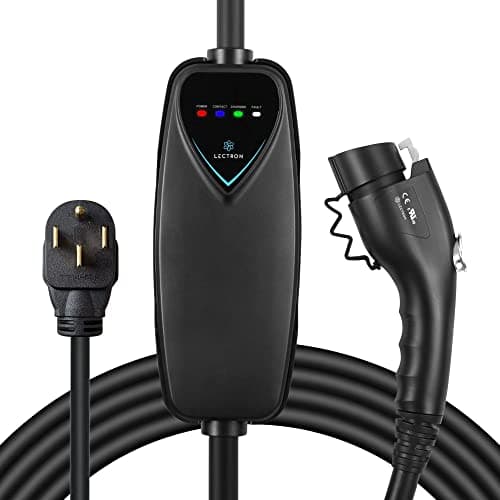
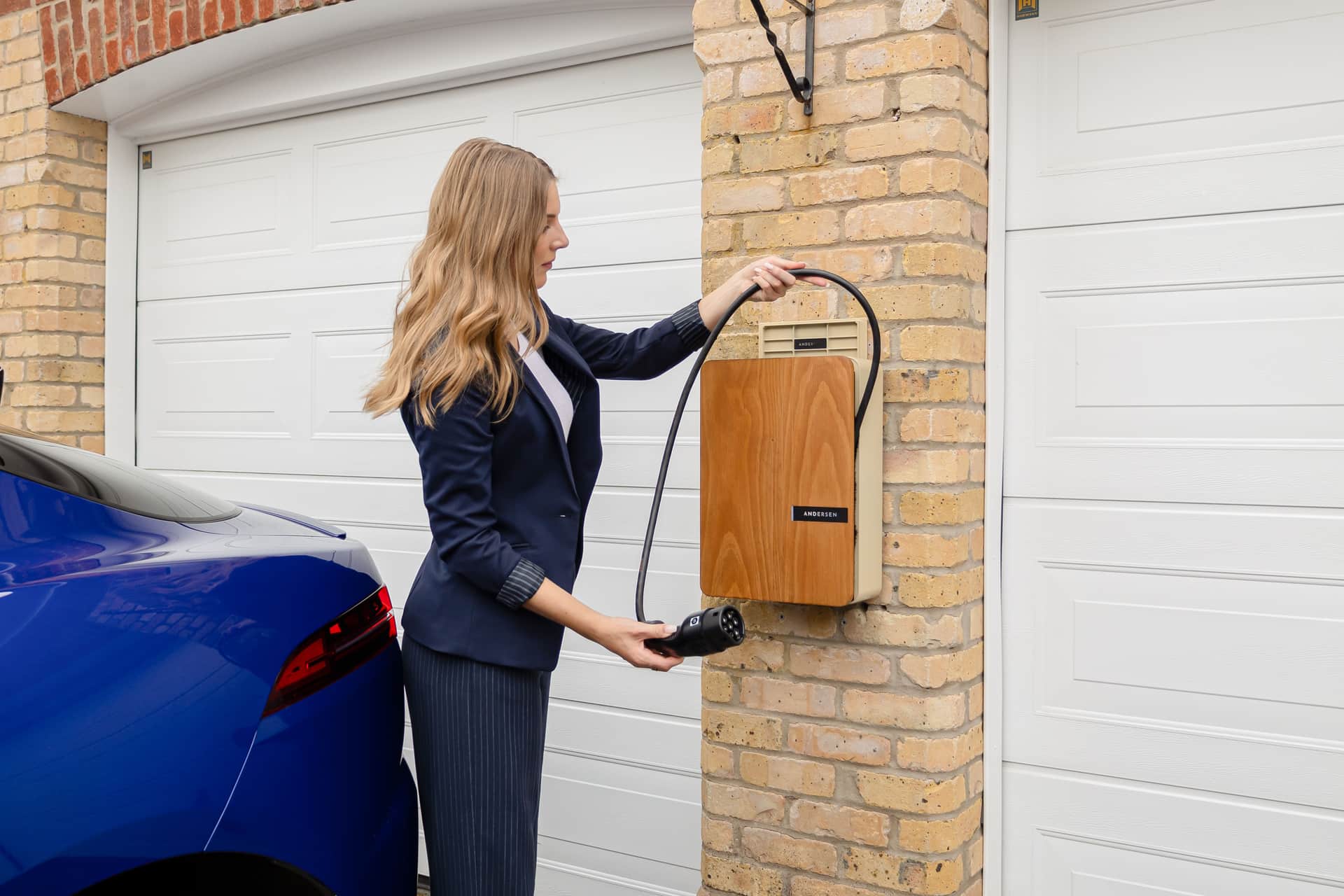
Tethered means the charging cable is permanently attached to the charger. Untethered — also called socket-only — means the unit has a socket and you plug in your own portable cable. In the US, essentially every home charger sold is tethered: every unit we cover ships with a fixed 18 to 25 ft lead. So the practical decision is not tethered versus untethered at all, it is how long the attached cable is and whether the charger is hardwired or plug-in.
What the two words mean
- Tethered. The cable comes out of the enclosure and ends in a J1772 or NACS connector. You pick up the handle and plug it into the car. Replacing a damaged cable usually means replacing the unit.
- Untethered (socket-only). The wall unit has a socket. You keep a separate portable cable, plug one end into the wall unit and the other into the car, and store it in the car between sessions.
Untethered units are common in markets where public AC charging posts are socket-only and drivers already carry a cable for them. That is not the North American pattern: US public AC charging is overwhelmingly tethered, so there is no second use for a cable in the trunk and no reason for the market to have developed socket-only home hardware.
| Tethered (the US norm) | Untethered (socket-only) | |
|---|---|---|
| Daily use | Pick up the handle and plug in | Fetch the cable, plug in at both ends |
| Cable length | Fixed at purchase, 18-25 ft | Whatever cable you buy |
| Connector type | Fixed — J1772 or NACS | Swap the cable to change plug type |
| If the cable is damaged | Usually a new charger | Buy a new cable |
| Theft exposure | Cable is attached to the wall | Cable can be taken from the car |
| US availability | Every unit we cover | Not a mainstream US home product |
The decision this replaces in the US
Because the cable is attached, two specifications that would otherwise be flexible become permanent at purchase. These are the ones to think hard about.
Cable length — permanent, and the usual regret
Published leads run from 18 ft on the hardwired Leviton units to 25 ft on the Emporia Pro, EVIQO 48 A and Autel AC Lite. You cannot change it later without changing the charger, which is why we rank it ahead of amperage: best EV chargers with a long cable. Measure the real route, add three to five feet of slack, then buy.
Connector type — also permanent
A tethered charger fixes your plug type too. A J1772 unit charges a Tesla through a J1772 to NACS adapter; a NACS unit charges a J1772 car through the reverse adapter, or natively if it is a Universal Wall Connector. If your household plug types might change within the charger's life, that is worth a thought now — which plug does my EV use sorts it out.
Which tethered cable arrangement to buy
Three attached-cable units at different lengths
If the cable is permanent, buy the length your garage actually needs. These three bracket the range: 25 ft at 48 A, 25 ft on a budget, and 18 ft from the brand most electricians stock.
Most households, and anyone with a tight panel
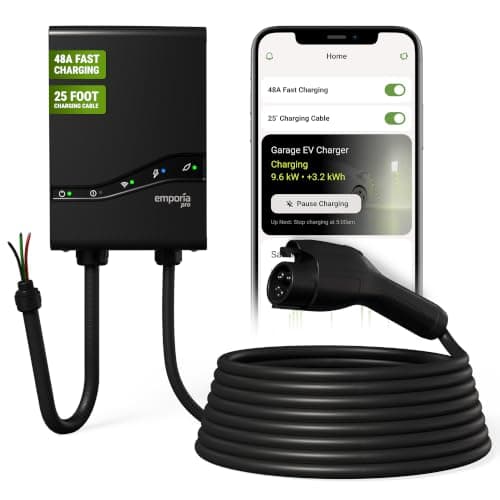
Emporia Pro Level 2 EV Charger
The best-balanced 48 A charger for a typical US house: full 11.5 kW hardwired, and the only unit at this price that ships with a whole-home energy monitor so its load management is reading your actual panel rather than guessing.
#ad Price as of October 28, 2026. How we make money
48 A on a budget
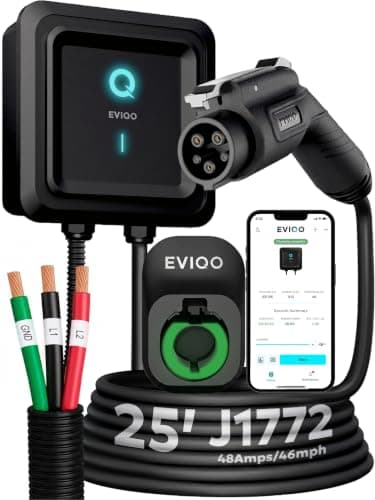
EVIQO Level 2 EV Charger (48 A, hardwired)
The cheapest way to get a genuine 11.5 kW hardwired install, with IP66/NEMA 4 weatherproofing and an internal switch for 16/32/40/48 A. The trade is a younger brand with a shorter support record.
An electrician's default brand
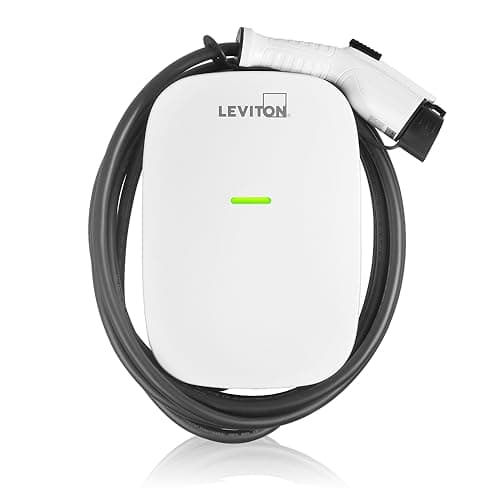
Leviton Level 2 EV Charger (48 A, hardwired)
48 A and 11.6 kW from a company your electrician already stocks, which matters more than it sounds: a warranty claim on a Leviton goes through a supply house, not a startup's support queue.
#ad Price as of October 28, 2026. How we make money
We earn commission on qualifying purchases at no cost to you. Affiliate disclosure.
The Emporia Pro is 48 A with a 25 ft lead and load management. The EVIQO 48 A matches the length for less and ships set to 40 A, so the internal switch has to be changed at install. The Leviton 48 A is 18 ft — fine for a charger mounted beside the parking space, short for anything else, and the reason to check the number rather than the brand.
Looking after a cable you cannot replace
- Hang the loop on a steel hook. 25 ft of 8 AWG cable is heavy enough to tear a plastic one off a wall — cable management and cable holders cover the hardware.
- Holster the handle above the floor. Being driven over is the single most common way these cables die.
- Never stretch it taut. The strain lands on the gland where the cable enters the enclosure.
- Keep the connector out of standing water, and cap it outdoors — outdoor mounting has the detail.
Check the warranty wording too: cable damage is treated very differently between manufacturers, and on a tethered unit that is effectively charger-replacement cover. Our warranty comparison lays out who covers what.