The short answer
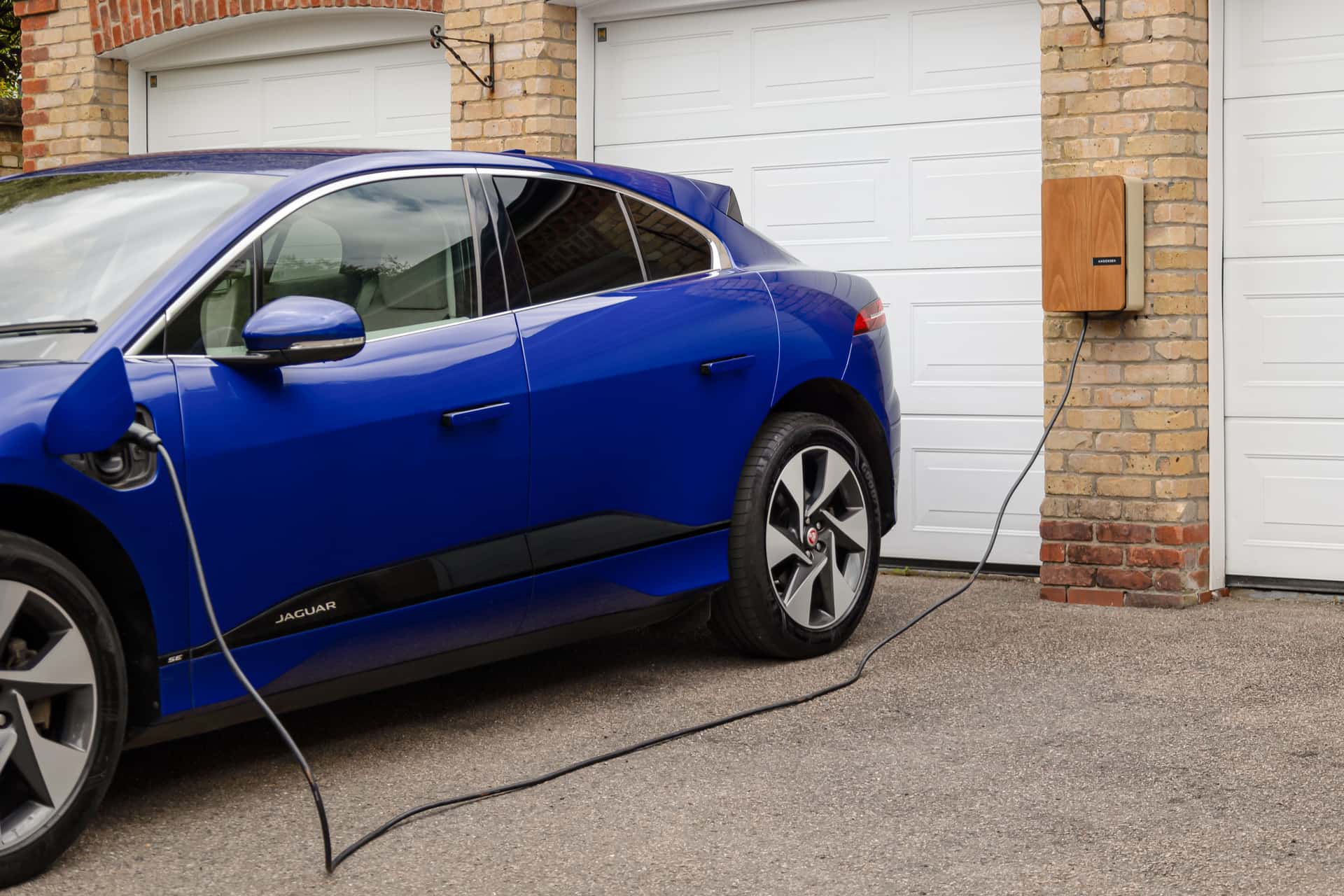
Good cable management is three decisions. Mount the charger so the cable reaches with slack, not tension — measure to the car's charge port along the route the cable will actually take and add three to five feet. Hang the loop on a steel hook, not a plastic one, because 25 ft of 8 AWG cable is heavier than it looks. And holster the handle above the floor, which is the single change that prevents the most common failure: a connector that has been stepped on or driven over.
Why this matters more than it sounds
The charging cable is the part of the installation that moves. The charger is bolted to a wall and never touched again; the cable is handled twice a day for a decade, dragged across concrete, bent in the cold and, if nobody gave it a home, parked on.
It is also the part you cannot cheaply replace. On almost every home charger the cable is permanently attached, so damaging it means replacing the unit. A fifteen-dollar hook protecting a six-hundred-dollar charger is the best-value purchase in this entire category, and almost nobody makes it.
Step one: mount the charger in the right place
Cable management starts before anything is hung on a wall, because a badly positioned charger cannot be managed well afterwards.
- Park the car where it will actually live. Not centered in the bay for the measurement — where it ends up when somebody is tired.
- Note which side the charge port is on, and whether you will ever park facing the other way.
- Measure from the intended mounting point to the port along the cable's real route, which usually means down the wall, across the floor and up — not the straight line through the car.
- Add three to five feet of slack. The cable should loop, not stretch. This is the number people get wrong.
- Mount the unit at 36 to 48 inches to the bottom of the enclosure, which keeps the handle at a comfortable height and the cable off the floor. Our mounting height guide has the detail and the code considerations.
If the measurement comes out longer than your charger's cable, the answer is a different mounting position or a different charger — not an extension cord. Our cable length guide covers the sizes available, and are EV charger extension cords safe covers why reaching for one is usually the wrong move.
Step two: route it so nothing pinches or pulls
- Keep the bend at the charger gentle. The point where the cable leaves the enclosure is the highest-stress spot in the whole assembly. A loop that hangs from a hook beside the charger takes that load off it.
- Never route a charging cable across a doorway or a walking path without protection. If it must cross one, it crosses on a hook at head height or in a floor channel, not loose.
- Do not run it under a garage door. A sectional door closing on a live cable is a real failure mode, and the seal will wear the jacket even when it does not crush it.
- Give the handle a destination within arm's reach of the port side of the car, so hanging it up is easier than dropping it.
Step three: the parts that do the work
Three inexpensive items cover almost every setup. Buy the hook and the holster together — they do different jobs and neither substitutes for the other.
Cable management hardware worth buying
A holster holds the handle; a hook holds the loop. If you buy only one, buy the holster, because a handle on the floor is the failure that actually happens.
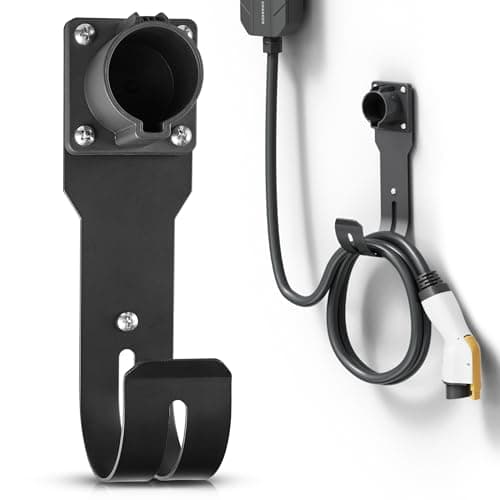
Getting the handle and the cable off the floor
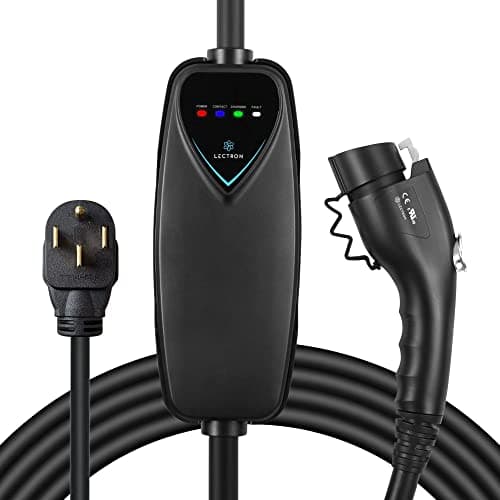
MECMO J1772 Holster Dock and J-Hook
A holster for the handle plus a hook for the loop. The cheapest meaningful upgrade to any charging setup, because a handle that lives on the floor gets stepped on, driven over and eventually fails.
#ad Price as of October 10, 2026. How we make money
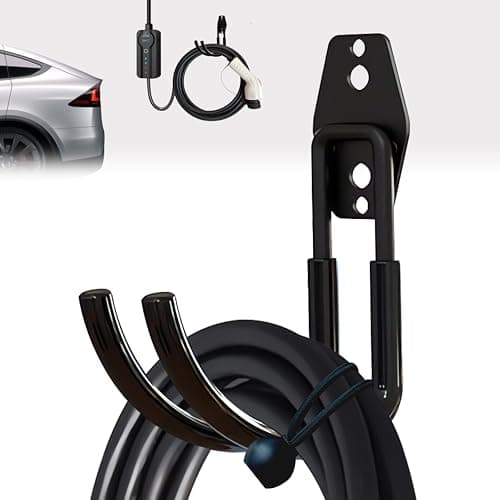
A heavy 25 ft cable that bends plastic hooks
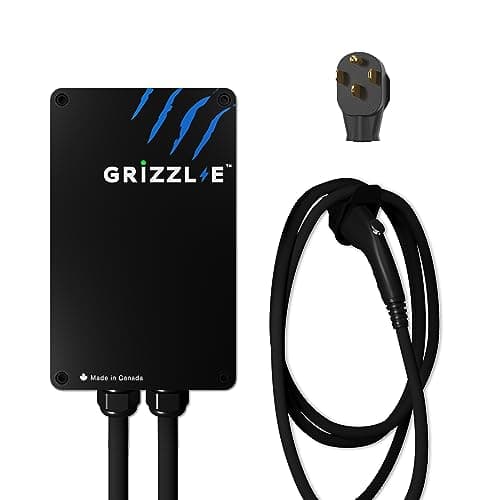
Nexoroot Heavy-Duty Steel EV Cable J-Hook
Steel rather than plastic, which matters with 25 feet of 8 AWG cable hanging on it — the full loop of a premium charger's lead is heavier than people expect.
#ad Price as of October 10, 2026. How we make money
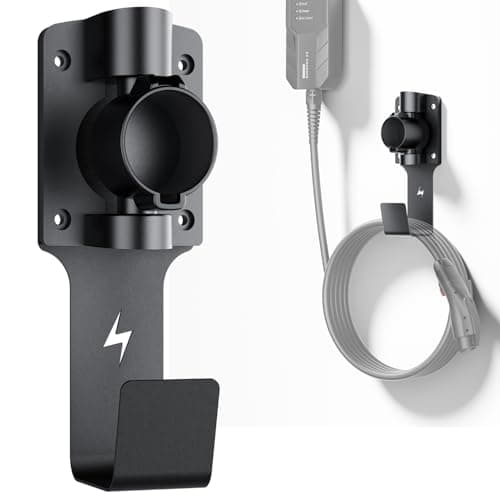
A tight wall where the handle needs to swing
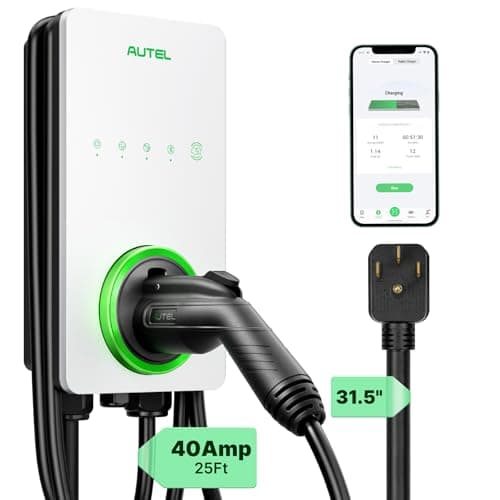
FOCSPROD Rotating J1772 Holder with Metal J-Hook
A 180-degree rotating dock plus a metal hook. The rotation is the point: in a narrow garage the handle has to be able to point away from the car's path.
We earn commission on qualifying purchases at no cost to you. Affiliate disclosure.
| Part | Job | Buy it when |
|---|---|---|
| Holster and J-hook combination | Holds the handle upright and the loop beside it | Always — this is the default purchase |
| Heavy steel J-hook | Carries the weight of a full 25 ft loop without sagging | Your cable is 24 ft or longer, or a plastic hook has already bent |
| Rotating holder with metal hook | Lets the handle swing clear of the car's path | The wall is tight to where the car parks |
Our best EV charging cable holders roundup ranks these in detail, including a connector dust cap that is worth adding on any outdoor install.
Outdoor installs: three extra rules
A charger on an exterior wall or a driveway post has the same cable problem plus weather.
- Hang the loop so water runs off it, not into it. A cable coiled flat on top of a bracket holds a puddle; a cable hung in a vertical loop drains.
- Keep the handle pointing down when holstered. It keeps rain out of the pins, and a dust cap finishes the job.
- Expect the cable to stiffen in winter and leave more slack than feels necessary in summer. A cable that is just long enough in August is short in January. Cold weather charging covers the rest of the winter picture, and best cold weather EV chargers covers the units that handle it.
A note on hardwired and plug-in installs
Cable management is the same either way for the output cable, but a plug-in install adds a second cable to think about: the input cord between the charger and the receptacle. That one should be short, unstressed and never used as the thing the charger hangs from. Hardwired vs plug-in covers the broader trade, and if you are running a plug-in unit, the NEMA 14-50 receptacle carrying it is worth getting right.