The short answer
Cold affects three things: the car (a cold battery accepts less power while it warms, so a winter charge starts slower), the cable (every EV cable stiffens below freezing and the long ones stiffen most), and the charger — where published operating ranges differ by 18 degrees at the cold end. The Autel MaxiCharger is rated to -40 degF and the Wallbox Pulsar Plus to -22 degF. In a genuinely cold region that is the specification that should decide your purchase.
What cold does to charging speed
A cold battery accepts less power until it warms. On AC home charging the effect is much smaller than on DC fast charging — the currents are an order of magnitude lower — but it is real, and it shows up as a slower first hour on a very cold night.
There is a second, larger effect that is not about charging at all: you use more energy in winter. Cabin heating, battery conditioning and denser air all take their share, so the same commute needs more kWh replaced.
| Effect | Scale | What helps |
|---|---|---|
| Cold battery accepts less power initially | Modest on AC | Preconditioning on a timer while still plugged in |
| Higher consumption per mile | Substantial — this is the big one | Nothing, except accepting longer charges |
| Preconditioning draws from the pack | Modest | Precondition while plugged in, not after unplugging |
| Cable stiffness | Significant handling nuisance | A shorter cable, a better-placed charger |
| Charger electronics below rated range | Potentially total | Choose a charger rated for your climate |
The charger specification that actually matters
| Charger | Low | High |
|---|---|---|
| Autel MaxiCharger AC Lite | -40 degF | +131 degF |
| Wallbox Pulsar Plus 48 A | -22 degF | +104 degF |
| Others | Check the manufacturer's documentation | — |
If your charger will live in an unheated garage or outdoors in a region where -20 degF happens, this is the spec to buy on — ahead of the app, the load management and the cable length. A charger outside its rated range is not a slow charger; it is a charger that may not run.
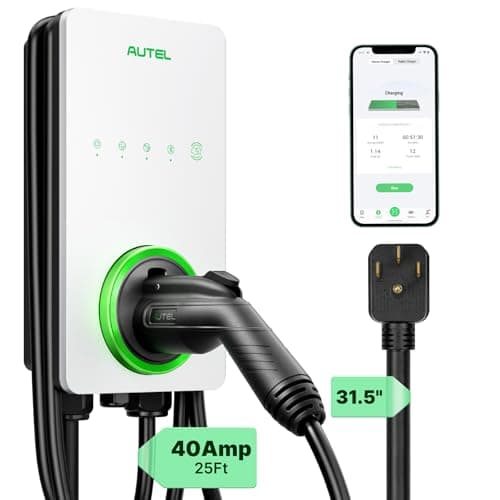
Cold climates and 1 A output tuning
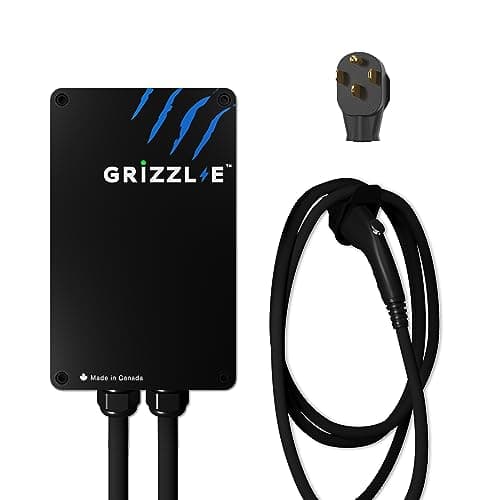
Autel MaxiCharger AC Lite (40 A)
Rated -40 degF to +131 degF, the widest range of any unit we recommend, with a 25 ft cable and 1 A output adjustment. The trade is a 40 A ceiling and no whole-home load management — see [our full review](/chargers/autel-maxicharger-ac-lite-review).
#ad Price as of October 5, 2026. How we make money
Cables in the cold
Every EV cable stiffens below freezing, and no charger's temperature rating changes that — the rating protects the electronics, not the ergonomics. A 25 ft cable that handles beautifully in October is a genuine wrestling match at 10 degF.
Which leads to an under-appreciated conclusion: in a cold climate, a well-placed charger with a shorter cable is a nicer thing to own than a badly placed one with a long cable. Measure properly before mounting — see cable length — and buy the shortest cable that comfortably reaches rather than the longest available.
- Do not force a stiff cable into a tight bend. Let it warm, or accept a wider loop.
- Keep it off the ground. A cable frozen into ice is a cable you will damage getting it free.
- Uncoil before charging, as always.
The handle, which is the part that suffers
A handle lying on a driveway in winter sits in snow-melt and road salt, which is corrosive and gets into the contacts. This is the single worst thing you can do to charging equipment, and it is also the easiest to fix.
Winter protection for the handle and cable
A holster mounted above the snow line, a steel hook that will not snap in the cold, and a dust cap to keep road salt out of the contacts. Under forty dollars, and the highest-value winter purchase available.
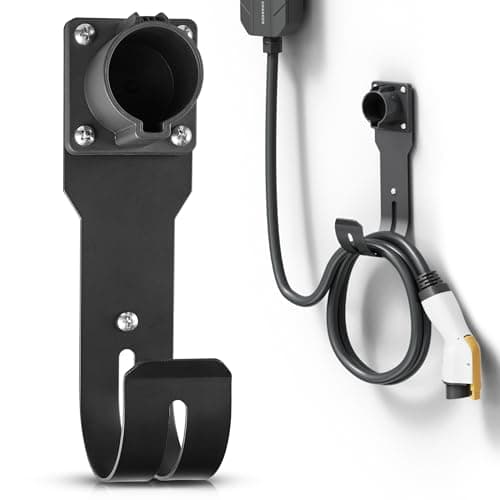
Getting the handle and the cable off the floor
MECMO J1772 Holster Dock and J-Hook
A holster for the handle plus a hook for the loop. The cheapest meaningful upgrade to any charging setup, because a handle that lives on the floor gets stepped on, driven over and eventually fails.
#ad Price as of October 5, 2026. How we make money
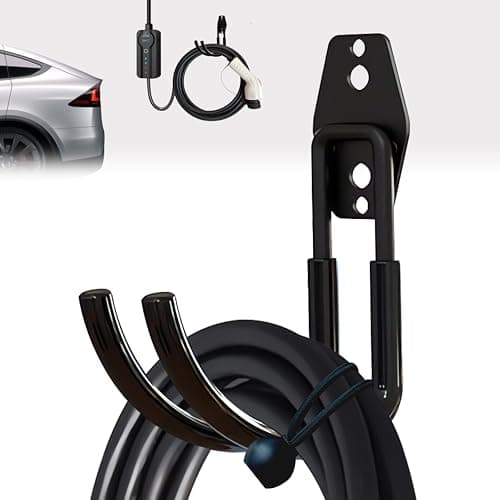
A heavy 25 ft cable that bends plastic hooks
Nexoroot Heavy-Duty Steel EV Cable J-Hook
Steel rather than plastic, which matters with 25 feet of 8 AWG cable hanging on it — the full loop of a premium charger's lead is heavier than people expect.
#ad Price as of October 5, 2026. How we make money
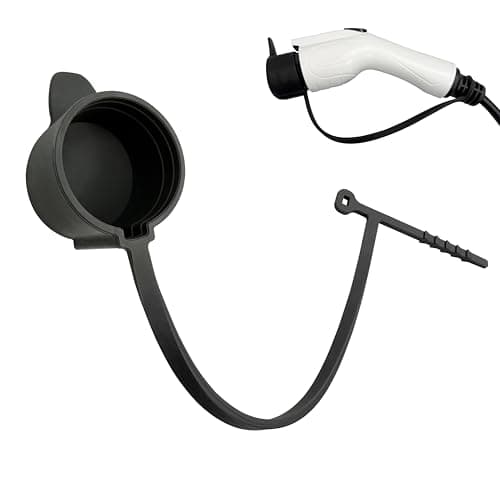
An outdoor handle that sits idle all day
Nexoroot J1772 Waterproof Dust Cap
A silicone cap over the contacts. Trivially cheap, and it addresses the one thing that genuinely degrades an outdoor J1772 handle: grit and salt in the pins.
#ad Price as of October 5, 2026. How we make money
We earn commission on qualifying purchases at no cost to you. Affiliate disclosure.
Two placement notes specific to winter: get the holster above the snow line — 18 inches is a drift in February — and the steel hook matters more in the cold, because plastic becomes brittle.
A roofed pedestal, if the charger is on a post
A bare post in a snow belt leaves the handle and cable exposed on all sides and from above. A roofed pedestal protects exactly the parts that need it.
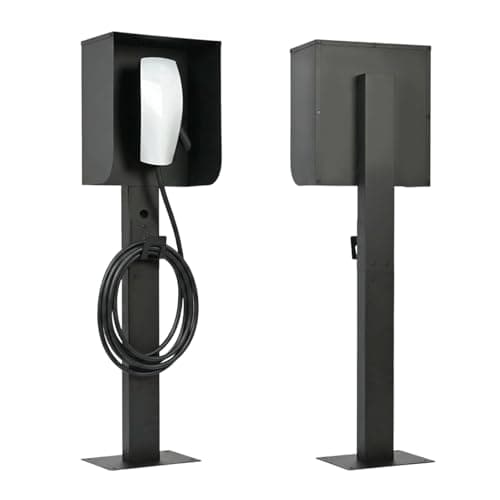
A pedestal in heavy rain or snow
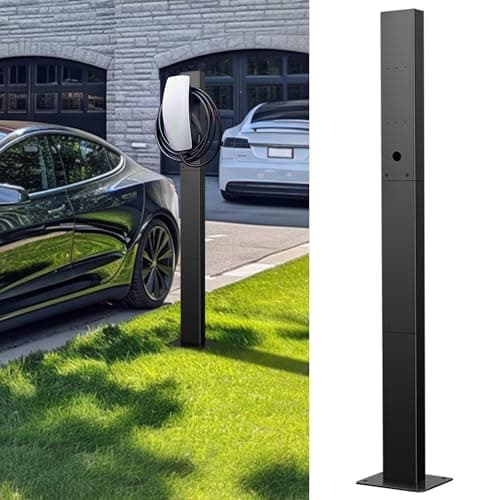
Lukar EV Charger Pedestal with Roof and Side Protection
Steel with a roof and side panels. It does not protect the charger — that is already weather rated — it protects the handle and the cable. In a snow belt that is the right thing to be protecting.
#ad Price as of October 5, 2026. How we make money
Practical winter habits
- Precondition while plugged in. The car heats the cabin and the battery from the wall rather than from the pack, which is the single biggest winter range saving available and costs nothing.
- Plug in every night, even on a short day. Topping up a warm-ish battery is easier than charging a deeply cold one.
- Expect longer charges, because winter consumption is higher. The charger is working fine.
- Clear snow from around the charger and the holster, so the handle is not going into a drift.
- Keep the connector capped when idle, and shake snow off before plugging in.
- Do not use a heat gun or hot water on a frozen connector. Let the car's own port heating, or time, deal with it.
What does not help
- A cover left on while charging. It is a heat trap. On when idle, off before it runs.
- A higher-amperage charger. Cold reduces what the car will accept initially; more available current does not change that.
- An enclosure, for warmth. It is theft protection, and it may restrict ventilation — which NEC 110.3(B) makes a code issue if the manual specifies clearances.
- Heating the cable. There is no safe way to do this and no need; it is a stiffness problem, not a function problem.