Skip to content
EV & Charger

Our picks

Best Smart Wi-Fi EV Chargers

A smart charger earns its premium in exactly three situations. Here are the units that do it well, and an honest argument for the dumb one.

By Mike M.Published Last verified

A wall-mounted Level 2 EV charger installed on the exterior wall of a house

The short answer

A smart charger earns its premium in three situations: you are on a time-of-use tariff and want the charger rather than the car to enforce the window; your panel is tight and you need whole-home load management; or you have solar and want to charge on surplus. The Emporia Pro is the pick for load management, the Enphase IQ EV Charger 2 for solar, and the ChargePoint Home Flex for the most mature app. Outside those three cases, a non-smart charger does the same job.

Quick picks

Ranked by fit for the stated use case first, then price, then warranty and support. Tap any row to jump to the full assessment. Commission rate plays no part in the order.

#ProductBest forScorePrice
1
Emporia Pro Level 2 EV Charger
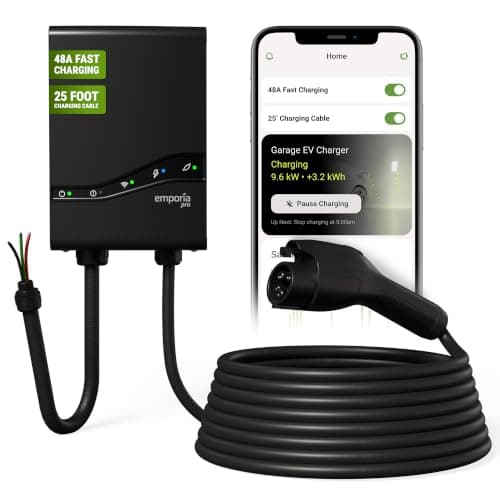
Emporia Pro Level 2 EV ChargerThe best-balanced 48 A charger for a typical US house: full 11.5 kW hardwired, and the only unit at this price that ships with a whole-home energy monitor so its load management is reading your actual panel rather than guessing.
Most households, and anyone with a tight panel9.0
2
ChargePoint Home Flex (hardwired, 50 A)
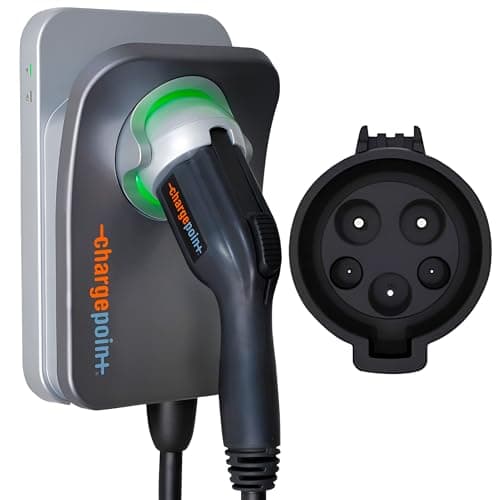
ChargePoint Home Flex (hardwired, 50 A)The most adjustable charger on this page: output steps through 16, 24, 32, 40, 48 and 50 A in the app, so one unit fits almost any panel and can be turned up later if you upgrade the service.
A house whose panel headroom is uncertain8.9
3
Enphase IQ EV Charger 2 (48 A)
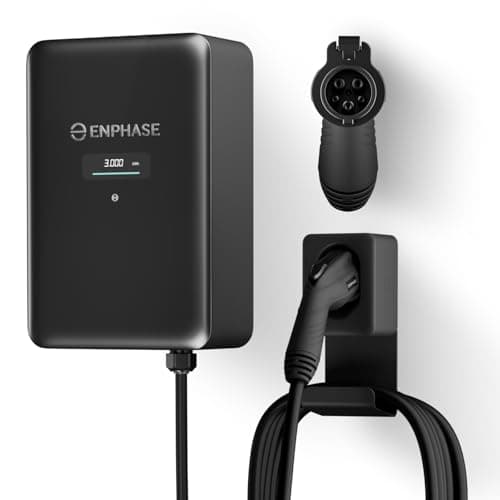
Enphase IQ EV Charger 2 (48 A)The charger to buy if you have solar: it adjusts in 1 A increments to absorb whatever the array is exporting, and it carries a 5-year warranty, the longest here.
A house with rooftop solar8.7
4
Autel MaxiCharger AC Lite (40 A)
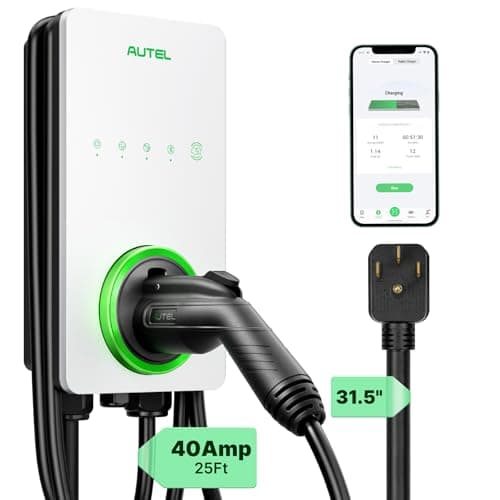
Autel MaxiCharger AC Lite (40 A)The widest output adjustment range here — 6 A to 40 A in the app — plus an operating range down to -40 degF, which makes it the practical pick for an unheated garage in the north.
Cold climates and 1 A output tuning8.6
5
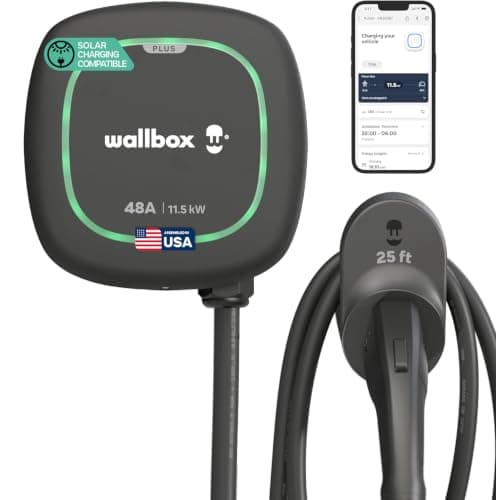
Wallbox Pulsar Plus 48 A
Wallbox Pulsar Plus 48 AA genuinely small 48 A charger — under 8 inches square — which is the deciding factor when the only spot left is a narrow strip of wall beside the panel.
The smallest 48 A unit on a wall8.5

The honest question first: does your car already do this?

Most EVs can schedule their own charging. If yours can, a smart charger's scheduling is duplicate functionality, and you are paying for it twice.

So before reading further: open your car's charging settings. If there is a departure time or a scheduled charging window, you already own the feature most smart chargers are sold on.

What a smart charger does that your car cannot
CapabilityCar can do it?Charger needed?
Schedule charging to off-peak hoursUsually yesOnly if your car cannot, or two cars share the charger
Whole-home load managementNoYes — this is the real one
Charge on surplus solarNoYes
Energy reporting per sessionUsually yes, roughlyOnly if you want accurate metering
Adjust output amperage remotelyNoYes, and it matters on a changing panel
Firmware updates over the airn/aYes — a genuine benefit over a decade
Enforce a window regardless of which car plugs inNoYes

The three cases where it is clearly worth it

1. Whole-home load management on a tight panel

The strongest case by a distance, and it has nothing to do with convenience. A charger that monitors total household consumption and throttles when the house is busy enters a load calculation at the managed figure rather than its nameplate — and NEC 625.42 explicitly permits an installation's rating to be limited through controls.

In practice this is what turns a "you need a service upgrade" quote into a normal install. It is worth far more than the charger's price difference. See can my panel handle an EV charger.

The Emporia Pro is our pick here for a specific reason: its PowerSmart load management includes the Vue home energy monitor, which clamps onto the service conductors. It is throttling against your actual whole-home draw rather than against a number someone typed into a setting.

2. Solar

If you have an array and are exporting surplus at a low rate while charging at night at a higher one, a charger that tracks solar output changes the economics. The Enphase IQ EV Charger 2 adjusts in 1 A increments to absorb what the array is producing, which is fine-grained enough to actually follow a cloudy afternoon.

The honest caveat: if your net metering terms are favorable, this matters much less. Solar EV charging at home works through what to check.

3. A time-of-use tariff and more than one driver

Scheduling in the car works until someone else plugs in, or you swap cars, or a guest charges. A charger that enforces the off-peak window does it regardless of which car is on the end of the cable. On a tariff with a 2-3x peak-to-off-peak spread, that is real money.

When to buy a dumb charger instead

  • Flat electricity tariff. Nothing to schedule around.
  • Your car schedules charging. Duplicate functionality.
  • Panel with clear headroom. No load management needed.
  • No solar.
  • An outdoor install in a cold climate. The Grizzl-E Classic's cast aluminum and physical switches are more robust than any app, and the setting survives a new phone, a cloud outage and a house sale.
  • You dislike cloud dependencies, which is a legitimate position on a device bolted to your house for a decade.

If three or more of those apply, buy from best budget chargers and spend the difference on an industrial receptacle and a cable holster.

What we ranked on

  • Load management quality — specifically whether it measures or assumes.
  • Solar integration granularity, where 1 A steps beat coarse presets.
  • App maturity and offline behavior. The Wallbox's Bluetooth control works without internet, which matters when a cloud service has an outage.
  • Output adjustability, which is a smart feature with real electrical consequences.
  • Whether the smart layer can fail without breaking charging. It should not be able to.

A monitor without a smart charger

Worth knowing: you can get most of the useful data without buying a smart charger at all. A standalone energy monitor tells you what your house is drawing, which is the information that actually informs decisions.
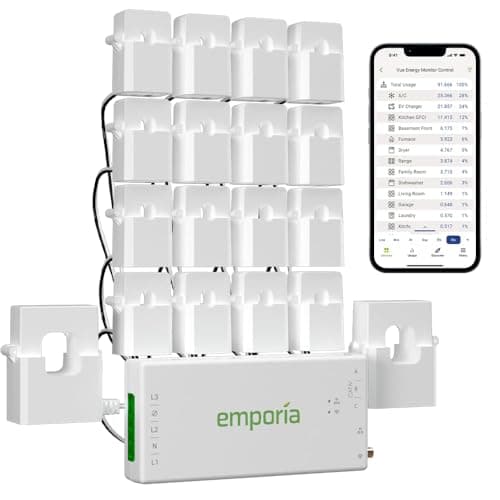
Emporia Vue 3 Home Energy Monitor

Knowing what your panel is actually doing

Emporia Vue 3 Home Energy Monitor

Whole-home and per-circuit monitoring on its own. Useful before you buy a charger — a month of real data can change which charger you need — and it is what closes the load-management loop on an Emporia charger.

$199.99View on Amazon

#ad Price as of October 5, 2026. How we make money

How we picked

Every unit here is currently purchasable, carries a real UL or ETL certification to an EVSE standard, and comes from a brand with an identifiable North American support path. We verified each one's published specifications against the manufacturer's own documentation on the date shown at the top of this page. We verify specifications; we do not bench-test chargers, and our methodology says so in plain terms. Ranking order is fit for the stated use case first, then price, then warranty and support — commission rate plays no part in it.

In detail

Every pick, assessed

Top pick · Most households, and anyone with a tight panel

Emporia Pro Level 2 EV Charger

Emporia Pro Level 2 EV Charger charger

9.0/ 10

$599.00View on Amazon

#ad Price as of October 5, 2026. How we make money

Our verdict

The best-balanced 48 A charger for a typical US house: full 11.5 kW hardwired, and the only unit at this price that ships with a whole-home energy monitor so its load management is reading your actual panel rather than guessing.

What works

  • Hardwires at the full 48 A for 11.5 kW — matches the onboard limit of most current BEVs exactly
  • PowerSmart load management reads whole-home draw through the included Vue monitor, so it can throttle instead of tripping a breaker
  • 25 ft cable reaches across a two-car garage without an extension
  • NEMA 4 enclosure and a real UL listing, not just an ETL mark

What doesn't

  • The energy monitor has to be installed in the panel to be useful, which means the electrician is in there longer
  • App-dependent for scheduling — there is no physical timer
  • At 40 A on the plug-in version you are paying for 48 A of hardware you cannot use
Emporia Pro Level 2 EV Charger specifications
Max output48 A / 11.5 kW hardwired; 40 A / 9.6 kW on a NEMA 14-50 plug
Breaker60 A dedicated 2-pole for 48 A; 50 A for 40 A
Cable25 ft
ConnectorJ1772 or NACS, chosen at purchase
EnclosureNEMA 4, indoor or outdoor
CertificationUL certified, ENERGY STAR
Warranty3 years
Load managementPowerSmart, with the Vue home energy monitor included

Specifications checked against Emporia Pro sell sheet. We verify published specifications; we do not bench-test hardware — how we assess products.

How it scored

Fit to a typical panel
9.4
Charge rate
9.0
Cable and reach
9.0
Smart features
9.2
Weather and build
8.6
Warranty and support
8.4
Pick 2 · A house whose panel headroom is uncertain

ChargePoint Home Flex (hardwired, 50 A)

ChargePoint Home Flex (hardwired, 50 A) charger

8.9/ 10

$549.00View on Amazon

#ad Price as of October 5, 2026. How we make money

Our verdict

The most adjustable charger on this page: output steps through 16, 24, 32, 40, 48 and 50 A in the app, so one unit fits almost any panel and can be turned up later if you upgrade the service.

What works

  • Six selectable output levels mean one unit fits a 100 A panel today and a 200 A panel after an upgrade
  • 12 kW ceiling is the highest here, which matters only for the handful of cars that accept more than 11.5 kW
  • Mature app with Alexa and Google Home support, and the largest installed base of any home charger in the US
  • Available in both J1772 and NACS, hardwired or plug-in

What doesn't

  • 23 ft cable is the shortest of the premium units — measure before you commit to a mounting spot
  • The adjustable amperage lives in the app, so a phone and a working account stand between you and a setting change
  • Costs more than units that charge at an identical real-world rate
ChargePoint Home Flex (hardwired, 50 A) specifications
Max output50 A / 12 kW (240 V x 50 A)
Adjustable output16, 24, 32, 40, 48, 50 A, set in the app
BreakerDedicated 2-pole rated 125% of the output you set — a 50 A breaker for 40 A output
Cable23 ft
ConnectorJ1772 (a NACS version is sold separately)
InstallHardwired, or NEMA 6-50 / NEMA 14-50 input cord on the plug-in version
Weight13.8 lb

Specifications checked against ChargePoint Home Flex datasheet. We verify published specifications; we do not bench-test hardware — how we assess products.

How it scored

Fit to a typical panel
9.6
Charge rate
9.3
Cable and reach
7.8
Smart features
9.0
Weather and build
8.8
Warranty and support
8.8
Pick 3 · A house with rooftop solar

Enphase IQ EV Charger 2 (48 A)

Enphase IQ EV Charger 2 (48 A) charger

8.7/ 10

$1,124.00View on Amazon

#ad Price as of October 5, 2026. How we make money

Our verdict

The charger to buy if you have solar: it adjusts in 1 A increments to absorb whatever the array is exporting, and it carries a 5-year warranty, the longest here.

What works

  • 1 A solar tracking is a real feature, not a marketing line — it is the difference between exporting at the retail rate and charging for free
  • 5-year warranty, the longest of any unit here
  • Integrates with an existing Enphase system rather than fighting it

What doesn't

  • Most expensive non-Tesla unit here, and the solar feature is worth nothing without an array
  • Hardwired only
  • The integration story is strongest inside the Enphase ecosystem and thinner outside it
Enphase IQ EV Charger 2 (48 A) specifications
Max output48 A / up to 11.5 kW at 240 V
Breaker60 A dedicated 2-pole
ConnectorJ1772
InstallHardwired
EnclosureNEMA 4
CertificationUL certified
Warranty5 years
SolarAdjusts in 1 A increments to track surplus solar

Specifications checked against Enphase IQ EV Charger 2 product documentation. We verify published specifications; we do not bench-test hardware — how we assess products.

How it scored

Solar integration
9.8
Charge rate
9.0
Warranty and support
9.6
Smart features
9.2
Weather and build
8.8
Value
6.2
Pick 4 · Cold climates and 1 A output tuning

Autel MaxiCharger AC Lite (40 A)

Autel MaxiCharger AC Lite (40 A) charger

8.6/ 10

$470.00View on Amazon

#ad Price as of October 5, 2026. How we make money

Our verdict

The widest output adjustment range here — 6 A to 40 A in the app — plus an operating range down to -40 degF, which makes it the practical pick for an unheated garage in the north.

What works

  • 6-40 A in 1 A steps is the finest adjustment of any unit here — genuinely useful when a load calculation lands at 37 A
  • -40 degF to +131 degF rated, which is a real differentiator in Minnesota or Maine
  • Integrated surge protection, which most units leave to a panel-mounted device
  • 25 ft cable

What doesn't

  • 40 A ceiling
  • Bluetooth, Wi-Fi and Ethernet is more connectivity than a home needs and more surface to go wrong
  • Autel's North American consumer support is newer than ChargePoint's or Tesla's
Autel MaxiCharger AC Lite (40 A) specifications
Max output40 A / 9.6 kW (240 V x 40 A)
Adjustable output6-40 A via the app
Breaker50 A dedicated 2-pole
Cable25 ft, J1772
EnclosureNEMA 4
Operating temperature-40 degF to +131 degF
Protection20 mA CCID ground-fault detection, integrated surge protection
Warranty36 months

Specifications checked against ENERGY STAR certified EVSE listing. We verify published specifications; we do not bench-test hardware — how we assess products.

How it scored

Cold-weather fitness
9.8
Charge rate
7.6
Output adjustability
9.8
Cable and reach
9.2
Weather and build
9.0
Value
8.6
Pick 5 · The smallest 48 A unit on a wall

Wallbox Pulsar Plus 48 A

Wallbox Pulsar Plus 48 A charger

8.5/ 10

$799.99View on Amazon

#ad Price as of October 5, 2026. How we make money

Our verdict

A genuinely small 48 A charger — under 8 inches square — which is the deciding factor when the only spot left is a narrow strip of wall beside the panel.

What works

  • The smallest 48 A box here — matters more than people expect in a crowded garage
  • Bluetooth control works without an internet connection, so scheduling survives a Wi-Fi outage
  • Full 11.5 kW at 48 A
  • NEMA Type 4 to UL 50E

What doesn't

  • -22 degF lower limit is the narrowest cold rating of the units we recommend
  • Hardwired only
  • Costs more than the Emporia Pro for the same charge rate and no energy monitor
Wallbox Pulsar Plus 48 A specifications
Max output48 A / 11.5 kW
Input voltage240 / 208 V
Breaker60 A dedicated 2-pole
Cable25 ft
Dimensions7.8 in W x 3.9 in D x 7.9 in H
EnclosureNEMA Type 4 per UL 50E, indoor or outdoor
Temperature-22 degF to 104 degF
Warranty3 years limited
InstallHardwired

Specifications checked against Wallbox Pulsar Plus North America datasheet. We verify published specifications; we do not bench-test hardware — how we assess products.

How it scored

Footprint
9.8
Charge rate
9.0
Cable and reach
9.2
Smart features
8.8
Cold-weather fitness
7.0
Value
7.2

FAQ

Questions people actually ask

Do I need a smart EV charger?

Only in three situations: you need whole-home load management because your panel is tight, you have solar and want to charge on surplus, or you are on a time-of-use tariff and want the charger rather than the car to enforce the window. Otherwise a non-smart charger does the same job.

What is the best smart EV charger?

The Emporia Pro for load management, because its PowerSmart includes a whole-home energy monitor so it throttles against measured draw. The Enphase IQ EV Charger 2 for solar, with 1 A adjustment increments. The ChargePoint Home Flex for the most mature app.

What is a smart EV charger?

A charger with network connectivity that can schedule charging, report energy use, adjust its output remotely and — on the better units — monitor whole-home consumption and throttle itself. The capability that genuinely matters is the last one.

Will my smart charger stop working if the Wi-Fi goes down?

A well-designed one keeps charging on its last known schedule and loses only the reporting. Ask this before buying: Wallbox's Bluetooth control works without internet, and Grizzl-E's physical amperage switches cannot be affected by a cloud outage at all.

Is a smart charger worth it if my car already schedules charging?

Usually not for scheduling alone — that is duplicate functionality. It becomes worth it when two cars share the charger, when you need load management, or when you have solar.

Sources

What we checked this against

Read next

Disclosure. Some links on this page are affiliate links. If you buy through one, we earn a commission at no extra cost to you. We are a participant in the Amazon Services LLC Associates Program. Prices come from Amazon's live data and are shown with the date they were checked; where no live price is available we say "check price" rather than show an old number. Commission rate plays no part in which products we recommend or in what order — see our methodology and our full affiliate disclosure.