Skip to content
EV & Charger

Head to head

Hardwired vs Plug-In EV Charger

Two installs of the same charger. One gets 48 amps and has nothing to loosen; the other caps at 40 amps and comes with you when you move.

By Mike M.Published Last verified

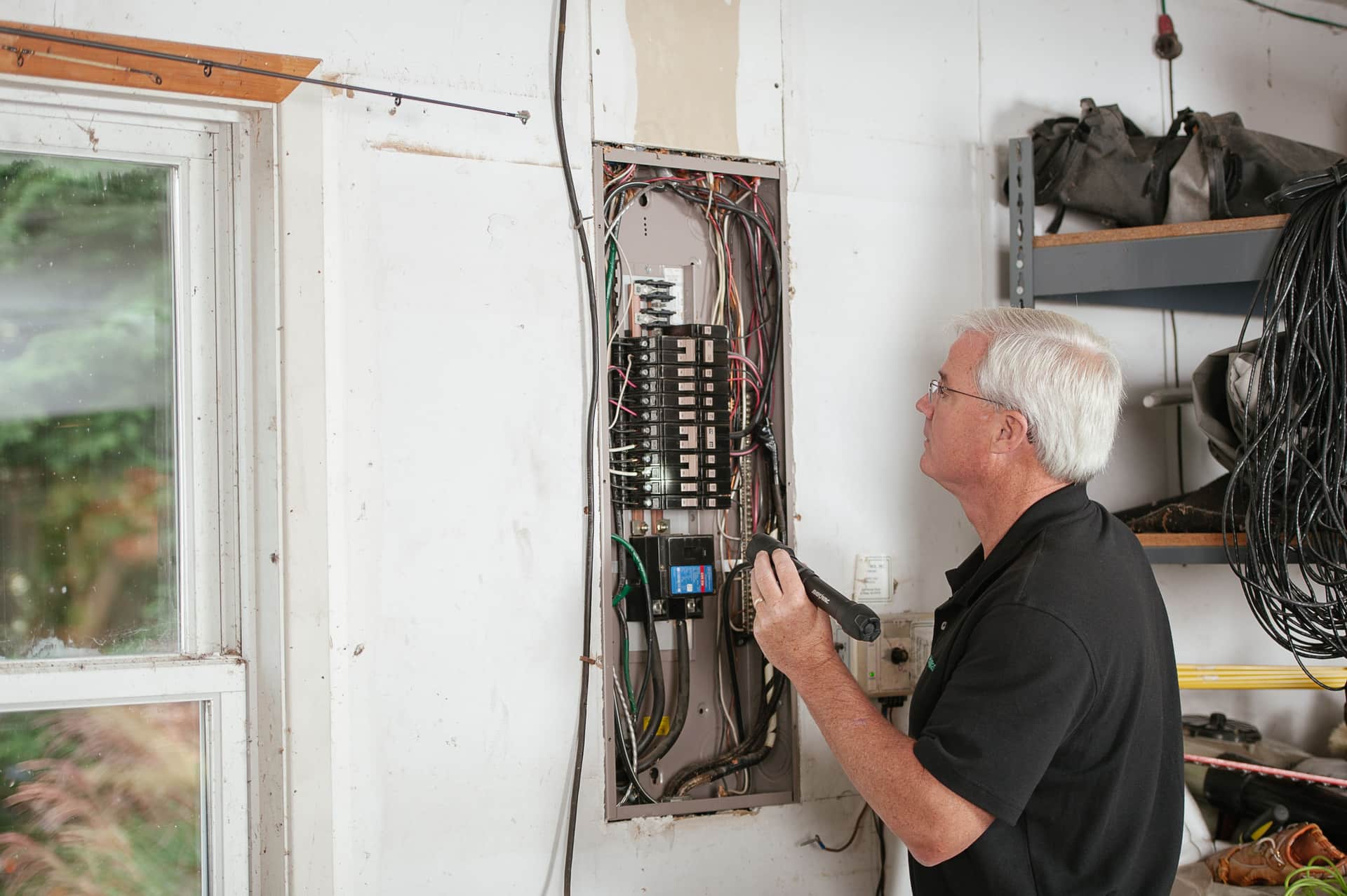
An electrician inspecting a residential electrical panel and breaker box

The short answer

Hardwire if you own the home and want maximum charge rate. It gets you the charger's full 48 A, needs no GFCI breaker, and has no receptacle to loosen or overheat. Choose plug-in if you rent, might move, or already have a correctly wired NEMA 14-50 outlet. It caps you at 40 A and requires GFCI protection under NEC 625.54, but it unplugs and travels.

Hardwired against plug-in, the parts that differSide by side comparison showing a hardwired charger spliced directly to the branch circuit versus a plug-in charger on a NEMA 14-50 receptacle with a GFCI breaker.Hardwired60A48 Adirect spliceFull 48 A · no GFCI breaker required · nothing to loosenNEC 625.54 applies to receptacles, not to directly connected equipment.Plug-inGFCI14-5040 A40 A ceiling · GFCI breaker required · moves house with youThe receptacle and the GFCI breaker are the two parts that cause trouble.
The receptacle and the GFCI breaker are the whole difference — and both are failure points a hardwired install does not have.
Hardwired against plug-in, every difference that matters
HardwiredPlug-in (NEMA 14-50)
Maximum continuous outputThe charger's full rating, commonly 48 A40 A — 80% of the 50 A circuit
Power at 240 V11.5 kW9.6 kW
Breaker60 A for a 48 A charger50 A
GFCI breaker requiredNo — NEC 625.54 applies to receptaclesYes — NEC 625.54
Nuisance tripping riskLowReal — GFCI plus EVSE is the classic pairing
Connection points in the current pathOne terminal blockTerminal block, plug and receptacle
Takes it with you when you moveNoYes
Permitted outdoorsYes, with correct conductorsYes, with an extra-duty in-use cover
Typical install costSlightly higher labor, no receptacleReceptacle cost plus a GFCI breaker
Typical failure mode over 10 yearsRareReceptacle contacts heating and browning
Breaker sizes per NEC 625.41's 125% rule, with EV charging classified as continuous by NEC 625.42. The 40 A ceiling on a 50 A receptacle circuit is the same 80% rule read from the other direction.

Why plug-in caps at 40 amps

This is the part people are most often surprised by. A NEMA 14-50 receptacle is a 50 A device, so it feels like it should deliver 50 A. It does not, because EV charging is a continuous load under NEC 625.42 and a circuit may only carry 80% of its rating continuously. 80% of 50 A is 40 A.

So the sentence "I'll put in a 14-50 and run a 48 amp charger" does not work, regardless of the charger. 48 A requires a 60 A circuit, and there is no common residential receptacle on a 60 A circuit. That is why effectively every 48 A charger sold is hardwired-only.

The GFCI question, properly

The 2020 and 2023 editions of the NEC both state, at 625.54, that in addition to the requirements of 210.8, all receptacles installed for the connection of electric vehicle charging shall have ground-fault circuit-interrupter protection for personnel. The 2017 edition limited this to receptacles rated 150 volts to ground or less and 50 amperes or less; the 2020 cycle removed those limits.

Equally important is what the rule does not cover: a directly connected, hardwired charger. The outlet supplying direct-connected EVSE is not required to be GFCI protected unless the manufacturer's instructions specify it. Hardwiring removes the requirement, and with it the most common source of nuisance tripping in home charging.

Choose hardwired if

  • You own the home and are not planning to move soon.
  • Your car accepts 48 A and you want all of it.
  • The charger is going outdoors. No receptacle means no in-use cover and one fewer thing for water to find.
  • You have had GFCI nuisance tripping before, or you want to rule it out.
  • You want the cleanest possible install. A terminal block inside a sealed enclosure beats a plug hanging out of a receptacle.

Choose plug-in if

  • You rent, or expect to move within a few years. The charger is yours; the circuit stays.
  • A correctly wired NEMA 14-50 already exists on an adequate circuit. Then the install is plugging it in — have an electrician verify the receptacle and the conductors first.
  • Your car accepts 40 A or less. Then the ceiling costs you nothing. Every plug-in hybrid lives here.
  • You want to be able to swap the charger easily without an electrician.
  • You want to take it on a trip. A plug-in unit works at a relative's house; a hardwired one does not.

If you do go plug-in, spend money on the receptacle

This is the single highest-leverage detail in a plug-in install. A builder-grade NEMA 14-50 receptacle was designed for an electric range, which draws heavily in short bursts. An EV draws 40 A continuously for hours, night after night. That duty cycle finds every weak contact, and the failure mode is a browned, heat-damaged receptacle face — sometimes worse.

The parts a plug-in install should not economize on

An industrial-grade receptacle and the correct GFCI breaker. Together they cost a fraction of the charger and they are the two components that decide whether the install ages well.
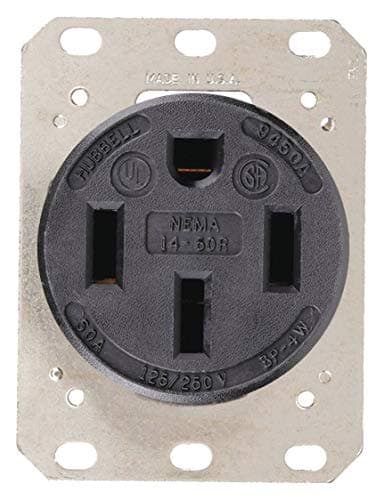
Hubbell HBL9450A NEMA 14-50 Receptacle (industrial)

The one part not to save money on

Hubbell HBL9450A NEMA 14-50 Receptacle (industrial)

An industrial-grade 14-50 receptacle. An EV draws 40 A continuously for hours, which is a duty cycle the cheap builder-grade receptacles were never designed for — this is the part that stops a plug-in install from browning its own contacts.

$64.99View on Amazon

#ad Price as of October 5, 2026. How we make money
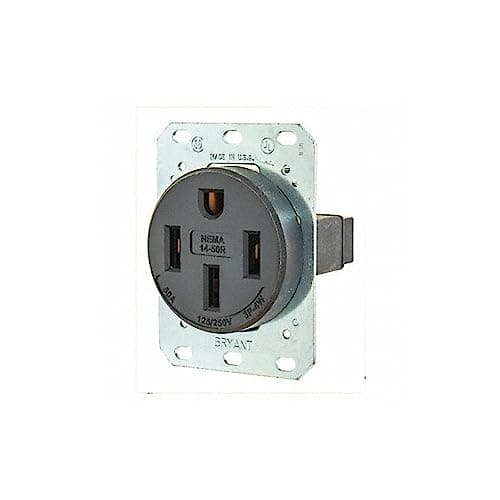
Bryant 9450FR NEMA 14-50 Receptacle

The same quality, slightly cheaper

Bryant 9450FR NEMA 14-50 Receptacle

Bryant is Hubbell's sister brand and the 9450FR is the same class of part for a little less — the sensible alternative when the Hubbell is out of stock.

$56.64View on Amazon

#ad Price as of October 5, 2026. How we make money
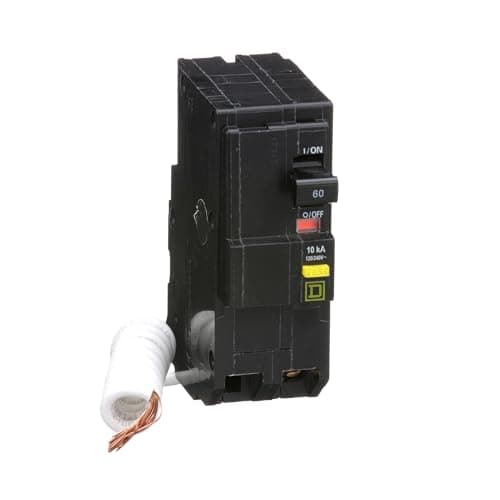
Square D QO260GFI 60 A 2-Pole GFCI Breaker

A plug-in charger on a 14-50 receptacle circuit

Square D QO260GFI 60 A 2-Pole GFCI Breaker

If your charger plugs into a receptacle, NEC 625.54 requires GFCI protection on that circuit, and this is the part that provides it. It is also the single most common cause of nuisance tripping in a home charging install.
$139.99View on Amazon

$157.72 list · 11% off

#ad Price as of October 5, 2026. How we make money

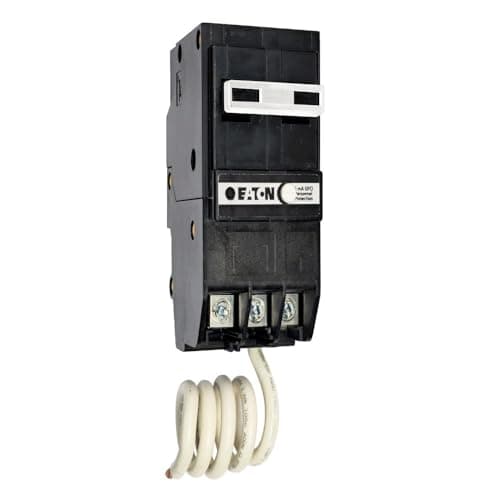
Eaton BRN260GF 60 A 2-Pole GFCI Breaker

The same job in an Eaton BR panel

Eaton BRN260GF 60 A 2-Pole GFCI Breaker

Eaton's 60 A two-pole GFCI for a BR-series panel. Same role, same caveat about nuisance tripping.

$112.52View on Amazon

#ad Price as of October 5, 2026. How we make money

We earn commission on qualifying purchases at no cost to you. Affiliate disclosure.

A middle path

Several chargers are sold in both forms — the ChargePoint Home Flex, the Emporia Pro, the EVIQO 48 A unit and the Grizzl-E among them. That means you can start plug-in on an existing outlet and hardwire the same unit later if you decide to stay in the house. Worth knowing before you buy, because it makes the decision reversible.

Quick picks

Ranked by fit for the stated use case first, then price, then warranty and support. Tap any row to jump to the full assessment. Commission rate plays no part in the order.

#ProductBest forScorePrice
1
Emporia Pro Level 2 EV Charger
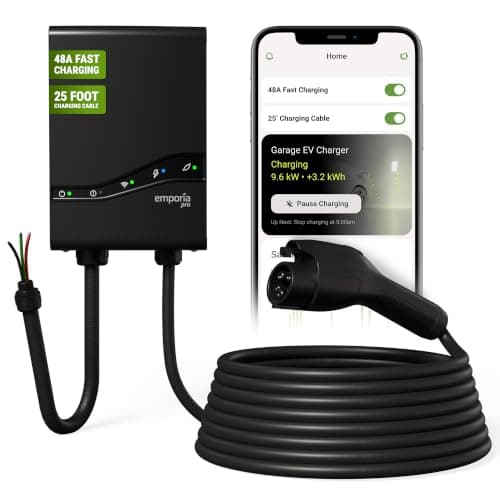
Emporia Pro Level 2 EV ChargerThe best-balanced 48 A charger for a typical US house: full 11.5 kW hardwired, and the only unit at this price that ships with a whole-home energy monitor so its load management is reading your actual panel rather than guessing.
Most households, and anyone with a tight panel9.0
2
ChargePoint Home Flex (NEMA 14-50 plug)
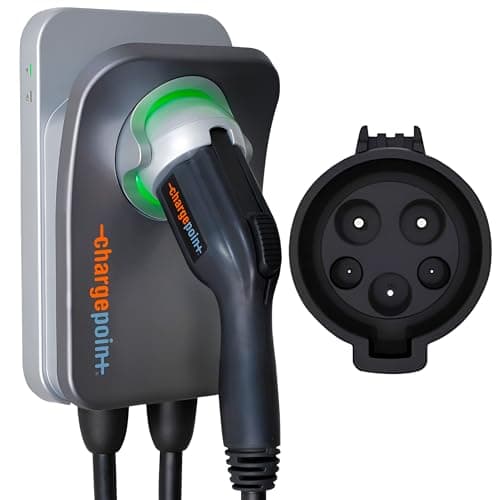
ChargePoint Home Flex (NEMA 14-50 plug)The same charger as the hardwired Home Flex with a NEMA 14-50 input cord, which turns the install into plugging it in — at the cost of a 40 A ceiling, because a 50 A receptacle circuit can only carry 40 A continuously.
A garage that already has a 14-50 outlet8.4
$599.00View on Amazon

$657.99 list · 9% off

Both units

The two, side by side

Most households, and anyone with a tight panel

Emporia Pro Level 2 EV Charger

Emporia Pro Level 2 EV Charger charger

9.0/ 10

$599.00View on Amazon

#ad Price as of October 5, 2026. How we make money

Our verdict

The best-balanced 48 A charger for a typical US house: full 11.5 kW hardwired, and the only unit at this price that ships with a whole-home energy monitor so its load management is reading your actual panel rather than guessing.

What works

  • Hardwires at the full 48 A for 11.5 kW — matches the onboard limit of most current BEVs exactly
  • PowerSmart load management reads whole-home draw through the included Vue monitor, so it can throttle instead of tripping a breaker
  • 25 ft cable reaches across a two-car garage without an extension
  • NEMA 4 enclosure and a real UL listing, not just an ETL mark

What doesn't

  • The energy monitor has to be installed in the panel to be useful, which means the electrician is in there longer
  • App-dependent for scheduling — there is no physical timer
  • At 40 A on the plug-in version you are paying for 48 A of hardware you cannot use
Emporia Pro Level 2 EV Charger specifications
Max output48 A / 11.5 kW hardwired; 40 A / 9.6 kW on a NEMA 14-50 plug
Breaker60 A dedicated 2-pole for 48 A; 50 A for 40 A
Cable25 ft
ConnectorJ1772 or NACS, chosen at purchase
EnclosureNEMA 4, indoor or outdoor
CertificationUL certified, ENERGY STAR
Warranty3 years
Load managementPowerSmart, with the Vue home energy monitor included

Specifications checked against Emporia Pro sell sheet. We verify published specifications; we do not bench-test hardware — how we assess products.

How it scored

Fit to a typical panel
9.4
Charge rate
9.0
Cable and reach
9.0
Smart features
9.2
Weather and build
8.6
Warranty and support
8.4
A garage that already has a 14-50 outlet

ChargePoint Home Flex (NEMA 14-50 plug)

ChargePoint Home Flex (NEMA 14-50 plug) charger

8.4/ 10

$599.00View on Amazon

$657.99 list · 9% off

#ad Price as of October 5, 2026. How we make money

Our verdict

The same charger as the hardwired Home Flex with a NEMA 14-50 input cord, which turns the install into plugging it in — at the cost of a 40 A ceiling, because a 50 A receptacle circuit can only carry 40 A continuously.

What works

  • No electrician needed if a correctly wired 14-50 outlet is already there
  • Unplugs and moves with you, which matters if you rent
  • Same app and the same adjustable amperage as the hardwired unit

What doesn't

  • 40 A ceiling, so a car that accepts 48 A charges ~20% slower than it could
  • Needs a GFCI breaker on the receptacle circuit, and that pairing is the most common source of nuisance tripping
  • The plug and receptacle are the weakest link in the whole run — a cheap receptacle will eventually heat up
ChargePoint Home Flex (NEMA 14-50 plug) specifications
Max output40 A / 9.6 kW on a 50 A receptacle circuit
Adjustable output16, 24, 32, 40 A
InputNEMA 14-50 plug
Cable23 ft
ConnectorJ1772
GFCIRequired — NEC 625.54 applies to every EV charging receptacle

Specifications checked against ChargePoint Home Flex datasheet. We verify published specifications; we do not bench-test hardware — how we assess products.

How it scored

Install simplicity
9.6
Charge rate
7.6
Cable and reach
7.8
Smart features
9.0
Portability
8.6

FAQ

Questions people actually ask

Is a hardwired EV charger better than a plug-in?

For a homeowner who wants maximum charge rate, yes: it reaches the charger's full 48 A, needs no GFCI breaker, and has no receptacle to degrade. For a renter or anyone who may move, plug-in is better because the charger comes with you.

Can I get 48 amps from a plug-in charger?

Not from a standard NEMA 14-50 receptacle. A circuit may carry only 80% of its rating continuously, so a 50 A receptacle circuit supports a 40 A continuous charger. 48 A needs a 60 A circuit, which in practice means hardwiring.

Does a hardwired EV charger need a GFCI breaker?

Generally no. NEC 625.54 requires GFCI protection for receptacles installed for EV charging; a directly connected charger is outside that requirement unless the manufacturer's instructions call for it. Always check the manual — it governs.

Why does my GFCI breaker keep tripping with my EV charger?

Your charger has its own ground-fault protection, typically at 20 mA. A Class A GFCI breaker trips at 5 mA, and normal leakage from a long charging cable can reach that. Some charger and breaker combinations are simply incompatible. The reliable fixes are a different breaker, a different charger, or hardwiring.

Can I convert a plug-in charger to hardwired later?

On units sold in both configurations, often yes — the ChargePoint Home Flex, Emporia Pro, EVIQO and Grizzl-E among them. Check your specific model's manual, and note that going to 48 A also means a 60 A breaker and heavier conductors, not just a different connection.

Sources

What we checked this against

Read next

Disclosure. Some links on this page are affiliate links. If you buy through one, we earn a commission at no extra cost to you. We are a participant in the Amazon Services LLC Associates Program. Prices come from Amazon's live data and are shown with the date they were checked; where no live price is available we say "check price" rather than show an old number. Commission rate plays no part in which products we recommend or in what order — see our methodology and our full affiliate disclosure.