Skip to content
EV & Charger

Head to head

40 Amp vs 48 Amp EV Charger

The gap is 1.9 kW. Whether that is worth a 60 A breaker and 6 AWG copper depends entirely on your car and your mileage — here is the arithmetic.

By Mike M.Published Last verified

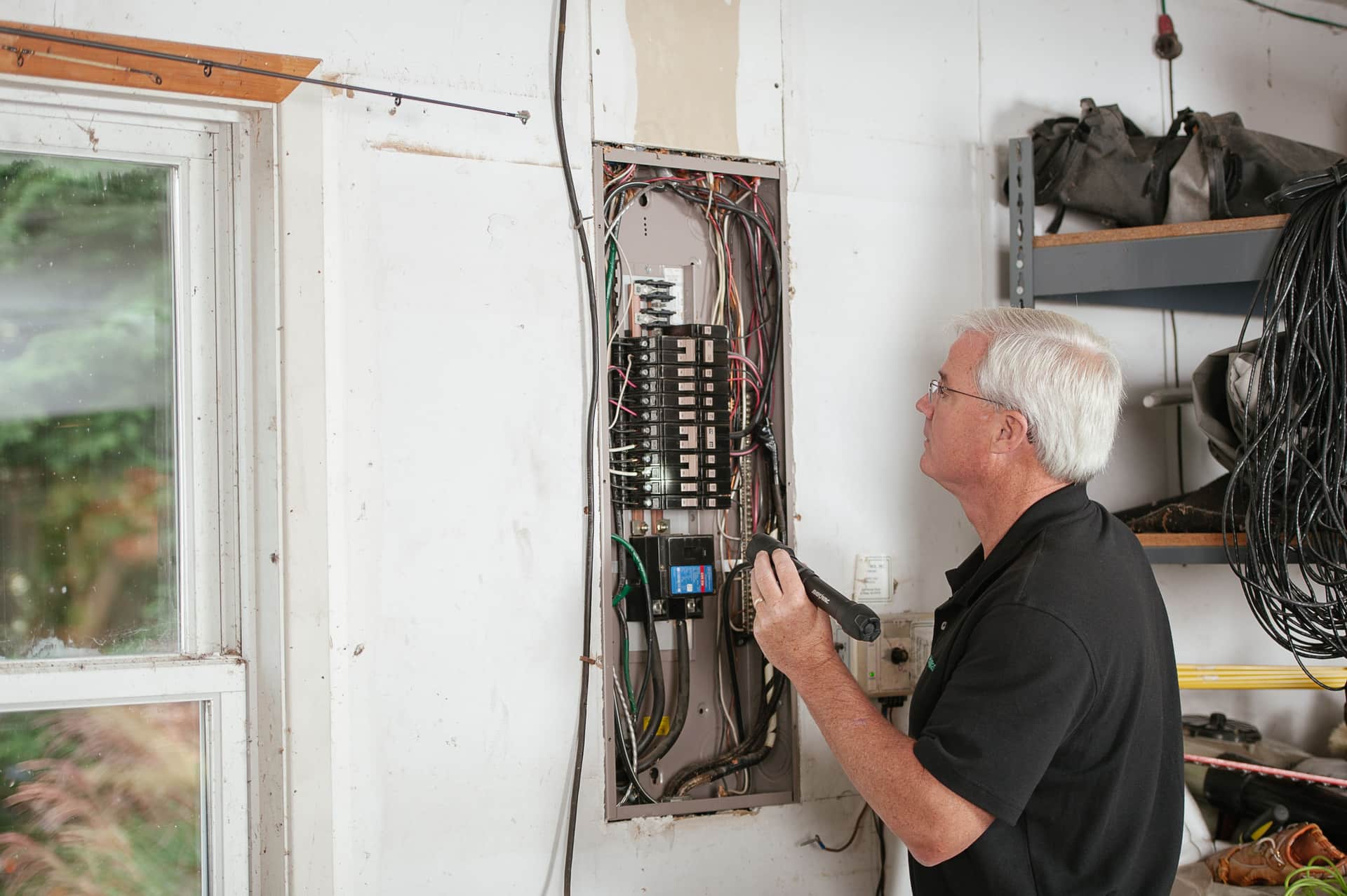
An electrician inspecting a residential electrical panel and breaker box

The short answer

48 A delivers 11.5 kW against 40 A's 9.6 kW — about 20% more power, or roughly 1-2 hours on a full charge. It needs a 60 A breaker and 6 AWG copper instead of a 50 A breaker and 8 AWG. Choose 48 A if you drive a big, inefficient vehicle a long way every day. Choose 40 A for almost everyone else, and especially if the run is long or your panel is tight.

40 A against 48 A, the whole comparison
40 A48 A
Power at 240 V9.6 kW11.5 kW
Breaker required (NEC 625.41)50 A60 A
Copper in conduit (75 degC)8 AWG6 AWG
NM-B cable6/26/2, or conduit
Miles added per hour, 28 kWh/100mi carabout 31about 37
Available as a plug-in unitYes, on a NEMA 14-50No — 48 A is hardwired only
Needs a GFCI breakerYes if plug-inNo if hardwired
Cars that can use all of itEverything from 40 A upMost current BEVs
Typical install cost differenceBaselineHigher: heavier conductor, bigger breaker
Miles per hour uses the formula (kW x 0.9 x 100) / kWh-per-100-miles, at a representative 28 kWh/100 mi. Breaker sizes per NEC 625.41; conductor sizes per NEC Table 310.16 with NEC 334.80 applied to the NM-B row.

The arithmetic, on real vehicles

Abstract percentages are not useful here. Here is the same comparison on three real cars, using EPA efficiency figures from the US DOE / EPA fueleconomy.gov service.

Hours to replace 100 miles of range, 40 A against 48 A
Vehicle (EPA trim)kWh / 100 miAt 40 AAt 48 AYou save
Hyundai Ioniq 6 RWD 18in (2025)26.03h 00m2h 31m29 min
Tesla Model Y Long Range AWD (2026)27.53h 11m2h 39m32 min
Ford Mustang Mach-E RWD Extended (2026)30.73h 33m2h 58m35 min
Rivian R1T Dual Large (2026)44.45h 08m4h 17m51 min
GMC Hummer EV Pickup 3X (2025)65.17h 32m6h 17m1h 15m
EPA combined kWh per 100 miles from the US DOE / EPA fueleconomy.gov web service, queried October 5, 2026. Hours calculated as (kWh needed) / (kW x 0.9), allowing for AC-to-DC conversion losses.

Read the right-hand column carefully. For an efficient sedan replacing a normal day's driving, 48 A saves you half an hour in the middle of the night. For a Hummer EV, it saves an hour and a quarter — and the Hummer is also the car most likely to need a near-full charge regularly.

When 48 A is genuinely the right answer

  • A large, inefficient vehicle. Above about 40 kWh per 100 miles, the extra kilowatts start translating into real wall-clock time. Electric trucks and large SUVs live here.
  • High daily mileage. If you routinely arrive home with under 20% and need a near-full charge by morning, the 1.9 kW is the difference between finishing and not.
  • A short charging window. A household on a 6-hour off-peak time-of-use window has a hard deadline, and the faster charger fits more into it.
  • You are hardwiring anyway and the run is short. If the conductor cost difference on your particular run is small, there is no reason to leave the amps on the table.
  • Two EVs on one charger. Alternating two cars overnight needs the throughput.

When 40 A is the better buy

  • Your car accepts 40 A or less. Then there is nothing to discuss.
  • You want a plug-in install. 48 A is hardwired-only in practice, because a receptacle circuit gives you 80% of its rating. A NEMA 14-50 outlet means 40 A, full stop.
  • Your panel is tight. A 50 A breaker is easier to find room and headroom for than a 60 A one, and the load calculation is 8 A kinder.
  • The run is long or awkward. 6 AWG copper is materially more expensive and genuinely harder to pull through tight bends. On an 80-foot run through finished walls that difference is real money and real labor.
  • You drive normal distances. Under 60 miles a day, on an average-efficiency car, 40 A replaces everything you used in under two hours.

A third option people forget: an adjustable charger

Several units step through output levels. The ChargePoint Home Flex is settable to 16, 24, 32, 40, 48 or 50 A in the app. The Autel MaxiCharger adjusts from 6 to 40 A in 1 A steps. The EVIQO 48 A unit has an internal switch for 16, 32, 40 or 48 A.

That matters because it decouples the charger decision from the circuit decision. You can install a 50 A circuit now, set the charger to 40 A, and turn it up later if you upgrade the service — without buying a new charger. It is the right answer for a house whose electrical future is uncertain.

Quick picks

Ranked by fit for the stated use case first, then price, then warranty and support. Tap any row to jump to the full assessment. Commission rate plays no part in the order.

#ProductBest forScorePrice
1
Emporia Pro Level 2 EV Charger
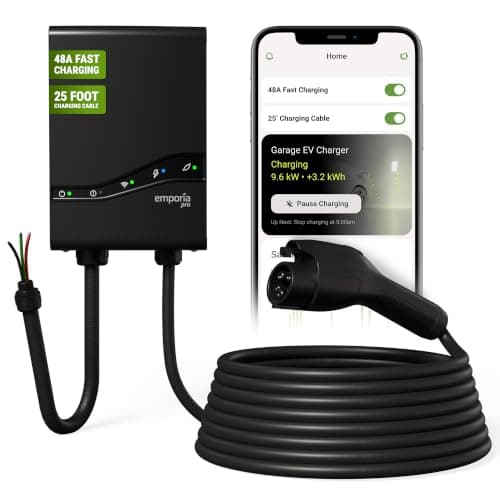
Emporia Pro Level 2 EV ChargerThe best-balanced 48 A charger for a typical US house: full 11.5 kW hardwired, and the only unit at this price that ships with a whole-home energy monitor so its load management is reading your actual panel rather than guessing.
Most households, and anyone with a tight panel9.0
2
Grizzl-E Classic
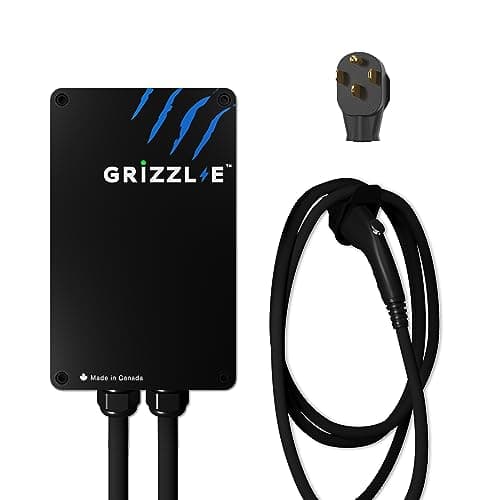
Grizzl-E ClassicA cast-aluminum 40 A charger with dip switches instead of a cloud account.
An outdoor install, and anyone who distrusts apps8.5
$299.99View on Amazon

$399.00 list · 25% off

Both units

The two, side by side

Most households, and anyone with a tight panel

Emporia Pro Level 2 EV Charger

Emporia Pro Level 2 EV Charger charger

9.0/ 10

$599.00View on Amazon

#ad Price as of October 5, 2026. How we make money

Our verdict

The best-balanced 48 A charger for a typical US house: full 11.5 kW hardwired, and the only unit at this price that ships with a whole-home energy monitor so its load management is reading your actual panel rather than guessing.

What works

  • Hardwires at the full 48 A for 11.5 kW — matches the onboard limit of most current BEVs exactly
  • PowerSmart load management reads whole-home draw through the included Vue monitor, so it can throttle instead of tripping a breaker
  • 25 ft cable reaches across a two-car garage without an extension
  • NEMA 4 enclosure and a real UL listing, not just an ETL mark

What doesn't

  • The energy monitor has to be installed in the panel to be useful, which means the electrician is in there longer
  • App-dependent for scheduling — there is no physical timer
  • At 40 A on the plug-in version you are paying for 48 A of hardware you cannot use
Emporia Pro Level 2 EV Charger specifications
Max output48 A / 11.5 kW hardwired; 40 A / 9.6 kW on a NEMA 14-50 plug
Breaker60 A dedicated 2-pole for 48 A; 50 A for 40 A
Cable25 ft
ConnectorJ1772 or NACS, chosen at purchase
EnclosureNEMA 4, indoor or outdoor
CertificationUL certified, ENERGY STAR
Warranty3 years
Load managementPowerSmart, with the Vue home energy monitor included

Specifications checked against Emporia Pro sell sheet. We verify published specifications; we do not bench-test hardware — how we assess products.

How it scored

Fit to a typical panel
9.4
Charge rate
9.0
Cable and reach
9.0
Smart features
9.2
Weather and build
8.6
Warranty and support
8.4
An outdoor install, and anyone who distrusts apps

Grizzl-E Classic

Grizzl-E Classic charger

8.5/ 10

$299.99View on Amazon

$399.00 list · 25% off

#ad Price as of October 5, 2026. How we make money

Our verdict

A cast-aluminum 40 A charger with dip switches instead of a cloud account. Nothing about it is clever, which is exactly why it is the unit to buy for a driveway post in a cold climate.

What works

  • Cast-aluminum NEMA 4 body is the most physically robust enclosure in this price class
  • Amperage set by physical switch, so the setting survives an app outage, a new phone and a sold house
  • 24 ft cable at a 40 A price
  • ENERGY STAR certified

What doesn't

  • 40 A ceiling — a 48 A car leaves ~2 kW on the table
  • No scheduling, no energy reporting, no load management; if you need time-of-use scheduling you are doing it in the car
  • Changing amperage means opening the unit, which most people will do exactly once
Grizzl-E Classic specifications
Max output40 A / 9.6 kW continuous
Adjustable output16, 24, 32 or 40 A via physical switches
Breaker50 A dedicated 2-pole for 40 A output
Cable24 ft, 8 AWG output cord
ConnectorJ1772
EnclosureNEMA 4 cast aluminum, IP67, fire resistant
ProtectionOver-current, over/under-voltage, missing diode, ground fault, over-temperature
Warranty3 years

Specifications checked against United Chargers Grizzl-E specifications. We verify published specifications; we do not bench-test hardware — how we assess products.

How it scored

Weather and build
9.8
Charge rate
7.6
Cable and reach
9.6
Smart features
3.0
Simplicity
9.6
Value
9.4

FAQ

Questions people actually ask

Is a 48 amp charger faster than a 40 amp charger?

Yes, by about 20% — 11.5 kW against 9.6 kW — but only on a car that accepts 48 A. On a typical EV that is roughly half an hour saved on replacing 100 miles of range.

Can I buy a 48 amp charger and run it at 40 amps?

On an adjustable unit, yes, and it is often the sensible plan. The ChargePoint Home Flex, EVIQO 48 A and several others let you set a lower output, so you can wire for what your panel allows today and raise it later.

Why can't I get 48 amps from a NEMA 14-50 outlet?

Because a circuit may only carry 80% of its rating continuously, and EV charging is a continuous load under NEC 625.42. A 50 A receptacle circuit therefore supports a 40 A continuous charger. 48 A requires a 60 A circuit, which means hardwiring.

Does a 48 amp charger cost much more to install?

The charger itself is often similar. The circuit is where the difference lives: a 60 A breaker instead of 50 A, and 6 AWG copper instead of 8 AWG. On a short run that is modest; on a long run through finished walls it can be several hundred dollars in material and labor.

Sources

What we checked this against

Read next

Disclosure. Some links on this page are affiliate links. If you buy through one, we earn a commission at no extra cost to you. We are a participant in the Amazon Services LLC Associates Program. Prices come from Amazon's live data and are shown with the date they were checked; where no live price is available we say "check price" rather than show an old number. Commission rate plays no part in which products we recommend or in what order — see our methodology and our full affiliate disclosure.