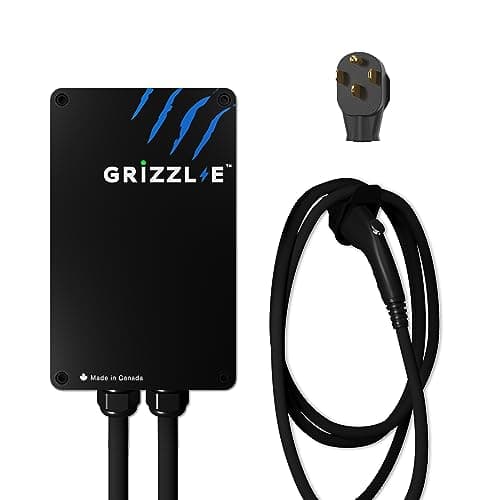
Most home chargers sold in the US are already rated for outdoor installation — NEMA 4 or better, which means rain, sleet, snow, windblown dust and hose-directed water. So the common question, "can I put this outside?", usually has a boring answer: yes, check the manual, it is rated for it.
The interesting question is the one people ask second. What actually degrades outdoors is not the box. It is the handle sitting on wet concrete collecting road salt, the cable stiffening and cracking through five winters, the receptacle on a plug-in install slowly corroding behind an in-use cover that someone left open, and — in a street-facing driveway — the adapter that walked off the handle one night.
The four things an outdoor install needs that an indoor one doesn't
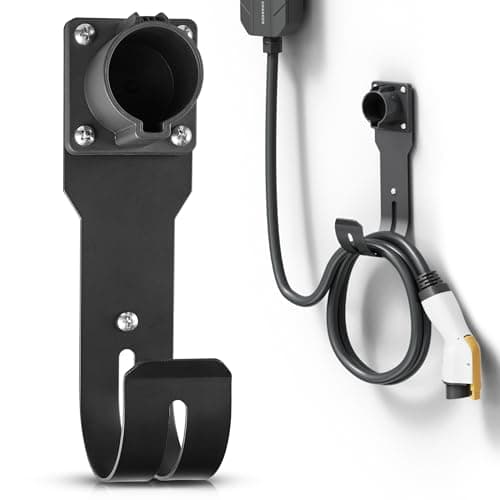
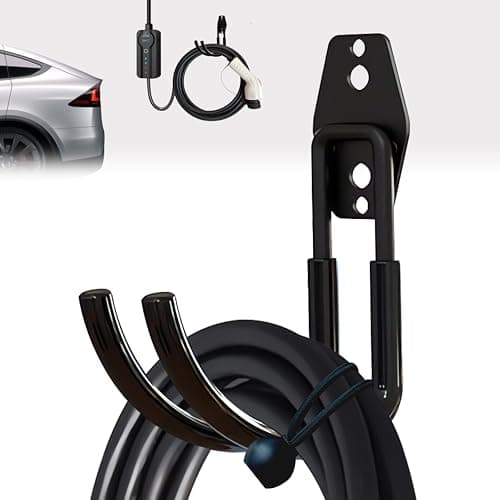
- A holster for the handle and a hook for the cable. The cheapest meaningful upgrade to any charging setup, indoors or out, and genuinely load-bearing outdoors. A handle on the ground is a handle in standing water.
- A drip loop. The cable should hang below its entry point so water runs off rather than tracking in. This costs nothing and is skipped constantly.
- Correct conductors and conduit. NM-B cable is not permitted in wet locations. An outdoor run is THWN-2 in conduit at code burial depth, with weatherproof fittings. This is electrician territory.
- An extra-duty in-use cover, if anything plugs in. A standard flip-lid receptacle cover is not weatherproof once a plug is in it. Hardwired installs need none of this, which is one more argument for hardwiring outdoors.
Where to mount it
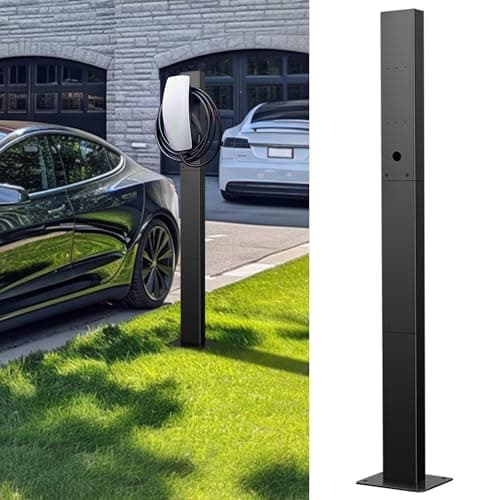
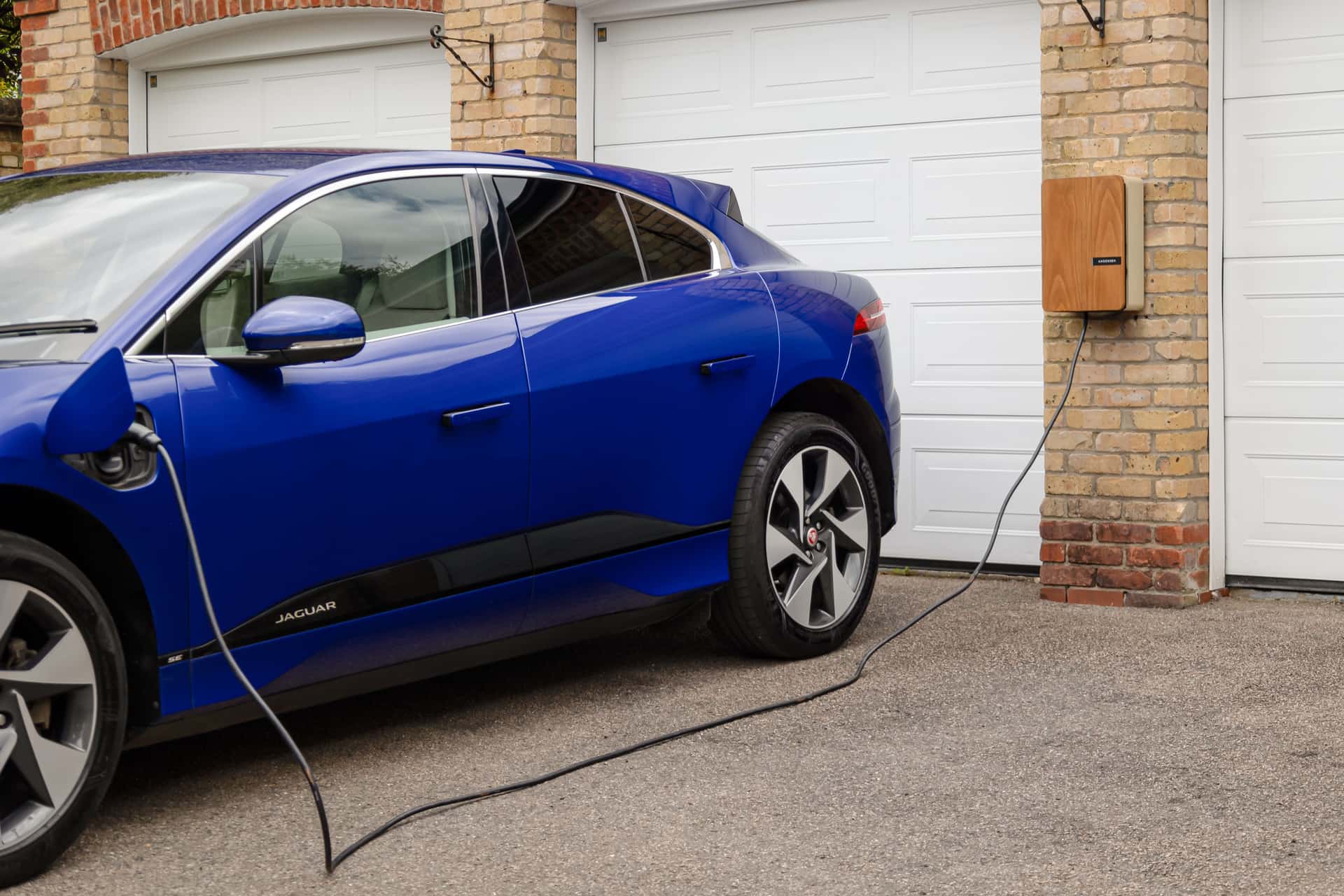
Your charger's own manual governs, and some units specify minimum clearances for heat dissipation that an enclosure can violate. Beyond that, the sensible rule is mount at handle height, not at eye height: between roughly 42 and 48 inches above the finished surface puts the handle where your hand is, lets the cable loop clear the ground, and keeps the unit above splash and snow line. Then check the car door's swing — a charger exactly where the driver's door opens is a mistake you only make once.
What NEMA and IP ratings actually promise
These two systems get used interchangeably in marketing copy and they do not mean the same thing. NEMA ratings describe enclosure protection in installed service, including corrosion and ice. IP ratings describe ingress of solids and liquids on a two-digit scale. A unit can honestly carry both, and several do — the EVIQO 48 A unit lists IP66 and NEMA 4, for instance.
| Rating | What it covers | Where it matters |
|---|---|---|
| NEMA 3R | Rain, sleet, snow; external ice damage | Junction boxes and disconnects on an outdoor run |
| NEMA 4 | The above, plus windblown dust and hose-directed water | The charger body itself — the common rating |
| NEMA 4X | The above, plus corrosion resistance | Coastal installs, surge panels mounted outdoors |
| IP65 | Dust-tight; protected against water jets | Chargers and some enclosures |
| IP66 | Dust-tight; protected against powerful water jets | Better-sealed charger bodies |
| IP67 | Dust-tight; protected against temporary immersion | Handles and connectors, which do end up in puddles |
Cold weather is a specification, not an afterthought
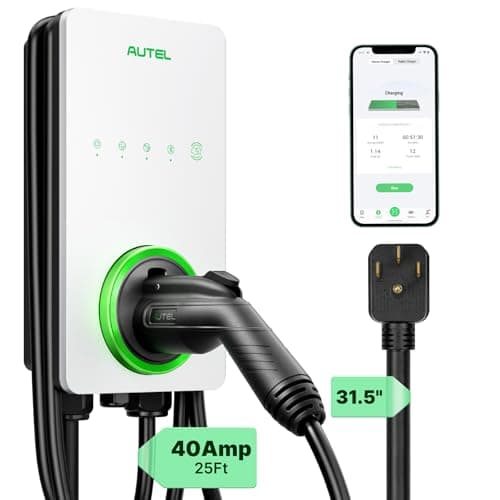
Operating temperature ranges on home chargers vary more than almost any other spec. The Autel MaxiCharger AC Lite is rated from -40 degF to +131 degF. The Wallbox Pulsar Plus is rated from -22 degF to +104 degF. If your garage is unheated and you live where winter means something, that difference is the spec that should decide your purchase — not the app.
Cables are the other cold-weather story. Every EV cable stiffens below freezing and the long ones stiffen most. A 25 ft cable that handles beautifully in October is a wrestling match at 10 degF, which is an argument for a well-placed charger and a shorter cable rather than a long one and a longer reach.
Security: when it is worth bothering
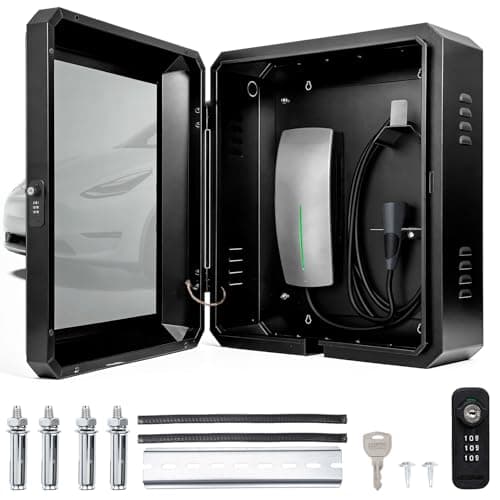
In a closed garage, it is not. On a street-facing driveway it can be — and the thing most likely to disappear is not the charger (hardwired and screwed to a wall) but the adapter left clipped to the handle. A locking adapter solves that for a few dollars. A full lockable enclosure solves the rest, with the honest caveat that people stop locking things by about week three.