The short answer
An outdoor install needs five things an indoor one does not: THWN-2 conductors in conduit (NM-B is not permitted in wet locations), a drip loop in the cable below its entry point, an extra-duty in-use cover if anything plugs in, a rain-tight or better enclosure at every junction, and correct burial depth where the run goes underground. The charger body itself is usually already NEMA 4 rated and needs nothing extra.
The five additions, in order
1. Conductors and conduit
THWN-2 in conduit, sized the same way as an indoor run: 6 AWG copper for a 48 A charger on a 60 A breaker, 8 AWG for 32 or 40 A, per NEC Table 310.16's 75 degC column and NEC 625.41's 125% rule. Where the run goes underground, at code burial depth with the correct conduit type.
The conduit is also what makes the run serviceable: a conductor can be pulled and replaced later, which a direct-buried cable cannot.
2. A drip loop
The cable should hang below its entry point so water runs off the low point rather than tracking along the cable and into the enclosure. It costs nothing, it is skipped constantly, and it is one of the simplest things that distinguishes a careful install from a quick one.
3. An extra-duty in-use cover, if anything plugs in
A standard flip-lid receptacle cover is not weatherproof once a plug is in it. An outdoor receptacle with a cord connected needs an extra-duty in-use cover — the kind that closes over the plug. Metal versions survive UV far better than the clear plastic ones.
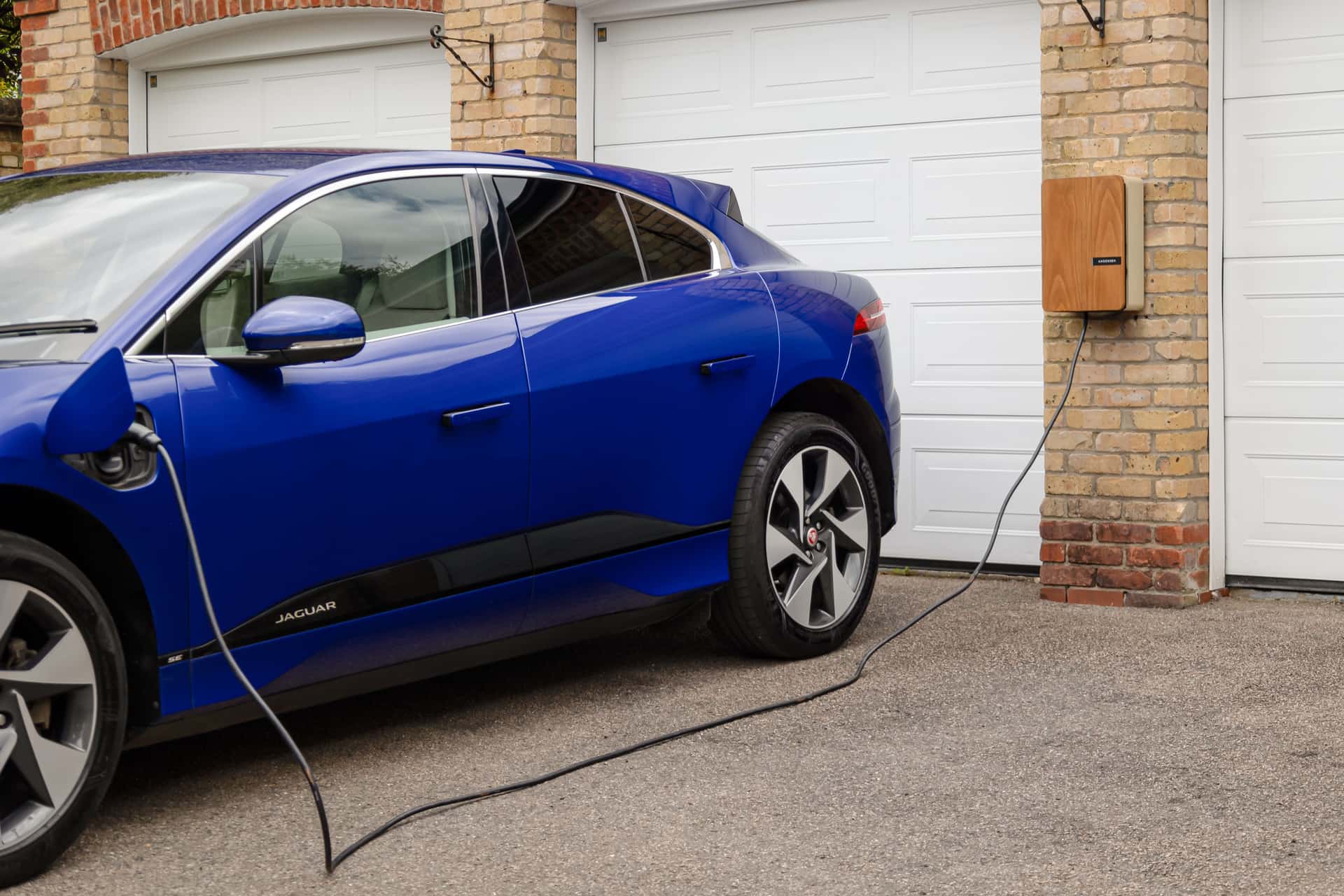
An outdoor 240 V receptacle with a charger plugged in
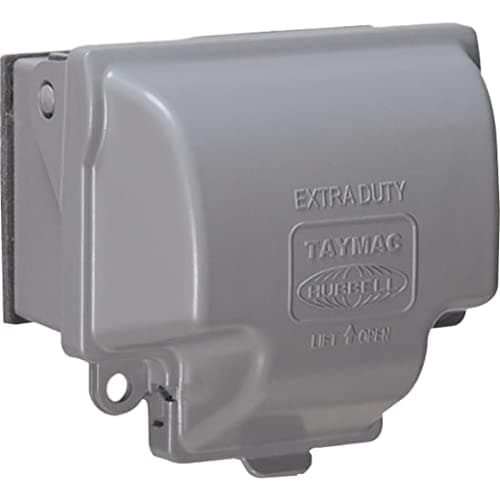
TayMac MX3300 RaynGuard Metal Weatherproof In-Use Cover
Extra-duty, metal, deep enough to close over a 14-50 plug. Check the depth against your specific plug before ordering — some charger plugs are bulkier than the RV plugs these are commonly sized around.
#ad Price as of October 5, 2026. How we make money
Or avoid the whole issue: hardwire the charger. No receptacle means no cover, no GFCI breaker under NEC 625.54, and one fewer path for water. That is the strongest argument for hardwiring and it applies most outdoors.
4. A rain-tight enclosure at every junction
Any junction, splice or disconnect on an outdoor run needs an enclosure rated for the location — commonly NEMA 3R or better, with correct fittings at every entry. A plastic box with a cable pushed through a hole is how an outdoor run becomes a box full of water.
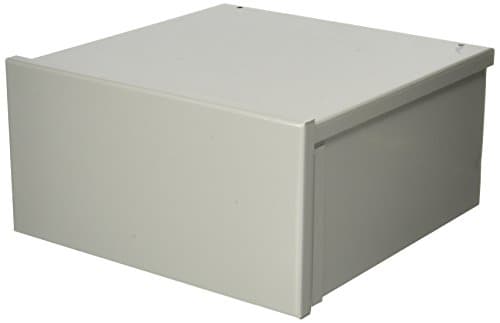
A junction or disconnect on an outdoor run
Hoffman NEMA 3R Enclosure (12 x 12 x 6)
Rain-tight galvanized steel with a screw cover, and enough room to make up 6 AWG conductors properly. Note that NEMA 3R is rain-tight rather than watertight — not for a location that floods — and the rating depends entirely on correct fittings at every entry.
#ad Price as of October 5, 2026. How we make money
5. Correct burial depth
Where the run crosses open ground, the depth depends on the wiring method and whether there is concrete above it. Your electrician determines it; the thing to know as a homeowner is that it is a real requirement with real numbers, not a judgment call, and that a shallow run is both a code violation and a future shovel incident.
What the charger itself needs
Usually nothing extra. Most home chargers are NEMA 4 rated, which covers rain, sleet, snow, windblown dust and hose-directed water. Check your specific unit's manual — and check its clearance requirements, because NEC 110.3(B) makes a listed product's instructions enforceable code.
Where the outdoor environment genuinely changes the charger choice is temperature: published operating ranges vary from -40 degF to -22 degF at the cold end. Best outdoor EV chargers ranks on exactly that.
Where to mount it
- Above the snow line. Obvious until February.
- Under an eave if one exists. Free weather protection and free shade.
- Out of direct afternoon sun if you can. UV is what chalks a white charger gray over years, regardless of its NEMA rating.
- 42 to 48 inches above the finished surface, so the handle is at hand height and the cable loops clear of the ground.
- Clear of the car door's swing, and clear of the panel's required working space under NEC 110.26.
The two cheap parts that matter most outdoors
Not the enclosure. The handle and the cable are what the weather actually degrades, and neither comes with any charger.
What an outdoor install should not skip
A holster above the snow line, a steel hook for the loop, and a dust cap for the contacts on a handle that sits idle all day in road salt.
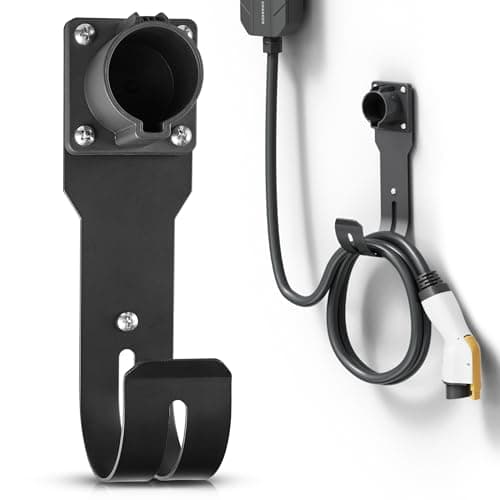
Getting the handle and the cable off the floor
MECMO J1772 Holster Dock and J-Hook
A holster for the handle plus a hook for the loop. The cheapest meaningful upgrade to any charging setup, because a handle that lives on the floor gets stepped on, driven over and eventually fails.
#ad Price as of October 5, 2026. How we make money
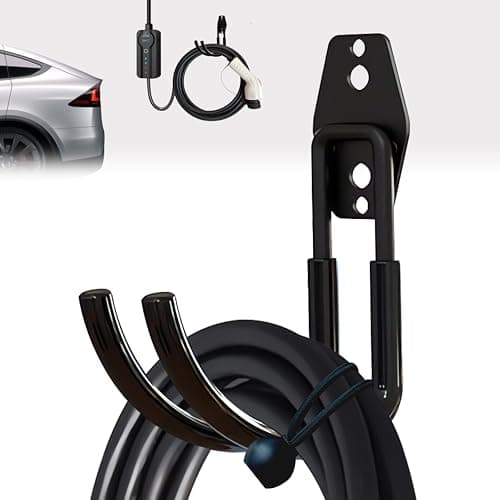
A heavy 25 ft cable that bends plastic hooks
Nexoroot Heavy-Duty Steel EV Cable J-Hook
Steel rather than plastic, which matters with 25 feet of 8 AWG cable hanging on it — the full loop of a premium charger's lead is heavier than people expect.
#ad Price as of October 5, 2026. How we make money
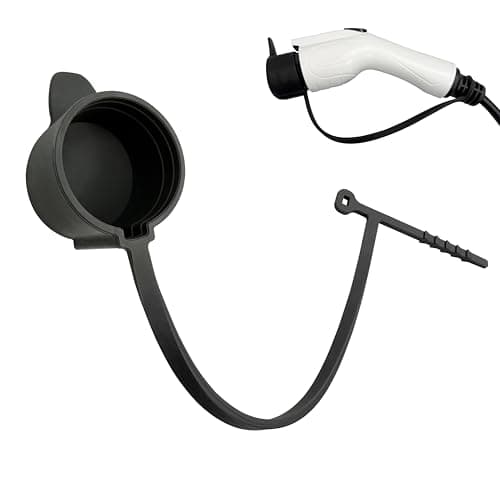
An outdoor handle that sits idle all day
Nexoroot J1772 Waterproof Dust Cap
A silicone cap over the contacts. Trivially cheap, and it addresses the one thing that genuinely degrades an outdoor J1772 handle: grit and salt in the pins.
#ad Price as of October 5, 2026. How we make money
We earn commission on qualifying purchases at no cost to you. Affiliate disclosure.
What to ask your electrician
- “What conductors and conduit, and at what burial depth?” You want THWN-2 in conduit and a depth figure.
- “Where does the junction go, and in what enclosure?” Rain-tight or better, with correct fittings.
- “Hardwired or plug-in, and why for an outdoor location?” An electrician with a view and a reason is a good sign.
- “Is a drip loop in the plan?” It should not need asking, and it often does.
- “Does this charger's manual specify clearances?” It makes clear you know NEC 110.3(B) exists.