The short answer
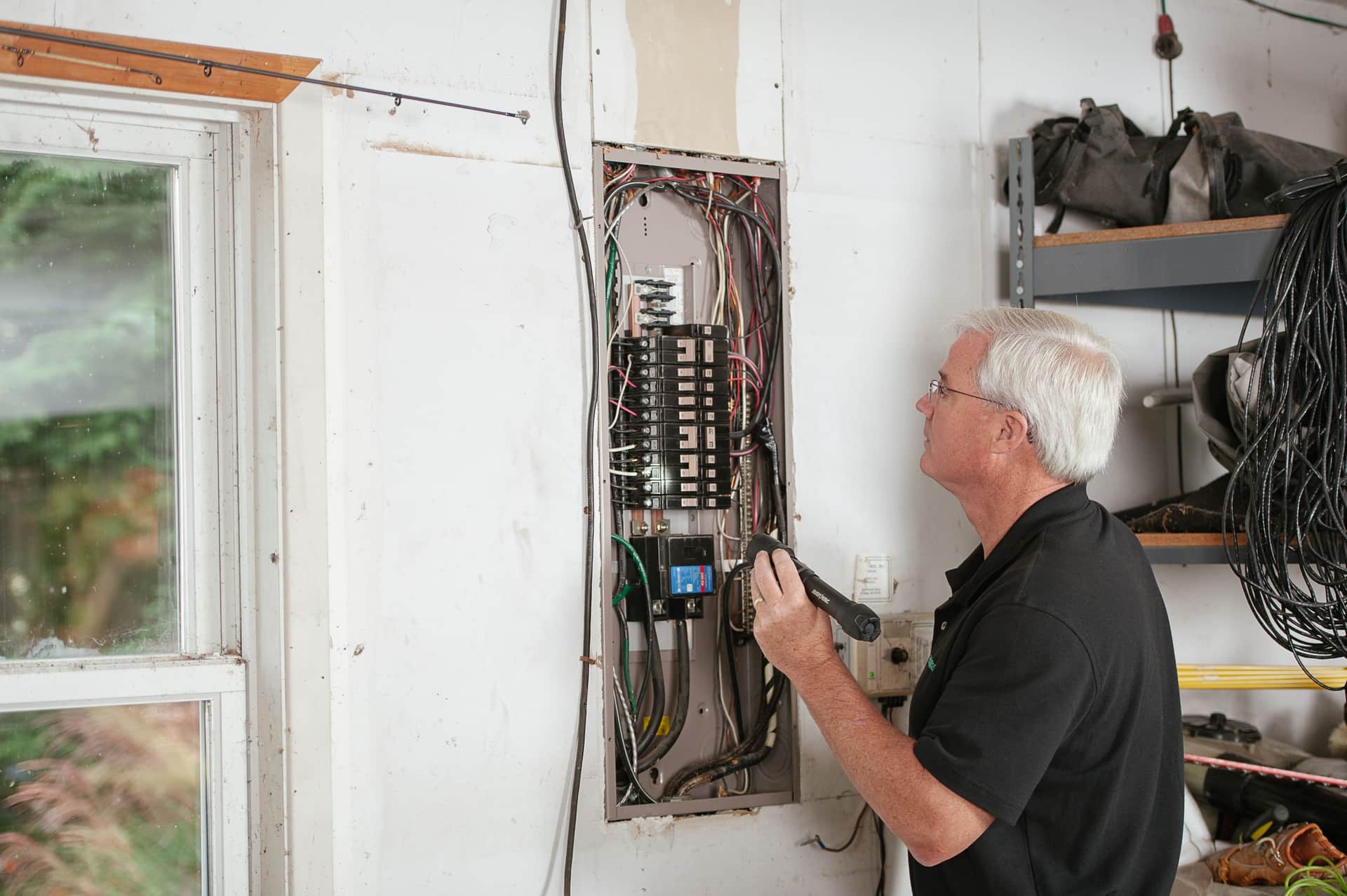
For a detached garage, run a feeder to a small subpanel in the garage rather than one long branch circuit to the charger. The reason is distance: voltage drop grows with length, so a long branch circuit often has to be upsized anyway, and for similar money a feeder plus a subpanel also gives you lights, receptacles and room for a second charger later. A separate structure also brings its own code requirements — notably a disconnecting means where the conductors enter the building under NEC 225.31 and 225.32, and a grounding electrode at the structure.
Why the distance decides everything
An attached-garage install is a short run and the conductor size is decided by ampacity alone. A detached garage is usually 40 to 150 feet from the panel, and at that length a second constraint appears: voltage drop.
Voltage drop is not a code violation at modest levels — the NEC's references to 3% for a branch circuit and 5% overall are recommendations in informational notes, not mandatory rules. But it is a real engineering limit. A charger supplied at a sagging voltage draws more current for the same power, which heats the conductors further, and some chargers fault or derate.
| One-way distance | Ampacity alone says | Voltage drop usually pushes you to |
|---|---|---|
| Under 50 ft | 8 AWG copper | 8 AWG — no change |
| 50-100 ft | 8 AWG copper | 6 AWG |
| 100-150 ft | 8 AWG copper | 6 or 4 AWG |
| Over 150 ft | 8 AWG copper | 4 AWG or a feeder and subpanel |
Once you are pulling 6 or 4 AWG to the garage anyway, the marginal cost of making it a feeder instead of a branch circuit is small — and a feeder is far more useful.
Feeder and subpanel versus one long circuit
| Long branch circuit | Feeder + subpanel | |
|---|---|---|
| Serves the charger | Yes | Yes |
| Serves garage lights and receptacles | No | Yes |
| Room for a second charger later | No | Yes |
| Local disconnect for the charger | Separate item if required | The subpanel main provides it |
| Separate-structure disconnect (NEC 225.31) | Still required | Satisfied by the subpanel |
| Conductors | Upsized for voltage drop | Upsized for voltage drop |
| Cost | Lower in parts, similar in labor | Slightly higher in parts |
| Flexibility afterwards | None | High |
The exception is a garage that genuinely only ever needs the charger, already has its own lighting circuit, and is close enough that 8 AWG covers it. In that case a single branch circuit is the simpler job. Does an EV charger need its own circuit covers the dedicated-circuit rule that applies either way.
What a separate structure adds to the job
- A disconnecting means where the conductors enter the building. NEC 225.31 requires one, and 225.32 requires it at a readily accessible location nearest the point of entrance. A subpanel with a main breaker satisfies this. Does an EV charger need a disconnect covers the related EVSE rule.
- A grounding electrode at the structure. A separate building fed by a feeder needs its own grounding electrode system, bonded per NEC 250.32 — not just an equipment ground brought over from the house.
- An equipment grounding conductor in the feeder. Modern practice runs a four-wire feeder with a separate equipment ground and does not re-bond neutral to ground at the subpanel.
- Burial depth and conduit, if it goes underground. Cover requirements depend on the wiring method and whether the route is under a driveway. This is an area where local amendments are common.
- A permit, and usually a load calculation. Adding a feeder to an outbuilding is inspected work in most jurisdictions. Permits and inspection covers the submission.
The charger itself: pick for the environment
A detached garage is usually unheated, often damp, and sometimes has no reliable Wi-Fi. That changes which charger is the right one.
Chargers suited to an unheated detached garage
Two things matter more here than features: a published low-temperature limit, and whether the charger works when its radio does not. An amperage setting that lives in a physical switch does not care about Wi-Fi.
An outdoor install, and anyone who distrusts apps
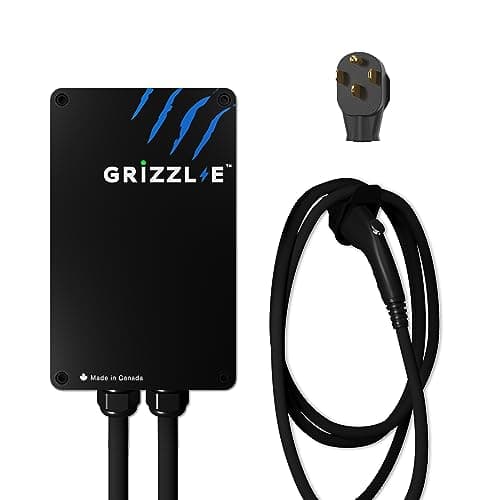
Grizzl-E Classic
A cast-aluminum 40 A charger with dip switches instead of a cloud account. Nothing about it is clever, which is exactly why it is the unit to buy for a driveway post in a cold climate.
Cold climates and 1 A output tuning
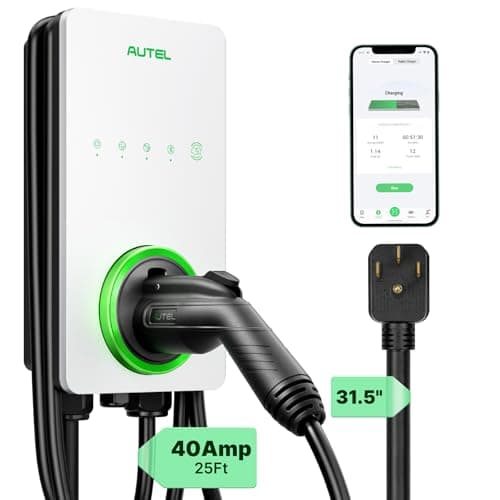
Autel MaxiCharger AC Lite (40 A)
The widest output adjustment range here — 6 A to 40 A in the app — plus an operating range down to -40 degF, which makes it the practical pick for an unheated garage in the north.
A driveway with no wall to mount on
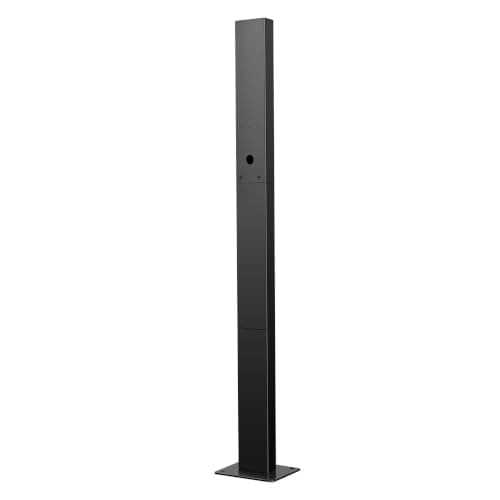
Ufixed Steel EV Charger Pedestal
A heavy-duty steel post for a charger with nowhere to hang. The honest comparison is against the cost of running conduit to the garage wall instead — sometimes the post wins, usually it does not.
#ad Price as of October 10, 2026. How we make money
We earn commission on qualifying purchases at no cost to you. Affiliate disclosure.
- Grizzl-E Classic — cast-aluminum NEMA 4 with an IP67 rating, amperage on physical switches, no cloud dependency. The default choice for a detached building.
- Autel MaxiCharger AC Lite — the widest published operating range of any unit we cover at -40 degF to +131 degF, plus integrated surge protection, which matters at the end of a long feeder.
- A steel pedestal — if there is no suitable wall, or the car parks outside the garage rather than in it. Pedestal vs wall mount covers the choice.
Our best cold weather EV chargers roundup goes further on the temperature question, and best outdoor EV chargers covers fully exposed installs.
Two things worth adding while the walls are open
- Surge protection at the subpanel. A long underground feeder to an outbuilding is more exposed to surges than a circuit inside the house. EV charger surge protection covers panel-mounted devices.
- Spare capacity and a spare pair of slots. If you are sizing a subpanel anyway, size it for a second charger or a shop circuit. The incremental cost now is a fraction of doing it again later.
And get the cost picture straight before you commit: a detached-garage install is reliably one of the more expensive configurations, and EV charger installation cost breaks a quote into its parts so you can see where the money goes. Check rebates for 2026 too — some utility programs cover panel and feeder work, not just the charger.