The short answer
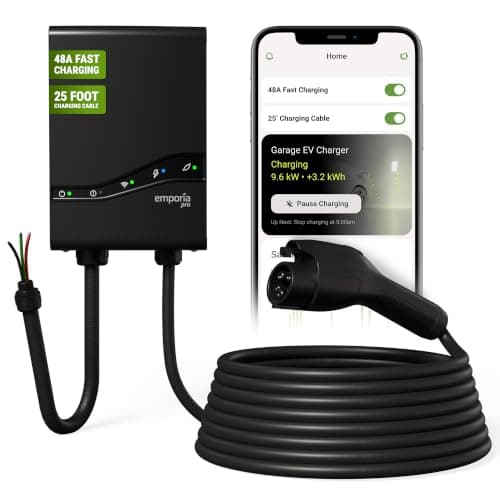
Buy the charger amperage that matches the lower of two numbers: your car's maximum AC onboard charging rate, and the spare capacity in your electrical panel. For most battery EVs that is 48 A on a 60 A breaker. For plug-in hybrids and the entry Tesla Model 3 it is 32 A on a 40 A breaker. Buying above the lower number adds cost and no speed.
Almost every bad home-charging purchase comes from answering this question in the wrong order. People start with the chargers, compare their specifications, pick the strongest one, and only then discover that their car cannot use it or their panel cannot feed it. Start with the two constraints instead and the shortlist builds itself.
Step one: find your car's onboard AC limit
Inside your car there is a piece of hardware called the onboard charger. It converts the AC coming out of your wall into the DC your battery stores, and it has a hard ceiling. That ceiling is your car's maximum AC charging rate, and no wall charger can exceed it.
The figure is in your owner's manual, usually in the charging chapter, expressed either in kilowatts or in amps. Our onboard charger limits table lists every model we cover with the manufacturer source we checked it against. The common values:
| Vehicle group | Max AC | Max amps at 240 V | Charger to buy |
|---|---|---|---|
| Plug-in hybrids (Wrangler 4xe, Grand Cherokee 4xe) | 7.2-7.7 kW | 32 A | 32 A |
| Tesla Model 3 RWD (entry trim) | 7.7 kW | 32 A | 32 A |
| Most battery EVs (Model Y, Ioniq 5, Mach-E, EV6, ID.4, i4, Rivian) | 10.5-11.5 kW | 48 A | 48 A |
| F-150 Lightning Extended Range, Hummer EV 2024+, Equinox EV 19 kW | 19.2 kW | 80 A | 48 A is the realistic answer |
Step two: find what your panel can spare
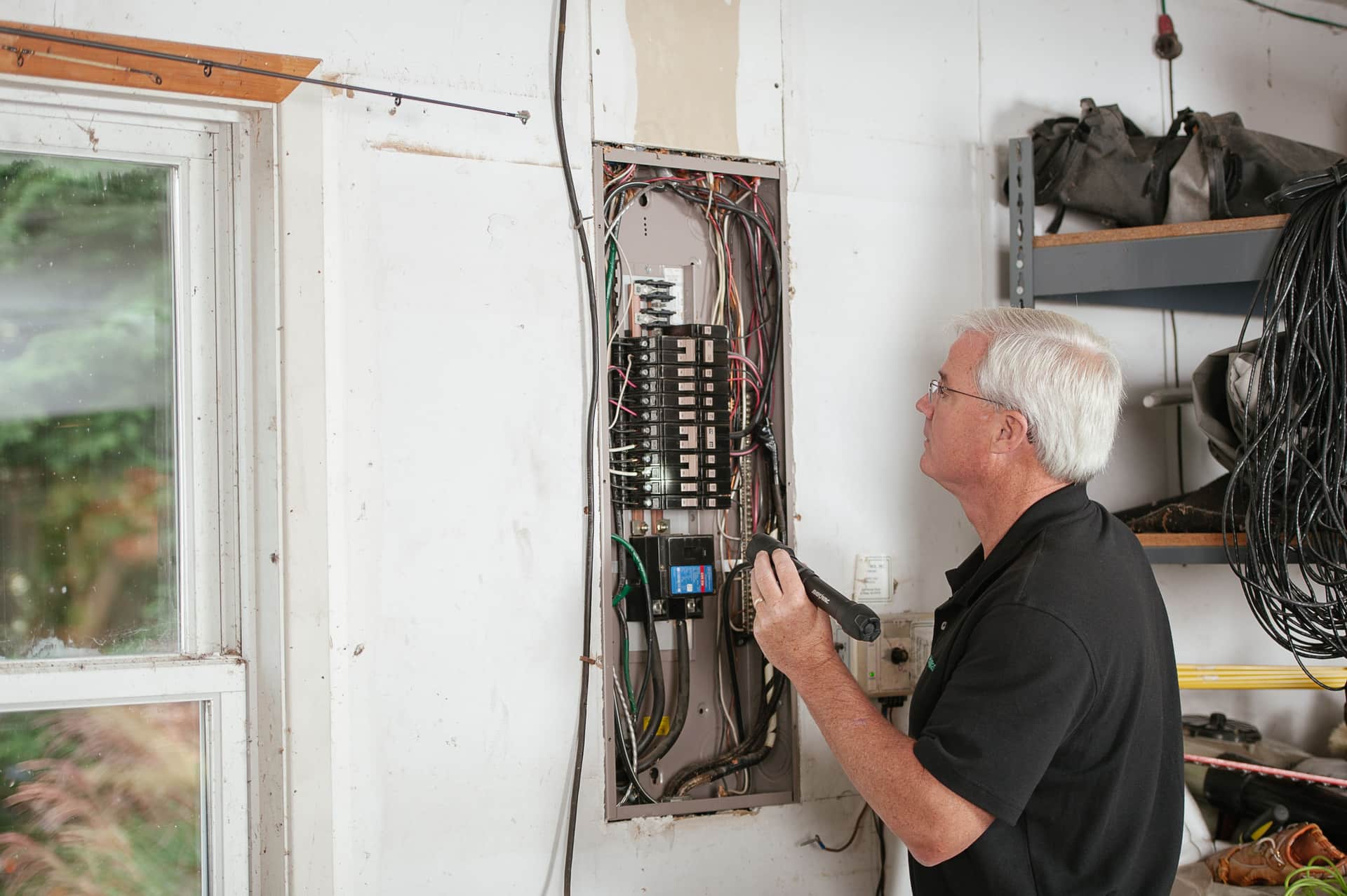
This is a load calculation, and it is arithmetic rather than a judgment. An electrician adds up the fixed loads already on your service — general lighting, range, HVAC, water heater, dryer — applies the demand factors in NEC Article 220, and sees what is left. Our load calculation walkthrough shows the method, and can my electrical panel handle an EV charger covers what to do when the answer is no.
A rough orientation while you wait for a real number: a 200 A service in a house with gas heat, a gas range and a gas water heater very often has room for a 48 A charger. A 100 A service in a house with electric heat and an electric range very often does not. Everything in between needs the calculation.
Step three: take the lower number, then work out the circuit
Two code rules turn your chosen amperage into a breaker and a wire gauge, and both come from NEC Article 625. 625.42 classifies EV charging as a continuous load, which means the circuit is sized as though the car will draw full current indefinitely. 625.41 then requires overcurrent protection rated at not less than 125% of the equipment's maximum load.
| Charger output | Power at 240 V | Breaker (125%) | Copper, 75 degC | NM-B equivalent |
|---|---|---|---|---|
| 16 A | 3.8 kW | 20 A | 12 AWG | 12/2 NM-B |
| 24 A | 5.8 kW | 30 A | 10 AWG | 10/2 NM-B |
| 32 A | 7.7 kW | 40 A | 8 AWG | 8/2 NM-B |
| 40 A | 9.6 kW | 50 A | 8 AWG | 6/2 NM-B |
| 48 A | 11.5 kW | 60 A | 6 AWG | 6/2 NM-B |
| 80 A | 19.2 kW | 100 A | 3 AWG | Not practical — conduit |
What the difference actually feels like
This is the part that is usually missing from amperage advice. The gap between 40 A and 48 A is 1.9 kW. On a car that accepts both, that is about 20% more power — which sounds like a lot and, on an overnight charge, is almost always invisible.
Take a 2026 Tesla Model Y Long Range, EPA-rated at 27.5 kWh per 100 miles. Say you drove 40 miles today and plug in at 10pm.
40 miles x 0.275 kWh/mile = 11.0 kWh needed; at 11.5 kW x 0.9 = 1h 04m; at 9.6 kW x 0.9 = 1h 16m
A 12-minute difference, at 2am, while you are asleep
EPA efficiency figure from the US DOE / EPA fueleconomy.gov service, 2026 Model Y Long Range AWD, checked October 5, 2026. The 0.9 allows for AC-to-DC conversion losses.
The 48 A charger earns its keep in a specific situation: a big, inefficient vehicle, driven hard, that needs a near-full charge every night. EPA's own figure for a max-pack Rivian R1S is 15 hours at 240 V. That household should take every amp available. A Bolt EUV, at EPA's 7.5 hours, should not bother.
When to deliberately buy less
- Your car tops out at 32 A. Every plug-in hybrid and the entry Model 3 RWD. A 48 A charger delivers exactly the same charge rate and requires a bigger breaker and thicker wire to do it.
- Your panel is tight. Dropping from 48 A to 32 A changes the breaker from 60 A to 40 A and the conductor from 6 AWG to 8 AWG, which can be the difference between a straightforward job and a service upgrade.
- The run is long. 6 AWG copper over 80 feet costs real money and is genuinely hard to pull. 8 AWG is a different job.
- You drive under 40 miles a day. At that mileage a 32 A charger replaces a day's driving in under two hours. The extra amps buy nothing you will ever notice.
Accessories that make the amperage decision work
What a correctly sized install actually needs
The breaker and the conductors are specified by your amperage. These are the parts that are chosen rather than calculated, and the two places people economize and regret it.
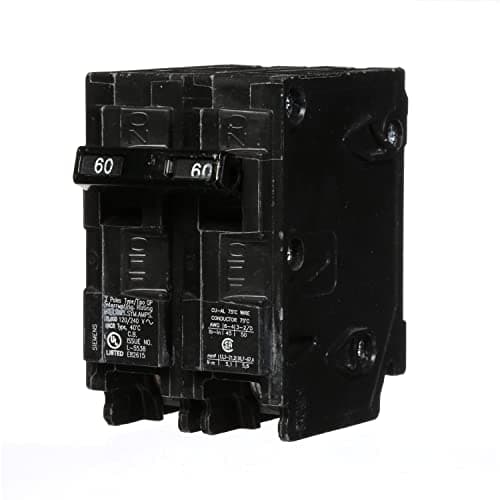
A 48 A charger in a Siemens or Murray panel
Siemens Q260 60 A Double-Pole Breaker
The standard 60 A two-pole breaker for a 48 A hardwired charger — 48 A x 125% = 60 A, exactly as NEC 625.41 requires.
#ad Price as of October 5, 2026. How we make money
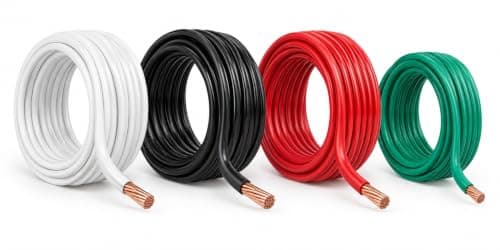
A 60 A circuit for a 48 A charger
6 AWG THHN Copper Wire Set with 8 AWG Ground (50 ft)
6 AWG copper carries 65 A at 75 degC, which is what a 60 A breaker and a 48 A charger require. Buying the conductors as a matched set with the correctly sized equipment ground saves a trip.
#ad Price as of October 5, 2026. How we make money
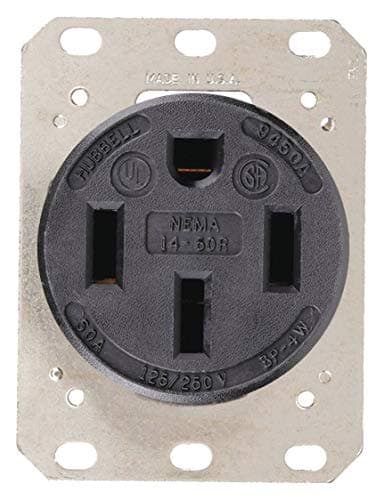
The one part not to save money on
Hubbell HBL9450A NEMA 14-50 Receptacle (industrial)
An industrial-grade 14-50 receptacle. An EV draws 40 A continuously for hours, which is a duty cycle the cheap builder-grade receptacles were never designed for — this is the part that stops a plug-in install from browning its own contacts.
#ad Price as of October 5, 2026. How we make money

Knowing what your panel is actually doing
Emporia Vue 3 Home Energy Monitor
The cheapest way to replace a load calculation's assumptions with measurements. If your panel is marginal, a month of real data from this tells you whether a 48 A charger fits better than any rule of thumb will.
#ad Price as of October 5, 2026. How we make money
We earn commission on qualifying purchases at no cost to you. Affiliate disclosure.