The short answer
The Leviton 32 A hardwired charger is the best EV charger for a plug-in hybrid: 32 A / 7.6 kW is the exact ceiling of the fastest PHEVs sold in the US, it runs on a 40 A circuit with 8 AWG copper rather than a 60 A one, and that cheaper circuit is where the real saving is. The Lectron 40 A cordset is the budget answer and travels; the Grizzl-E Classic is the one for an outdoor wall. A 48 A charger charges a PHEV no faster than a 32 A charger — the car, not the charger, is the limit.
Quick picks
Ranked by fit for the stated use case first, then price, then warranty and support. Tap any row to jump to the full assessment. Commission rate plays no part in the order.
| # | Product | Best for | Score | Price |
|---|---|---|---|---|
| 1 | 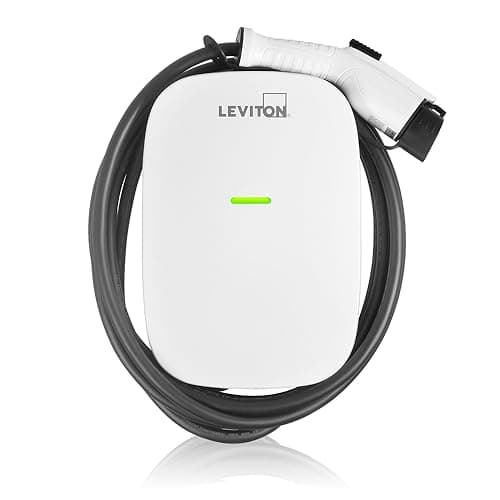 Leviton Level 2 EV Charger (32 A, hardwired)A 32 A hardwired unit — the right size for a Wrangler 4xe, a Model 3 RWD, or any house whose load calculation will not support more. | A 40 A circuit, a PHEV, or a 100 A panel | 8.0 | |
| 2 | 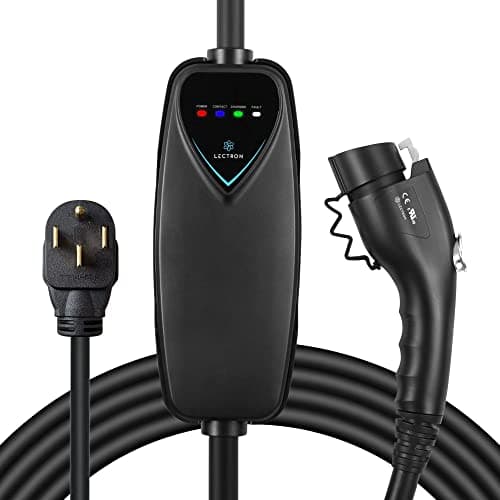 Lectron Level 2 EV Charger (40 A, NEMA 14-50)A 40 A ETL-certified portable charger for roughly half what the smart units cost. | The cheapest charger worth owning | 7.9 | |
| 3 | 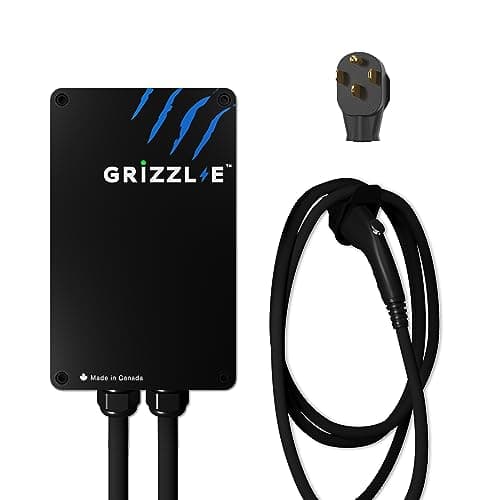 Grizzl-E ClassicA cast-aluminum 40 A charger with dip switches instead of a cloud account. | An outdoor install, and anyone who distrusts apps | 8.5 | $299.99View on Amazon $399.00 list · 25% off |
| 4 | 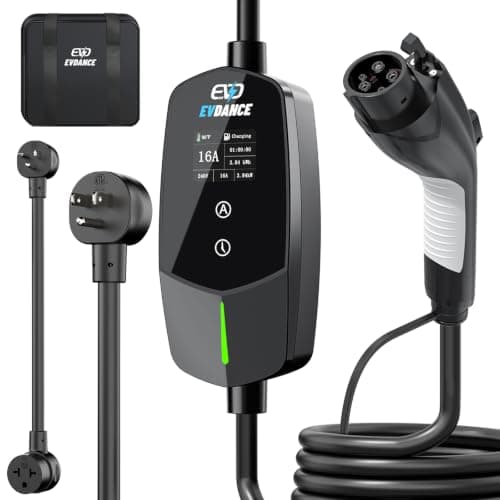 EVDANCE Level 1 & 2 Portable EV Charger (16 A)A dual-voltage 16 A cordset. | A renter with access to a 240 V outlet | 7.6 |
Why a PHEV changes the answer completely
A Level 2 charger does not charge your car. It supplies AC power to the charger built into the car, and that onboard unit sets the maximum. On plug-in hybrids those onboard chargers are small, because the battery is small and there is a petrol engine for the rest of the journey.
| Vehicle | Max AC power | Max AC current | EPA hours at 240 V |
|---|---|---|---|
| Jeep Wrangler 4xe | 7.7 kW | 32 A | 2.4 h |
| Jeep Grand Cherokee 4xe | 7.2 kW | 32 A | Per EPA trim data |
min(48 A charger, 32 A car) = 32 A; 240 V x 32 A
7.7 kW either way
The lower of the two limits always wins. The extra 16 A of charger capacity is unreachable, and it costs a 60 A breaker and 6 AWG conductor to install.
Look up your car before you buy anything
PHEV onboard chargers range from about 3.3 kW to 7.7 kW, and the spread matters: a 3.6 kW car cannot use even a 24 A charger fully. Our onboard charger limits by model page lists what each car accepts, with each figure bound to its source, and the PHEV home charging guide covers the behavior — including the fact that a PHEV's small battery is often full in two to three hours whatever you install.
The picks
1. Leviton 32 A hardwired — the right-sized unit
A 40 A circuit, a PHEV, or a 100 A panel
Leviton Level 2 EV Charger (32 A, hardwired)
32 A / 7.6 kW at 208/240 V on a 40 A two-pole breaker, hardwired, indoor or outdoor, from the brand most electricians already stock.
#ad Price as of October 28, 2026. How we make money
This matches the fastest PHEV sold exactly, and the 40 A circuit behind it is cheaper to install than anything bigger. The cable is 18 ft, which is the thing to check — measure your run before you commit, because it is shorter than most. Full detail in the Leviton review.
2. Lectron 40 A cordset — the cheapest thing worth owning
The cheapest charger worth owning
Lectron Level 2 EV Charger (40 A, NEMA 14-50)
40 A / 9.6 kW, ETL certified, plugs into a NEMA 14-50 and costs a fraction of a hardwired install.
#ad Price as of October 28, 2026. How we make money
If a 14-50 outlet already exists, this is the whole job done for very little money. The 40 A rating is more than your PHEV can use, which is fine — it just means you are not paying for a hardwired install. The receptacle needs GFCI protection under NEC 625.54, and it should be on its own circuit.
3. Grizzl-E Classic — the outdoor choice, dialled down
An outdoor install, and anyone who distrusts apps
Grizzl-E Classic
Cast-aluminum NEMA 4 body, IP67, with switch-set output at 16, 24, 32 or 40 A — so it can be set to exactly what the car accepts.
The switchable amperage is genuinely useful on a PHEV: set it to 32 A and the circuit can be smaller, with no app and nothing to configure. It is the unit to buy if the charger lives on an exposed wall or a driveway post.
4. EVDANCE 16 A portable — for a short commute or a rental
A renter with access to a 240 V outlet
EVDANCE Level 1 & 2 Portable EV Charger (16 A)
16 A on 120 or 240 V — about 3.8 kW from a 240 V outlet, with nothing mounted and no install.
#ad Price as of October 28, 2026. How we make money
For many PHEV owners this is genuinely enough. A 10-15 kWh battery at 3.8 kW is full in about four hours, and a 16 A draw does not need a new circuit in most garages. It is also the only pick here that works in a rental — see portable Level 2 charging for renters.
What not to buy for a plug-in hybrid
- A 48 A charger. It cannot deliver more than your car accepts, and it needs the most expensive circuit. 40 A vs 48 A has the arithmetic for cars that can use it.
- A charger chosen for its app. Your PHEV almost certainly schedules its own charging. If it does not, the adjustable portable unit has a built-in timer for less money than a smart wall unit.
- A panel upgrade. A 32 A charger on a 40 A circuit fits in far more panels than a 48 A one — run the load calculation before anyone quotes you for service work.
How we picked
Every unit here is currently purchasable, carries a real UL or ETL certification to the relevant standard, and comes from a brand with an identifiable North American support path. We verified each one's published specifications against the manufacturer's own documentation on the date shown at the top of this page. We verify specifications; we do not bench-test hardware, and our methodology says so in plain terms. Ranking order is fit for the stated use case first, then price, then warranty and support — commission rate plays no part in it. On this page the ranking metric is fit to the car's published onboard limit and the cost of the circuit behind the charger — not output, which is capacity a plug-in hybrid cannot use.