The short answer
A load calculation adds your dwelling's connected loads, applies the demand factors in NEC Article 220 (because nothing runs everything at once), and produces a demand figure in amps. Subtract it from your service rating and the remainder is the continuous load an EV charger may add. Because NEC 625.42 makes EV charging continuous, the charger enters the calculation at 125% of its output.
You are not going to do this yourself, and you should not need to. But understanding the shape of it means you can read the answer you are given, ask a useful follow-up question, and recognize when a quote has skipped the step entirely.
The two methods
Article 220 offers a standard method and an optional method for dwellings. They produce different numbers, and for a house with a lot of electric appliances the optional method is usually more generous — because it applies a single demand factor across the general loads rather than itemizing each one.
The practical consequence worth knowing: if a standard calculation says your service is full, ask whether the optional method has been run. It frequently finds headroom the standard method does not, and running it costs the electrician ten minutes.
What goes in
| Input | Where it comes from | Note |
|---|---|---|
| General lighting and receptacle load | Square footage x a volt-amps-per-square-foot figure | Scales with house size |
| Small-appliance and laundry branch circuits | A fixed allowance per circuit | Standard figures, not measured |
| Range / oven | Nameplate rating, with a demand factor | Gas instead removes this entirely |
| Clothes dryer | Nameplate or a minimum allowance | Electric only |
| Water heater | Nameplate rating | A heat-pump unit is far smaller than resistance |
| Heating or cooling, whichever is larger | Nameplate rating | Only the larger of the two counts |
| Other fixed appliances | Nameplate, with a demand factor above a threshold | Dishwasher, disposal, hot tub, pool pump |
| EV charger | 125% of continuous output | NEC 625.41 and 625.42 |
Why demand factors matter more than anything else
Add up every nameplate in your house and the total will comfortably exceed your service rating. That is not a problem — it is why demand factors exist. The code recognizes that you do not run the oven, the dryer, the air conditioning, the water heater and the dishwasher simultaneously, and it discounts the total accordingly.
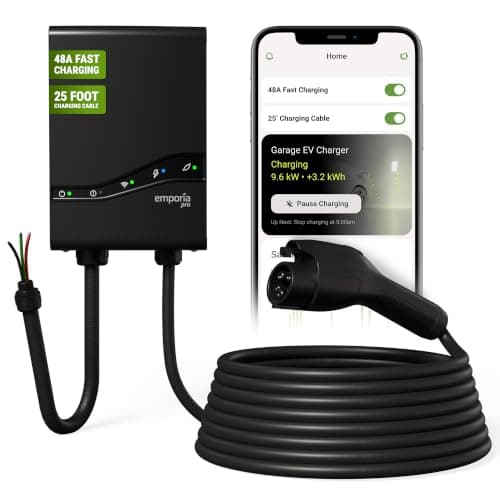
Except for the EV charger. The charger goes in at 125% with no demand factor, because it genuinely does run flat out for hours. That is the whole reason this one load gets special treatment, and it is why a 48 A charger weighs so heavily on a marginal service.
Reading the answer you are given
A good answer looks like: "Your calculated demand is X amps on a 200 amp service, leaving Y amps. A 48 A charger needs 60 A of that, so it fits / does not fit." Three things to check:
- Was a calculation actually done? "You'll need a 200 amp service for that" with no numbers behind it is a guess, and sometimes a sales position.
- Which method? If the standard method says no, ask for the optional method.
- Was load management considered? If the answer is "you need an upgrade" and nobody mentioned a managed charger, the cheapest option was skipped.
Measured data beats estimated data
A load calculation is deliberately conservative — it is built from nameplates and statistical factors, not from your house. Real measured consumption is almost always lower. If your calculation lands marginal, a month of logged data is the cheapest way to turn an estimate into a fact, and it is information your electrician can use.
Knowing what your panel is actually doing
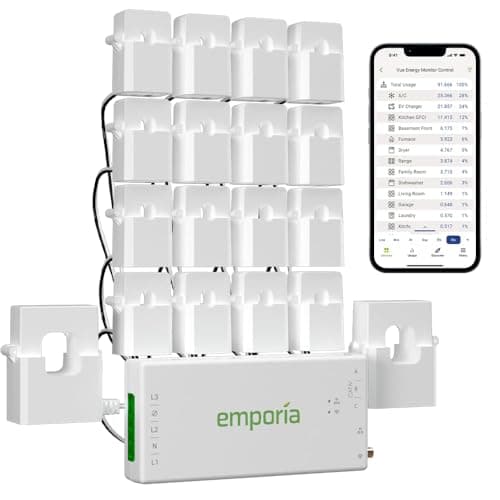
Emporia Vue 3 Home Energy Monitor
Current transformers on the service conductors, logging whole-home and per-circuit draw. The reason to own one before the charger rather than after is that it can change which charger you buy.
#ad Price as of October 5, 2026. How we make money
Note the limitation honestly: measured data does not override a code calculation for permitting purposes. The calculation is what the inspector cares about. What measurement gives you is confidence, an argument for the optional method, and a realistic view of whether a managed charger will spend its life throttled.
What this changes about your charger choice
If the calculation comes back with plenty of headroom, buy on cable length and features. If it comes back tight, buy on adjustability and load management — those two properties are worth more on a tight service than any app feature. Our chargers for 100 amp panels roundup is built entirely around this.