Skip to content
EV & Charger

Our picks

Best EV Chargers for a 100 Amp Panel

On a tight service, two specifications matter and the rest is noise: how low the charger will go, and whether it can watch your panel and throttle itself.

By Mike M.Published Last verified

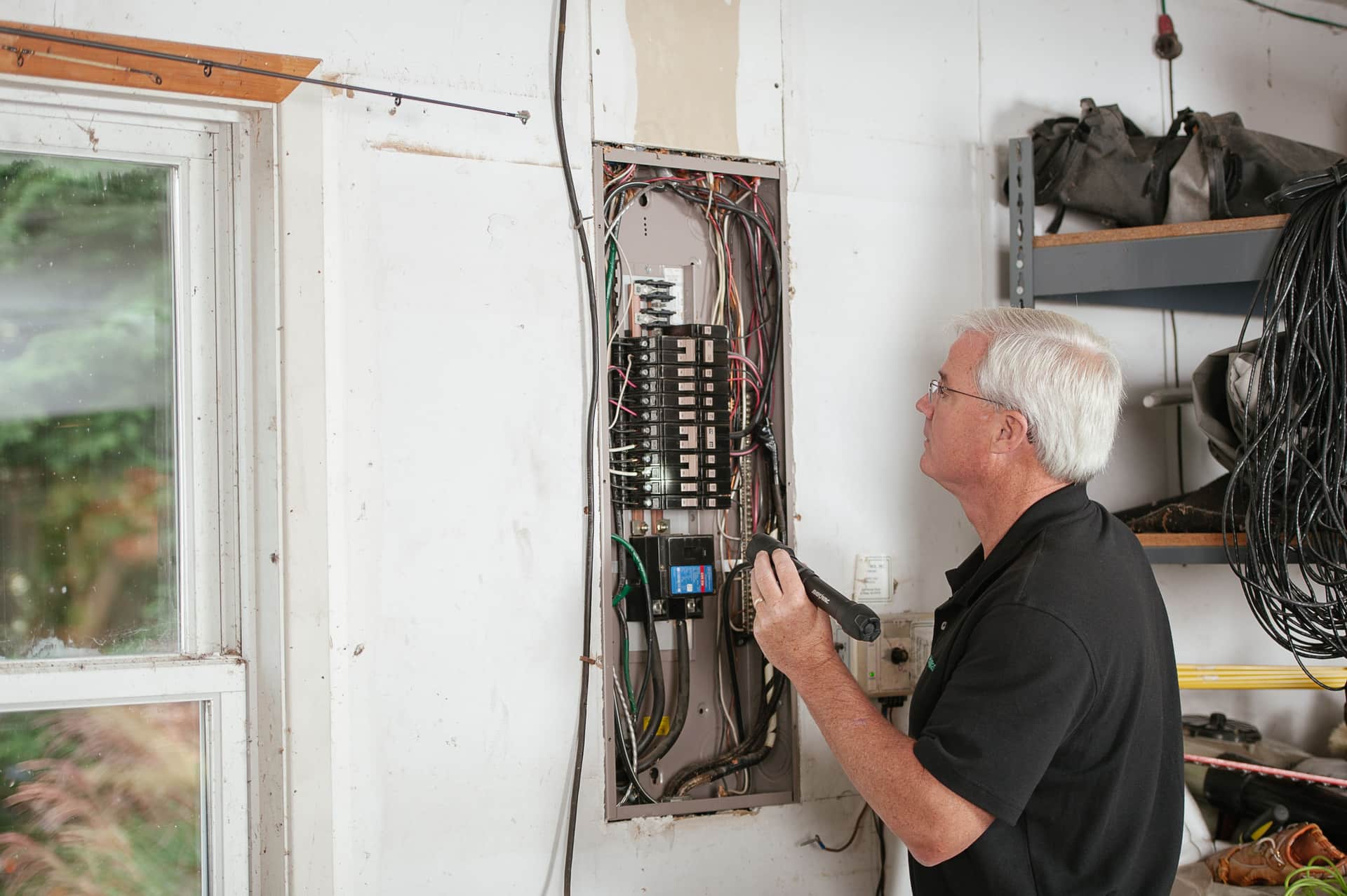
An electrician inspecting a residential electrical panel and breaker box

The short answer

On a 100 amp service, buy for adjustability and load management, not for maximum output. The Emporia Pro is the pick because its PowerSmart load management reads whole-home draw through an included energy monitor and throttles rather than tripping. The ChargePoint Home Flex is the alternative, because it steps down to 16 A — a figure no load calculation will object to.

Every other roundup on this site ranks by charge rate. This one deliberately does not. On a service with no headroom, a 48 A charger is not a better product — it is a product you cannot install. What you want is a charger that fits the capacity you have and can use more later if that changes.

Quick picks

Ranked by fit for the stated use case first, then price, then warranty and support. Tap any row to jump to the full assessment. Commission rate plays no part in the order.

#ProductBest forScorePrice
1
Emporia Pro Level 2 EV Charger
Emporia Pro Level 2 EV ChargerThe best-balanced 48 A charger for a typical US house: full 11.5 kW hardwired, and the only unit at this price that ships with a whole-home energy monitor so its load management is reading your actual panel rather than guessing.
Most households, and anyone with a tight panel9.0
2
ChargePoint Home Flex (hardwired, 50 A)
ChargePoint Home Flex (hardwired, 50 A)The most adjustable charger on this page: output steps through 16, 24, 32, 40, 48 and 50 A in the app, so one unit fits almost any panel and can be turned up later if you upgrade the service.
A house whose panel headroom is uncertain8.9
3
Autel MaxiCharger AC Lite (40 A)
Autel MaxiCharger AC Lite (40 A)The widest output adjustment range here — 6 A to 40 A in the app — plus an operating range down to -40 degF, which makes it the practical pick for an unheated garage in the north.
Cold climates and 1 A output tuning8.6
4
Leviton Level 2 EV Charger (32 A, hardwired)
Leviton Level 2 EV Charger (32 A, hardwired)A 32 A hardwired unit — the right size for a Wrangler 4xe, a Model 3 RWD, or any house whose load calculation will not support more.
A 40 A circuit, a PHEV, or a 100 A panel8.0
5
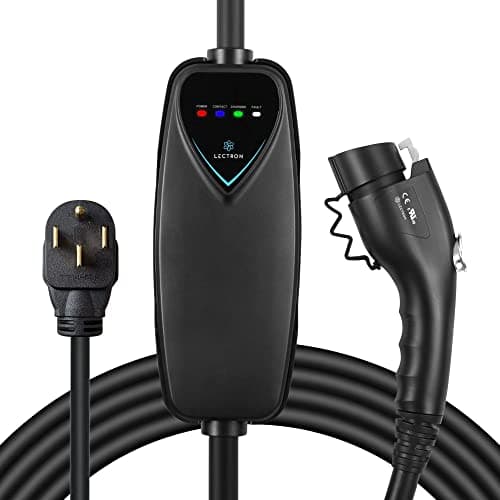
Lectron Level 2 EV Charger (40 A, NEMA 14-50)
Lectron Level 2 EV Charger (40 A, NEMA 14-50)A 40 A ETL-certified portable charger for roughly half what the smart units cost.
The cheapest charger worth owning7.9

What we ranked on

  • Lowest settable output. A charger that goes to 16 A fits a service that nothing else will.
  • Whole-home load management. The feature that lets a marginal load calculation pass, per NEC 625.42's allowance for limiting an installation's rating through controls.
  • Granularity of adjustment. 1 A steps beat fixed presets when a calculation lands at an awkward number.
  • Headroom to grow. If you later upgrade the service, can you turn the charger up instead of replacing it?
  • Install cost at the low setting. A 32 A charger needs 8 AWG and a 40 A breaker, which is a materially cheaper circuit than 6 AWG and 60 A.

What we deliberately did not weight: maximum output, app polish, and cable length. All three matter on a normal service and none of them is the binding constraint here.

Why load management is the whole game

A load calculation has to assume the worst: everything on, car charging flat out. Load management breaks that assumption. The charger watches total household consumption and backs off when the oven, the dryer and the air conditioning are competing — then goes to full output at midnight when they are not.

Over a full night you lose very little total energy, because the throttling happens during the two or three hours the house is actually busy. What you gain is an install that passes, on a service that would otherwise have needed utility work. Our load calculation guide covers the code basis.

The circuit each of these actually needs

Circuit requirements at each useful setting
SettingPowerBreakerCopper (conduit)Load calc impact
16 A3.8 kW20 A12 AWGMinimal
24 A5.8 kW30 A10 AWGSmall
32 A7.7 kW40 A8 AWGModerate
40 A9.6 kW50 A8 AWGSignificant
48 A11.5 kW60 A6 AWGLarge
Breaker sizes per NEC 625.41 (125% of continuous load). Conductor sizes are the 75 degC copper column of NEC Table 310.16 for conduit installations; NM-B runs are limited to the 60 degC column by NEC 334.80 — see our wire size guide.

Notice the bottom two rows. The jump from 40 A to 48 A is where the conductor changes and the install cost steps up. On a tight service you are rarely choosing between those two anyway — but it is worth knowing that the saving from dropping to 32 A is bigger than it looks, because 8 AWG is so much easier to pull than 6 AWG.

What to do before you buy any of these

  1. Get an Article 220 load calculation. Ask for the optional method as well as the standard one — it frequently finds headroom.
  2. Ask explicitly whether a load-managed charger changes the answer. If a quote proposes a service upgrade and nobody mentioned this, the cheapest option was skipped.
  3. Check your car's ceiling. If it is a plug-in hybrid at 32 A, the whole problem may already be solved.
  4. Consider measuring for a month. A monitor turns a conservative estimate into a fact, and can change which charger you buy.
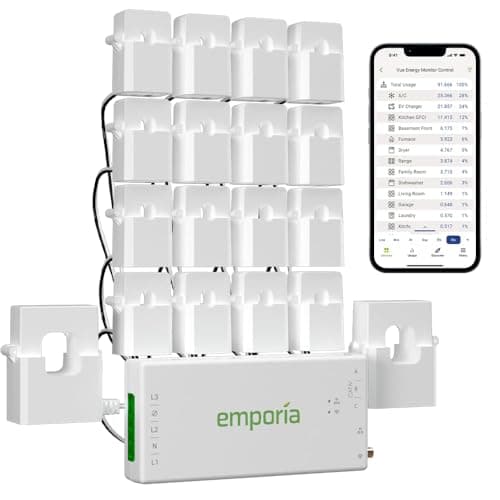
Emporia Vue 3 Home Energy Monitor

Knowing what your panel is actually doing

Emporia Vue 3 Home Energy Monitor

The monitor on its own, for the house that wants data before committing to a charger. It is also the component that makes Emporia's load management read your real panel.

$199.99View on Amazon

#ad Price as of October 5, 2026. How we make money

How we picked

Every unit here is currently purchasable, carries a real UL or ETL listing to an EVSE standard, and comes from a brand with an identifiable North American support path. We verified each one's published specifications against the manufacturer's own documentation on the date shown at the top of this page. We do not bench-test chargers, and our methodology says so in plain terms. Ranking order is fit for this specific use case first — commission rate plays no part in it.

In detail

Every pick, assessed

Top pick · Most households, and anyone with a tight panel

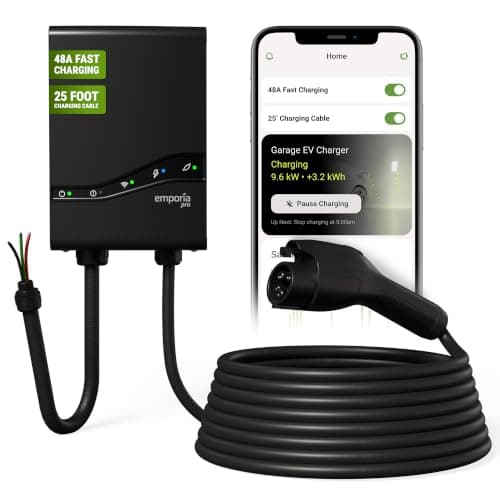
Emporia Pro Level 2 EV Charger

Emporia Pro Level 2 EV Charger charger

9.0/ 10

$599.00View on Amazon

#ad Price as of October 5, 2026. How we make money

Our verdict

The best-balanced 48 A charger for a typical US house: full 11.5 kW hardwired, and the only unit at this price that ships with a whole-home energy monitor so its load management is reading your actual panel rather than guessing.

What works

  • Hardwires at the full 48 A for 11.5 kW — matches the onboard limit of most current BEVs exactly
  • PowerSmart load management reads whole-home draw through the included Vue monitor, so it can throttle instead of tripping a breaker
  • 25 ft cable reaches across a two-car garage without an extension
  • NEMA 4 enclosure and a real UL listing, not just an ETL mark

What doesn't

  • The energy monitor has to be installed in the panel to be useful, which means the electrician is in there longer
  • App-dependent for scheduling — there is no physical timer
  • At 40 A on the plug-in version you are paying for 48 A of hardware you cannot use
Emporia Pro Level 2 EV Charger specifications
Max output48 A / 11.5 kW hardwired; 40 A / 9.6 kW on a NEMA 14-50 plug
Breaker60 A dedicated 2-pole for 48 A; 50 A for 40 A
Cable25 ft
ConnectorJ1772 or NACS, chosen at purchase
EnclosureNEMA 4, indoor or outdoor
CertificationUL certified, ENERGY STAR
Warranty3 years
Load managementPowerSmart, with the Vue home energy monitor included

Specifications checked against Emporia Pro sell sheet. We verify published specifications; we do not bench-test hardware — how we assess products.

How it scored

Fit to a typical panel
9.4
Charge rate
9.0
Cable and reach
9.0
Smart features
9.2
Weather and build
8.6
Warranty and support
8.4
Pick 2 · A house whose panel headroom is uncertain

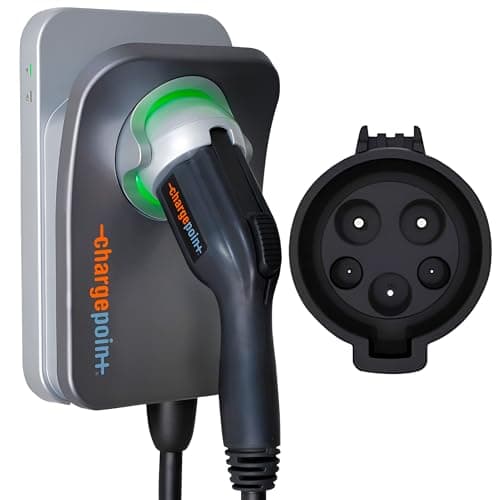
ChargePoint Home Flex (hardwired, 50 A)

ChargePoint Home Flex (hardwired, 50 A) charger

8.9/ 10

$549.00View on Amazon

#ad Price as of October 5, 2026. How we make money

Our verdict

The most adjustable charger on this page: output steps through 16, 24, 32, 40, 48 and 50 A in the app, so one unit fits almost any panel and can be turned up later if you upgrade the service.

What works

  • Six selectable output levels mean one unit fits a 100 A panel today and a 200 A panel after an upgrade
  • 12 kW ceiling is the highest here, which matters only for the handful of cars that accept more than 11.5 kW
  • Mature app with Alexa and Google Home support, and the largest installed base of any home charger in the US
  • Available in both J1772 and NACS, hardwired or plug-in

What doesn't

  • 23 ft cable is the shortest of the premium units — measure before you commit to a mounting spot
  • The adjustable amperage lives in the app, so a phone and a working account stand between you and a setting change
  • Costs more than units that charge at an identical real-world rate
ChargePoint Home Flex (hardwired, 50 A) specifications
Max output50 A / 12 kW (240 V x 50 A)
Adjustable output16, 24, 32, 40, 48, 50 A, set in the app
BreakerDedicated 2-pole rated 125% of the output you set — a 50 A breaker for 40 A output
Cable23 ft
ConnectorJ1772 (a NACS version is sold separately)
InstallHardwired, or NEMA 6-50 / NEMA 14-50 input cord on the plug-in version
Weight13.8 lb

Specifications checked against ChargePoint Home Flex datasheet. We verify published specifications; we do not bench-test hardware — how we assess products.

How it scored

Fit to a typical panel
9.6
Charge rate
9.3
Cable and reach
7.8
Smart features
9.0
Weather and build
8.8
Warranty and support
8.8
Pick 3 · Cold climates and 1 A output tuning

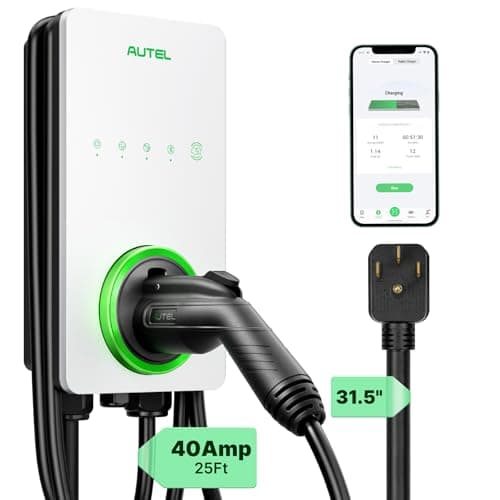
Autel MaxiCharger AC Lite (40 A)

Autel MaxiCharger AC Lite (40 A) charger

8.6/ 10

$470.00View on Amazon

#ad Price as of October 5, 2026. How we make money

Our verdict

The widest output adjustment range here — 6 A to 40 A in the app — plus an operating range down to -40 degF, which makes it the practical pick for an unheated garage in the north.

What works

  • 6-40 A in 1 A steps is the finest adjustment of any unit here — genuinely useful when a load calculation lands at 37 A
  • -40 degF to +131 degF rated, which is a real differentiator in Minnesota or Maine
  • Integrated surge protection, which most units leave to a panel-mounted device
  • 25 ft cable

What doesn't

  • 40 A ceiling
  • Bluetooth, Wi-Fi and Ethernet is more connectivity than a home needs and more surface to go wrong
  • Autel's North American consumer support is newer than ChargePoint's or Tesla's
Autel MaxiCharger AC Lite (40 A) specifications
Max output40 A / 9.6 kW (240 V x 40 A)
Adjustable output6-40 A via the app
Breaker50 A dedicated 2-pole
Cable25 ft, J1772
EnclosureNEMA 4
Operating temperature-40 degF to +131 degF
Protection20 mA CCID ground-fault detection, integrated surge protection
Warranty36 months

Specifications checked against ENERGY STAR certified EVSE listing. We verify published specifications; we do not bench-test hardware — how we assess products.

How it scored

Cold-weather fitness
9.8
Charge rate
7.6
Output adjustability
9.8
Cable and reach
9.2
Weather and build
9.0
Value
8.6
Pick 4 · A 40 A circuit, a PHEV, or a 100 A panel

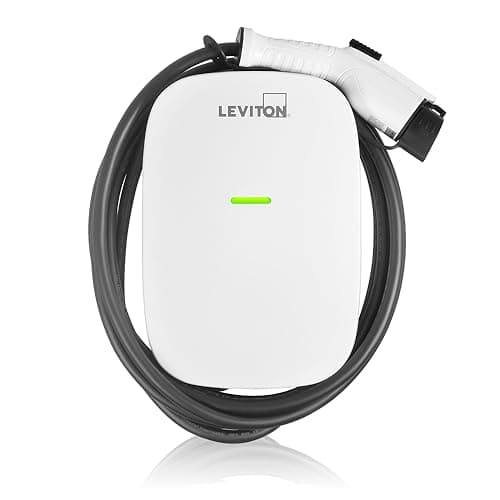
Leviton Level 2 EV Charger (32 A, hardwired)

Leviton Level 2 EV Charger (32 A, hardwired) charger

8.0/ 10

$649.00View on Amazon

#ad Price as of October 5, 2026. How we make money

Our verdict

A 32 A hardwired unit — the right size for a Wrangler 4xe, a Model 3 RWD, or any house whose load calculation will not support more.

What works

  • A 40 A circuit needs only 8 AWG copper, which is materially cheaper and easier to pull than 6 AWG
  • Matches the onboard ceiling of every PHEV and the entry Model 3 exactly
  • Hardwired, so no GFCI receptacle requirement and no nuisance tripping

What doesn't

  • 32 A caps a big BEV at about 7.6 kW
  • 18 ft cable
  • If you later buy a 48 A car you are replacing the charger, not reprogramming it
Leviton Level 2 EV Charger (32 A, hardwired) specifications
Max output32 A / 7.6 kW at 208/240 VAC
Breaker40 A dedicated 2-pole
Cable18 ft
ConnectorJ1772
InstallHardwired, indoor or outdoor

Specifications checked against Leviton EV charging product specifications. We verify published specifications; we do not bench-test hardware — how we assess products.

Pick 5 · The cheapest charger worth owning

Lectron Level 2 EV Charger (40 A, NEMA 14-50)

Lectron Level 2 EV Charger (40 A, NEMA 14-50) charger

7.9/ 10

$269.99View on Amazon

#ad Price as of October 5, 2026. How we make money

Our verdict

A 40 A ETL-certified portable charger for roughly half what the smart units cost. It does one thing, it does it at 9.6 kW, and for a household charging overnight on a flat rate that is the whole job.

What works

  • By far the lowest cost per kW of anything we would actually recommend
  • Portable — it travels and it moves house
  • 40 A is enough for every PHEV and most overnight BEV charging

What doesn't

  • No scheduling, no app, no energy data; on a time-of-use tariff you schedule in the car or you overpay
  • Shorter total reach than the 24-25 ft units
  • Plastic enclosure, not metal — keep it out of direct weather
Lectron Level 2 EV Charger (40 A, NEMA 14-50) specifications
Max output40 A / 9.6 kW
InputNEMA 14-50 plug
Cable16 ft extension cord plus the J1772 lead
ConnectorJ1772
CertificationETL certified
GFCIRequired on the receptacle circuit — NEC 625.54

Specifications checked against Lectron Level 2 charger specifications. We verify published specifications; we do not bench-test hardware — how we assess products.

How it scored

Value
9.8
Charge rate
7.6
Portability
9.4
Smart features
2.5
Weather and build
6.4

FAQ

Questions people actually ask

What is the best EV charger for a 100 amp panel?

A charger with whole-home load management and a low minimum output. The Emporia Pro is our pick because its load management measures actual household draw through an included energy monitor; the ChargePoint Home Flex is the alternative because it steps down to 16 A.

Can I use a 48 amp charger on a 100 amp panel?

Sometimes, with load management, and rarely without. A 48 A charger needs 60 A of calculated headroom, which a 100 A service with electric heat and an electric range does not have. A load-managed unit set lower, or a 32 A charger, is the usual answer.

Does load management slow down charging?

Only while the rest of the house is drawing heavily — typically a couple of hours in the evening. It runs at full output the rest of the night, so the total energy delivered overnight is usually close to unmanaged.

Is a 32 amp charger enough?

For most households, comfortably. 32 A delivers 7.7 kW, which adds roughly 25-28 miles of range per hour on an average-efficiency EV. It is also the ceiling of every plug-in hybrid and the entry Tesla Model 3 RWD, which cannot use more.

Will any of these work if I later upgrade my service?

Yes — that is part of why adjustability is the criterion. The Emporia Pro, ChargePoint Home Flex, Autel and EVIQO units can all be set higher later. Only the fixed-output units, like the 32 A Leviton, would need replacing.

Sources

What we checked this against

Read next

Disclosure. Some links on this page are affiliate links. If you buy through one, we earn a commission at no extra cost to you. We are a participant in the Amazon Services LLC Associates Program. Prices come from Amazon's live data and are shown with the date they were checked; where no live price is available we say "check price" rather than show an old number. Commission rate plays no part in which products we recommend or in what order — see our methodology and our full affiliate disclosure.