Skip to content
EV & Charger

Our picks

Best EV Chargers With Load Management

A service upgrade is the most expensive answer to a tight panel, and usually the wrong one. These are the chargers that make the cheaper answer work — and the honest line between a charger that watches your house and one you simply turn down once.

By Mike M.Published Last verified

A wall-mounted Level 2 EV charger installed on the exterior wall of a house

The short answer

The Emporia Pro is the pick: it is the cheapest charger we know of that does real load management, because PowerSmart reads your actual whole-home draw through the Vue energy monitor included in the box rather than an assumed figure. If your load calculation is comfortably clear and you only need the charger to sit at a fixed, smaller number, the ChargePoint Home Flex (six output levels) or the Grizzl-E Classic (physical switches, no app) do that for less. NEC 625.42 permits an EVSE installation's rating to be limited through controls, which is the code basis for all of it.

Quick picks

Ranked by fit for the stated use case first, then price, then warranty and support. Tap any row to jump to the full assessment. Commission rate plays no part in the order.

#ProductBest forScorePrice
1
Emporia Pro Level 2 EV Charger
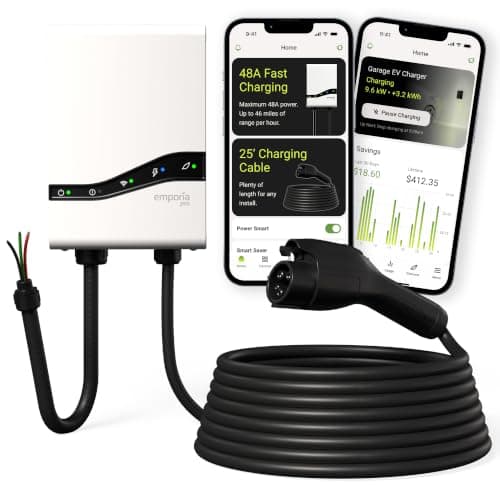
Emporia Pro Level 2 EV ChargerThe best-balanced 48 A charger for a typical US house: full 11.5 kW hardwired, and the only unit at this price that ships with a whole-home energy monitor so its load management is reading your actual panel rather than guessing.
Most households, and anyone with a tight panel9.5
2
Emporia Classic Level 2 EV Charger
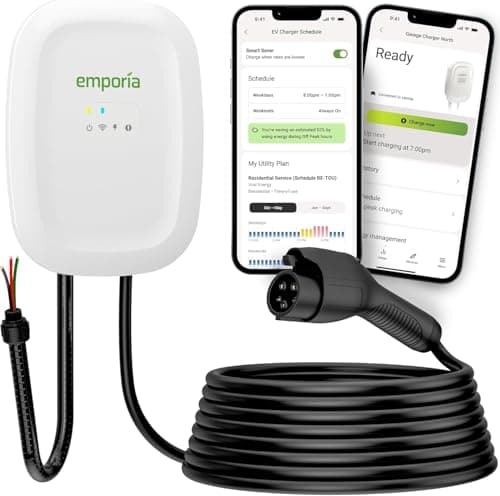
Emporia Classic Level 2 EV ChargerThe same 48 A hardware and the same 25 ft cable as the Pro, minus PowerSmart load management and minus the money.
The cheapest way into real 48 A charging9.4
3
ChargePoint Home Flex (hardwired, 50 A)
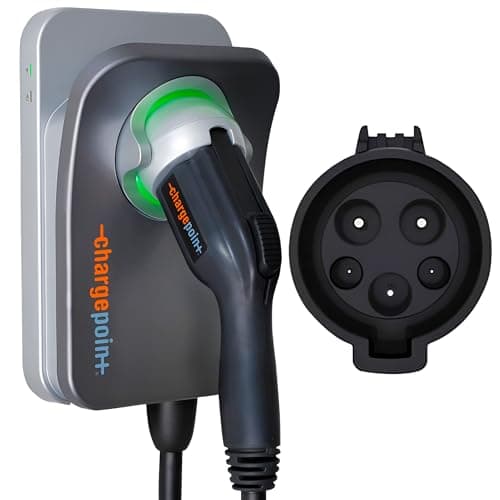
ChargePoint Home Flex (hardwired, 50 A)The most adjustable charger on this page: output steps through 16, 24, 32, 40, 48 and 50 A in the app, so one unit fits almost any panel and can be turned up later if you upgrade the service.
A house whose panel headroom is uncertain9.5
4
Autel MaxiCharger AC Lite (40 A)
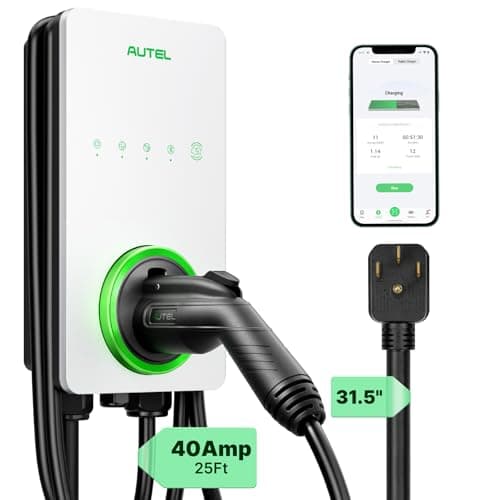
Autel MaxiCharger AC Lite (40 A)The widest output adjustment range here — 6 A to 40 A in the app — plus an operating range down to -40 degF, which makes it the practical pick for an unheated garage in the north.
Cold climates and 1 A output tuning9.3
5
No
image
EVIQO Level 2 EV Charger (48 A, hardwired)The cheapest way to get a genuine 11.5 kW hardwired install, with IP66/NEMA 4 weatherproofing and an internal switch for 16/32/40/48 A.
48 A on a budget9.2
6
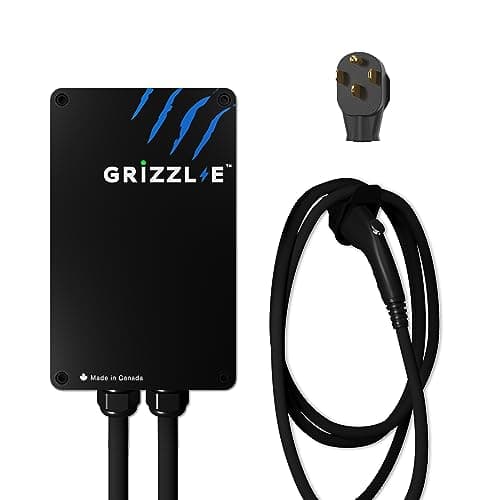
Grizzl-E Classic
Grizzl-E ClassicA cast-aluminum 40 A charger with dip switches instead of a cloud account.
An outdoor install, and anyone who distrusts apps9.2
$299.99See the Grizzl-E Classic

$399.00 list · 25% off

7
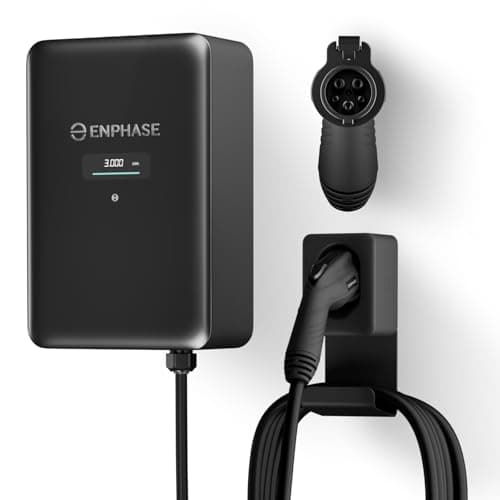
Enphase IQ EV Charger 2 (48 A)
Enphase IQ EV Charger 2 (48 A)The charger to buy if you have solar: it adjusts in 1 A increments to absorb whatever the array is exporting, and it carries a 5-year warranty, the longest here.
A house with rooftop solar9.4
8
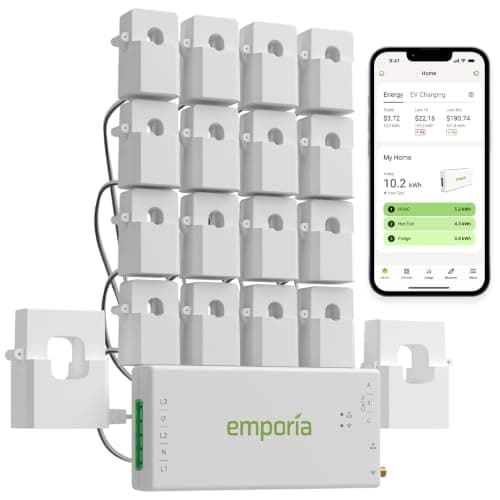
Emporia Vue 3 Home Energy Monitor
Emporia Vue 3 Home Energy MonitorThe cheapest way to replace a load calculation's assumptions with measurements.
Knowing what your panel is actually doing9.4

Two different things are sold as "load management"

This is the distinction the category hides, and it decides which charger you need. Both are legitimate. They are not the same product and they do not solve the same problem.

Dynamic load management against fixed derating
Dynamic load managementFixed derating
What it doesMeasures total household draw and reduces the charger's output in real time when the oven, dryer and HVAC are runningYou choose one lower output once and the charger holds it forever
What it needsA sensor on the service conductors, or a utility-grade meter the charger can readNothing. An app setting, or a switch inside the unit
What you get at 2amFull output, because nothing else in the house is runningThe same reduced output you set, all night
In the load calculationThe managed figure rather than the nameplateThe set figure rather than the nameplate
Typical costA premium over the same charger without itFree — it is a setting
Who it is forA house that is genuinely at its limit and still wants full speed sometimesA house with a little headroom that simply needs the charger to be smaller
Both approaches rely on the same code provision: NEC 625.42 permits the overall rating of an EVSE installation to be limited through controls, so an inspector evaluates the managed or set figure rather than the nameplate.

How we ranked them

In this order, and the order is the method:

  1. Whether the charger measures anything. A unit that reads whole-home draw is doing something a unit with an app slider is not, and we rank it above one.
  2. Whether the measurement is included. Load management that needs a monitor you have to buy separately is not the same price as load management that ships with one.
  3. How finely the output adjusts. A load calculation does not land on round numbers. 1 A steps fit a result of 37 A; four fixed positions do not.
  4. Whether the adjustment survives a dead phone. A physical switch inside the unit cannot be locked behind an app account or a firmware update.
  5. Everything else a charger has to be — certification to an EVSE standard, cable length, enclosure rating, warranty and a support path in North America.

Every unit here is currently purchasable, carries a real UL or ETL certification to an EVSE standard, and comes from a brand with an identifiable North American support path. We checked each one's published specifications against the manufacturer's own documentation on the date shown at the top of this page, and we only credit a charger with a load-management capability its own documentation describes. Reliability notes come from verified owner feedback and are labeled as owner reports — our methodology sets out the whole standard, criterion by criterion. Ranking order is fit for the stated use case first, then price, then warranty and support — commission rate plays no part in it.

1. Emporia Pro — the only one that ships with the sensor

Emporia Pro Level 2 EV Charger

Most households, and anyone with a tight panel

Emporia Pro Level 2 EV Charger

PowerSmart throttles against measured whole-home draw, and the Vue monitor that does the measuring is in the box

$599.00See the Emporia Pro

#ad Price as of November 18, 2026. How we make money

Emporia's own line-up page describes PowerSmart load management on the Pro, and the Pro ships with the Vue home energy monitor. That pairing is the entire reason this charger leads the page: the throttling decision is made against your panel's real current, not against a number somebody typed into an app.

The practical consequence is narrow and valuable. A house that cannot add an unmanaged 48 A load can usually add a managed one, because the installation enters the calculation at the managed figure. That is the difference between a normal install and a service upgrade quote, and our panel upgrade cost page explains what the expensive branch actually costs.

Good to know: the Vue's current transformers have to go into the panel to be useful, which means the electrician is in there longer and the quote reflects it. There is also no physical timer — scheduling lives in the app. If you want the same 48 A hardware without paying for the monitor, that is the next entry.

2. Emporia Classic — the same box, with the management unbundled

Emporia Classic Level 2 EV Charger

The cheapest way into real 48 A charging

Emporia Classic Level 2 EV Charger

Identical 48 A hardware and 25 ft cable; load sharing between Emporia units is standard, PowerSmart is a paid add-on

$449.00See the Emporia Classic

#ad Price as of November 18, 2026. How we make money

The Classic is the same 48 A / 11.5 kW hardwired unit with the same 25 ft cable and the same NEMA 4 enclosure. What differs is what comes switched on. Emporia documents Intelligent Load Sharing between Emporia units as standard — which is the feature you want if you are installing two chargers on one circuit — while PowerSmart whole-home management is a paid add-on.

So the Classic is the better buy in exactly two situations: you are charging two cars and need the pair to share one feeder, or your panel has enough headroom that you never needed whole-home throttling in the first place. The head-to-head is on Emporia Classic vs Pro.

Good to know: once you add PowerSmart and a monitor to a Classic, you have spent your way to a Pro. Decide which feature you are buying before you compare the sticker prices.

3. ChargePoint Home Flex — six fixed levels, the widest range

ChargePoint Home Flex (hardwired, 50 A)

A house whose panel headroom is uncertain

ChargePoint Home Flex (hardwired, 50 A)

16, 24, 32, 40, 48 and 50 A in the app — one unit fits a 100 A panel now and a 200 A panel later

This is fixed derating done properly. ChargePoint's datasheet lists output steps of 16, 24, 32, 40, 48 and 50 A, set in the app, with the breaker sized at 125% of whatever you choose. One unit therefore fits a tight panel today and can be turned up after a service upgrade instead of being replaced.

It is also the only unit here with a 50 A / 12 kW ceiling, which matters for the handful of cars that accept more than 11.5 kW — see onboard charger limits by model before you pay for headroom your car cannot use.

Good to know: the 23 ft cable is the shortest of the premium units here, and the amperage setting lives in the app, so a phone and a working account sit between you and a change. Measure the run from your car's charge port before you commit to a mounting spot — cable length guide.

4. Autel MaxiCharger AC Lite — 1 A steps, for a calculation that lands awkwardly

Autel MaxiCharger AC Lite (40 A)

Cold climates and 1 A output tuning

Autel MaxiCharger AC Lite (40 A)

6 to 40 A in 1 A increments, and rated to -40 degF for an unheated garage

$424.00See the Autel MaxiCharger AC Lite

$470.00 list · 10% off

#ad Price as of November 18, 2026. How we make money

Load calculations do not produce round numbers. When yours comes back at 37 A, a charger with four fixed positions makes you drop to 32 A and give away five amps you are allowed to use. The AC Lite adjusts from 6 A to 40 A in 1 A steps, which is the finest granularity on this page and the reason it outranks cheaper units.

Its other differentiator is the -40 degF to +131 degF operating range, the widest here, plus integrated surge protection that most units leave to a panel-mounted device. For a detached or unheated garage in the north that combination is worth more than two extra amps — see cold weather EV charging at home.

Good to know: the ceiling is 40 A / 9.6 kW, so this is not the unit if you want a full 11.5 kW later. Autel's North American consumer support is newer than ChargePoint's or Tesla's.

5. EVIQO 48 A — switch-set derating at the lowest price

48 A on a budget

EVIQO Level 2 EV Charger (48 A, hardwired)

16, 32, 40 or 48 A on an internal switch, and the cheapest route to a genuine 11.5 kW

EVIQO's documentation lists internal switch positions of 16, 32, 40 and 48 A, with 40 A as the factory default. That last detail is the one people miss: a unit installed straight out of the box charges at 40 A, not 48 A, until an electrician moves the switch. If your reason for buying it is the full 11.5 kW, say so to the installer.

For a tight panel the switch is an advantage rather than a limitation — it is set once, at install, by the person who did your load calculation, and it cannot be changed later by a phone. Certification is ETL and ENERGY STAR, with an IP66 / NEMA 4 enclosure.

Good to know: four positions is coarse. If your calculation lands between them you lose the difference, and changing the setting later means opening the unit rather than opening an app.

6. Grizzl-E Classic — physical switches and no account at all

Grizzl-E Classic

An outdoor install, and anyone who distrusts apps

Grizzl-E Classic

16, 24, 32 or 40 A on dip switches inside a cast-aluminum NEMA 4 body — nothing to log into

$299.99See the Grizzl-E Classic

$399.00 list · 25% off

#ad Price as of November 18, 2026. How we make money

The Grizzl-E sets its output with physical switches inside the unit at 16, 24, 32 or 40 A, in a cast-aluminum NEMA 4 / IP67 enclosure. There is no radio, no account and no firmware. For a derated install that is genuinely a feature: the setting your electrician chose is the setting the charger will still have in ten years.

It is also the cheapest unit on this page by a clear margin, which makes it the honest answer for a household on a flat electricity tariff that was never going to schedule anything. If that is you, the whole app tier is a cost you can skip — best EV chargers without an app makes that case in full.

Good to know: no app means no scheduling and no energy reporting, and the 40 A ceiling rules out 11.5 kW. On a time-of-use tariff you would be setting the charge window in the car instead — time-of-use rates and EV charging.

7. Enphase IQ EV Charger 2 — management aimed at your solar, not your panel

Enphase IQ EV Charger 2 (48 A)

A house with rooftop solar

Enphase IQ EV Charger 2 (48 A)

Adjusts in 1 A increments to track surplus solar, with the longest warranty here

This one manages a different variable. Enphase documents the IQ EV Charger 2 adjusting in 1 A increments to track surplus solar, so the car absorbs what the array is exporting rather than what the panel can spare. On a house with Enphase microinverters already on the roof, that is the most useful form of control available.

It also carries the longest warranty on this page at five years, against three almost everywhere else. If solar is the reason you are here, solar EV charging at home and best EV chargers for solar go deeper.

Good to know: it is the most expensive unit here, and the surplus-tracking logic is aimed at a solar household. Without an array you are paying for a feature you cannot use — the Emporia Pro manages the thing you actually have, which is a panel.

8. Emporia Vue 3 — the part that makes the measuring possible

Emporia Vue 3 Home Energy Monitor

Knowing what your panel is actually doing

Emporia Vue 3 Home Energy Monitor

Up to 16 branch sensors plus 2 x 200 A mains — the monitor PowerSmart reads

$199.99See the Emporia Vue 3

#ad Price as of November 18, 2026. How we make money

Not a charger, and on this page for one reason: it is the sensor the Emporia Pro's load management reads, and the one you would add to an Emporia Classic to turn PowerSmart on. It carries two 200 A sensors on the service conductors plus up to sixteen 50 A branch sensors, sampling at 24,000 samples per second to a stated +/-2%.

Buy it on its own if you want to know what your panel is really doing before you commit to a charger at all. Measuring first is how a load calculation stops being an argument — the full ranking is on best home energy monitors for EV charging.

Good to know: it goes inside the panel, so it is electrician work, and the warranty is one year against three on the chargers.

What we left off, and why

  • The Wallbox Pulsar Plus. Wallbox markets a power-sharing capability, but our registry entry for the 48 A unit documents the enclosure, the temperature range and the footprint — not a load-management specification we could cite. We do not credit a charger with a feature we cannot source, so it is covered on its own terms in ChargePoint Home Flex vs Wallbox Pulsar Plus instead.
  • Passive splitters. A device that lets two loads share one 30 A circuit simultaneously is not load management and we will not put a buy button beside one. Automatic switching devices are the version of that idea that is safe.
  • Chargers whose "smart" is a timer. A clock that starts charging at 2am does not measure anything and does not change a load calculation. It is a useful feature on a time-of-use tariff and nothing more.

What this actually saves you

The arithmetic is worth doing before you choose. A dwelling-unit load calculation under NEC Article 220 adds the EV charger at 125% of its continuous rating, with no demand factor applied to it — it is the one load that gets no discount.

What a managed charger removes from the calculation

48 A x 1.25 = 60 A against 32 A x 1.25 = 40 A

20 A of calculated load, removed by a setting

The same hardware, entered at a different figure because its output is limited through controls per NEC 625.42. On a 100 A service that 20 A is frequently the whole margin.

Against that, a service upgrade is a four-figure job in most of the country. The order of operations is always the same: calculate, then derate, then manage, then upgrade — and most houses stop at step two.

Before you buy any of these

  1. Do the load calculation, or have your electrician do it. The walkthrough shows the arithmetic.
  2. Check what your car can actually accept. A 48 A charger on a 32 A car is 16 amps of hardware you will never use — onboard charger limits by model.
  3. Size the circuit to the output you will set, not to the nameplate: breaker size chart and wire size guide.
  4. Tell the inspector the installation is limited through controls. That is the sentence that makes NEC 625.42 apply to your job.

How we picked

Every unit here is currently purchasable, carries a real UL or ETL certification to an EVSE standard, and comes from a brand with an identifiable North American support path. We checked each one's published specifications against the manufacturer's own documentation on the date shown at the top of this page, and we only credit a charger with a load-management capability its own documentation describes. Reliability notes come from verified owner feedback and are labeled as owner reports — our methodology sets out the whole standard, criterion by criterion. Ranking order is fit for the stated use case first, then price, then warranty and support — commission rate plays no part in it.

In detail

Every pick, assessed

Top pick · Most households, and anyone with a tight panel

Emporia Pro Level 2 EV Charger

Emporia Pro Level 2 EV Charger charger

9.5/ 10

Our verdict

The best-balanced 48 A charger for a typical US house: full 11.5 kW hardwired, and the only unit at this price that ships with a whole-home energy monitor so its load management is reading your actual panel rather than guessing.

What works

  • Hardwires at the full 48 A for 11.5 kW — matches the onboard limit of most current BEVs exactly
  • PowerSmart load management reads whole-home draw through the included Vue monitor, so it can throttle instead of tripping a breaker
  • 25 ft cable reaches across a two-car garage without an extension
  • NEMA 4 enclosure and a real UL listing, not just an ETL mark

Good to know

  • The energy monitor has to be installed in the panel to be useful, which means the electrician is in there longer
  • App-dependent for scheduling — there is no physical timer
  • At 40 A on the plug-in version you are paying for 48 A of hardware you cannot use
Emporia Pro Level 2 EV Charger specifications
Max output48 A / 11.5 kW hardwired; 40 A / 9.6 kW on a NEMA 14-50 plug
Breaker60 A dedicated 2-pole for 48 A; 50 A for 40 A
Cable25 ft
ConnectorJ1772 or NACS, chosen at purchase
EnclosureNEMA 4, indoor or outdoor
CertificationUL certified, ENERGY STAR
Warranty3 years
Load managementPowerSmart, with the Vue home energy monitor included

Specifications checked against Emporia Pro sell sheet, and against the National Electrical Code by article — how we assess products.

How it scored

Our rubric, on the same 8.4–9.8 published scale as the score above — what the bands mean.

Fit to a typical panel
9.7
Charge rate
9.6
Cable and reach
9.6
Smart features
9.7
Weather and build
9.6
Warranty and support
9.5
Pick 2 · The cheapest way into real 48 A charging

Emporia Classic Level 2 EV Charger

Emporia Classic Level 2 EV Charger charger

9.4/ 10

Our verdict

The same 48 A hardware and the same 25 ft cable as the Pro, minus PowerSmart load management and minus the money. If your panel has room for a 60 A breaker without any juggling, this is the one to buy.

What works

  • Full 48 A hardwired for 11.5 kW — the same charge rate as the Pro, for less money
  • Same 25 ft cable, same NEMA 4 enclosure and the same UL and ENERGY STAR listings as the Pro
  • Intelligent Load Sharing lets two Emporia units share one circuit without a second breaker
  • Sold in J1772 and NACS, hardwired or NEMA 14-50, so you can match the install instead of adapting to it

Good to know

  • PowerSmart whole-home load management is an extra-cost add-on here, not standard as it is on the Pro
  • Peak-demand and solar-following charging need an Emporia Vue monitor in the panel, bought separately
  • No physical timer — scheduling happens in the app or not at all
  • The 40 A plug-in version wastes hardware you have paid for
Emporia Classic Level 2 EV Charger specifications
Max output48 A / 11.5 kW at 240 V hardwired; 40 A / 9.6 kW on a NEMA 14-50 plug
Breaker60 A dedicated 2-pole for 48 A; 50 A for 40 A
Cable25 ft
ConnectorJ1772 or NACS, chosen at purchase
EnclosureNEMA 4, indoor or outdoor
CertificationUL listed, ENERGY STAR certified
Warranty3 years
Load managementIntelligent Load Sharing between Emporia units; PowerSmart is a paid add-on

Specifications checked against Emporia EV charger line-up — Classic and Pro specifications, and against the National Electrical Code by article — how we assess products.

How it scored

Our rubric, on the same 8.4–9.8 published scale as the score above — what the bands mean.

Fit to a typical panel
9.5
Charge rate
9.6
Cable and reach
9.6
Smart features
9.4
Weather and build
9.6
Value
9.7
Pick 3 · A house whose panel headroom is uncertain

ChargePoint Home Flex (hardwired, 50 A)

ChargePoint Home Flex (hardwired, 50 A) charger

9.5/ 10

Our verdict

The most adjustable charger on this page: output steps through 16, 24, 32, 40, 48 and 50 A in the app, so one unit fits almost any panel and can be turned up later if you upgrade the service.

What works

  • Six selectable output levels mean one unit fits a 100 A panel today and a 200 A panel after an upgrade
  • 12 kW ceiling is the highest here, which matters only for the handful of cars that accept more than 11.5 kW
  • Mature app with Alexa and Google Home support, and the largest installed base of any home charger in the US
  • Available in both J1772 and NACS, hardwired or plug-in

Good to know

  • 23 ft cable is the shortest of the premium units — measure before you commit to a mounting spot
  • The adjustable amperage lives in the app, so a phone and a working account stand between you and a setting change
  • Costs more than units that charge at an identical real-world rate
ChargePoint Home Flex (hardwired, 50 A) specifications
Max output50 A / 12 kW (240 V x 50 A)
Adjustable output16, 24, 32, 40, 48, 50 A, set in the app
BreakerDedicated 2-pole rated 125% of the output you set — a 50 A breaker for 40 A output
Cable23 ft
ConnectorJ1772 (a NACS version is sold separately)
InstallHardwired, or NEMA 6-50 / NEMA 14-50 input cord on the plug-in version
Weight13.8 lb

Specifications checked against ChargePoint Home Flex datasheet, and against the National Electrical Code by article — how we assess products.

How it scored

Our rubric, on the same 8.4–9.8 published scale as the score above — what the bands mean.

Fit to a typical panel
9.8
Charge rate
9.7
Cable and reach
9.4
Smart features
9.6
Weather and build
9.6
Warranty and support
9.6
Pick 4 · Cold climates and 1 A output tuning

Autel MaxiCharger AC Lite (40 A)

Autel MaxiCharger AC Lite (40 A) charger

9.3/ 10

$424.00See the Autel MaxiCharger AC Lite on Amazon

$470.00 list · 10% off

#ad Price as of November 18, 2026. How we make money

Our verdict

The widest output adjustment range here — 6 A to 40 A in the app — plus an operating range down to -40 degF, which makes it the practical pick for an unheated garage in the north.

What works

  • 6-40 A in 1 A steps is the finest adjustment of any unit here — genuinely useful when a load calculation lands at 37 A
  • -40 degF to +131 degF rated, which is a real differentiator in Minnesota or Maine
  • Integrated surge protection, which most units leave to a panel-mounted device
  • 25 ft cable

Good to know

  • 40 A ceiling
  • Bluetooth, Wi-Fi and Ethernet is more connectivity than a home needs and more surface to go wrong
  • Autel's North American consumer support is newer than ChargePoint's or Tesla's
Autel MaxiCharger AC Lite (40 A) specifications
Max output40 A / 9.6 kW (240 V x 40 A)
Adjustable output6-40 A via the app
Breaker50 A dedicated 2-pole
Cable25 ft, J1772
EnclosureNEMA 4
Operating temperature-40 degF to +131 degF
Protection20 mA CCID ground-fault detection, integrated surge protection
Warranty36 months

Specifications checked against ENERGY STAR certified EVSE listing, and against the National Electrical Code by article — how we assess products.

How it scored

Our rubric, on the same 8.4–9.8 published scale as the score above — what the bands mean.

Cold-weather fitness
9.8
Charge rate
9.4
Output adjustability
9.8
Cable and reach
9.7
Weather and build
9.6
Value
9.6
Pick 5 · 48 A on a budget

EVIQO Level 2 EV Charger (48 A, hardwired)

9.2/ 10

Our verdict

The cheapest way to get a genuine 11.5 kW hardwired install, with IP66/NEMA 4 weatherproofing and an internal switch for 16/32/40/48 A. The trade is a younger brand with a shorter support record.

What works

  • Full 48 A for well under the price of the premium 48 A units
  • IP66 plus NEMA 4 is a stronger weather rating than the price suggests
  • Amperage switch is internal and physical, so it survives app changes
  • 25 ft cable

Good to know

  • EVIQO is a newer brand than ChargePoint, Tesla or Emporia; the warranty is only worth the company behind it
  • Ships set to 40 A, so a surprising number of owners never get the 48 A they paid for
  • EVIQO also publishes its own 'best charger' buying guides, which is a conflict worth knowing about when you read them
EVIQO Level 2 EV Charger (48 A, hardwired) specifications
Max output48 A / 11.5 kW hardwired; 40 A / 9.6 kW on a 14-50 plug
Adjustable output16, 32, 40 (default) or 48 A via an internal switch
Breaker60 A dedicated 2-pole for 48 A
Cable25 ft
ConnectorJ1772
EnclosureIP66 / NEMA 4
CertificationETL certified, ENERGY STAR, FCC; built to UL and CSA standards
Warranty3 years standard

Specifications checked against EVIQO hardwired charger specifications, and against the National Electrical Code by article — how we assess products.

How it scored

Our rubric, on the same 8.4–9.8 published scale as the score above — what the bands mean.

Value
9.8
Charge rate
9.6
Cable and reach
9.7
Weather and build
9.6
Smart features
9.3
Warranty and support
9.2
Pick 6 · An outdoor install, and anyone who distrusts apps

Grizzl-E Classic

Grizzl-E Classic charger

9.2/ 10

$299.99See the Grizzl-E Classic on Amazon

$399.00 list · 25% off

#ad Price as of November 18, 2026. How we make money

Our verdict

A cast-aluminum 40 A charger with dip switches instead of a cloud account. Nothing about it is clever, which is exactly why it is the unit to buy for a driveway post in a cold climate.

What works

  • Cast-aluminum NEMA 4 body is the most physically robust enclosure in this price class
  • Amperage set by physical switch, so the setting survives an app outage, a new phone and a sold house
  • 24 ft cable at a 40 A price
  • ENERGY STAR certified

Good to know

  • 40 A ceiling — a 48 A car leaves ~2 kW on the table
  • No scheduling, no energy reporting, no load management; if you need time-of-use scheduling you are doing it in the car
  • Changing amperage means opening the unit, which most people will do exactly once
Grizzl-E Classic specifications
Max output40 A / 9.6 kW continuous
Adjustable output16, 24, 32 or 40 A via physical switches
Breaker50 A dedicated 2-pole for 40 A output
Cable24 ft, 8 AWG output cord
ConnectorJ1772
EnclosureNEMA 4 cast aluminum, IP67, fire resistant
ProtectionOver-current, over/under-voltage, missing diode, ground fault, over-temperature
Warranty3 years

Specifications checked against United Chargers Grizzl-E specifications, and against the National Electrical Code by article — how we assess products.

How it scored

Our rubric, on the same 8.4–9.8 published scale as the score above — what the bands mean.

Weather and build
9.8
Charge rate
9.4
Cable and reach
9.8
Smart features
8.5
Simplicity
9.8
Value
9.7
Pick 7 · A house with rooftop solar

Enphase IQ EV Charger 2 (48 A)

Enphase IQ EV Charger 2 (48 A) charger

9.4/ 10

Our verdict

The charger to buy if you have solar: it adjusts in 1 A increments to absorb whatever the array is exporting, and it carries a 5-year warranty, the longest here.

What works

  • 1 A solar tracking is a real feature, not a marketing line — it is the difference between exporting at the retail rate and charging for free
  • 5-year warranty, the longest of any unit here
  • Integrates with an existing Enphase system rather than fighting it

Good to know

  • Most expensive non-Tesla unit here, and the solar feature is worth nothing without an array
  • Hardwired only
  • The integration story is strongest inside the Enphase ecosystem and thinner outside it
Enphase IQ EV Charger 2 (48 A) specifications
Max output48 A / up to 11.5 kW at 240 V
Breaker60 A dedicated 2-pole
ConnectorJ1772
InstallHardwired
EnclosureNEMA 4
CertificationUL certified
Warranty5 years
SolarAdjusts in 1 A increments to track surplus solar

Specifications checked against Enphase IQ EV Charger 2 product documentation, and against the National Electrical Code by article — how we assess products.

How it scored

Our rubric, on the same 8.4–9.8 published scale as the score above — what the bands mean.

Solar integration
9.8
Charge rate
9.6
Warranty and support
9.8
Smart features
9.7
Weather and build
9.6
Value
9.1
Pick 8 · Knowing what your panel is actually doing

Emporia Vue 3 Home Energy Monitor

Emporia Vue 3 Home Energy Monitor charger

9.4/ 10

Our verdict

The cheapest way to replace a load calculation's assumptions with measurements. If your panel is marginal, a month of real data from this tells you whether a 48 A charger fits better than any rule of thumb will.

What works

  • Turns 'can my panel handle it' from an estimate into a measurement
  • Enables load management on an Emporia charger, which can be the difference between a charger and a service upgrade
  • Also finds the phantom loads that were inflating your bill

Good to know

  • Panel work — the CTs go around the service conductors, which is not a DIY job for most people
  • Only closes the load-management loop with an Emporia charger
  • App-dependent
Emporia Vue 3 Home Energy Monitor specifications
FunctionWhole-home and circuit-level real-time energy monitoring
Branch sensorsUp to 16 x 50 A, one per breaker
Main sensors2 x 200 A on the service conductors
Sampling24,000 samples per second, +/-2% stated accuracy
InstallCurrent transformers in the panel
Connectivity2.4 GHz Wi-Fi
Warranty1 year
Pairs withEmporia chargers for PowerSmart load management

Specifications checked against Emporia Vue product specifications, and against the National Electrical Code by article — how we assess products.

The bottom line

Our recommendation

Best for a panel that is already full

Emporia Pro Level 2 EV Charger

The best-balanced 48 A charger for a typical US house: full 11.5 kW hardwired, and the only unit at this price that ships with a whole-home energy monitor so its load management is reading your actual panel rather than guessing.

9.5/ 10

FAQ

Questions people actually ask

What is load management on an EV charger?

Two different things are sold under the name. Dynamic load management measures your total household draw and reduces the charger's output in real time when the rest of the house is busy. Fixed derating simply sets the charger to a lower output once and holds it there. Both let the installation enter a load calculation at the lower figure under NEC 625.42; only the first gives you full output at 2am.

Which EV charger has the best load management?

The Emporia Pro, because PowerSmart throttles against measured whole-home current and the Emporia Vue monitor that does the measuring is included in the box. Every other dynamic system here either needs a monitor bought separately or manages surplus solar rather than panel capacity.

Can load management avoid an electrical panel upgrade?

Often, yes. NEC 625.42 permits the overall rating of an EVSE installation to be limited through controls, so the calculation uses the managed or set figure rather than the nameplate. Most houses that fail a load calculation fail by a small margin, and a 48 A charger set to 32 A removes 20 A of calculated load.

Do I need dynamic load management, or is setting a lower amperage enough?

Setting a lower amperage is enough for most houses. Buy dynamic management when you genuinely need full output some of the time and your panel cannot support it continuously. If a fixed, smaller output clears your calculation and still charges the car overnight, the cheaper unit is the right one.

Does a smaller charger setting mean the car charges slower?

Yes, proportionally — but usually not in a way you notice. A 48 A charger set to 32 A delivers about 7.7 kW instead of 11.5 kW, which still replaces a typical commute in a couple of hours and fills a near-empty battery overnight. The constraint that matters more is your car's own onboard limit.

Can two EV chargers share one circuit?

With the right equipment, yes. Emporia documents Intelligent Load Sharing between its own units, and that is the feature to look for rather than a passive splitter. Charging two EVs at home covers the options, including a single dual-cable unit.

Sources

What we checked this against

Read next

Disclosure. Some links on this page are affiliate links. If you buy through one, we earn a commission at no extra cost to you. We are a participant in the Amazon Services LLC Associates Program and in brand partner programs run through the Impact network — Autel and EVIQO buy buttons are attributed to those programs rather than to Amazon. Prices come from Amazon's live data and are shown with the date they were checked; where no live price is available, or where a button goes to a brand's own store rather than to Amazon, we show no number rather than an old or borrowed one. Commission rate plays no part in which products we recommend or in what order — see our methodology and our full affiliate disclosure.

Brands: want your product tested? For Brands.