The short answer
The Splitvolt NEMA 14-30/14-50 Splitter Switch is the pick: cETLus certified, automatic switching with dryer priority, and 24 A to the car. For two EVs rather than a dryer and a car, a dual-cable charger like the Grizzl-E Duo shares a single circuit properly and is usually the better answer than splitting an outlet.
Quick picks
Ranked by fit for the stated use case first, then price, then warranty and support. Tap any row to jump to the full assessment. Commission rate plays no part in the order.
| # | Product | Best for | Score | Price |
|---|---|---|---|---|
| 1 | 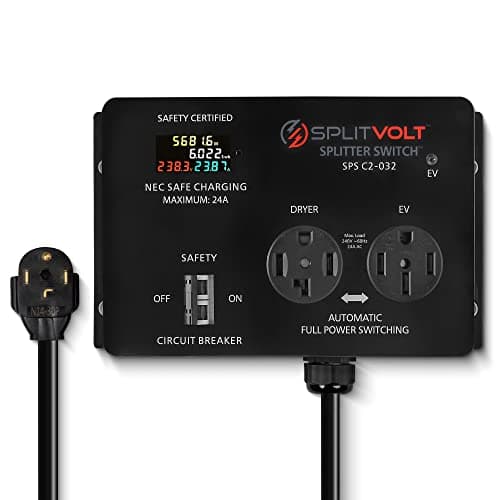 Splitvolt NEMA 14-30/14-50 Splitter SwitchA cETLus-certified automatic switch that lets a dryer circuit feed either the dryer or a 24 A charger, never both. | Charging off a dryer outlet without rewiring | 8.0 | |
| 2 | 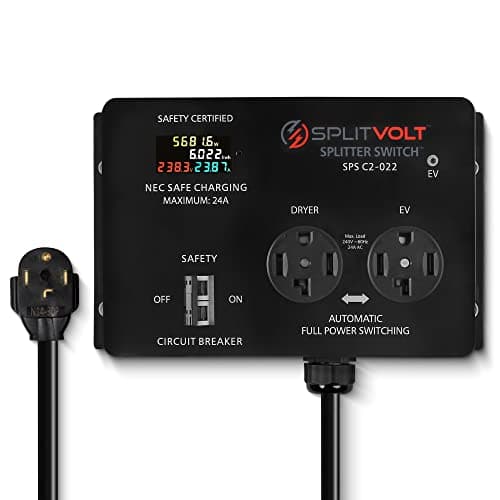 Splitvolt NEMA 14-30 Splitter SwitchThe 14-30-only version, for a laundry room with a four-prong dryer outlet and nothing else to give. | A 14-30 dryer outlet specifically | 7.8 | |
| 3 | 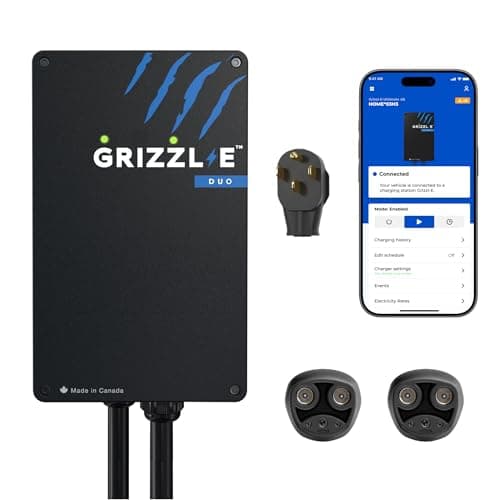 Grizzl-E Duo Connect (dual 40 A)Two cables, one circuit, one breaker. | Two EVs sharing one circuit | 8.1 |
Two different problems people call "splitting"
| Situation | What you need | Charge rate |
|---|---|---|
| One dryer circuit, dryer plus car | An automatic switch with dryer priority | 24 A on a 30 A circuit |
| One 14-50 circuit, two cars | A switch, or a dual-cable charger | 40 A total, shared or alternating |
| Two cars, one new circuit | A dual-cable charger, or two chargers with power sharing | Shared or alternating at the circuit's rating |
What we ranked on
- Certification. cETLus or equivalent listing, because this device sits in the current path of a continuous 240 V load.
- Automatic switching with priority. The appliance wins; the car waits. No user decision required.
- Correct output limiting. 24 A on a 30 A circuit, not 30 A.
- Honest comparison against a real circuit. These cost about as much as a budget charger, and sometimes the dedicated circuit is the better purchase.
For two EVs, a dual-cable charger usually beats a splitter
If the problem is two cars rather than a dryer, a charger with two cables on one circuit is a cleaner answer than splitting a receptacle. It is one listed device rather than two plus an adapter, it manages the sharing internally, and it does not depend on anyone unplugging anything.
The honest caveat with a shared-output dual charger: the circuit's capacity is divided. A 40 A Grizzl-E Duo charging two cars simultaneously gives roughly 20 A each. If both cars need a full charge overnight, a single 48 A charger that you move between them can actually finish faster. It depends entirely on whether the two cars' schedules overlap.
Two EVs sharing one circuit
Grizzl-E Duo Connect (dual 40 A)
Two J1772 handles on one 40 A circuit, in Grizzl-E's cast-aluminum NEMA 4 body. The right answer for a two-EV household where the cars do not both need a full charge every night.
#ad Price as of October 5, 2026. How we make money
Before you buy any of this: price a real circuit
These devices cost roughly what a budget Level 2 charger costs. If your panel has capacity and is physically near the garage, a dedicated 40 A circuit may land in a similar range — and it gets you 32 A instead of 24 A, with no switching, no shared load and nothing to go wrong.
Get a quote for the real circuit first. If it comes back high because of a long run or finished walls, a switch is a genuinely good solution. If it comes back comparable, buy the circuit.
How we picked
Every product here is currently purchasable and carries a safety certification we could verify in the manufacturer's own published material, checked on the date at the top of this page. We do not bench-test equipment — see our methodology. We excluded passive splitters entirely: they are not a product we are willing to put a buy button next to on a shared 30 A circuit.