The short answer
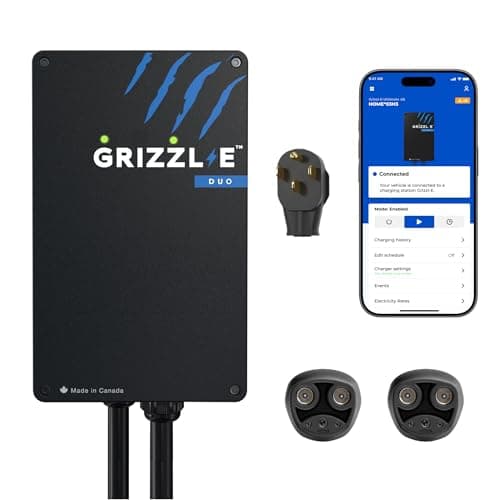
The Grizzl-E Duo Connect is the right buy for a two-EV household whose panel cannot spare a second 240 V circuit. It delivers 40 A / 9.6 kW total, and when both handles are in use it splits that in half — roughly 20 A, or 4.8 kW, per car. That is enough overnight for most commutes and not enough for two long days back to back.
We verified this unit's published specifications against the manufacturer's own documentation on the date shown at the top of this page, and confirmed it is currently purchasable before writing a word of it. We verify specifications; we do not bench-test hardware — our methodology says so in plain terms, and anything in the "known issues" section below is labeled as owner reports rather than a finding of ours. Commission rate plays no part in the verdict or in which alternative we point you at.
What the Duo actually is
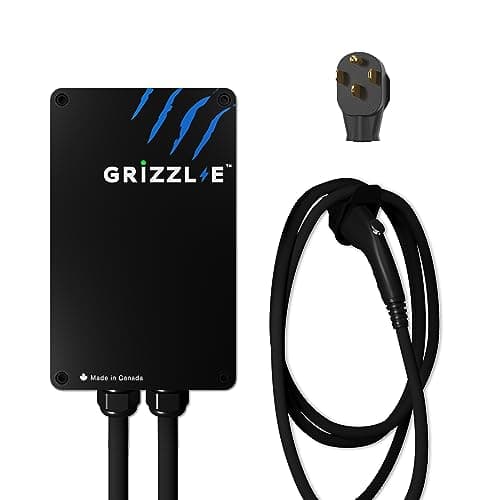
A single Level 2 charger with two output cables and the electronics to decide which one gets current. It installs on one circuit — United Chargers specifies a NEMA 14-50 or NEMA 6-50 plug, which means a 50 A two-pole breaker — and from the panel's point of view it is one 40 A continuous load no matter how many cars are attached.
The enclosure is the same cast-aluminum shell as the rest of the Grizzl-E line, rated UL Type 4 for indoor or outdoor mounting, with an operating range Grizzl-E publishes as -30 degC to +50 degC (-22 degF to 122 degF) and a 3 year warranty. It carries UL certification under file E510712. Each port terminates in an SAE J1772 handle as standard; United Chargers also sells the Duo Connect with NACS connectors, or with one of each, which is the configuration worth asking about if your household is one Tesla and one of everything else.
The number that decides this purchase
Everything about the Duo comes down to one piece of arithmetic. When one car is plugged in, it gets the whole 40 A. When two are plugged in and both want current, Grizzl-E's power sharing gives each 50% of what is available.
40 A total / 2 cars = 20 A each; 20 A x 240 V = 4,800 W
about 4.8 kW per car
At a typical 3.5 miles per kWh, that is roughly 17 miles of range per hour, per car.
40 A x 240 V = 9,600 W
9.6 kW, about 33 miles per hour
The Duo gives a single car the full circuit. Nothing is lost when the second handle is idle.
Over an eight-hour overnight window, 4.8 kW per car is about 135 miles of range each — which covers two average US commutes several times over. The failure case is narrow and specific: two cars that each arrive home nearly empty and each need to leave full the next morning. If that is your week rather than your exception, read the comparison below before buying.
Who this is for
- Two EVs and a panel with one slot left. This is the whole use case: one breaker, one circuit, one conduit run, two cars. Our load calculation guide explains how to confirm the 50 A circuit fits before you order anything.
- Two cars with different schedules. A commuter that charges 10pm to 6am and a second car that sits most days never actually contend for the 40 A, so the sharing penalty is theoretical rather than real.
- A PHEV plus a BEV. Almost every plug-in hybrid tops out near 16 to 32 A and finishes in a few hours. Pair one with a BEV and the Duo rarely has to split anything for long — see our PHEV home charging guide.
- An outdoor or detached-garage install. The cast-aluminum Type 4 body and the -22 degF rating are the reason Grizzl-E units show up on exposed posts. One run to a detached garage that serves two cars is a meaningful saving.
Who should buy something else instead
Three genuine cases, and we would rather lose the sale than pretend they are edge cases:
- Both cars regularly need a full charge overnight. Two separate 48 A chargers on two circuits is the correct answer. If the panel will not carry both, a single 48 A unit plus a charger splitter is usually cheaper than the Duo and faster for whichever car is plugged in.
- You only have one EV today and might never have two. The Duo costs meaningfully more than a single 40 A unit of the same build. Buy a 40 A charger now — the Lectron Nexus is the cheapest properly listed wall box we would put up — and revisit when the second car is actually in the driveway.
- You want scheduling, energy reporting and a polished app. The Grizzl-E Connect app exists, and it is not why anyone buys a Grizzl-E. If app quality and time-of-use automation matter, start at best smart Wi-Fi EV chargers.
What this charger needs from your electrical system
| Item | Requirement | Basis |
|---|---|---|
| Charger output | 40 A / 9.6 kW total, shared across two ports | Manufacturer published |
| Breaker | 50 A, two-pole | NEC 625.41 — 125% of a continuous load; NEC 625.42 makes EV charging continuous |
| Copper conductor (conduit, 75 degC) | 8 AWG | NEC Table 310.16 |
| Receptacle | NEMA 14-50 or NEMA 6-50 | Manufacturer published |
| GFCI breaker | Required — this is a plug-in unit on a receptacle circuit | NEC 625.54 |
| Enclosure rating | UL Type 4, indoor or outdoor | Manufacturer published |
Note the GFCI line. Because the Duo Connect lands on a receptacle rather than a hardwired whip, NEC 625.54 puts a GFCI breaker on the circuit, and that is the single most common source of nuisance tripping on any EVSE install. Our GFCI breaker guide explains why, and what to do about it.
Duo vs two chargers vs a splitter
These are the three honest ways to charge two EVs at one house, and the right one depends almost entirely on how much of a hurry both cars are in.
| Approach | Simultaneous speed per car | Panel cost | Best when |
|---|---|---|---|
| Grizzl-E Duo Connect | About 4.8 kW each | One 50 A circuit | Overnight charging, differing schedules, no panel headroom |
| Two separate chargers | Full speed each, up to 11.5 kW | Two circuits, often a panel or service upgrade | Both cars driven hard, every day |
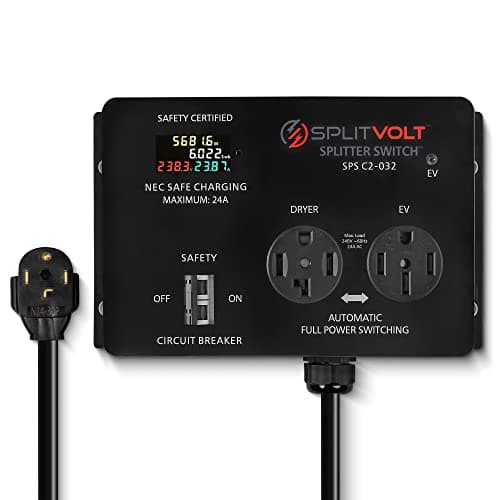
| One charger plus a splitter switch | Full speed, but one car at a time | One circuit | Cars that can alternate nights without anyone noticing |
The splitter route deserves a serious look before you spend Duo money: a charger splitter plus a good 48 A unit gives each car the full circuit on the night it needs it, which is strictly faster than 20 A each — it just cannot do both at once. The Duo wins on convenience, because nobody has to think about it.
Known issues, from owner reports
Labeled as owner reports rather than tested findings. These are the patterns that recur across the Grizzl-E line and specifically the dual-port units.
- People expect 40 A each. By far the most common disappointment, and it is a reading-the-spec problem rather than a fault. The unit does exactly what United Chargers says it does.
- GFCI nuisance tripping on the 14-50 circuit. Not specific to this charger — it is the general EVSE-plus-GFCI interaction, because the charger has its own ground-fault protection and a Class A breaker trips at 5 mA. A different GFCI breaker model is the usual fix.
- The app is the weak point. Grizzl-E Connect handles scheduling and basic reporting; owners arriving from a ChargePoint or Tesla app find it thin. The hardware is the reason to buy a Grizzl-E.
- It is heavy, and it is big. Cast aluminum plus two cables means two people and real anchors. Check the mounting surface before install day — our mounting height guide covers position as well as height.
The verdict
Two EVs sharing one circuit
Grizzl-E Duo Connect (dual 40 A)
One circuit, two cars, and a body built for an outdoor post.
#ad Price as of October 28, 2026. How we make money