The short answer
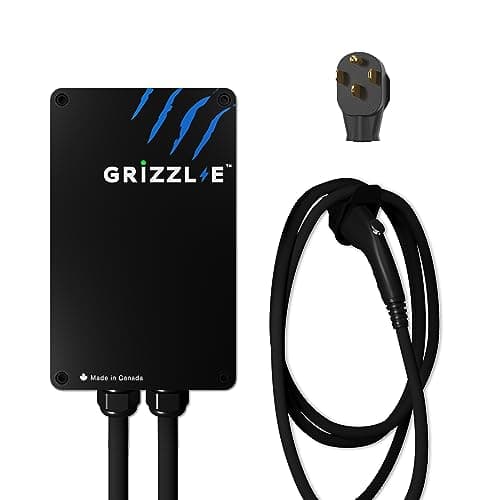
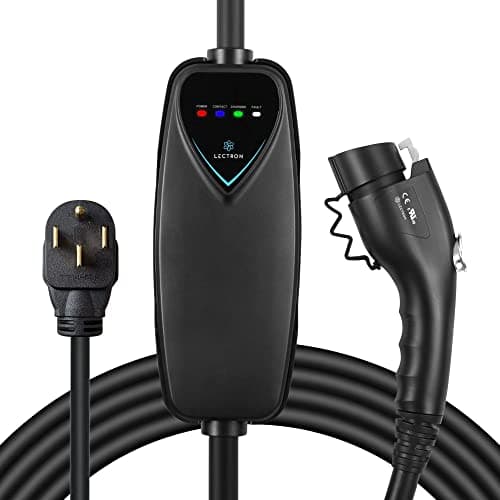
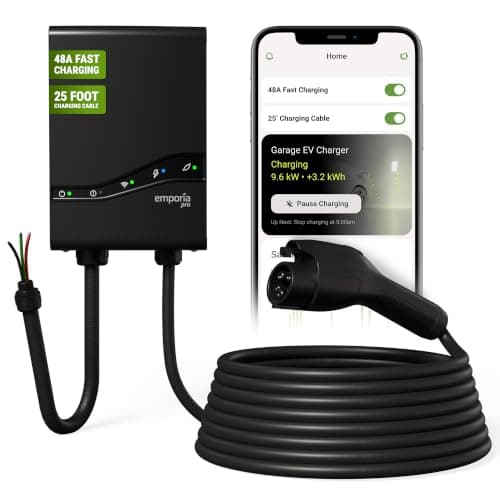
Mount the charger body between roughly 42 and 48 inches above the finished floor, with the handle holster at a comfortable hand height. Your charger's own manual governs — NEC 110.3(B) makes it enforceable — and beyond that the test is whether the cable reaches the car's charge port with slack to loop clear of the floor, and whether the unit clears the swing of the car door.
Measure before you mark the wall
This takes five minutes and prevents the most common post-install regret. Do it with the car in the position it will actually occupy, not an approximation.
- Park the car where it will live. Pulled in, or backed in — whichever you actually do.
- Note where the charge port is. Front-left, rear-left, front-right: it varies enormously and it decides which wall the charger belongs on.
- Measure from the proposed mounting point to the port, following the route the cable will take. Round up.
- Add 3 to 5 feet of slack so the cable can hang in a loop rather than stretching taut.
- Check that total against the charger's cable length. 16 ft, 18 ft, 20 ft, 23 ft, 24 ft and 25 ft are all real options — this is where the number matters.
The three clearances people miss
| Clearance | Why | Typical mistake |
|---|---|---|
| Car door swing | A charger exactly where the driver's door opens gets hit | Mounting at the midpoint of the parking bay |
| The manufacturer's own ventilation and service clearance | NEC 110.3(B) makes the manual enforceable; some units need free air | Boxing a unit into a tight enclosure or a cabinet |
| Working space in front of the panel | NEC 110.26 requires clear space at the service panel | Mounting the charger in the panel's working space |
Height, and why 42 to 48 inches
There is no single code-mandated residential height. The 42-48 inch range comes from three practical constraints converging: the handle sits where your hand naturally is, the cable can loop with its lowest point clear of the floor, and the unit is above splash, snow line and the height at which things get knocked.
Go higher and the cable has further to fall and a bigger loop to manage. Go much lower and the loop touches the ground, which is how handles end up in standing water. Accessibility-focused guidance for public charging often references a lower reach range; for a private garage, hand height is the governing consideration.
Left wall or right wall
Decided by your car's charge port, and it genuinely matters. Teslas have the port at the rear-left. Many Hyundai and Kia models have it at the rear-right. Ford places it front-left. Rivian is front-left. A charger on the wrong wall means the cable crossing the full width or length of the car every single time.
If two cars with ports on opposite sides share a garage, mount centrally and buy the longest cable you can, or consider a dual-cable unit. Our vehicles hub notes the port position where it affects the charger decision.
What to fit at the same time
Two cheap things that should go on the wall in the same visit, because they are what determine whether the handle and cable survive a decade.
Fit the holster and the hook when you mount the charger
A holster for the handle and a hook for the cable loop. Twenty dollars between them, ten minutes, and they prevent the most common physical damage in home charging.
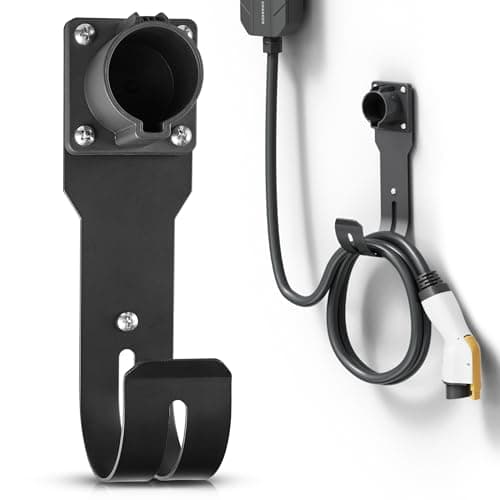
Getting the handle and the cable off the floor
MECMO J1772 Holster Dock and J-Hook
A holster for the handle plus a hook for the loop. The cheapest meaningful upgrade to any charging setup, because a handle that lives on the floor gets stepped on, driven over and eventually fails.
#ad Price as of October 5, 2026. How we make money
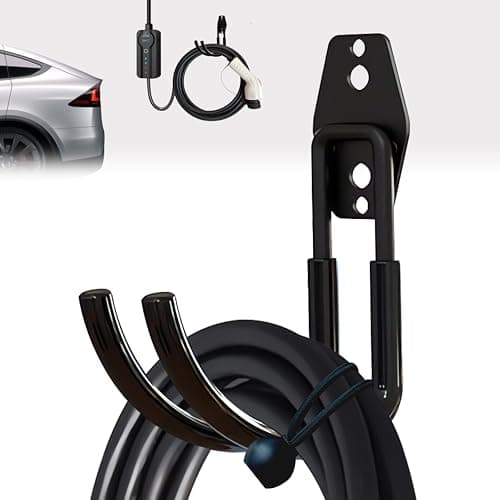
A heavy 25 ft cable that bends plastic hooks
Nexoroot Heavy-Duty Steel EV Cable J-Hook
Steel rather than plastic, which matters with 25 feet of 8 AWG cable hanging on it — the full loop of a premium charger's lead is heavier than people expect.
#ad Price as of October 5, 2026. How we make money
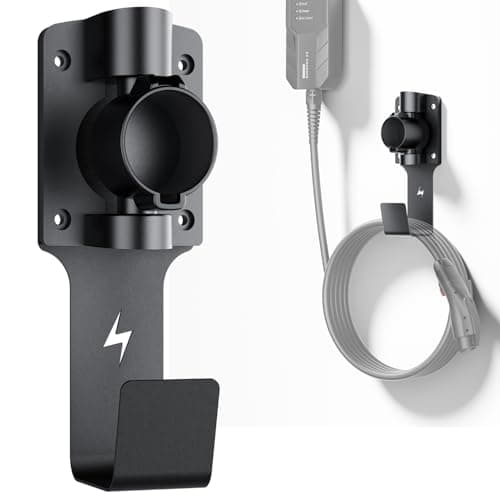
A tight wall where the handle needs to swing
FOCSPROD Rotating J1772 Holder with Metal J-Hook
A 180-degree rotating dock plus a metal hook. The rotation is the point: in a narrow garage the handle has to be able to point away from the car's path.
#ad Price as of October 5, 2026. How we make money
We earn commission on qualifying purchases at no cost to you. Affiliate disclosure.
Outdoors
Everything above applies, plus: get it above the snow line, under an eave if there is one, and out of direct afternoon sun if you can — UV is what chalks a white charger gray over years, regardless of its NEMA rating. A drip loop in the cable below the entry point costs nothing and keeps water running off rather than tracking in. Full detail on our outdoor installation guide.