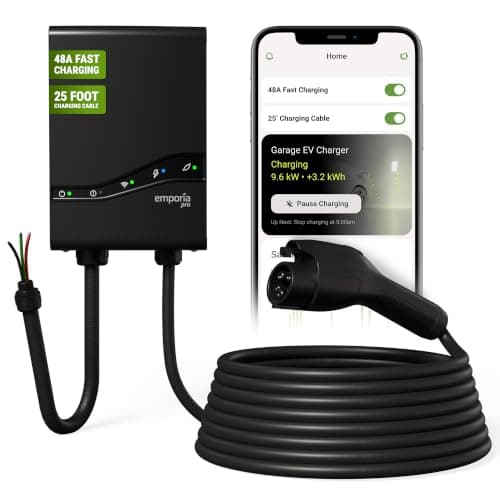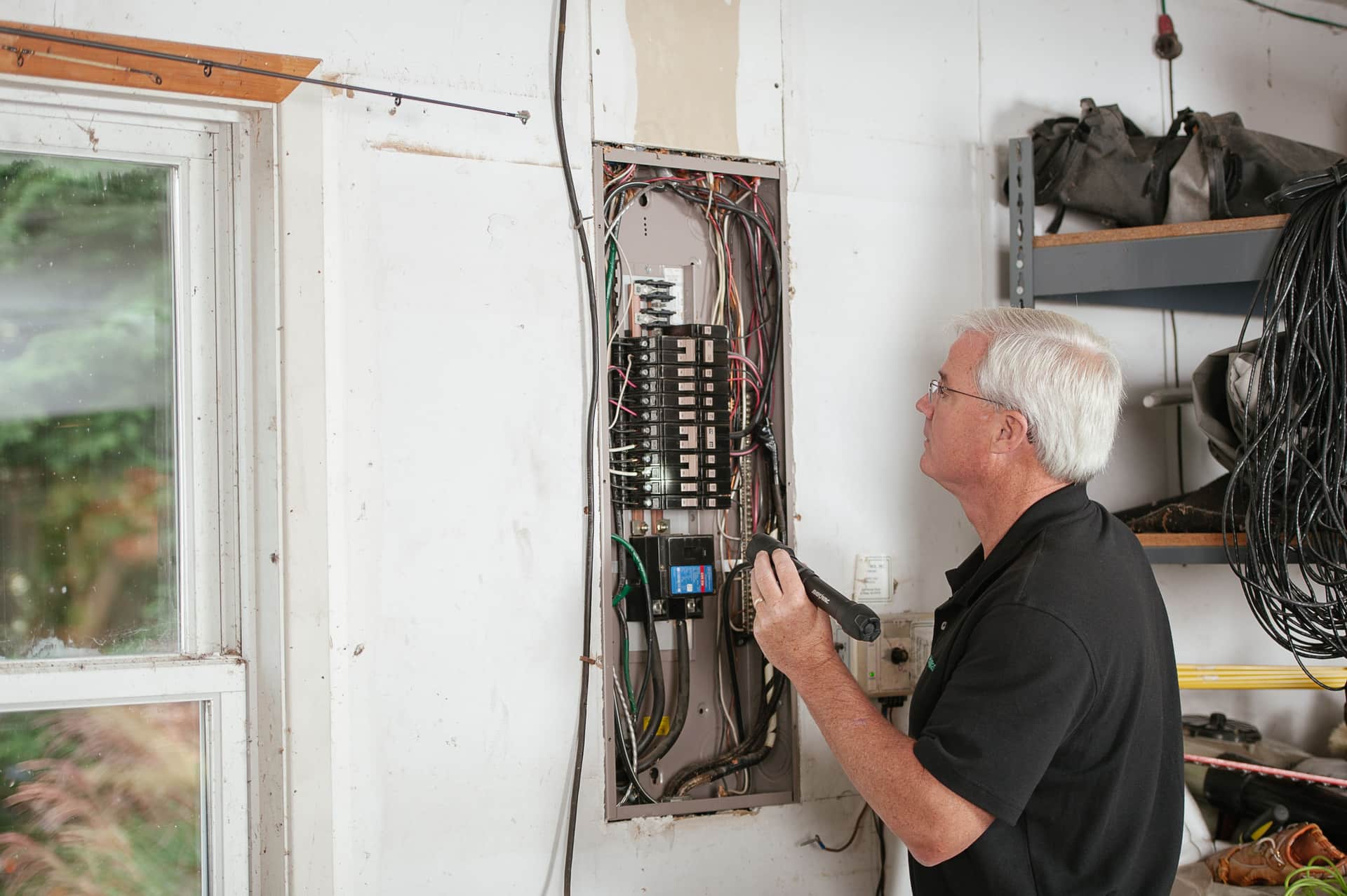
The short answer
Four phases: decide (car's limit, load calculation, amperage, hardwired or plug-in), choose (charger, cable length, mounting position), prepare (quotes, permit, parts on hand, access cleared), and verify (inspection passed, terminations torqued, a test charge, holster fitted). Working through them in that order is what turns this from a project into an appointment.
Phase 1 — Decide (before you call anyone)
- Find your car's maximum AC onboard rate. From the manual or our limits table. This caps everything downstream.
- Get an Article 220 load calculation, and ask for the optional method as well as the standard one. See can my panel handle it.
- Take the lower of the two numbers. That is your amperage. What amp do I need.
- Decide hardwired or plug-in. Hardwired for maximum rate and no GFCI breaker; plug-in if you rent or may move. The comparison.
Phase 2 — Choose
- Measure for cable length. Park the car where it will live, measure to the charge port along the cable's route, add three to five feet of slack. Mounting height and position.
- Pick the charger. At your amperage, with a cable that reaches, in the connector your car uses. Our picks.
- Mark the mounting position on the wall in pencil. Check the car door's swing and the panel's working space.
Phase 3 — Prepare
- Get three itemized quotes against the same written brief. The nine questions.
- Confirm who pulls the permit and whether inspection is included.
- Buy the parts you are specifying yourself — an industrial receptacle if plug-in, a surge protective device, the holster and hook.
- Clear access to the panel, the run and the mounting wall. Move the shelving before they arrive, not during billable time.
The parts to have on hand
Four things an electrician will not upgrade unless you have them on site and ask. Together they cost a fraction of the labor.
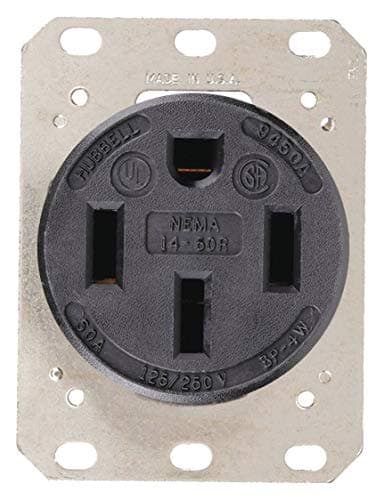
The one part not to save money on
Hubbell HBL9450A NEMA 14-50 Receptacle (industrial)
An industrial-grade 14-50 receptacle. An EV draws 40 A continuously for hours, which is a duty cycle the cheap builder-grade receptacles were never designed for — this is the part that stops a plug-in install from browning its own contacts.
#ad Price as of October 5, 2026. How we make money
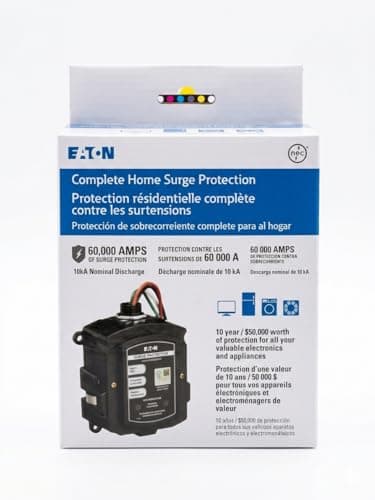
Protecting a charger that is wired into the panel
Eaton CHSPT2ULTRA Whole-Home Surge Protector
A panel-mounted Type 2 device rated at 60 kA. A hardwired charger has no plug to put a surge strip on, so the protection has to live at the panel — and it is cheap next to the charger it protects.
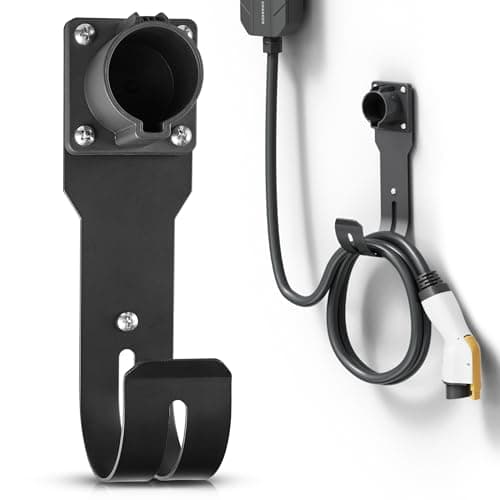
Getting the handle and the cable off the floor
MECMO J1772 Holster Dock and J-Hook
A holster for the handle plus a hook for the loop. The cheapest meaningful upgrade to any charging setup, because a handle that lives on the floor gets stepped on, driven over and eventually fails.
#ad Price as of October 5, 2026. How we make money
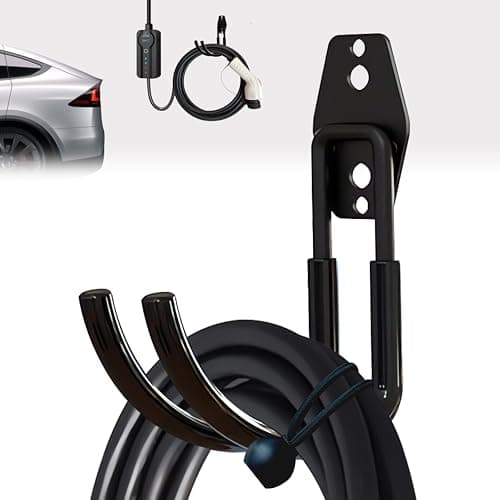
A heavy 25 ft cable that bends plastic hooks
Nexoroot Heavy-Duty Steel EV Cable J-Hook
Steel rather than plastic, which matters with 25 feet of 8 AWG cable hanging on it — the full loop of a premium charger's lead is heavier than people expect.
#ad Price as of October 5, 2026. How we make money
We earn commission on qualifying purchases at no cost to you. Affiliate disclosure.
Phase 4 — Verify (before you pay the final invoice)
- Inspection passed, with documentation. Pay after sign-off, not before. What the inspector checks.
- Breaker and conductor match what was quoted. Look at the breaker's rating with your own eyes. It takes five seconds.
- A full test charge. Plug in, confirm the charger reaches its rated current, and leave it for an hour. How to test it.
- Nothing is warm that should not be. Check the receptacle face, the plug and the breaker after an hour at full current. Warm is normal; hot is not.
A note on the federal credit
Do not budget for one. The Section 30C residential credit covered installations beginning January 1, 2023 through June 30, 2026 per the US DOE's Alternative Fuels Data Center. A charger placed in service after that date receives no federal credit. State and utility programs may still apply — the 2026 position.