The short answer
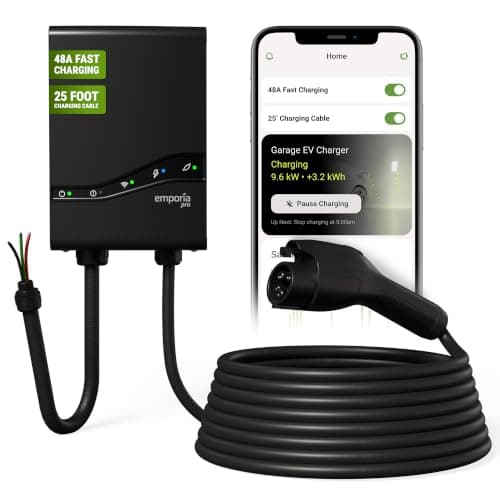
Ask three licensed, insured electricians for an itemized quote, and ask each one the same nine questions below. The two that matter most: have you installed this specific charger before, and will you run an Article 220 load calculation and tell me the largest charger my service supports. An electrician who answers both well will give you a better install than the cheapest quote.
The nine questions
- "Are you licensed and insured, and can I have the license number?" A reasonable question that a good contractor answers without friction. Verify the number with your state board.
- "Have you installed EV chargers before — and this model?" Experience with the specific unit matters more than it sounds: conduit entry, clearance requirements and terminal torque vary, and the manual governs.
- "Will you run an Article 220 load calculation, and what does it say my service supports?" This is the question that separates arithmetic from guesswork. If the answer is "you'll need a 200 amp service" with no calculation behind it, keep looking.
- "If capacity is tight, would a load-managed charger avoid a service upgrade?" The cheapest option. An electrician who has not considered it has skipped a step.
- "Hardwired or plug-in, and why for my situation?" There is a right answer per house. An electrician with a view and a reason is a good sign; a default is less so.
- "What conductor and breaker, and what installation method?" You want gauge, material and method — THHN in conduit or NM-B. If they say 8 AWG Romex for a 50 A breaker, ask about NEC 334.80.
- "Do you pull the permit, and is inspection included?" They should, and it should be. Anyone suggesting you skip it has told you something important.
- "Can you fit whole-home surge protection while the panel is open?" Cheap now, a service call later.
- "What is the warranty on your labor, and who handles a charger warranty claim?" Twelve months on labor is common. Know who you call for which problem.
Making three quotes comparable
Quotes for this work routinely differ by a factor of two or three, and it is almost always scope rather than greed. Give every electrician the same brief and you remove most of the variance:
- The exact charger, by make and model, and whether you are supplying it.
- The amperage you want, and that you expect them to confirm it against a load calculation.
- The mounting position, marked on the wall. Not "in the garage".
- Hardwired or plug-in, and that you want an industrial-grade receptacle if plug-in.
- That you want it itemized — charger, breaker, conductors, conduit, receptacle, labor, permit, patching.
- That you want surge protection priced as a line item.
Then read the line items, not the totals. Our installation cost page has the complete list of what should be there.
Signs you have found a good one
- They ask what car you drive before quoting an amperage.
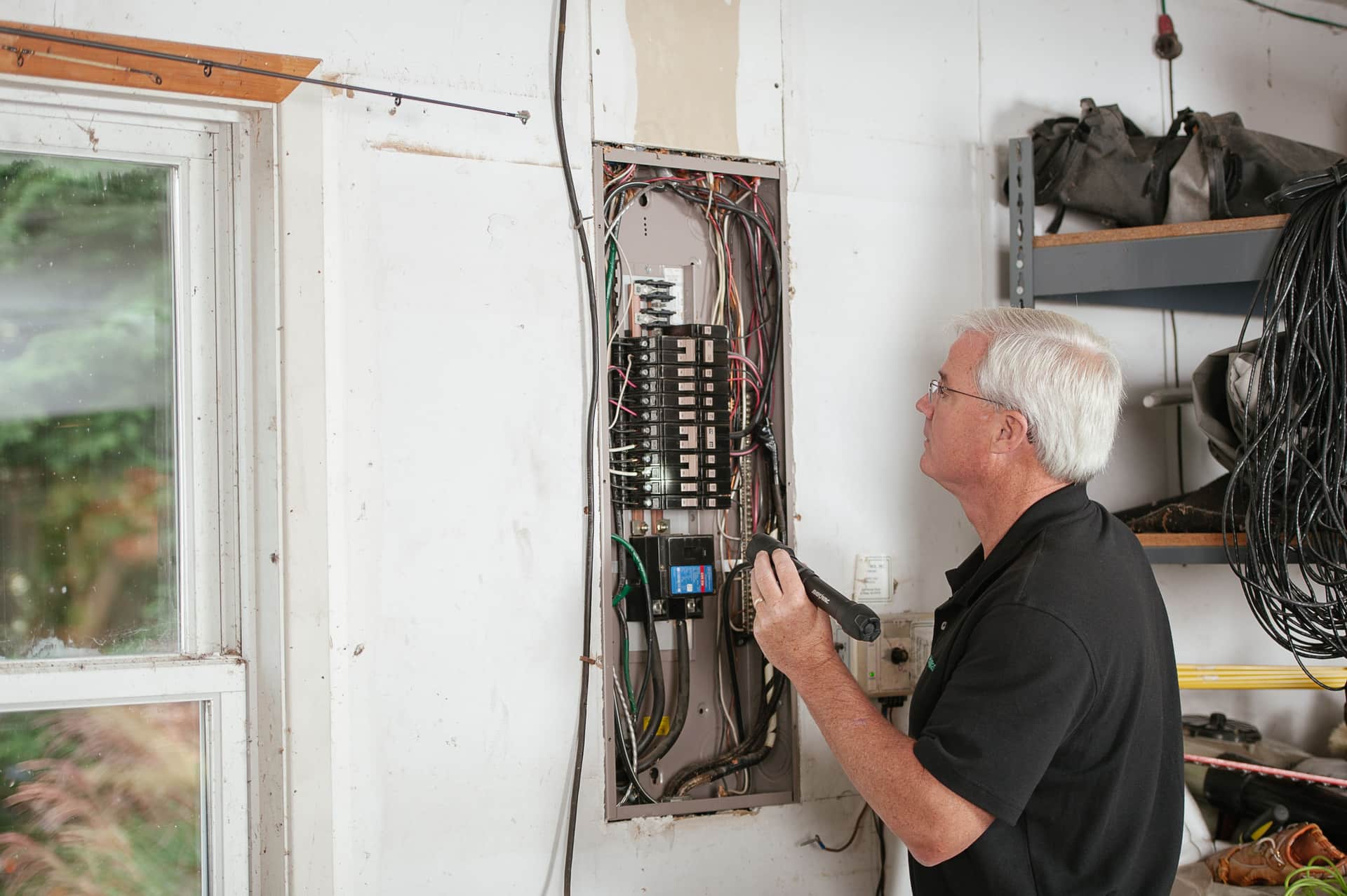
- They open the panel and look before giving you a number.
- They mention the permit without being asked.
- They ask where the car parks, not just where you want the box.
- They have an opinion about hardwired against plug-in, and a reason for it.
- They know the difference between the 60 degC and 75 degC ampacity columns and why NM-B matters.
Signs to walk away
- "We don't need a permit for this." The single clearest signal.
- A service upgrade quoted with no load calculation. It may be the right answer; it has not been shown to be.
- Cash only, no written quote. No paper trail is the problem, not the price.
- Reluctance to give a license number.
- "The receptacle doesn't matter, they're all the same." They are not, and this is the most documented failure point in a plug-in install.
- A quote dramatically below the others with no explanation of why. Usually a difference in scope you will discover later.
Where to find candidates
- Your utility's installer list. Many utilities with EV programs maintain one, and being on it usually means some vetting.
- The charger manufacturer's installer network, where one exists. Familiarity with the specific unit is genuinely worth something.
- Your state licensing board's directory, which at minimum confirms the license is current.
- Local EV owner groups. Blunt, specific, and recent — the most useful source in practice.
What to have ready before you call
Five minutes of preparation gets you better quotes:
- A photo of your open panel and the main breaker rating.
- Your car's maximum AC onboard rate, from our limits table or your manual.
- The charger you want, by model.
- The mounting spot, measured from where the car's charge port sits.
- A rough list of what is electric in the house — heat, range, water heater, dryer, hot tub. This is the first thing a good electrician will ask.
Specify these yourself
Three parts an electrician will not upgrade unless asked, and that cost little relative to the problems they prevent.
The one part not to save money on
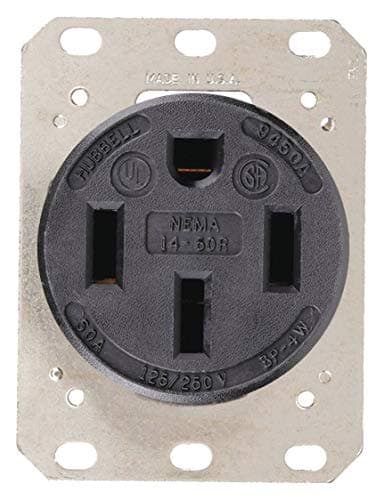
Hubbell HBL9450A NEMA 14-50 Receptacle (industrial)
An industrial-grade 14-50 receptacle. An EV draws 40 A continuously for hours, which is a duty cycle the cheap builder-grade receptacles were never designed for — this is the part that stops a plug-in install from browning its own contacts.
#ad Price as of October 5, 2026. How we make money
Protecting a charger that is wired into the panel
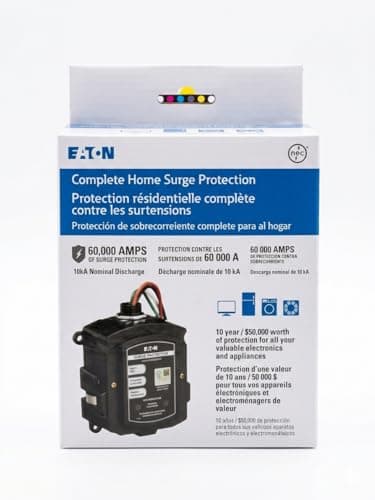
Eaton CHSPT2ULTRA Whole-Home Surge Protector
A panel-mounted Type 2 device rated at 60 kA. A hardwired charger has no plug to put a surge strip on, so the protection has to live at the panel — and it is cheap next to the charger it protects.
Knowing what your panel is actually doing
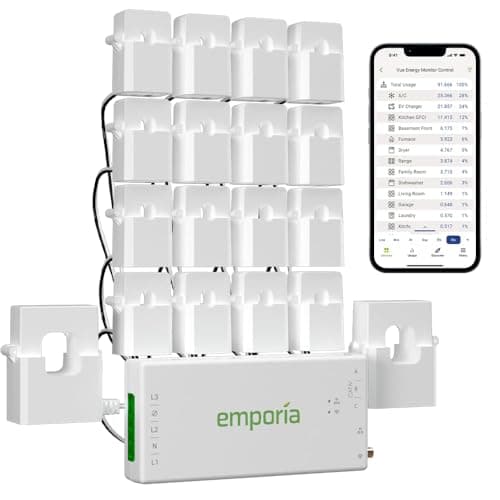
Emporia Vue 3 Home Energy Monitor
The cheapest way to replace a load calculation's assumptions with measurements. If your panel is marginal, a month of real data from this tells you whether a 48 A charger fits better than any rule of thumb will.
#ad Price as of October 5, 2026. How we make money
We earn commission on qualifying purchases at no cost to you. Affiliate disclosure.