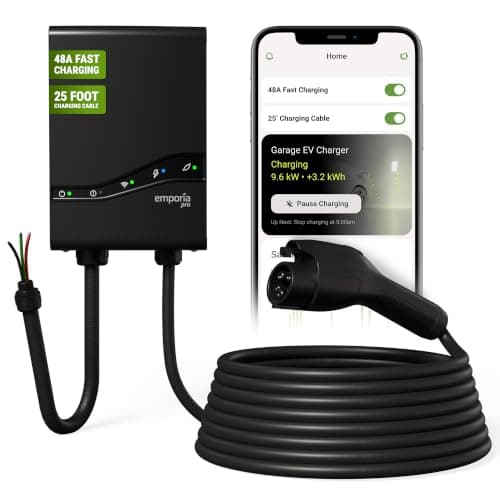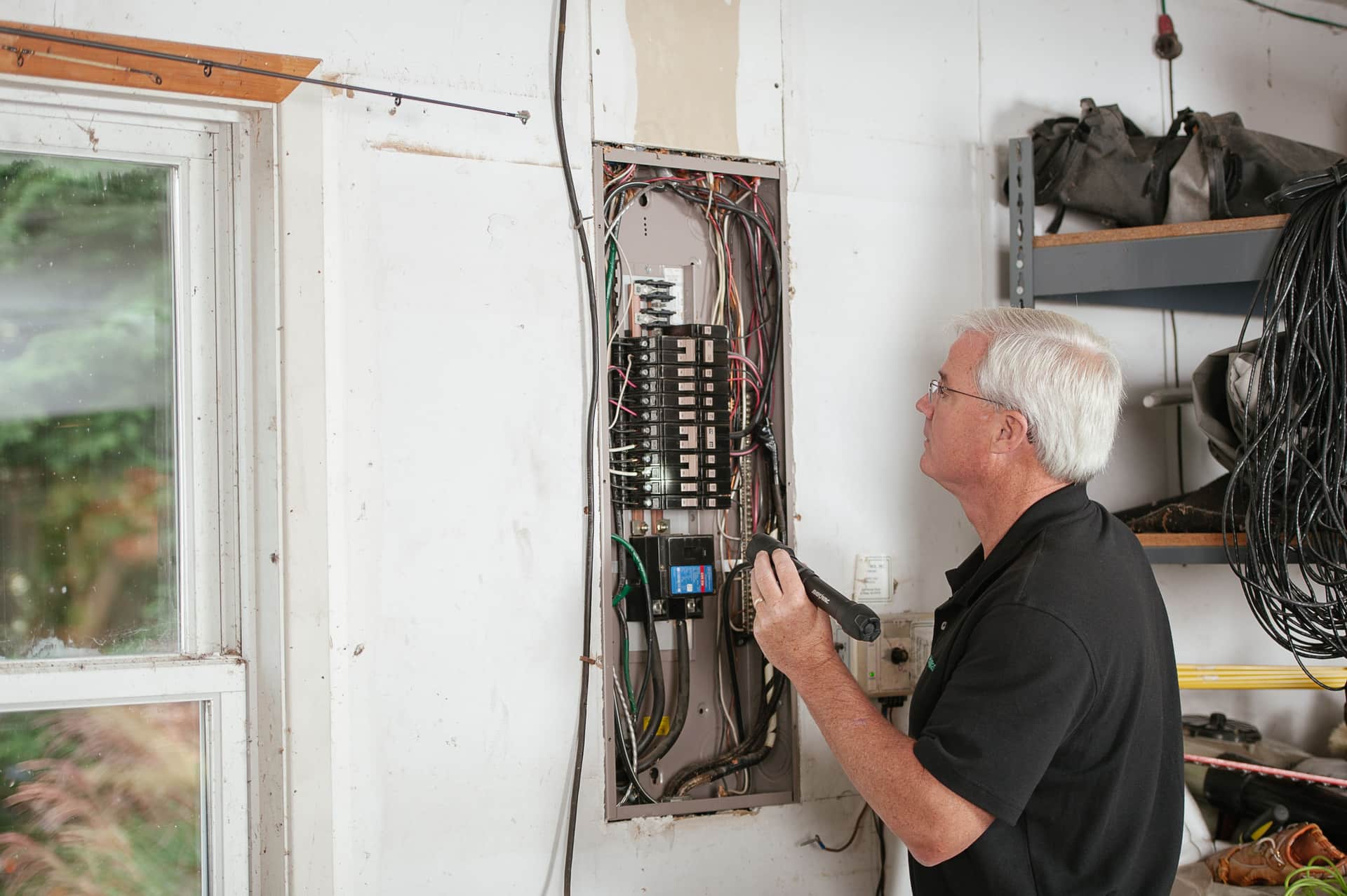
The short answer
Mounting the charger, fitting a cable holster and running surface conduit are reasonable DIY tasks. Landing conductors in a live service panel and energizing a new 240 V circuit is work that in most jurisdictions requires a licensed electrician and a permit — and even where a homeowner may legally do it, the permit and inspection are not optional. The US Department of Energy recommends a qualified electrician assess capacity and perform the work.
The honest breakdown
| Task | Homeowner? | Why |
|---|---|---|
| Choosing the charger and amperage | Yes | That is what this site is for |
| Deciding the mounting location | Yes | You know where the car parks |
| Mounting the charger to the wall | Usually | Anchors into studs or masonry. Follow the manual's clearances |
| Fitting a cable holster and J-hook | Yes | Two screws |
| Running surface conduit in an unfinished garage | Sometimes | Mechanical work — but what goes in it is not |
| Pulling conductors | No | Part of the circuit, inspected as a whole |
| Landing conductors at the charger | No | Torque specs, correct terminations, and it is part of the permitted work |
| Fitting the breaker in a live panel | No | The task with the highest consequence of error in the whole project |
| Load calculation | No | An Article 220 calculation is part of what the permit is for |
| Filing the permit | Sometimes | Many jurisdictions allow a homeowner permit; the inspection still applies |
Why we say no even where the law says maybe
This is not a comment on anyone's competence. It is about three consequences that sit outside the technical question.
Insurance
If an electrical fire originates at an unpermitted circuit, the existence of the permit is one of the first things an insurer establishes. A permitted, inspected installation performed by a licensed contractor is a documented chain of responsibility. An unpermitted one is you.
Resale
Unpermitted electrical work turns up in inspections and it becomes a negotiating item, sometimes an expensive one. A permitted install with an inspection record is an asset on a disclosure form. An undocumented 60 A circuit in the garage is a liability.
The failure mode is slow and invisible
A badly terminated 240 V circuit does not fail dramatically on day one. It heats slightly under a continuous 40 A load, oxidizes, loosens, heats more. By the time there is a smell, it has been degrading for months. There is no feedback loop that tells an amateur they got the torque wrong — which is precisely what inspection exists to catch.
What you genuinely should do yourself
The work that improves the outcome and that nobody else will do as carefully:
- Decide the amperage properly. Find your car's onboard limit, get a load calculation, and take the lower number. An electrician will fit what you ask for; what you ask for is your decision. What amp do I need.
- Pick the mounting position by measuring. Park the car where it will live, note where the charge port is, and measure to the proposed mounting point. Add slack for the cable to loop clear of the floor. This single step prevents the most common post-install regret.
- Buy a good receptacle, if it is a plug-in install. Specify it. An electrician will fit whatever is in the van unless you ask.
- Ask for surge protection while the panel is open. It will not be offered.
- Fit the holster and the hook afterwards. Twenty dollars, ten minutes, and it is the difference between a handle that lasts ten years and one that gets driven over.
The parts worth specifying yourself
Three things an electrician will not upgrade unless you ask, and that cost very little relative to what they prevent.
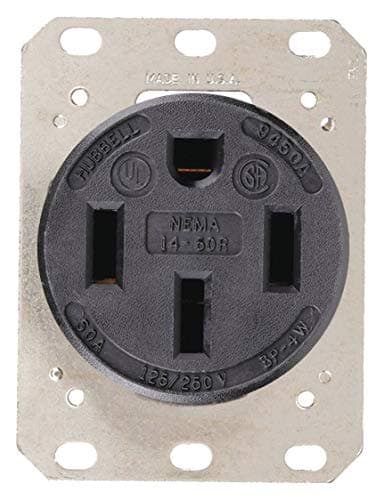
The one part not to save money on
Hubbell HBL9450A NEMA 14-50 Receptacle (industrial)
An industrial-grade 14-50 receptacle. An EV draws 40 A continuously for hours, which is a duty cycle the cheap builder-grade receptacles were never designed for — this is the part that stops a plug-in install from browning its own contacts.
#ad Price as of October 5, 2026. How we make money
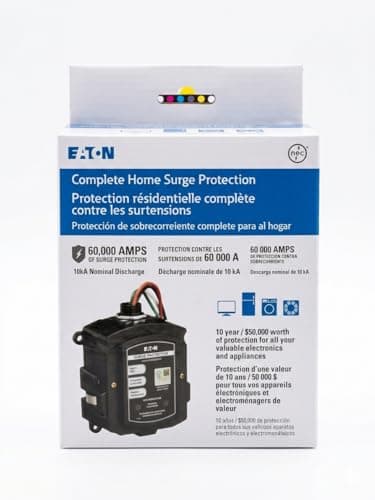
Protecting a charger that is wired into the panel
Eaton CHSPT2ULTRA Whole-Home Surge Protector
A panel-mounted Type 2 device rated at 60 kA. A hardwired charger has no plug to put a surge strip on, so the protection has to live at the panel — and it is cheap next to the charger it protects.
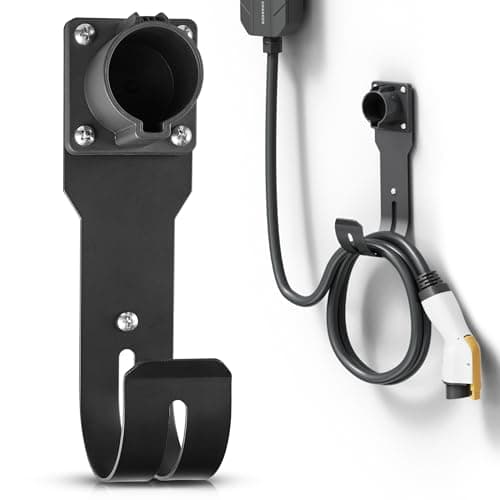
Getting the handle and the cable off the floor
MECMO J1772 Holster Dock and J-Hook
A holster for the handle plus a hook for the loop. The cheapest meaningful upgrade to any charging setup, because a handle that lives on the floor gets stepped on, driven over and eventually fails.
#ad Price as of October 5, 2026. How we make money
We earn commission on qualifying purchases at no cost to you. Affiliate disclosure.
If you are determined to do the circuit yourself
Then do it the way a professional would, which means all of this and not a subset:
- Pull a permit. Non-negotiable. The inspection is the only external check on your work.
- Get a real load calculation, or have one done. Guessing here is how a main breaker ends up tripping in January.
- Follow NEC 625.41 and 625.42 for the breaker, and NEC Table 310.16 (with 334.80 if using NM-B) for the conductors. Our breaker chart and wire size guide give you the figures.
- Torque every termination to specification with a torque screwdriver, not by feel. This is the detail that separates a safe install from a slow failure.
- Use the charger manufacturer's instructions as the governing document for clearances, conduit entry and conductor sizing at the unit.
- Have the inspector sign it off before you use it.