The short answer
Six checks: confirm the breaker rating matches the quote, confirm the charger reaches its rated current (in the car's display or the charger's app), run a full hour at that current, then feel the receptacle, plug and breaker — warm is normal, hot is not. Then verify the GFCI test button works if there is one, and confirm the inspection documentation exists.
Check 1 — The breaker rating
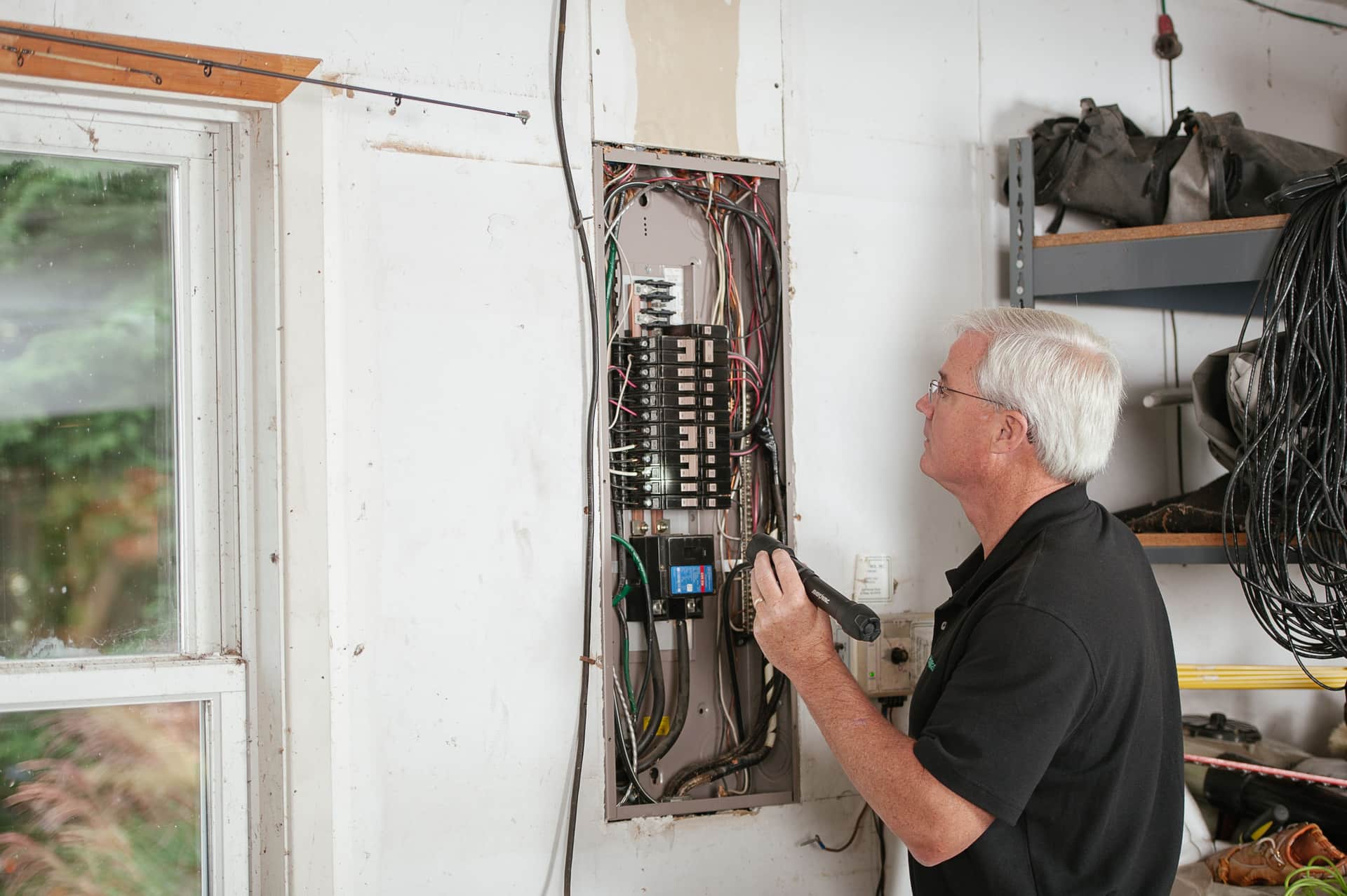
Open the panel door (the door, not the cover) and read the number on the new two-pole breaker. It should match what the quote said and what your amperage requires: 40 A for a 32 A charger, 50 A for 40 A, 60 A for 48 A. If a receptacle is involved it should be a GFCI breaker, which is visibly different — it has a test button.
Five seconds, and it catches the rare case where a different breaker went in than was quoted.
Check 2 — Actual delivered current
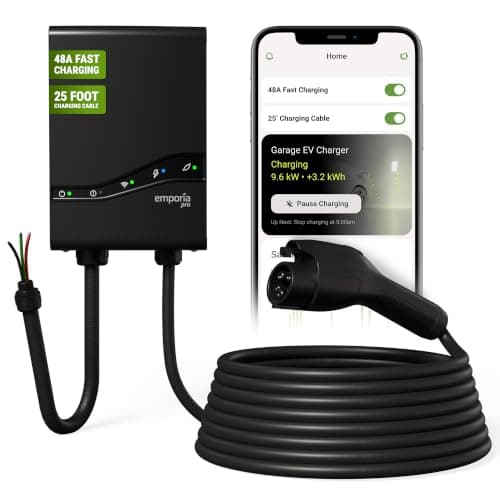
Plug in and look at the number. Most cars display charging amps or kW while charging; most smart chargers show it in the app. You are looking for the charger's rated output, not a lower figure.
| Charger set to | Amps at the car | kW at 240 V |
|---|---|---|
| 32 A | 32 A | about 7.7 kW |
| 40 A | 40 A | about 9.6 kW |
| 48 A | 48 A | about 11.5 kW |
The commonest cause of "my new charger is slow" is not a wiring fault. It is a charger shipped set to a lower default: the EVIQO 48 A unit ships set to 40 A, and several units default low deliberately. Check the setting before you call anyone.
The second commonest cause is the car, not the charger. If your car's onboard limit is 32 A, 32 A is all you will ever see — see onboard charger limits.
Check 3 — The one-hour thermal check
This is the most valuable thing on this page. Charge at full current for an hour, then touch, with the back of your hand:
- The receptacle cover plate, if plug-in. Slightly warm is normal. Uncomfortable to hold is not.
- The charger's plug body, if plug-in. Same standard.
- The breaker's face in the panel. Slightly warm is normal.
- The charger body. Warm is expected — it is converting power.
A bad termination announces itself as heat long before it announces itself as damage. Finding it in week one, under warranty, with the electrician's number still in your phone, is the difference between a ten-minute fix and a replaced receptacle.
Repeat this check at a month and at six months. The failure is progressive; a single early check is good and three are better.
Check 4 — The GFCI test button
If a GFCI breaker was fitted (it will have been, for a receptacle install), press its test button with the car charging. The breaker should trip. Reset it and charging should resume.
If it will not reset, or trips again on its own, that is a real finding — call the electrician. And if it starts nuisance-tripping over the following weeks, our GFCI page covers what is going on and what the fixes actually are.
Check 5 — A full charge, overnight
Run a complete session end to end. You are checking that nothing trips in the small hours, that the charger terminates cleanly when the car is full, and that the car reports the energy you would expect. Compare against EPA's published 240 V charge time for your trim as a sanity check — our vehicle pages list it.
Check 6 — The paperwork
- Inspection sign-off, in writing. Keep it with the house documents — it matters at resale.
- The invoice, itemized, showing the breaker and conductor actually used.
- The charger's warranty registration, done. Several manufacturers require registration within a window.
- The charger's manual, filed. You will want the clearance and reset information eventually.
What to do if something is wrong
| Symptom | Most likely cause | First action |
|---|---|---|
| Charging slower than expected | Charger set low, or the car's own limit | Check the charger's amperage setting, then the car's onboard rating |
| Receptacle or plug hot | A loose or poor termination | Stop charging. Call the electrician |
| GFCI trips intermittently | Charger CCID and breaker interaction | Rule out a real fault, then see our GFCI page |
| Charger will not start a session | Handshake, or the car's own schedule | Check the car's scheduled charging setting first |
| Breaker trips under load | Undersized circuit, or a service at its limit | Stop. Call the electrician and ask about the load calculation |
| Charger reports a ground fault | Could be real | Stop charging. This one is not for self-diagnosis |