The short answer
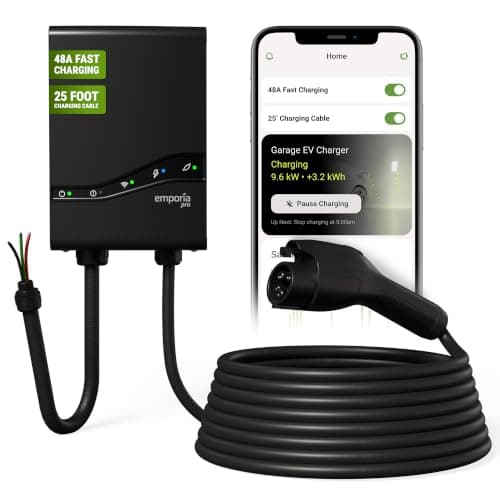
An EV charger's breaker must be rated at at least 125% of the charger's continuous output, because NEC 625.42 classifies EV charging as a continuous load and NEC 625.41 sets the 125% rule. So: a 32 A charger needs a 40 A breaker, a 40 A charger needs a 50 A breaker, and a 48 A charger needs a 60 A breaker.
| Charger output | Power at 240 V | Breaker | Copper (75 degC) | Aluminum (75 degC) | NM-B cable |
|---|---|---|---|---|---|
| 16 A | 3.8 kW | 20 A | 12 AWG | 10 AWG | 12/2 |
| 24 A | 5.8 kW | 30 A | 10 AWG | 8 AWG | 10/2 |
| 32 A | 7.7 kW | 40 A | 8 AWG | 6 AWG | 8/2 |
| 40 A | 9.6 kW | 50 A | 8 AWG | 6 AWG | 6/2 |
| 48 A | 11.5 kW | 60 A | 6 AWG | 4 AWG | 6/2 |
| 50 A | 12.0 kW | 70 A | 4 AWG | 3 AWG | Not practical |
| 64 A | 15.4 kW | 80 A | 3 AWG | 1 AWG | Not practical |
| 80 A | 19.2 kW | 100 A | 3 AWG | 1 AWG | Not practical |
Why 125% and not 100%
Ordinary branch circuits are sized to the load. EV charging is not an ordinary load: the car draws its full current continuously for hours, which heats conductors and breakers in a way that intermittent loads do not. The code recognizes this explicitly.
NEC 625.42 reads that "electric vehicle charging loads shall be considered to be continuous loads". NEC 625.41 then requires that overcurrent protection for feeders and branch circuits supplying EVSE "shall be sized for continuous duty and shall have a current rating of not less than 125 percent of the maximum load of the equipment". The US Department of Energy's Alternative Fuels Data Center states the same thing: EV charging infrastructure "is considered a continuous load by the National Electrical Code".
The 125% factor is the inverse of the familiar 80% rule — a breaker may carry 80% of its rating continuously. Both describe the same margin from different ends. It is also why a NEMA 14-50 receptacle on a 50 A circuit gives you a 40 A charger and not a 50 A one.
The row that catches people: 40 A
A 40 A charger needs a 50 A breaker, and 8 AWG copper is good for 50 A at 75 degC — so 8 AWG looks correct, and in conduit it is. But if you are running NM-B cable (Romex), NEC 334.80 limits the assembly to the 60 degC column, where 8 AWG is only good for 40 A. That is below the 50 A breaker, so NM-B at that breaker size steps up to 6/2.
This single detail accounts for a large share of the disagreement you will find in forum threads about EV charger wiring. Both camps are right; they are describing different installation methods. Our wire size guide works through it properly.
Hardwired against receptacle-fed
| Install method | Max continuous output | Breaker | GFCI required? |
|---|---|---|---|
| Hardwired | The charger's full rating (e.g. 48 A) | 125% of output | No — NEC 625.54 covers receptacles |
| NEMA 14-50 receptacle | 40 A (80% of the 50 A circuit) | 50 A | Yes — NEC 625.54 |
| NEMA 14-30 receptacle | 24 A (80% of the 30 A circuit) | 30 A | Yes — NEC 625.54 |
| NEMA 6-50 receptacle | 40 A | 50 A | Yes — NEC 625.54 |
Two things the chart cannot tell you
Voltage drop over a long run. The chart sizes conductors for ampacity, which is a heat question. On a long run there is a second question — how much voltage you lose on the way — and the usual target is to keep it under 3%. Over about 100 feet at 48 A, that can mean going up a size beyond what ampacity alone requires. Your electrician calculates it from the actual distance.
Your breaker's and charger's terminal temperature rating. The 75 degC column assumes 75 degC-rated terminations, which most modern equipment has. If any part of the path is rated 60 degC, the whole circuit is governed by the lower rating. This is exactly the kind of detail that makes the final determination an electrician's call rather than a chart's.
The parts, at the sizes above
Breakers and conductors for the common sizes
Breakers are panel-specific — fitting the wrong brand into a panel voids its listing, and an inspector will notice. Check what your load center takes before ordering.
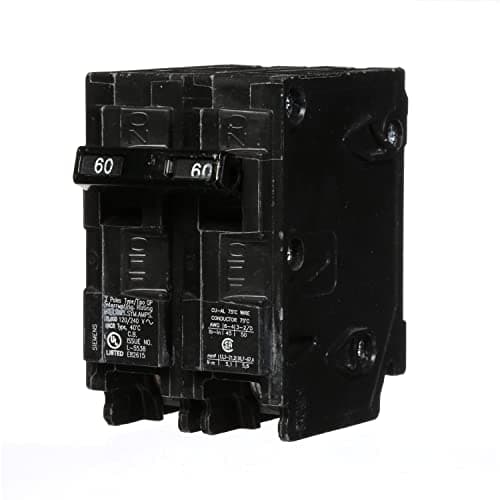
A 48 A charger in a Siemens or Murray panel
Siemens Q260 60 A Double-Pole Breaker
The standard 60 A two-pole breaker for a 48 A hardwired charger — 48 A x 125% = 60 A, exactly as NEC 625.41 requires.
#ad Price as of October 5, 2026. How we make money
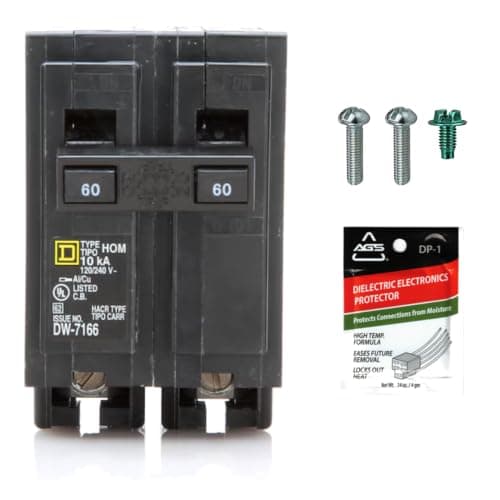
A 48 A charger in a Square D Homeline panel
Square D HOM260 60 A Double-Pole Breaker
The Homeline 60 A two-pole, for the single most common residential panel in the US. Match the breaker to the panel's listing, not to price.
#ad Price as of October 5, 2026. How we make money
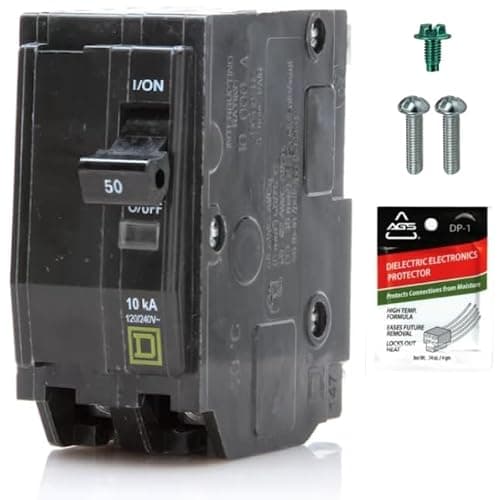
A 40 A charger or a 14-50 receptacle circuit
Square D QO250 50 A Double-Pole Breaker
50 A two-pole: the breaker for a 40 A charger (40 x 1.25 = 50) and for a NEMA 14-50 receptacle. Note that a receptacle circuit also needs GFCI protection under NEC 625.54.
#ad Price as of October 5, 2026. How we make money
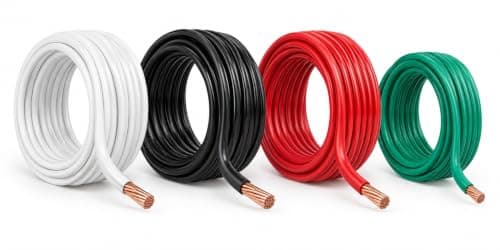
A 60 A circuit for a 48 A charger
6 AWG THHN Copper Wire Set with 8 AWG Ground (50 ft)
6 AWG copper carries 65 A at 75 degC, which is what a 60 A breaker and a 48 A charger require. Buying the conductors as a matched set with the correctly sized equipment ground saves a trip.
#ad Price as of October 5, 2026. How we make money
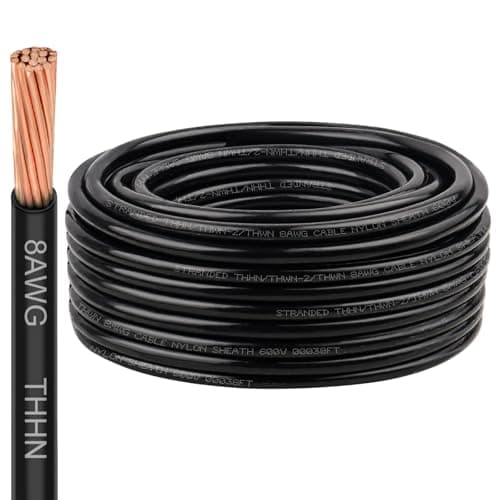
A 40 A circuit for a 32 A charger
8 AWG THHN Stranded Copper Wire (100 ft)
8 AWG copper is good for 50 A at 75 degC, which covers a 40 A breaker and a 32 A charger. This is the gauge that makes a 32 A install dramatically cheaper and easier than a 48 A one.
#ad Price as of October 5, 2026. How we make money
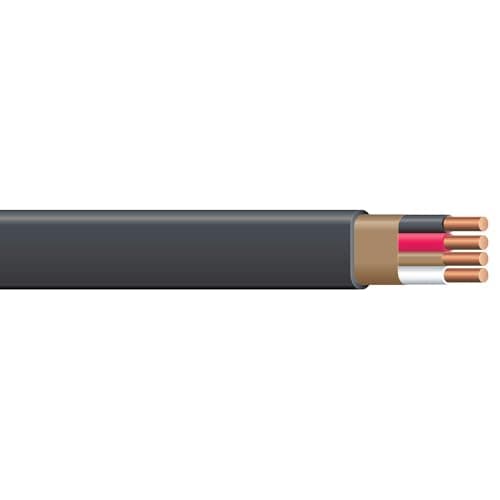
An indoor 48 A run inside a finished wall
Woods 6/3 NM-B Cable with Ground (50 ft)
6/3 NM-B carries 55 A under NEC 334.80, which limits the cable assembly to the 60 degC column regardless of the THHN conductors inside it. That is enough for a 48 A charger on a 60 A breaker; it is NOT enough to assume from the conductor gauge alone.
#ad Price as of October 5, 2026. How we make money
We earn commission on qualifying purchases at no cost to you. Affiliate disclosure.