The short answer
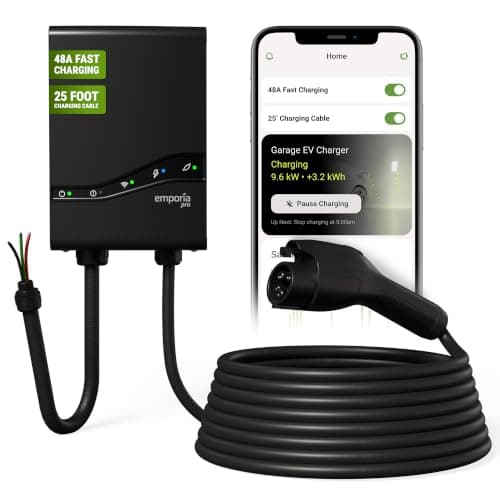
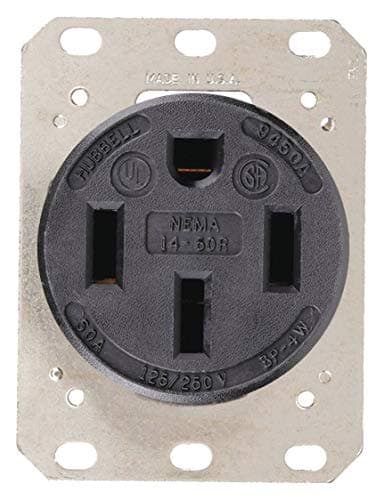
For a 48 A hardwired charger you need a 60 amp two-pole breaker — NEC 625.41 requires overcurrent protection at not less than 125% of a continuous load, and 48 x 1.25 = 60. For a 40 A charger, a 50 A two-pole. If the charger plugs into a receptacle, NEC 625.54 adds a GFCI requirement. The one thing you do not get to choose is the brand: a breaker must be the type your panel is listed for, and fitting another manufacturer's device voids that listing.
Quick picks
Ranked by fit for the stated use case first, then price, then warranty and support. Tap any row to jump to the full assessment. Commission rate plays no part in the order.
| # | Product | Best for | Score | Price |
|---|---|---|---|---|
| 1 | 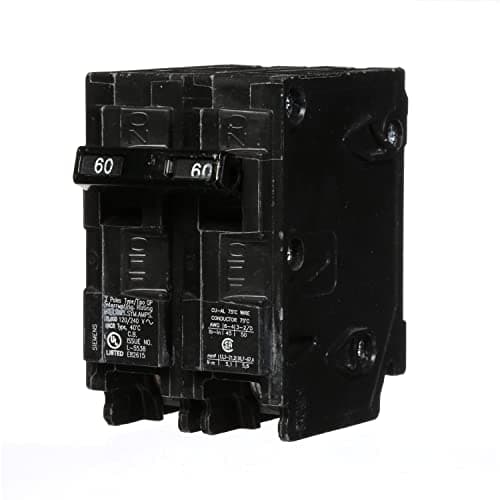 Siemens Q260 60 A Double-Pole BreakerThe standard 60 A two-pole breaker for a 48 A hardwired charger — 48 A x 125% = 60 A, exactly as NEC 625.41 requires. | A 48 A charger in a Siemens or Murray panel | 9.0 | |
| 2 | 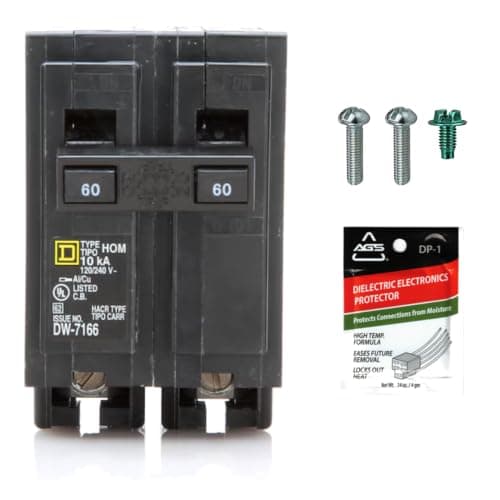 Square D HOM260 60 A Double-Pole BreakerThe Homeline 60 A two-pole, for the single most common residential panel in the US. | A 48 A charger in a Square D Homeline panel | 9.0 | |
| 3 | 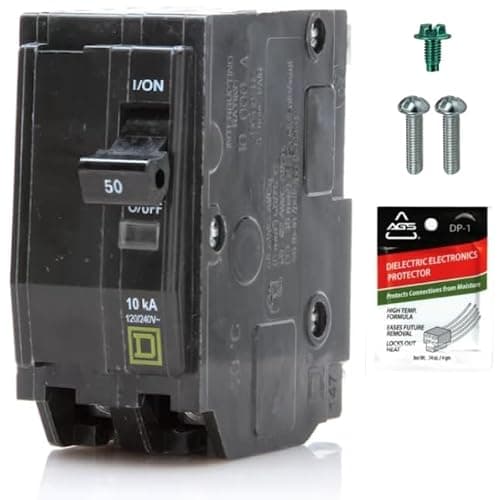 Square D QO250 50 A Double-Pole Breaker50 A two-pole: the breaker for a 40 A charger (40 x 1.25 = 50) and for a NEMA 14-50 receptacle. | A 40 A charger or a 14-50 receptacle circuit | 8.8 | |
| 4 | 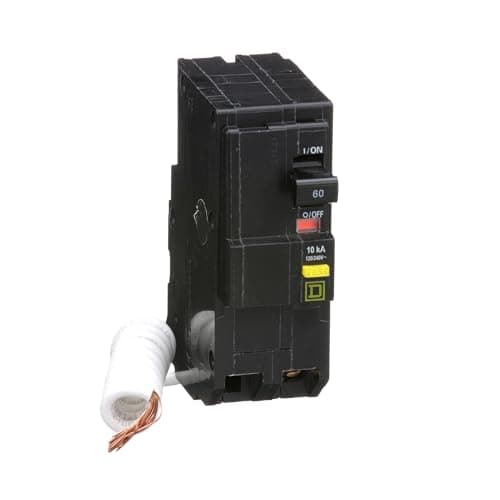 Square D QO260GFI 60 A 2-Pole GFCI BreakerIf your charger plugs into a receptacle, NEC 625.54 requires GFCI protection on that circuit, and this is the part that provides it. | A plug-in charger on a 14-50 receptacle circuit | 8.4 | $139.99View on Amazon $157.72 list · 11% off |
| 5 | 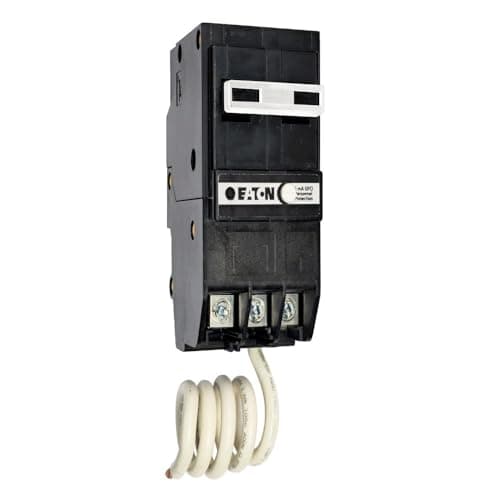 Eaton BRN260GF 60 A 2-Pole GFCI BreakerEaton's 60 A two-pole GFCI for a BR-series panel. | The same job in an Eaton BR panel | 8.2 |
Work out your size first
The breaker follows from the charger's output, not the other way round. Get this from the charger's documentation or its switch setting, not from the model name.
| Charger output | Breaker | Copper (75 degC) | GFCI required? |
|---|---|---|---|
| 16 A / 3.8 kW | 20 A two-pole | 12 AWG | Only if plug-in |
| 24 A / 5.8 kW | 30 A two-pole | 10 AWG | Only if plug-in |
| 32 A / 7.7 kW | 40 A two-pole | 8 AWG | Only if plug-in |
| 40 A / 9.6 kW | 50 A two-pole | 8 AWG | Yes if on a 14-50 |
| 48 A / 11.5 kW | 60 A two-pole | 6 AWG | Generally no — hardwired |
| 50 A / 12 kW | 70 A two-pole | 4 AWG | No — hardwired only |
Then match the brand to your panel, not to price
| Panel | Breaker line | 60 A two-pole | GFCI 60 A two-pole |
|---|---|---|---|
| Siemens, Murray, ITE | Siemens QP | Siemens Q260 | Siemens QP-series GFCI |
| Square D Homeline | Homeline | Square D HOM260 | Homeline GFCI |
| Square D QO | QO | QO260 | Square D QO260GFI |
| Eaton BR | Eaton BR | Eaton BR260 | Eaton BRN260GF |
What we ranked on
- Correct sizing for a real charger output, with the NEC 625.41 arithmetic shown rather than asserted.
- Panel compatibility clearly stated. A breaker that fits nothing you own is not a recommendation.
- Availability, because a breaker on backorder delays an install.
- GFCI self-test behavior on the ground-fault devices, which is where newer models behave better.
The picks
1. Siemens Q260 — 60 A for a Siemens, Murray or ITE panel
A 48 A charger in a Siemens or Murray panel
Siemens Q260 60 A Double-Pole Breaker
The standard 60 A two-pole for a 48 A hardwired charger in the Siemens QP family, which also covers Murray and ITE panels.
#ad Price as of October 10, 2026. How we make money
Inexpensive, universally stocked and exactly the right size for a 48 A charger. Thermal-magnetic with no ground-fault function, which is correct for a hardwired install under NEC 625.54.
2. Square D HOM260 — 60 A for the most common panel in US housing
A 48 A charger in a Square D Homeline panel
Square D HOM260 60 A Double-Pole Breaker
The Homeline 60 A two-pole. Homeline is the single most common residential load center in the US, so this is the most-needed part on the page.
#ad Price as of October 10, 2026. How we make money
If your panel label says Homeline, this is your breaker. It will not fit a QO panel — Square D's two residential lines share a brand and nothing else.
3. Square D QO250 — 50 A for a 40 A charger
A 40 A charger or a 14-50 receptacle circuit
Square D QO250 50 A Double-Pole Breaker
50 A two-pole in the QO line, for a 40 A hardwired charger. QO is the better of Square D's two residential lines.
#ad Price as of October 10, 2026. How we make money
The right size for a 40 A charger: 40 x 1.25 = 50. Note that if the 40 A charger is plugging into a 14-50 receptacle rather than hardwired, you need the GFCI version instead.
4 and 5. The GFCI breakers a plug-in install requires
Two-pole GFCI breakers for a receptacle-fed charger
NEC 625.54 requires GFCI protection for all receptacles installed for EV charging in the 2020 and 2023 editions. If your charger plugs in, this is not optional.
A plug-in charger on a 14-50 receptacle circuit
Square D QO260GFI 60 A 2-Pole GFCI Breaker
If your charger plugs into a receptacle, NEC 625.54 requires GFCI protection on that circuit, and this is the part that provides it. It is also the single most common cause of nuisance tripping in a home charging install.
The same job in an Eaton BR panel
Eaton BRN260GF 60 A 2-Pole GFCI Breaker
Eaton's 60 A two-pole GFCI for a BR-series panel. Same role, same caveat about nuisance tripping.
#ad Price as of October 10, 2026. How we make money
We earn commission on qualifying purchases at no cost to you. Affiliate disclosure.
Both do the same job in different panels — the Square D QO260GFI for a QO panel, the Eaton BRN260GF for a BR panel. Both cost several times a standard breaker, which is a real line item in the hardwired-versus-plug-in decision.
What a breaker does not solve
Two things people hope it will.
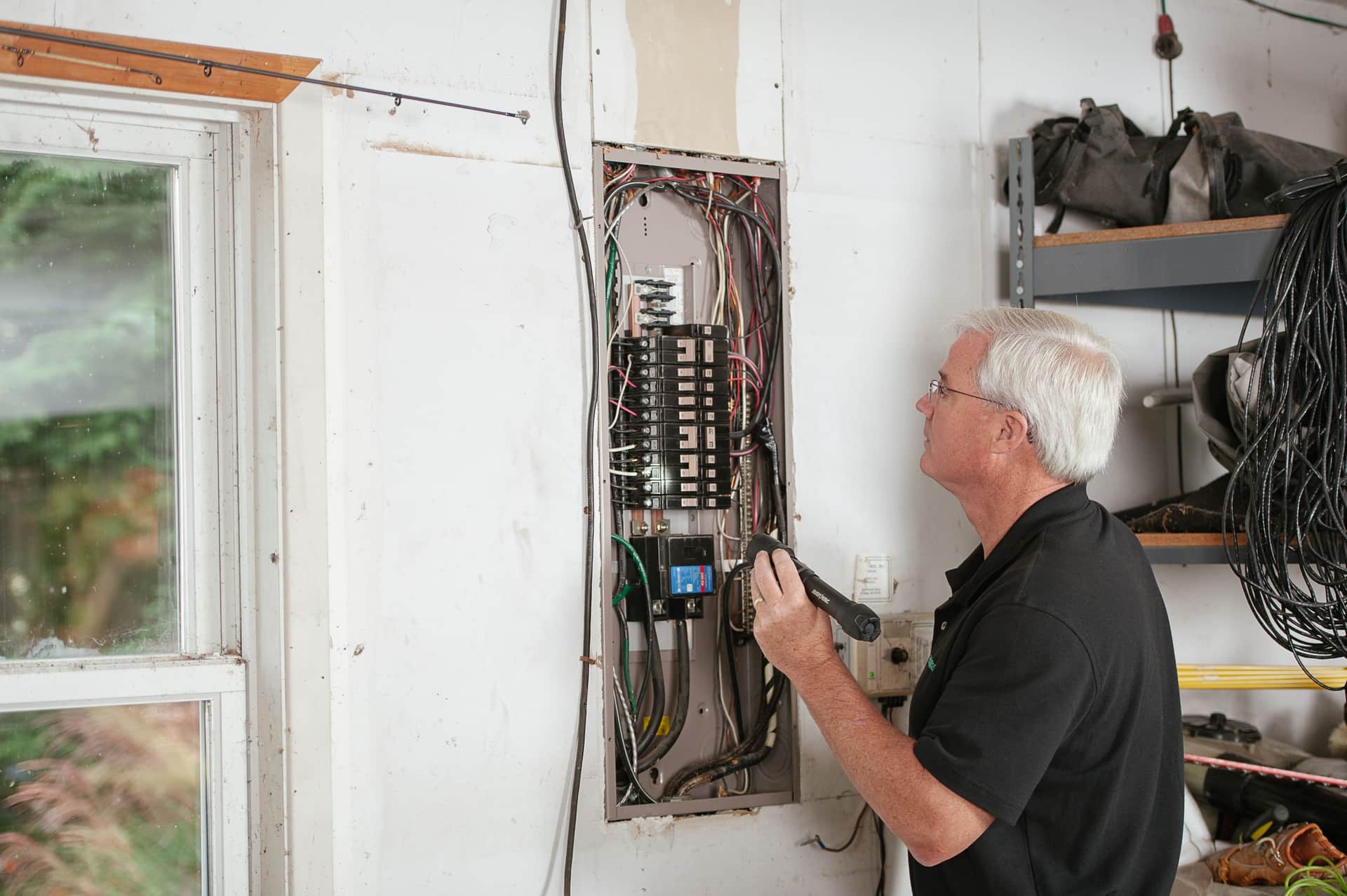
- It does not create capacity. If a load calculation says your service cannot carry another 60 A, fitting a 60 A breaker does not change that — it just means the breaker is not what trips first. The answers are a smaller charger, load management, or a service upgrade.
- It does not create slots. A two-pole breaker needs two adjacent spaces. If your panel is full, see does an EV charger need its own circuit for what to do about it.
How we picked
Every unit here is currently purchasable, carries a real UL or ETL certification to the relevant standard, and comes from a brand with an identifiable North American support path. We verified each one's published specifications against the manufacturer's own documentation on the date shown at the top of this page. We verify specifications; we do not bench-test hardware, and our methodology says so in plain terms. Ranking order is fit for the stated use case first, then price, then warranty and support — commission rate plays no part in it. Breakers are the one category on this site where the correct product is determined by your existing hardware rather than by any judgment of ours. The ranking is a compatibility matrix, not a preference order.