The short answer
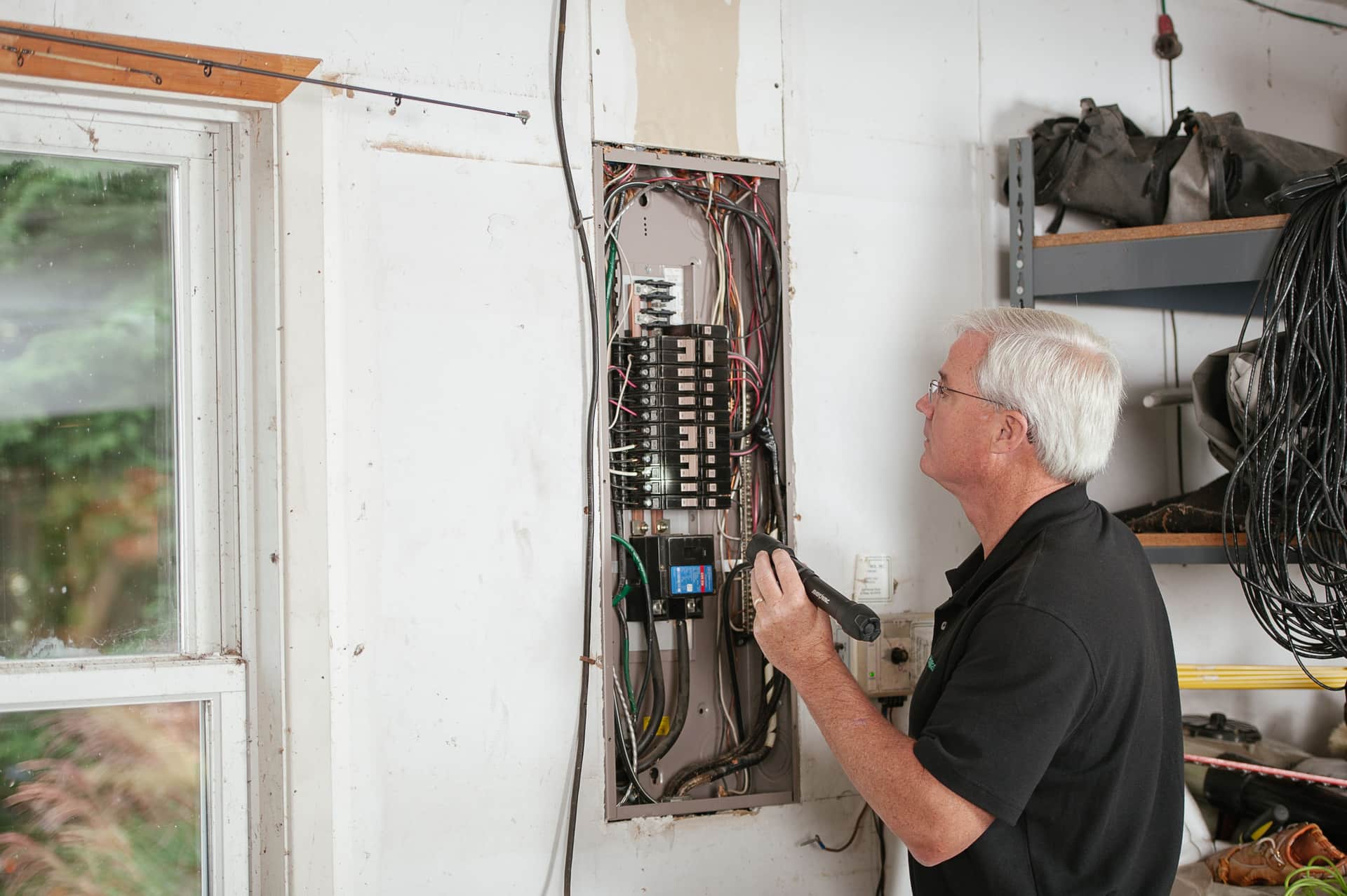
The charger is a known cost; the circuit is the variable, and it is driven by six things: distance from the panel, whether walls are finished, whether the panel has capacity and slots, the amperage you need, whether any of the run is outdoors, and local permit fees. A short run in an unfinished garage to a panel with room is a half-day job. A long run through finished walls that needs a subpanel is a different project entirely.
The six variables, in order of impact
| Variable | Cheap end | Expensive end |
|---|---|---|
| Distance from the panel | Charger on the other side of the panel wall | Detached garage, 100+ ft, possibly a trench |
| Wall construction | Unfinished garage or basement — surface conduit | Finished living space between panel and garage; cut and patch |
| Panel capacity and slots | Spare capacity and two adjacent free slots | No capacity: load management, subpanel or service upgrade |
| Amperage | 32 A: 8 AWG copper, 40 A breaker | 48 A: 6 AWG copper, 60 A breaker. 6 AWG is harder to pull as well as dearer |
| Indoors or out | Entirely inside, dry location | Buried conduit, weatherproof fittings, outdoor junction |
| Permit and inspection | A modest flat fee | Still modest — but never the thing to skip |
The line items a quote should contain
- The charger, by make and model, or a line noting you are supplying it.
- The breaker, by type and rating. A GFCI breaker on a receptacle circuit costs several times a standard one, so this line should say which it is.
- Conductors, by gauge, material and installation method — THHN in conduit or NM-B cable, and how many feet.
- Conduit, boxes and fittings, if applicable.
- The receptacle, if it is a plug-in install, and ideally by part number. An industrial-grade 14-50 is a different line from a builder-grade one.
- Labor, with the run length and method stated so you can see what you are paying for.
- Any panel work — a subpanel, breaker rearrangement, or load calculation.
- Permit and inspection fees, and who files.
- Drywall repair, if walls are being opened, and whether patching is finishing or just closing.
- Surge protection, which is cheap while the panel is open and a separate call later.
Two quotes reading "install Level 2 EV charger — $X" are not comparable. Two quotes with the list above itemized are, and you will usually find the difference is a real difference in scope rather than in price.
Where you can genuinely save money
- Mount closer to the panel. Every foot of conductor costs material and labor. If the car can park nearer the panel side of the garage, that is the single biggest lever available to you — far bigger than the choice of charger.
- Drop to 32 A if your car allows. Every plug-in hybrid and the entry Tesla Model 3 RWD top out there. 8 AWG instead of 6 AWG, 40 A breaker instead of 60 A, and no loss of charging speed at all. See what amp do I need.
- Hardwire rather than plug in. Counter-intuitive, but it removes a GFCI breaker and an industrial receptacle from the bill of materials. The labor is similar.
- Surface-mount conduit in a garage. It is not beautiful, and it is dramatically cheaper than fishing finished walls.
- Use load management instead of a service upgrade. A managed charger costs a charger; a service upgrade costs utility work. See can my panel handle it.
- Bundle other electrical work. If an electrician is coming anyway, the marginal cost of a surge protector or a garage circuit is small.
Where you should not
- The permit. It is a small line item and it is the thing your insurer will ask about after a fire. The AFDC's guidance is explicit that installations must comply with local and state codes and that permits may be required.
- The receptacle, on a plug-in install. A builder-grade 14-50 under a 40 A continuous load is the best-documented failure in home charging.
- The conductor gauge. There is no version of this where undersized wire is a saving.
- A licensed electrician. See below.
The federal credit has expired — plan without it
The Section 30C Alternative Fuel Vehicle Refueling Property Credit covered "Installations Beginning January 1, 2023, through June 30, 2026" per the US Department of Energy's Alternative Fuels Data Center, as amended by Public Law 119-21. A residential charger placed in service after that date receives $0 federal credit. A lot of published cost guidance still subtracts $1,000 from the total; do not budget on that.
State and utility programs do still exist and several are substantial. EV charger rebates in 2026 has the sourced detail and what to ask your utility.
What the parts themselves cost
Live prices on the hardware, so you can separate material from labor when you read a quote:
The material side of a typical install
A 48 A hardwired install at the top, a 40 A plug-in install below it. Labor is the line these do not cover — but knowing the material cost tells you a great deal about a quote.
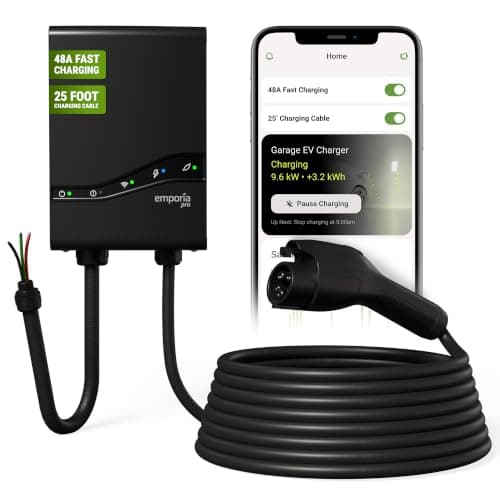
Most households, and anyone with a tight panel
Emporia Pro Level 2 EV Charger
The best-balanced 48 A charger for a typical US house: full 11.5 kW hardwired, and the only unit at this price that ships with a whole-home energy monitor so its load management is reading your actual panel rather than guessing.
#ad Price as of October 5, 2026. How we make money
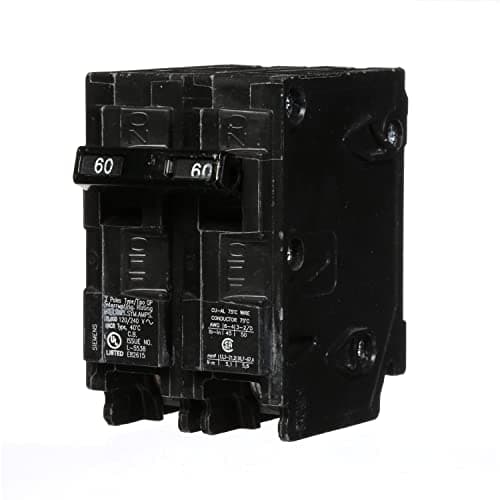
A 48 A charger in a Siemens or Murray panel
Siemens Q260 60 A Double-Pole Breaker
The standard 60 A two-pole breaker for a 48 A hardwired charger — 48 A x 125% = 60 A, exactly as NEC 625.41 requires.
#ad Price as of October 5, 2026. How we make money
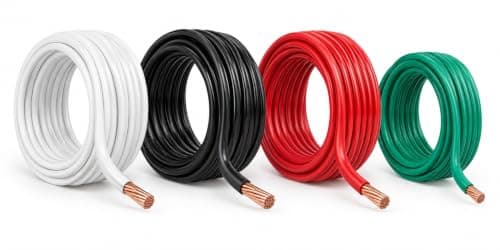
A 60 A circuit for a 48 A charger
6 AWG THHN Copper Wire Set with 8 AWG Ground (50 ft)
6 AWG copper carries 65 A at 75 degC, which is what a 60 A breaker and a 48 A charger require. Buying the conductors as a matched set with the correctly sized equipment ground saves a trip.
#ad Price as of October 5, 2026. How we make money
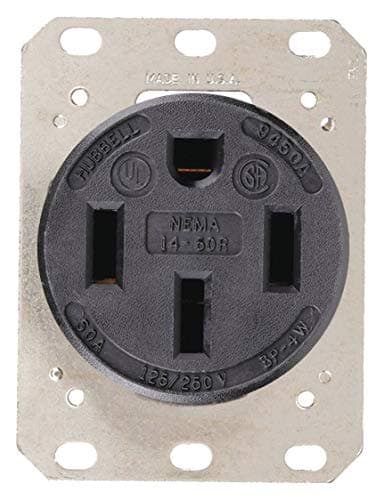
The one part not to save money on
Hubbell HBL9450A NEMA 14-50 Receptacle (industrial)
An industrial-grade 14-50 receptacle. An EV draws 40 A continuously for hours, which is a duty cycle the cheap builder-grade receptacles were never designed for — this is the part that stops a plug-in install from browning its own contacts.
#ad Price as of October 5, 2026. How we make money
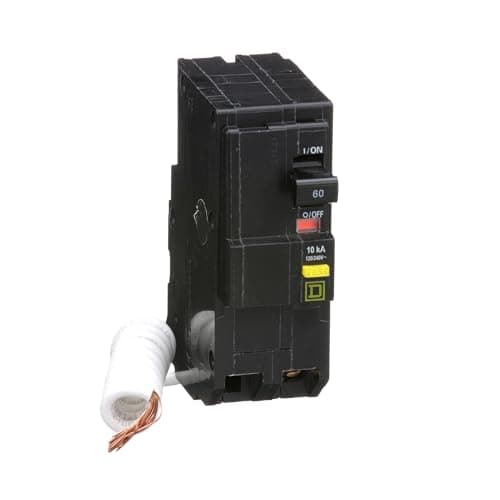
A plug-in charger on a 14-50 receptacle circuit
Square D QO260GFI 60 A 2-Pole GFCI Breaker
If your charger plugs into a receptacle, NEC 625.54 requires GFCI protection on that circuit, and this is the part that provides it. It is also the single most common cause of nuisance tripping in a home charging install.
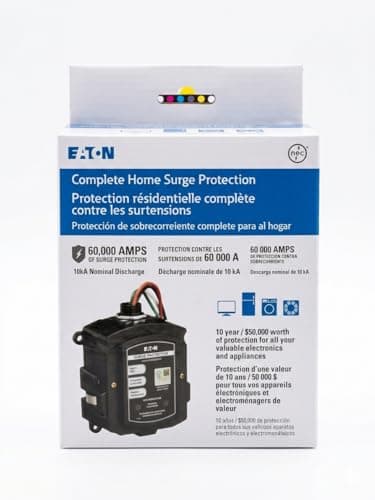
Protecting a charger that is wired into the panel
Eaton CHSPT2ULTRA Whole-Home Surge Protector
A panel-mounted Type 2 device rated at 60 kA. A hardwired charger has no plug to put a surge strip on, so the protection has to live at the panel — and it is cheap next to the charger it protects.
We earn commission on qualifying purchases at no cost to you. Affiliate disclosure.