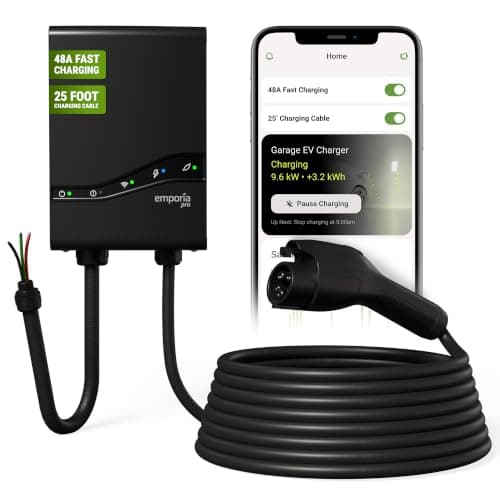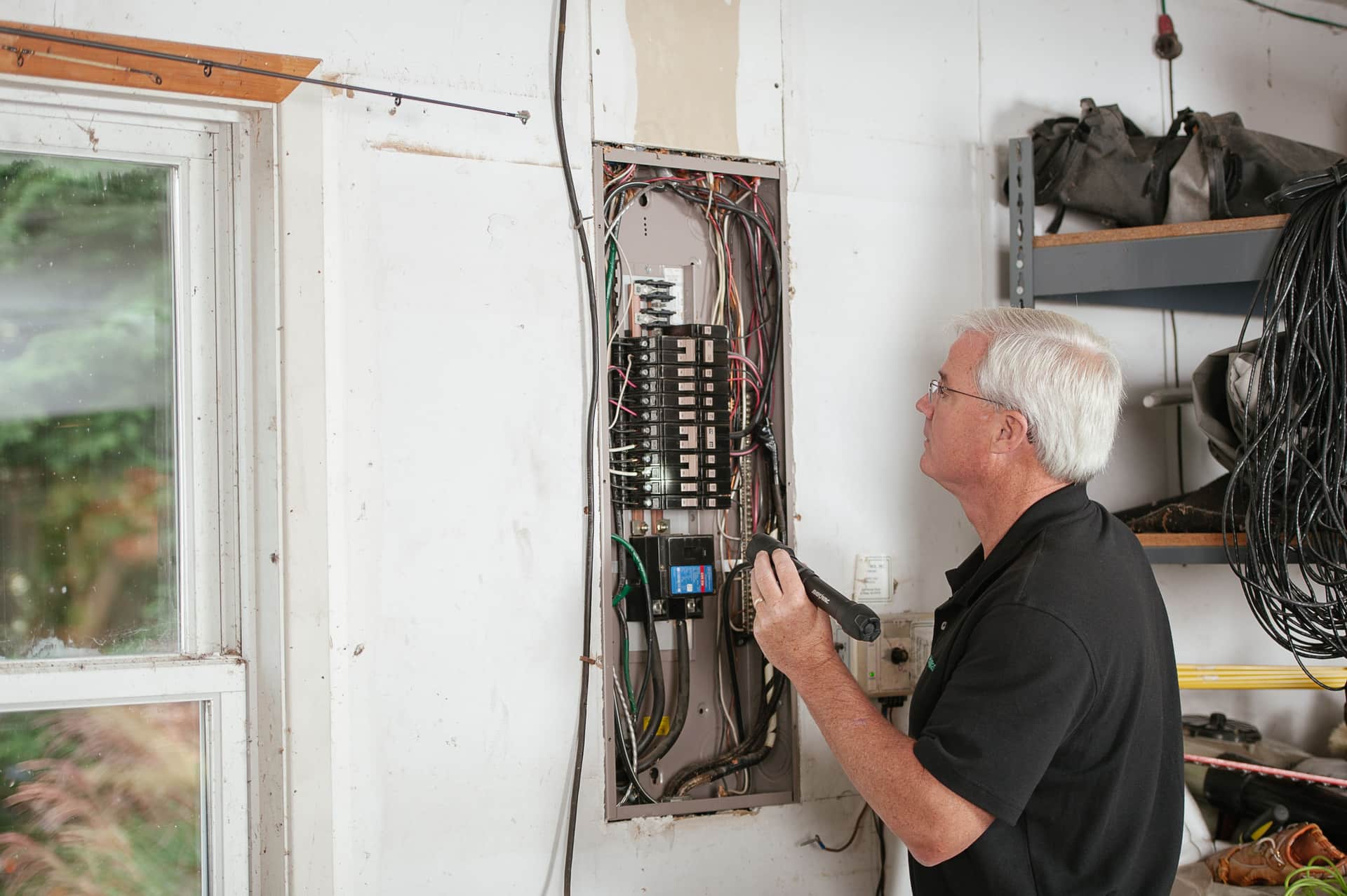
The short answer
A straightforward install is commonly a half day of labor — a run from the panel along an unfinished garage wall, a breaker, mount the charger, done. Fishing finished walls, a long or buried run, or a subpanel push it to a full day or two. Calendar time is a different question: the permit and the inspection usually set it, and a service upgrade adds utility scheduling on top.
Labor time by scenario
| Scenario | Typical labor | What eats the time |
|---|---|---|
| Panel in the garage, charger on the same wall | 2-4 hours | Almost nothing. This is the best case |
| Panel in the basement, charger in an attached garage | Half a day | The run, and getting through the wall cleanly |
| Panel and garage separated by finished living space | Full day | Fishing walls, or cutting and patching |
| Detached garage | 1-2 days | Trenching, conduit, possibly a subpanel |
| Any of the above plus a subpanel | Add half a day | Mounting, feeding and terminating the subpanel |
| Any of the above plus a service upgrade | Add a full day, plus the utility | New service conductors, meter base, grounding, and a disconnect/reconnect |
Calendar time is the one that surprises people
The work is a day. Getting to the work can be weeks. In rough order of how often each is the bottleneck:
- The electrician's schedule. Good ones are booked out. This is usually the longest wait and the one nobody plans for.
- Permit issue. Often same-week in jurisdictions with online permitting, sometimes longer where plan review is involved.
- Inspection scheduling. Typically a few days after the work, and in many jurisdictions you may not energize the circuit until it passes.
- Utility coordination, for a service upgrade only — disconnect, reconnect, and sometimes a new meter. This can add weeks and is outside your electrician's control.
- Equipment availability. A specific charger model, a particular breaker, or a meter base can all be back-ordered.
What you can do to make it faster
- Book the electrician before the car arrives. The constraint is their calendar, not your readiness.
- Have the charger on hand. A model that has to be ordered mid-job costs a return visit.
- Mark the mounting position and have the panel accessible — nothing in front of it, nothing stacked against the wall the run follows.
- Decide the amperage in advance. Deliberating during the visit costs time that is being billed.
- Ask about permit timing when you book. Some electricians file in advance; others file after quoting.
- Bundle other small electrical jobs so one visit covers them.
In the meantime
If the car arrives before the charger does, a portable Level 1/Level 2 cordset bridges the gap — and remains useful afterwards as a travel charger.
Something to use while you wait
Both plug into existing outlets with no installation. Neither replaces a real Level 2 install; both stop the car being undrivable while you wait for one.
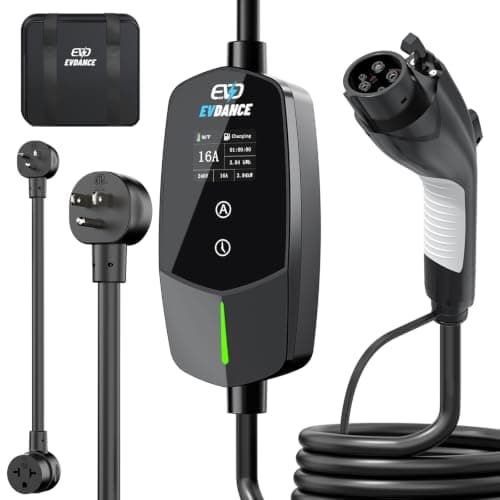
A renter with access to a 240 V outlet
EVDANCE Level 1 & 2 Portable EV Charger (16 A)
A dual-voltage 16 A cordset. On 240 V that is about 3.8 kW — roughly twice the Level 1 cordset that came with the car, from an outlet you may already be allowed to use.
#ad Price as of October 5, 2026. How we make money
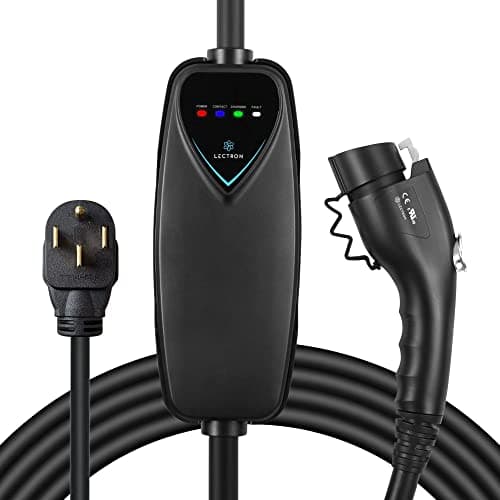
The cheapest charger worth owning
Lectron Level 2 EV Charger (40 A, NEMA 14-50)
A 40 A ETL-certified portable charger for roughly half what the smart units cost. It does one thing, it does it at 9.6 kW, and for a household charging overnight on a flat rate that is the whole job.
#ad Price as of October 5, 2026. How we make money
We earn commission on qualifying purchases at no cost to you. Affiliate disclosure.