The short answer
Level 1 is the 120 V cordset that came with your car: per the US DOE, 1.9 kW and approximately 5 miles of range per hour. Level 2 is 240 V: 2.9 to 19.2 kW, approximately 25 miles of range per hour. Level 1 is genuinely sufficient for a plug-in hybrid or a short commute in an efficient EV; Level 2 is necessary for a big battery, a long commute, or any need to charge twice in a day.
| Level | Voltage | Power | Range added | Where |
|---|---|---|---|---|
| Level 1 | 120 V | 1.9 kW | approximately 5 miles per hour | Any household outlet |
| Level 2 | 240 V residential (208 V commercial) | 2.9 to 19.2 kW | approximately 25 miles per hour | A dedicated home circuit, public AC chargers |
| DC fast charging | DC, bypasses the onboard charger | up to 500 kW | approximately 100 to 200+ miles per 30 minutes | Public DC chargers only |
The question that actually matters
What Level 1 actually replaces, on real vehicles
| Vehicle (EPA trim) | kWh / 100 mi | Miles in 12 hours | Enough for a 40-mile day? |
|---|---|---|---|
| Hyundai Ioniq 6 RWD 18in (2025) | 26.0 | about 66 | Yes, comfortably |
| Tesla Model Y Long Range AWD (2026) | 27.5 | about 62 | Yes |
| Chevrolet Bolt EUV (2023) | 29.4 | about 58 | Yes |
| Ford Mustang Mach-E RWD Ext (2026) | 30.7 | about 56 | Yes |
| Rivian R1T Dual Large (2026) | 44.4 | about 38 | Marginal |
| GMC Hummer EV Pickup 3X (2025) | 65.1 | about 26 | No |
| Jeep Wrangler 4xe (2026) | 68.0 | about 25 | Yes — that is a full battery |
Four of those seven vehicles are fully served by Level 1 for a 40-mile commuting day. That is a larger share than most charger advice admits.
When Level 1 is genuinely enough
- A plug-in hybrid. Twelve hours on Level 1 fills a Wrangler 4xe, and when the battery empties the engine covers the rest. PHEV home charging works through it.
- A commute under about 50 miles in a reasonably efficient EV, with the car parked overnight every night.
- A second car that does short local trips.
- You rent and cannot install anything. Then Level 1 is not a compromise, it is the plan. EV charging for renters.
- You are waiting for an installation. Level 1 bridges the weeks until an electrician can come.
When you need Level 2
- A large or inefficient vehicle. Above about 40 kWh per 100 miles, Level 1 stops keeping up. A Hummer EV gains 26 miles overnight.
- A commute over about 60 miles. You start each day with less than you finished the last, and the deficit compounds across a week.
- You need a second charge in a day. Level 1 cannot do it. This is the single clearest argument for Level 2 on any vehicle, including a PHEV.
- A time-of-use tariff with a narrow off-peak window. Level 1 cannot fit a useful amount of charging into six hours.
- Two EVs sharing one charging point.
- Cold climates. Battery preconditioning and cabin heating draw from the pack, and Level 1 can struggle to keep up in deep winter even on a short commute.
What Level 2 costs to get
The honest comparison, because the gap is not just the charger:
| Level 1 | Level 2 | |
|---|---|---|
| Equipment | Came with the car | A charger, plus possibly a receptacle |
| Circuit | A household outlet, ideally dedicated | A dedicated 240 V circuit, 40-60 A |
| Electrician | No | Yes, in most jurisdictions |
| Permit | No | Yes |
| Conductor | Existing | 8 AWG or 6 AWG copper |
| Typical cost | Nothing | The charger plus the circuit — see installation cost |
The middle ground almost nobody mentions
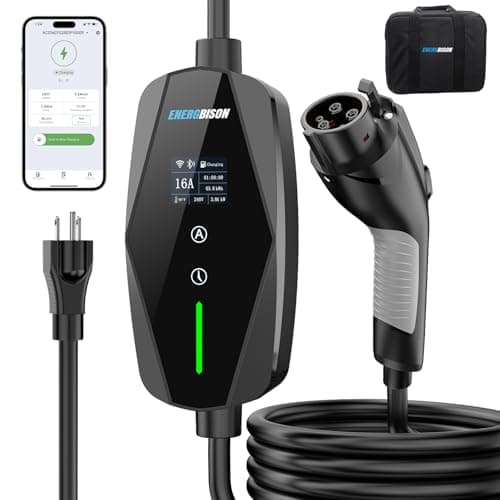
There is a third option between the two, and it suits a lot of people: an adjustable dual-voltage portable charger. On 120 V it does Level 1; on a 240 V outlet it does Level 2 at 16 A — about 3.8 kW, which is roughly 12 miles of range per hour. No installation, no permit, and it moves house with you.
The step up from Level 1 without an installation
Both plug into existing outlets. The adjustable ones matter most on a circuit you do not control, because you can dial the current down to what the circuit can genuinely take.
A shared or uncertain circuit
Portable Level 1 & 2 EV Charger with Timer (8-16 A)
Adjustable from 8 to 16 A with a built-in timer, which is the right feature set for a circuit you do not own and cannot characterize: dial it down until nothing else on the circuit complains.
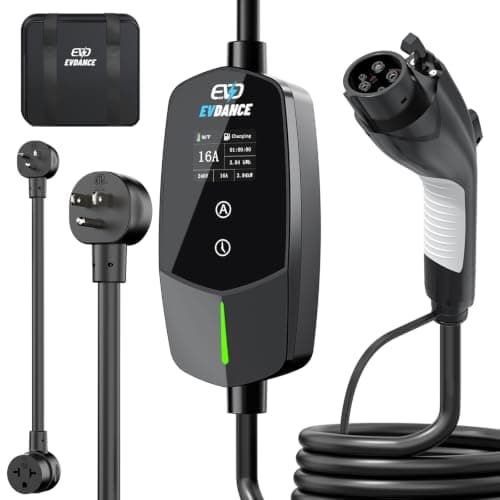
A renter with access to a 240 V outlet
EVDANCE Level 1 & 2 Portable EV Charger (16 A)
A dual-voltage 16 A cordset. On 240 V that is about 3.8 kW — roughly twice the Level 1 cordset that came with the car, from an outlet you may already be allowed to use.
#ad Price as of October 5, 2026. How we make money
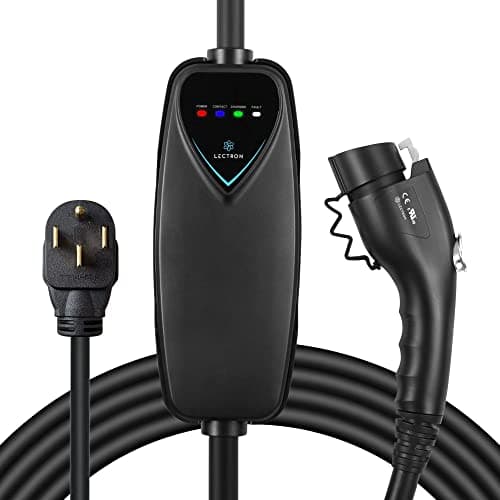
The cheapest charger worth owning
Lectron Level 2 EV Charger (40 A, NEMA 14-50)
A 40 A ETL-certified portable charger for roughly half what the smart units cost. It does one thing, it does it at 9.6 kW, and for a household charging overnight on a flat rate that is the whole job.
#ad Price as of October 5, 2026. How we make money
We earn commission on qualifying purchases at no cost to you. Affiliate disclosure.
A note on DC fast charging
You cannot have it at home, at any price. DC fast charging bypasses the car's onboard charger and feeds the battery directly, which requires equipment and a service connection no residence has. A “Level 3 home charger” does not exist, and any product marketed as one is misdescribing a Level 2 unit.
It also does not matter for home charging. The reason DC exists is to refill a car in twenty minutes on a road trip. Overnight you have twelve hours. Types of home EV chargers covers the category properly.