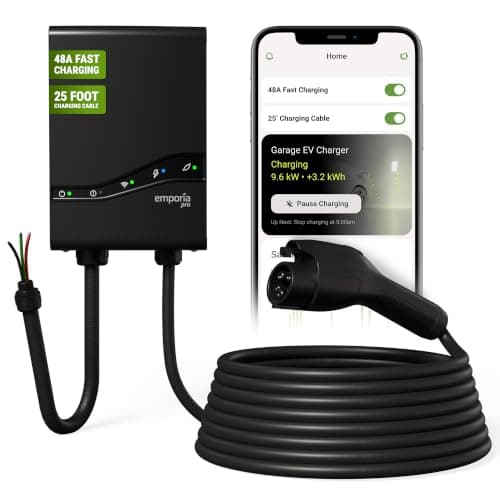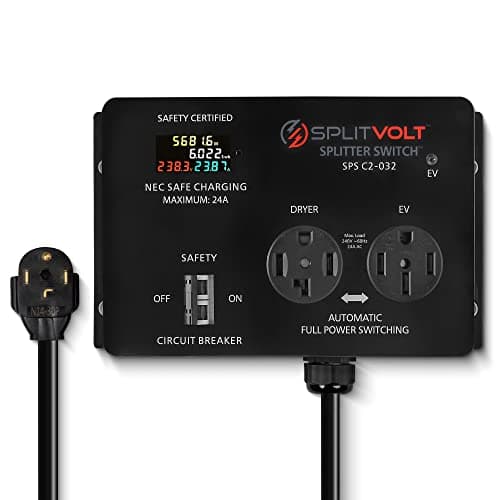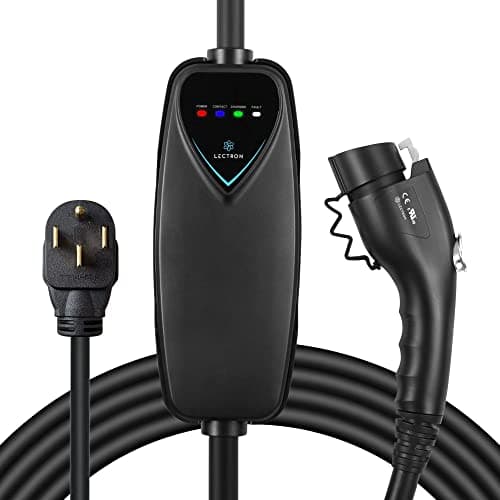
The charger is the cheap half of this project. The expensive half is the 240-volt circuit that feeds it, and the cost of that circuit depends almost entirely on three things: how many amps you need, how far the run is, and whether your existing service has room.
Those are answerable questions with sourced answers, which is what this hub is for. Twenty-eight pages, and every amperage, breaker, conductor and code figure on them cites either the National Electrical Code or a named manufacturer's installation manual at the point of use.
The two code rules that drive everything else
Almost every number in home EV charging falls out of two sentences in NEC Article 625.
- NEC 625.42: EV charging loads are continuous loads. Which means the circuit has to be sized as though the car will draw full current indefinitely — because, over an eight-hour overnight charge, it effectively does.
- NEC 625.41: overcurrent protection must be rated at not less than 125% of the equipment's maximum load. A 40 A charger needs a 50 A breaker; a 48 A charger needs a 60 A breaker. That is where every breaker size on this site comes from.
The US Department of Energy's Alternative Fuels Data Center states the same thing plainly: EV charging infrastructure "is considered a continuous load by the National Electrical Code", and "NEC Article 625 contains most of the information applicable to charging equipment".
How to work through this in order
- Amperage. Take the lower of your car's onboard limit and your panel's spare capacity. Start at what amp EV charger do I need.
- Breaker. 125% of the charger's continuous output, rounded up to a standard size. The breaker size chart is a table you can hand an electrician.
- Conductors. Sized from the breaker and the installation method. Wire size guide — and note that NM-B cable is limited to the 60 degC column, which trips people up.
- Load calculation. Does the service have the headroom? Can my electrical panel handle an EV charger walks the arithmetic.
- Hardwired or plug-in. This decides whether you need a GFCI breaker and whether you are capped at 40 A. Hardwired vs plug-in.
- Cost and installer. What installation costs, then how to hire an electrician.
What actually makes an install expensive
In rough order of how often it is the deciding factor:
- Distance from the panel. Conductor cost scales with length, and so does labor. A charger on the garage wall on the other side of the panel is a different job from one at the far end of a detached garage.
- Finished walls. Fishing cable through drywall, or cutting and patching, is labor. An unfinished basement or garage ceiling is cheap; a finished living space in between is not.
- Panel headroom. If there is no space for a 60 A two-pole breaker, the options are a tandem rearrangement, a subpanel, load management, or a service upgrade. Only the last of those is genuinely expensive, and it is also the one that gets quoted first.
- Amperage. 6 AWG copper costs noticeably more than 8 AWG and is harder to pull. Dropping from 48 A to 40 A can take real money off a long run.
- Outdoors. A buried conduit run, weatherproof fittings and an outdoor-rated junction change the job category entirely.
- Permit and inspection. Usually the smallest line on the invoice, and the one people most often ask to skip. Don't.
Where we draw the line
We publish numbers so you can brief an electrician properly, compare quotes, and recognize a quote that does not add up. We do not sell chargers, we do not install them, and we do not do electrical work. The AFDC's guidance is the right standard: installations "must comply with local and state codes and regulations", "appropriate permits may be required", and a qualified electrician should assess whether your home has adequate electrical capacity.
Two pages in this hub attract people who are about to do something unsafe — using a dryer outlet for EV charging and EV charger splitters. Both of them lead with the caveats rather than the products, deliberately.