The short answer
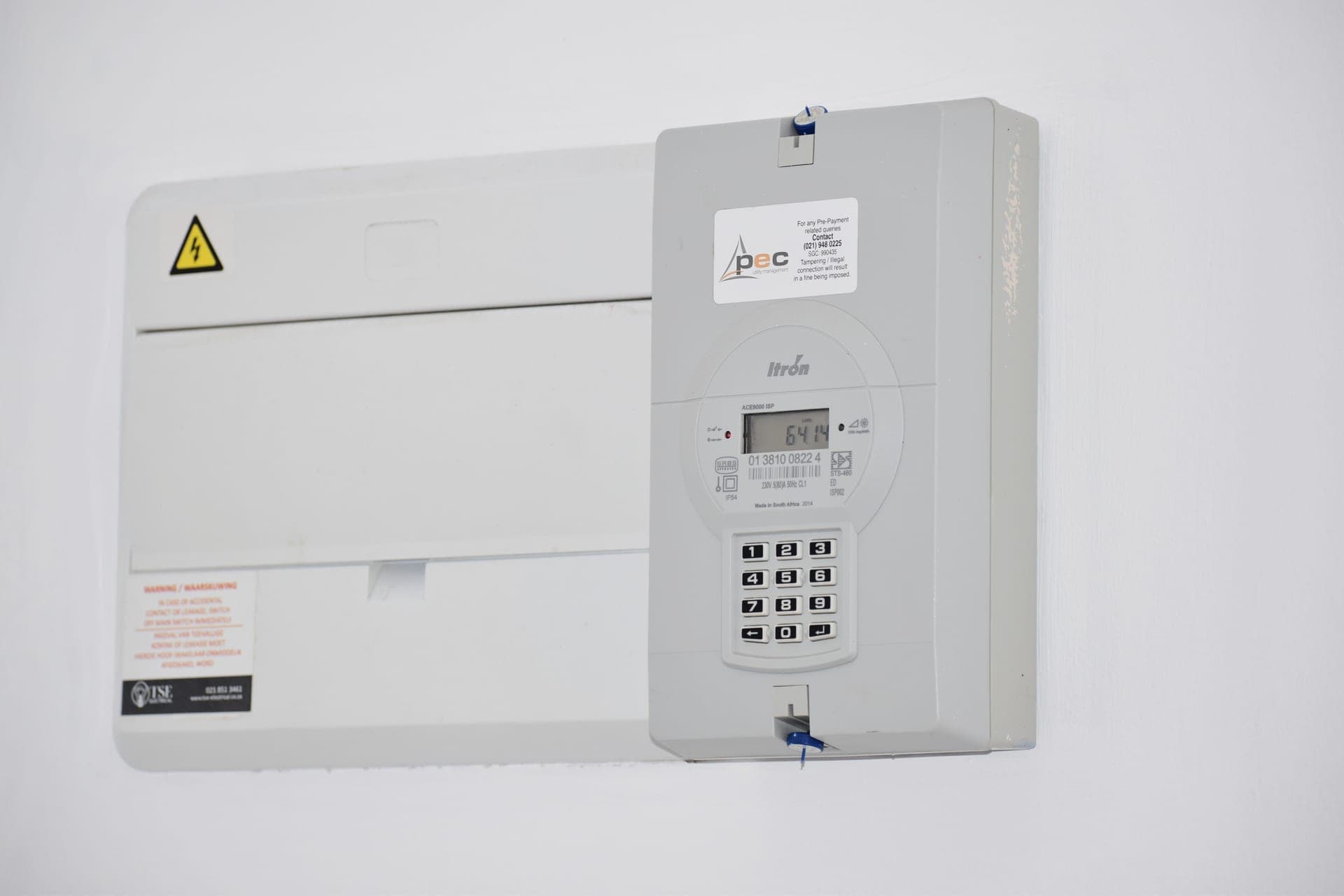
Charging an EV at home costs (miles ÷ miles-per-kWh) ÷ charging efficiency × your rate per kWh. Everything in that line is a number you already have: efficiency is on the EPA window sticker, mileage is yours, and the rate is the all-in figure on your utility bill. The calculator below runs it and puts the answer next to what the same miles would cost on the public network and in a gas car. No sign-up, nothing stored, and no national average — an average rate describes nobody's bill.
Work out your own number
Nothing is sent anywhere and nothing is stored — this is arithmetic running in your browser. Change any figure and the results update as you type.
Sets miles per kWh from EPA combined figures. Pick the closest, then fine-tune below.
Equivalent to 27.8 kWh per 100 miles. Yours is on the EPA window sticker.
US average is roughly 1,000 miles a month. Use your own if you know it.
A placeholder, not a claim — use the all-in rate on your bill, or your state's average from the EIA average price by state table.
Charging losses between the meter and the battery. 90% is the figure this site uses throughout.
The posted rate in the network app you would actually use. Public prices vary by network and territory.
For the comparison only. Leave it if you are not cross-shopping.
Your local pump price. Another placeholder, not a published average.
Charging at home
$49.38
per month
$593 a year · the number this page is about
Public charging
$148
per month
$1,778 a year · same miles, network rate
Gas equivalent
$114
per month
$1,371 a year · same miles, at the pump
At these figures you would draw 309 kWh a month from the meter and pay $0.05 a mile at home — $1,185 a year less than charging on the public network, and $779 a year less than the gas car.
The charger that fits these numbers
EVIQO Level 2 EV Charger (48 A, hardwired)
A normal commute. The cheapest route to a genuine 11.5 kW covers it with room to spare.
#ad Price shown at EVIQO. How we make money
The formula it runs
cost = (miles ÷ miles-per-kWh) ÷ 0.90 × $-per-kWh
1,000 miles at 3.6 mi/kWh, 90% efficiency, $0.16/kWh ≈ $49 a month
The 0.90 is charging losses: the meter bills for more energy than reaches the battery, so leaving it out understates the bill by roughly a tenth. This is the same formula used on our cost to charge an EV at home page, with the same efficiency allowance.
Miles per kWh and kWh per 100 miles are the same figure inverted — kWh per 100 miles = 100 ÷ miles per kWh. The EPA publishes the second one, most drivers quote the first, and the calculator shows both so you can check it against your sticker.
Where to get each number
| Input | Where it comes from | Why it matters |
|---|---|---|
| Efficiency (mi/kWh) | The EPA window sticker, or fueleconomy.gov for the exact trim | The single biggest spread on this page — a compact EV and an electric truck differ by about 2x |
| Miles per month | Your own odometer over a couple of months | Cost is linear in mileage, so this scales everything else |
| Rate ($/kWh) | The all-in rate on your utility bill, or your state's average in the EIA average price by state table | Use the all-in figure including delivery, not the generation line alone |
| Charging efficiency | 90% unless your charger's documentation says otherwise | Covers the losses between the meter and the battery |
What the rate column does to the answer
| Rate per kWh | Cost per 100 miles | Typically |
|---|---|---|
| $0.10 | $3.06 | A favorable residential or off-peak rate |
| $0.16 | $4.89 | A typical residential rate |
| $0.25 | $7.64 | A high residential rate, or public Level 2 |
| $0.35 | $10.69 | Public Level 2 in some territories |
| $0.48 | $14.67 | DC fast charging in some territories |
| $0.60 | $18.33 | DC fast charging at the higher end |
The pattern rather than the numbers is the point: the spread from a favorable off-peak home rate to higher-end DC fast charging is roughly six times. That gap is what a home charger closes, and it is why the biggest lever on this page is not the car — it is the rate you charge at and the hour you charge in. Time-of-use rates and EV charging covers moving the charge window; EV charging cost by state covers where you live.
Home against public, and against gas
Two comparisons sit beside the home figure because they are the two a buyer actually makes. Public charging is the same electricity bought at a speed premium — per the US DOE, Level 2 adds roughly 25 miles of range per hour against 100 to 200+ miles in 30 minutes for DC fast charging, and that difference is priced in. Overnight you have twelve hours, so paying for the speed makes no sense. The full argument is on home vs public charging cost.
The gas comparison is there to size the decision, not to win an argument. It uses the MPG and pump price you enter, because both are local and both move. If the result is close, the honest reading is that your electricity rate is high rather than that the car is wrong — and the rate is the thing you can change.
The chargers these numbers point at
Running cost is decided by your rate; how long the car spends on the cable is decided by the charger. These are the three the calculator recommends between, by mileage.
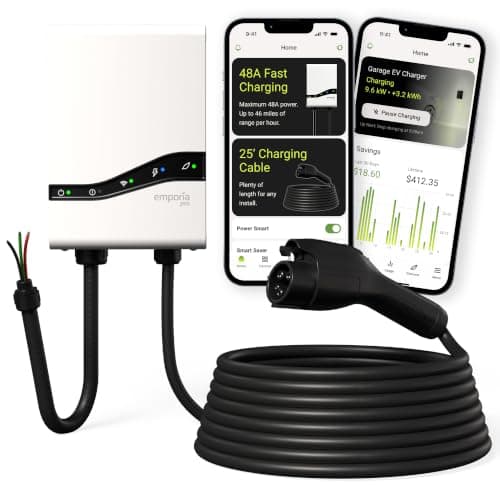
Most households, and anyone with a tight panel
Emporia Pro Level 2 EV Charger
The best-balanced 48 A charger for a typical US house: full 11.5 kW hardwired, and the only unit at this price that ships with a whole-home energy monitor so its load management is reading your actual panel rather than guessing.
#ad Price as of November 18, 2026. How we make money
48 A on a budget
EVIQO Level 2 EV Charger (48 A, hardwired)
The cheapest way to get a genuine 11.5 kW hardwired install, with IP66/NEMA 4 weatherproofing and an internal switch for 16/32/40/48 A. The trade is a younger brand with a shorter support record.
#ad Price shown at EVIQO. How we make money
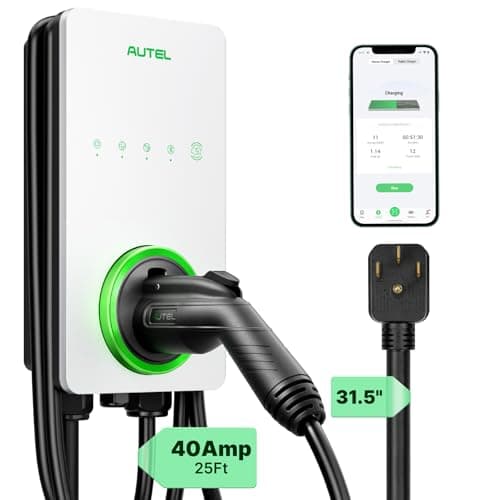
Cold climates and 1 A output tuning
Autel MaxiCharger AC Lite (40 A)
The widest output adjustment range here — 6 A to 40 A in the app — plus an operating range down to -40 degF, which makes it the practical pick for an unheated garage in the north.
$470.00 list · 10% off
#ad Price as of November 18, 2026. How we make money
We earn commission on qualifying purchases at no cost to you. Affiliate disclosure.
If you want the full ranking rather than three, ten Level 2 EV chargers compared side by side sets them against each other on charge rate, cable length, enclosure and panel fit.