Skip to content
EV & Charger

Head to head

Home vs Public EV Charging Cost

Home wins on cost almost every time. Here is the arithmetic, and the honest case for the households where public charging is the whole plan.

By Mike M.Published Last verified

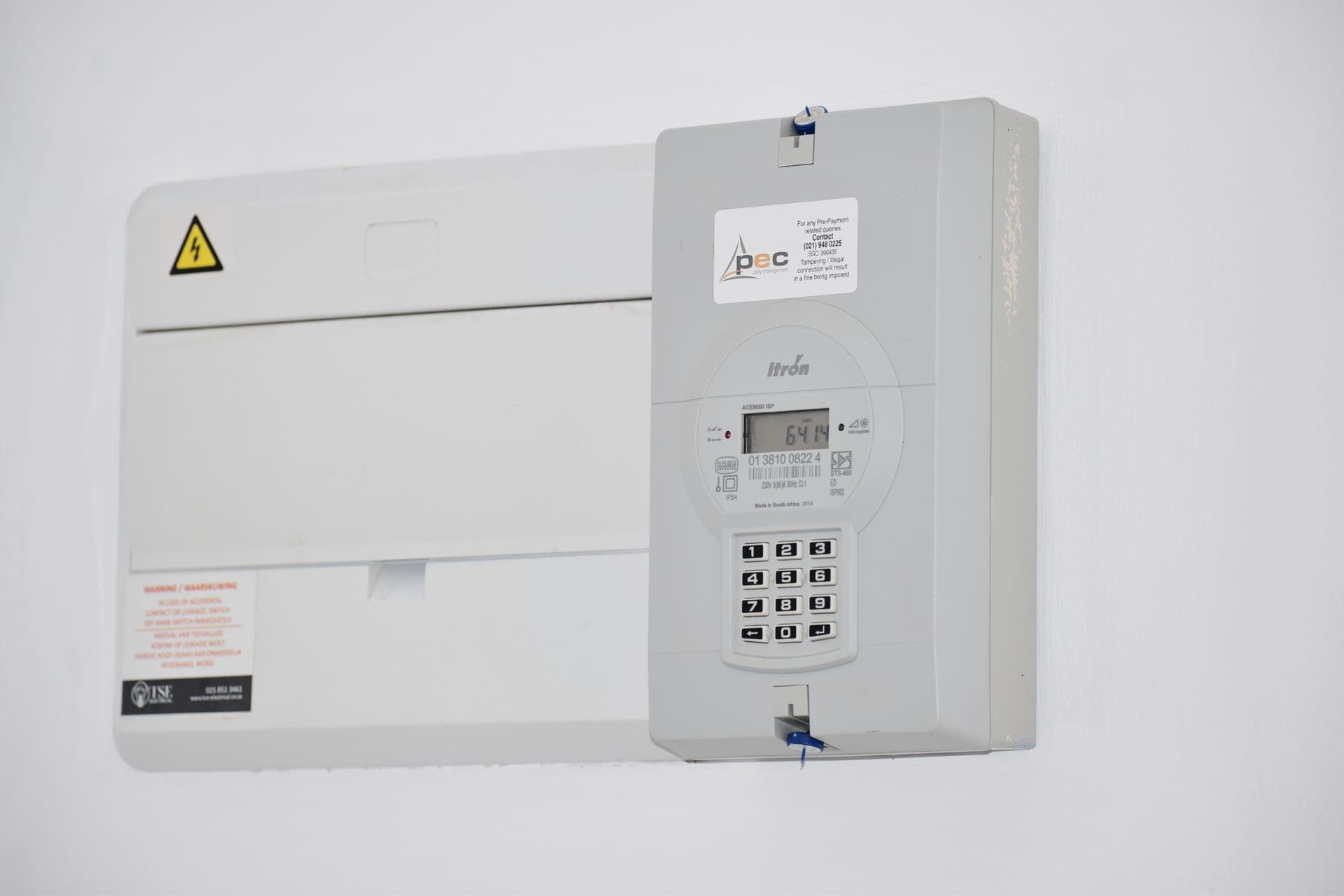
A residential electricity meter and service box mounted on an exterior wall

The short answer

Home charging is almost always cheaper, and dramatically cheaper than DC fast charging — you pay a premium for speed you do not need overnight. Per the US DOE, Level 2 adds approximately 25 miles of range per hour against 100 to 200+ miles per 30 minutes for DC fast charging, and that speed is priced in. Public Level 2 is sometimes free and sometimes above residential rates. The honest exception is a household that cannot install a charger at all, where public charging is not a comparison but the plan.

The arithmetic, on your own numbers

The comparison that matters is your residential rate against the specific networks near you. Both sides of that are local, which is why we give you the method rather than an average.

Cost per 100 miles, either way

(kWh-per-100-miles / 0.9) x $-per-kWh

Run it once with your home rate and once with the network's

Use the all-in rate from your utility bill for home, and the network's posted per-kWh rate for public. Some networks bill per minute rather than per kWh, which makes a direct comparison harder and generally favors home further.

Cost per 100 miles at different rates, on a 27.5 kWh/100mi car
Rate per kWhCost per 100 milesTypically
$0.10$3.06A favorable residential or off-peak rate
$0.16$4.89A typical residential rate
$0.25$7.64A high residential rate, or public Level 2
$0.35$10.69Public Level 2 in some territories
$0.48$14.67DC fast charging in some territories
$0.60$18.33DC fast charging at the higher end
Calculated for a 2026 Tesla Model Y Long Range AWD at EPA's 27.5 kWh per 100 miles (US DOE / EPA fueleconomy.gov, queried October 5, 2026), at 90% charging efficiency. The rate column is deliberately generic: public charging prices vary by network, by location and over time, and we will not publish figures we cannot date.

The pattern rather than the numbers is the point: the spread from a favorable off-peak home rate to higher-end DC fast charging is roughly six times. That is the gap home charging closes.

Why DC fast charging costs more

Not because the electricity is different. Because the infrastructure is: a DC fast charger is a large, expensive piece of equipment with a substantial grid connection, and in many territories the operator pays demand charges based on peak draw regardless of utilization. That cost is in the price.

What you are buying is speed — 100 to 200+ miles in 30 minutes per the US DOE. On a road trip that is exactly what you need. Overnight you have twelve hours, and paying a speed premium for it makes no sense.

Public Level 2 is a genuinely mixed picture

  • Free public Level 2 exists — shopping centers, hotels, workplaces, some municipal parking. Where it is free and convenient, it beats home charging on cost by definition.
  • Some public Level 2 is priced above residential rates, and some bills per hour rather than per kWh, which penalizes a car with a lower onboard charger rating.
  • Session fees and idle fees can dominate the cost of a short top-up.
  • Workplace charging is the best of both worlds where it exists, and is worth pushing for.

A per-minute tariff is worth understanding, because it interacts with your car's onboard limit. A car that accepts 48 A fills twice as fast as one accepting 32 A, so on a per-minute public charger the slower car pays twice as much for the same energy. Onboard limits by model.

What home charging costs to set up

The honest other side of the comparison. Home charging has a one-off cost that public charging does not.

Home charging: the one-off against the ongoing
One-offOngoing
Level 1 (the cordset in the car)NothingYour residential rate
A portable Level 2 on an existing outletThe chargerYour residential rate
A Level 2 installThe charger plus the circuitYour residential rate, or an EV tariff
Public chargingNothingThe network's rate, every time
The installation cost is real and it is a one-off. What installation costs breaks it into line items. Note also that the federal Section 30C credit expired on June 30, 2026, so plan without it.

For most households the install pays back quickly against public charging, and the Level 1 row is worth noticing: it costs nothing at all and at approximately 5 miles of range per hour replaces around 60 miles overnight — enough for a lot of commutes. Level 1 vs Level 2.

When public charging is the plan, not the comparison

This is the case the cost comparison usually ignores, and it is a real one. If you rent with street parking, or live in a building that will not install chargers, home charging is not an option you are declining on cost grounds — it is unavailable.

In that situation the plan is deliberate rather than reactive:

  • Workplace charging if it exists. The biggest single lever, and worth pushing for.
  • Public Level 2 on a predictable weekly rhythm, rather than when the car gets low.
  • DC fast charging as a backstop, not a routine — it is the most expensive electricity you will buy.
  • A Level 1 cordset for any evening you can legitimately reach an outlet.
  • Choose an efficient car. On constrained charging, a 26 kWh-per-100-mile sedan is a far easier vehicle to live with than a 65 kWh-per-100-mile truck. That decision matters more than any charger.

EV charging for renters and EV charging in an apartment cover the options properly.

What we would install

The two ends of the home charging decision

A full 48 A install for a household that can, and a portable that needs no installation for a household that cannot. Both beat routine DC fast charging on cost.
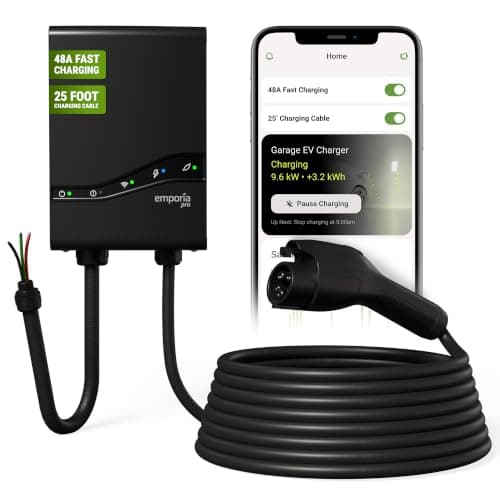
Emporia Pro Level 2 EV Charger

Most households, and anyone with a tight panel

Emporia Pro Level 2 EV Charger

The best-balanced 48 A charger for a typical US house: full 11.5 kW hardwired, and the only unit at this price that ships with a whole-home energy monitor so its load management is reading your actual panel rather than guessing.

$599.00View on Amazon

#ad Price as of October 5, 2026. How we make money
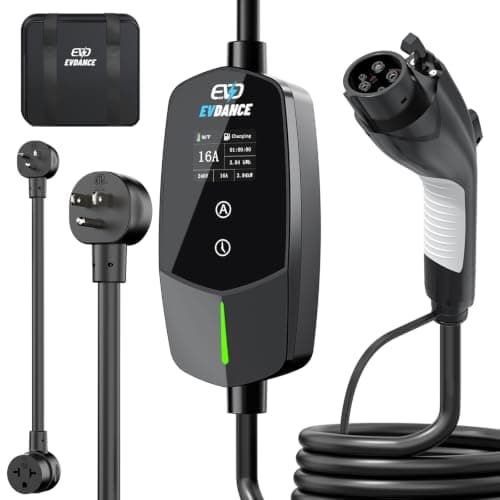
EVDANCE Level 1 & 2 Portable EV Charger (16 A)

A renter with access to a 240 V outlet

EVDANCE Level 1 & 2 Portable EV Charger (16 A)

A dual-voltage 16 A cordset. On 240 V that is about 3.8 kW — roughly twice the Level 1 cordset that came with the car, from an outlet you may already be allowed to use.

$139.99View on Amazon

#ad Price as of October 5, 2026. How we make money

We earn commission on qualifying purchases at no cost to you. Affiliate disclosure.
Both units

The two, side by side

Most households, and anyone with a tight panel

Emporia Pro Level 2 EV Charger

Emporia Pro Level 2 EV Charger charger

9.0/ 10

$599.00View on Amazon

#ad Price as of October 5, 2026. How we make money

Our verdict

The best-balanced 48 A charger for a typical US house: full 11.5 kW hardwired, and the only unit at this price that ships with a whole-home energy monitor so its load management is reading your actual panel rather than guessing.

What works

  • Hardwires at the full 48 A for 11.5 kW — matches the onboard limit of most current BEVs exactly
  • PowerSmart load management reads whole-home draw through the included Vue monitor, so it can throttle instead of tripping a breaker
  • 25 ft cable reaches across a two-car garage without an extension
  • NEMA 4 enclosure and a real UL listing, not just an ETL mark

What doesn't

  • The energy monitor has to be installed in the panel to be useful, which means the electrician is in there longer
  • App-dependent for scheduling — there is no physical timer
  • At 40 A on the plug-in version you are paying for 48 A of hardware you cannot use
Emporia Pro Level 2 EV Charger specifications
Max output48 A / 11.5 kW hardwired; 40 A / 9.6 kW on a NEMA 14-50 plug
Breaker60 A dedicated 2-pole for 48 A; 50 A for 40 A
Cable25 ft
ConnectorJ1772 or NACS, chosen at purchase
EnclosureNEMA 4, indoor or outdoor
CertificationUL certified, ENERGY STAR
Warranty3 years
Load managementPowerSmart, with the Vue home energy monitor included

Specifications checked against Emporia Pro sell sheet. We verify published specifications; we do not bench-test hardware — how we assess products.

How it scored

Fit to a typical panel
9.4
Charge rate
9.0
Cable and reach
9.0
Smart features
9.2
Weather and build
8.6
Warranty and support
8.4
A renter with access to a 240 V outlet

EVDANCE Level 1 & 2 Portable EV Charger (16 A)

EVDANCE Level 1 & 2 Portable EV Charger (16 A) charger

7.6/ 10

$139.99View on Amazon

#ad Price as of October 5, 2026. How we make money

Our verdict

A dual-voltage 16 A cordset. On 240 V that is about 3.8 kW — roughly twice the Level 1 cordset that came with the car, from an outlet you may already be allowed to use.

What works

  • No installation, no landlord conversation, no permanent change to the property
  • Doubles Level 1 charging speed from a 240 V outlet
  • Fits in a boot and works anywhere

What doesn't

  • 16 A is slow — figure on overnight for a partial charge, not a full one
  • A 240 V outlet in a rental garage is often on a shared circuit; ask before you load it nightly
  • Not a substitute for a real Level 2 install if you own the home
EVDANCE Level 1 & 2 Portable EV Charger (16 A) specifications
Max output16 A, 120-240 V
Power at 240 VAbout 3.8 kW
ConnectorJ1772
InstallPlug-in, no mounting

Specifications checked against EVDANCE portable charger specifications. We verify published specifications; we do not bench-test hardware — how we assess products.

FAQ

Questions people actually ask

Is it cheaper to charge an EV at home or at a public charger?

Home, almost always, and dramatically cheaper than DC fast charging. Public Level 2 is sometimes free and sometimes above residential rates. The comparison that matters is your own all-in residential rate against the specific networks near you.

Why is DC fast charging so expensive?

Not because the electricity differs. A DC fast charger is expensive equipment with a substantial grid connection, and in many territories the operator pays demand charges based on peak draw regardless of utilization. You are paying for speed — 100 to 200+ miles in 30 minutes per the US DOE — which overnight you do not need.

Is public Level 2 charging ever cheaper than home?

Yes, when it is free — shopping centers, hotels, workplaces and some municipal parking. Workplace charging in particular is the best of both worlds where it exists.

How long does a home charger take to pay back against public charging?

It depends on your rate, your mileage and what you would otherwise pay publicly, so run the formula on your own numbers. For most households charging daily it is quick. And note the Level 1 option costs nothing at all and replaces around 60 miles overnight.

What if I can't install a charger at home?

Then public charging is the plan rather than a comparison. Workplace charging if it exists, public Level 2 on a predictable rhythm, DC fast charging as a backstop rather than a routine, and a Level 1 cordset wherever you can reach an outlet. Choosing an efficient car matters more here than any equipment decision.

Does a per-minute public charging tariff disadvantage my car?

If your car has a lower onboard charger rating, yes — a car accepting 32 A takes twice as long as one accepting 48 A for the same energy, and on a per-minute tariff pays twice as much for it.

Sources

What we checked this against

Read next

Disclosure. Some links on this page are affiliate links. If you buy through one, we earn a commission at no extra cost to you. We are a participant in the Amazon Services LLC Associates Program. Prices come from Amazon's live data and are shown with the date they were checked; where no live price is available we say "check price" rather than show an old number. Commission rate plays no part in which products we recommend or in what order — see our methodology and our full affiliate disclosure.