The short answer
The Emporia Pro is the best Level 2 charger for most US households: a full 48 A / 11.5 kW hardwired, a 25 ft cable, NEMA 4 build, and — uniquely at its price — a whole-home energy monitor included so its load management reads your actual panel rather than a setting. The ChargePoint Home Flex is the pick if your electrical future is uncertain, because it steps through six output levels from 16 A to 50 A. The Grizzl-E Classic is the one to buy for an outdoor post in a cold climate.
Quick picks
Ranked by fit for the stated use case first, then price, then warranty and support. Tap any row to jump to the full assessment. Commission rate plays no part in the order.
| # | Product | Best for | Score | Price |
|---|---|---|---|---|
| 1 | 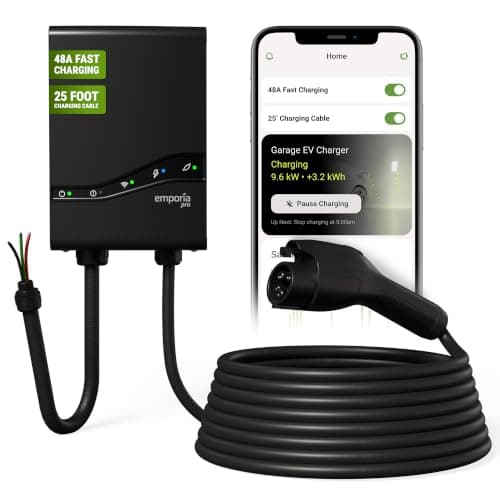 Emporia Pro Level 2 EV ChargerThe best-balanced 48 A charger for a typical US house: full 11.5 kW hardwired, and the only unit at this price that ships with a whole-home energy monitor so its load management is reading your actual panel rather than guessing. | Most households, and anyone with a tight panel | 9.0 | |
| 2 | 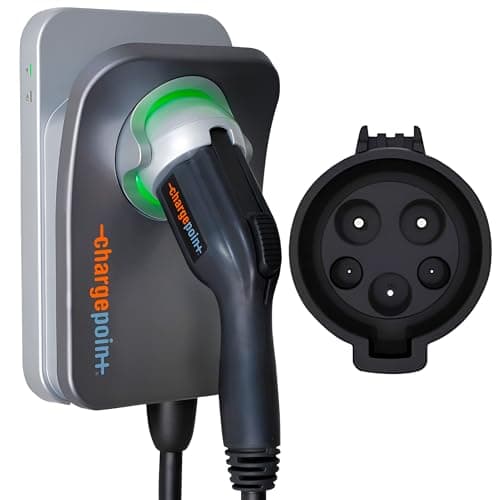 ChargePoint Home Flex (hardwired, 50 A)The most adjustable charger on this page: output steps through 16, 24, 32, 40, 48 and 50 A in the app, so one unit fits almost any panel and can be turned up later if you upgrade the service. | A house whose panel headroom is uncertain | 8.9 | |
| 3 | 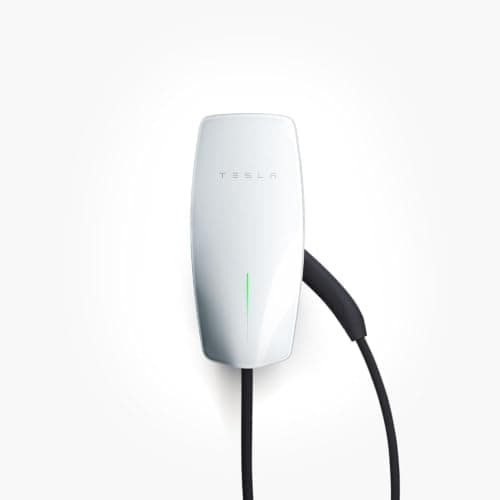 Tesla Wall Connector (Gen 3)If every car in the driveway is a Tesla, this is the cleanest answer: 48 A, a 24 ft cable, and a handle that opens the charge port for you — but it is NACS-only, so a J1772 car needs an adapter every single time. | A Tesla-only household | 8.8 | |
| 4 | 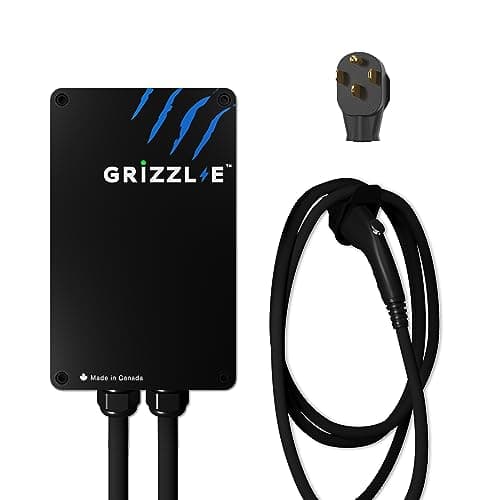 Grizzl-E ClassicA cast-aluminum 40 A charger with dip switches instead of a cloud account. | An outdoor install, and anyone who distrusts apps | 8.5 | $299.99View on Amazon $399.00 list · 25% off |
| 5 | 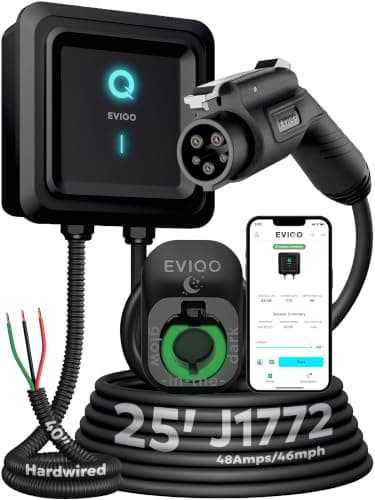 EVIQO Level 2 EV Charger (48 A, hardwired)The cheapest way to get a genuine 11.5 kW hardwired install, with IP66/NEMA 4 weatherproofing and an internal switch for 16/32/40/48 A. | 48 A on a budget | 8.4 | $449.99View on Amazon $510.00 list · 12% off |
| 6 | 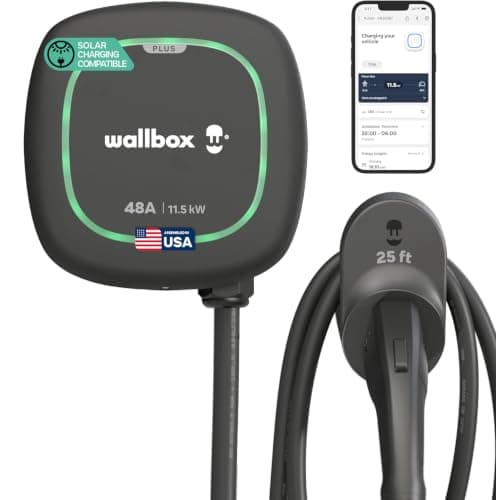 Wallbox Pulsar Plus 48 AA genuinely small 48 A charger — under 8 inches square — which is the deciding factor when the only spot left is a narrow strip of wall beside the panel. | The smallest 48 A unit on a wall | 8.5 | |
| 7 | 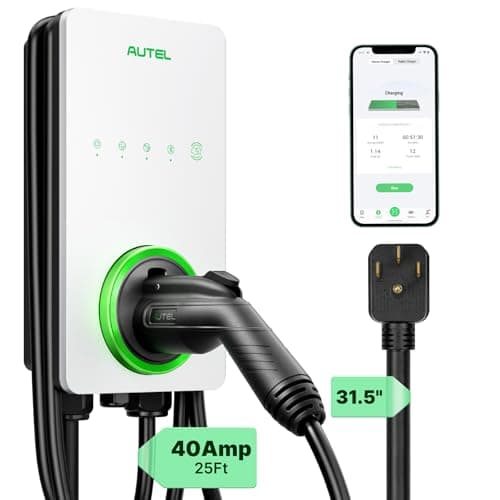 Autel MaxiCharger AC Lite (40 A)The widest output adjustment range here — 6 A to 40 A in the app — plus an operating range down to -40 degF, which makes it the practical pick for an unheated garage in the north. | Cold climates and 1 A output tuning | 8.6 | |
| 8 | 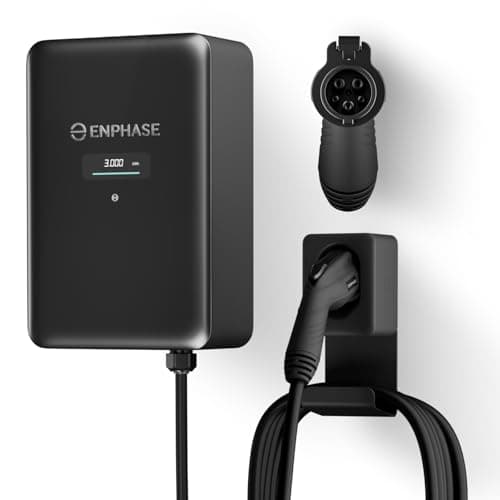 Enphase IQ EV Charger 2 (48 A)The charger to buy if you have solar: it adjusts in 1 A increments to absorb whatever the array is exporting, and it carries a 5-year warranty, the longest here. | A house with rooftop solar | 8.7 | |
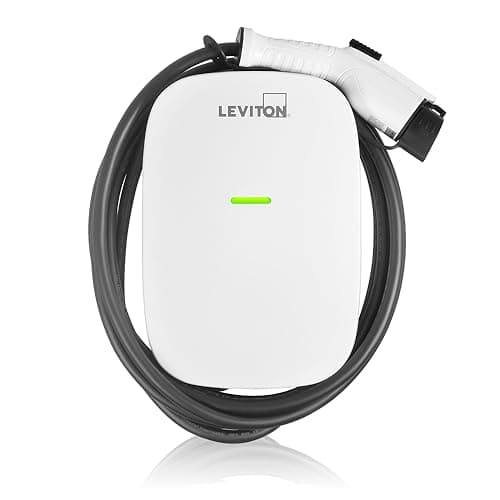
| 9 | 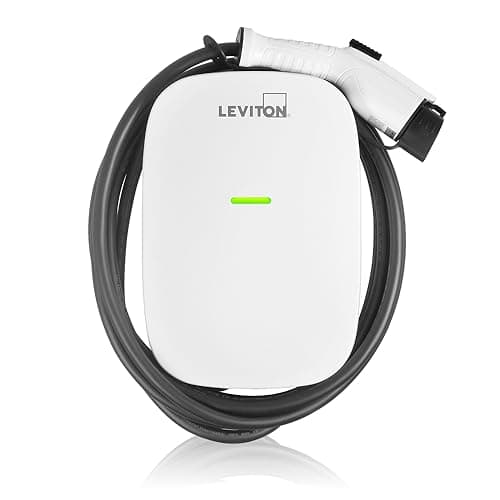 Leviton Level 2 EV Charger (48 A, hardwired)48 A and 11.6 kW from a company your electrician already stocks, which matters more than it sounds: a warranty claim on a Leviton goes through a supply house, not a startup's support queue. | An electrician's default brand | 8.2 | |
| 10 | 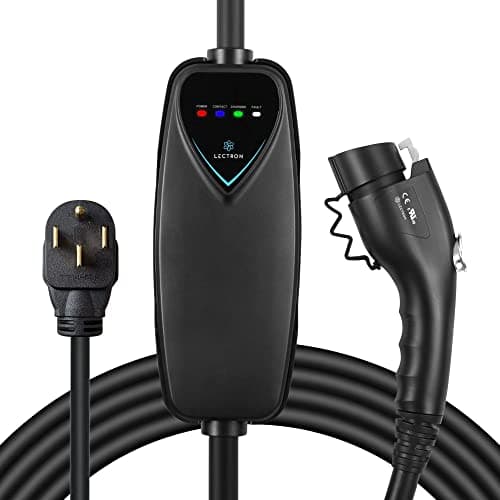 Lectron Level 2 EV Charger (40 A, NEMA 14-50)A 40 A ETL-certified portable charger for roughly half what the smart units cost. | The cheapest charger worth owning | 7.9 |
Who this is for, and who should skip it
This page is for you if you have a battery EV that accepts 40-48 A, a dedicated circuit is feasible, and you want the unit that suits your house rather than the one with the longest spec sheet.
Skip this page if: your car accepts 32 A or less — go to best 32 A chargers, because everything here is capacity you cannot use; you rent — go to portable chargers for renters; or your panel is tight — go to chargers for 100 amp panels, which ranks on completely different criteria.
Before you buy: can your panel feed it?
This is the step people skip and then regret. A 48 A charger needs a 60 A two-pole breaker and 6 AWG copper — NEC 625.42 classifies EV charging as a continuous load and NEC 625.41 requires overcurrent protection at not less than 125% of it.
| Charger | Power at 240 V | Breaker | Copper (conduit) | Install type |
|---|---|---|---|---|
| 32 A | 7.7 kW | 40 A | 8 AWG | Hardwired or plug-in |
| 40 A | 9.6 kW | 50 A | 8 AWG | Hardwired or plug-in |
| 48 A | 11.5 kW | 60 A | 6 AWG | Hardwired only |
If a load calculation says your service cannot supply a 60 A circuit, the answer is a load-managed charger or a smaller one — not a service upgrade by default. Can my panel handle an EV charger covers the four options in cost order.
What actually separates these ten units
Not the charging electronics — a 40 A charger and a 48 A charger contain nearly the same hardware. Five things matter, roughly in this order:
- Cable length. 18 ft to 25 ft across this list. Measure from your car's charge port before anything else; this single spec decides more purchases than any feature.
- Load management. Whether the charger can watch whole-home consumption and throttle. On a tight service this is the difference between an install and a service upgrade.
- Output adjustability. Six selectable levels (ChargePoint) against physical switches (Grizzl-E) against 1 A steps (Autel). Matters when a load calculation lands at an awkward number.
- Enclosure and temperature rating. NEMA 4 is the baseline; cast aluminum and a -40 degF rating are meaningfully better for a driveway post in the north.
- Warranty and who stands behind it. Three years is standard. Enphase is five. Tesla's Universal is four. A warranty is only worth the company behind it.
The full comparison
| Charger | Max output | Cable | Connector | Install | Enclosure | Warranty |
|---|---|---|---|---|---|---|
| Emporia Pro | 48 A / 11.5 kW | 25 ft | J1772 or NACS | Hardwired or plug-in | NEMA 4 | 3 years |
| ChargePoint Home Flex | 50 A / 12 kW | 23 ft | J1772 (NACS available) | Hardwired or plug-in | Outdoor rated | Manufacturer published |
| Tesla Wall Connector | 48 A / 11.5 kW | 24 ft | NACS | Hardwired | Outdoor rated | Manufacturer published |
| Grizzl-E Classic | 40 A / 9.6 kW | 24 ft | J1772 | Hardwired or plug-in | NEMA 4 cast aluminum, IP67 | 3 years |
| EVIQO 48 A | 48 A / 11.5 kW | 25 ft | J1772 | Hardwired or plug-in | IP66 / NEMA 4 | 3 years |
| Wallbox Pulsar Plus 48 A | 48 A / 11.5 kW | 25 ft | J1772 (NACS available) | Hardwired | NEMA 4 per UL 50E | 3 years |
| Autel MaxiCharger AC Lite | 40 A / 9.6 kW | 25 ft | J1772 | Plug-in | NEMA 4 | 36 months |
| Enphase IQ EV Charger 2 | 48 A / 11.5 kW | Manufacturer published | J1772 | Hardwired | NEMA 4 | 5 years |
| Leviton 48 A | 48 A / 11.6 kW | 18 ft | J1772 | Hardwired | Indoor/outdoor | Manufacturer published |
| Lectron 40 A | 40 A / 9.6 kW | 16 ft plus lead | J1772 | Plug-in | Indoor preferred | Manufacturer published |
Measure your cable length before you read any further
Why 48 amps is not automatically better
Three of the units here are 40 A, and they are not on the list as consolation prizes. The difference between 40 A and 48 A is 1.9 kW — about 20% — which on a typical overnight charge is roughly half an hour.
| Vehicle (EPA trim) | kWh / 100 mi | Hours for 100 mi at 40 A | At 48 A | You save |
|---|---|---|---|---|
| Hyundai Ioniq 6 RWD 18in (2025) | 26.0 | 3h 00m | 2h 31m | 29 min |
| Tesla Model Y Long Range AWD (2026) | 27.5 | 3h 11m | 2h 39m | 32 min |
| Ford Mustang Mach-E RWD Ext (2026) | 30.7 | 3h 33m | 2h 58m | 35 min |
| Rivian R1T Dual Large (2026) | 44.4 | 5h 08m | 4h 17m | 51 min |
| GMC Hummer EV Pickup 3X (2025) | 65.1 | 7h 32m | 6h 17m | 1h 15m |
So: if your car is a truck or a large SUV driven a long way daily, take 48 A. If it is an efficient sedan or crossover and a 40 A circuit is materially cheaper on your run, take 40 A and spend the difference on the install. Full arithmetic on 40 A vs 48 A.
A note on what is not on this list
Two deliberate exclusions, because a roundup's omissions are as informative as its picks.
- Very cheap unbranded 48 A units. There are 48 A chargers on Amazon at a third of the EVIQO's price. Some may be fine. We will not recommend a 48 A continuous-duty device from a brand whose North American support status we cannot establish, because the warranty is the product and an unreachable company has not sold you one.
- Brands with uncertain North American operations. Our methodology excludes units from brands whose support status is unclear, specifically so a recommendation does not age into a dead end. That rule cost this list some units that were widely recommended a few years ago.
How we picked
Every unit here is currently purchasable, carries a real UL or ETL certification to an EVSE standard, and comes from a brand with an identifiable North American support path. We verified each one's published specifications against the manufacturer's own documentation on the date shown at the top of this page. We verify specifications; we do not bench-test chargers, and our methodology says so in plain terms. Ranking order is fit for the stated use case first, then price, then warranty and support — commission rate plays no part in it. We also excluded any charger we could not resolve to a current, in-stock listing — a recommendation you cannot act on is not a recommendation.