Skip to content
EV & Charger

Our picks

Best 40 Amp EV Chargers

The size most houses actually end up installing — 9.6 kilowatts on a 50 amp breaker and 8 AWG copper. Ten units ranked on reach, build and whether the amperage survives a dead app.

By Mike M.Published Last verified

A wall-mounted Level 2 EV charger installed on the exterior wall of a house

The short answer

The Grizzl-E Classic is the best 40 A charger for most houses: a cast-aluminum NEMA 4 body, a 24 ft cable, and amperage set by a physical switch rather than a cloud account. The Autel MaxiCharger AC Lite wins in a cold garage and when a load calculation lands at an awkward number, because it adjusts in 1 A steps down to 6 A. The Lectron 40 A is the cheapest unit here we would actually put in a garage. Every charger on this page runs on a 50 A two-pole breaker with 8 AWG copper — one breaker size and one wire size cheaper than 48 A.

Quick picks

Ranked by fit for the stated use case first, then price, then warranty and support. Tap any row to jump to the full assessment. Commission rate plays no part in the order.

#ProductBest forScorePrice
1
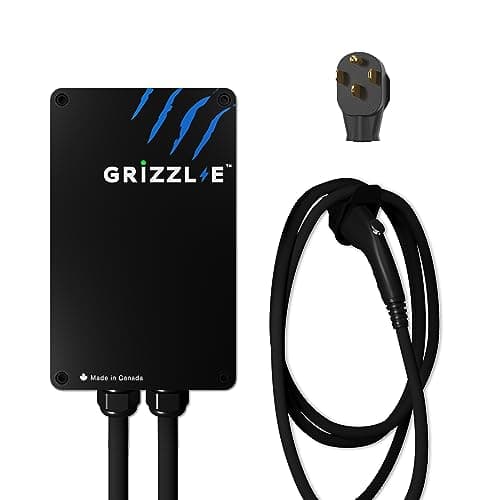
Grizzl-E Classic
Grizzl-E ClassicA cast-aluminum 40 A charger with dip switches instead of a cloud account.
An outdoor install, and anyone who distrusts apps8.5
$299.99View on Amazon

$399.00 list · 25% off

2
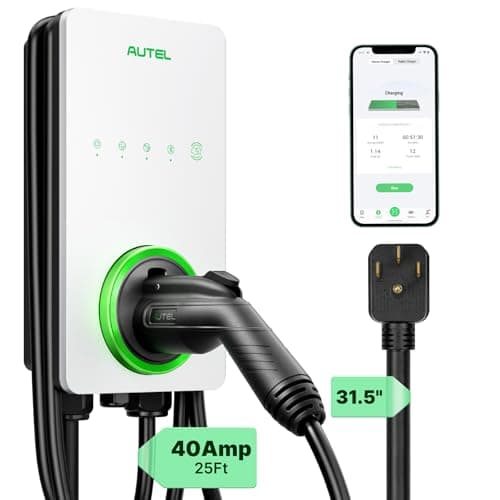
Autel MaxiCharger AC Lite (40 A)
Autel MaxiCharger AC Lite (40 A)The widest output adjustment range here — 6 A to 40 A in the app — plus an operating range down to -40 degF, which makes it the practical pick for an unheated garage in the north.
Cold climates and 1 A output tuning8.6
$375.99View on Amazon

$470.00 list · 20% off

3
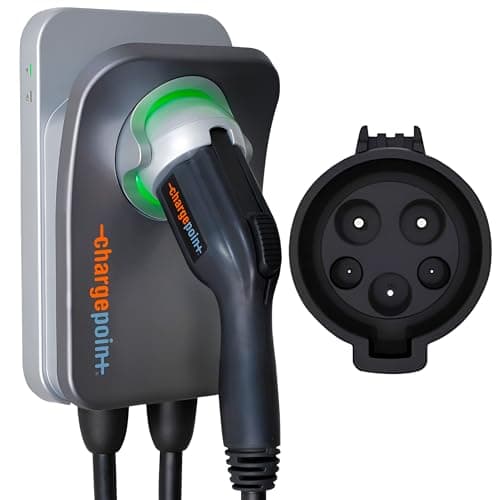
ChargePoint Home Flex (NEMA 14-50 plug)
ChargePoint Home Flex (NEMA 14-50 plug)The same charger as the hardwired Home Flex with a NEMA 14-50 input cord, which turns the install into plugging it in — at the cost of a 40 A ceiling, because a 50 A receptacle circuit can only carry 40 A continuously.
A garage that already has a 14-50 outlet8.4
$599.00View on Amazon

$657.99 list · 9% off

4
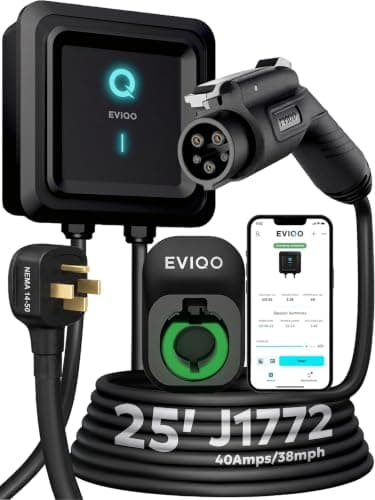
EVIQO Level 2 EV Charger (40 A, NEMA 14-50)
EVIQO Level 2 EV Charger (40 A, NEMA 14-50)The plug-in EVIQO: 40 A, 25 ft, IP66, into an existing 14-50.
A plug-in 40 A unit with a long cable8.1
$449.99View on Amazon

$510.99 list · 12% off

5
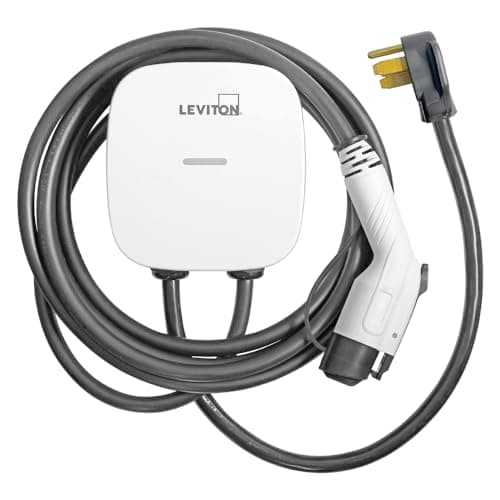
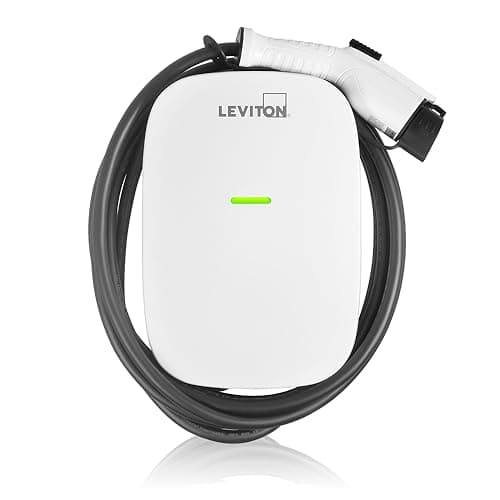
Leviton Smart EV Charger (40 A, NEMA 14-50)
Leviton Smart EV Charger (40 A, NEMA 14-50)Leviton's 40 A plug-in with Wi-Fi and a 25 ft cable — the balanced pick in their range.
Plug-in with Wi-Fi from a known brand8.0
6
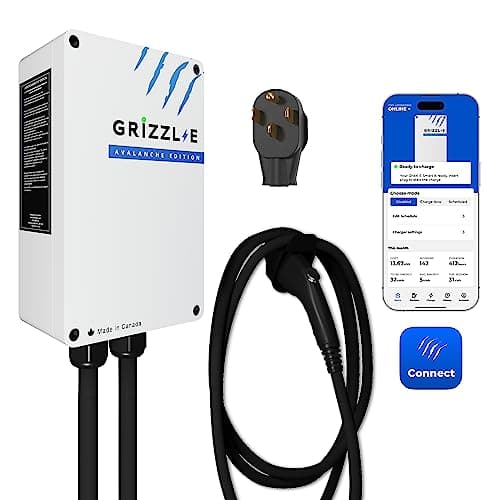
Grizzl-E Classic Connect
Grizzl-E Classic ConnectThe Classic's enclosure with Wi-Fi bolted on, for people who want the metal box and the time-of-use schedule.
The Grizzl-E build with scheduling added8.3
7
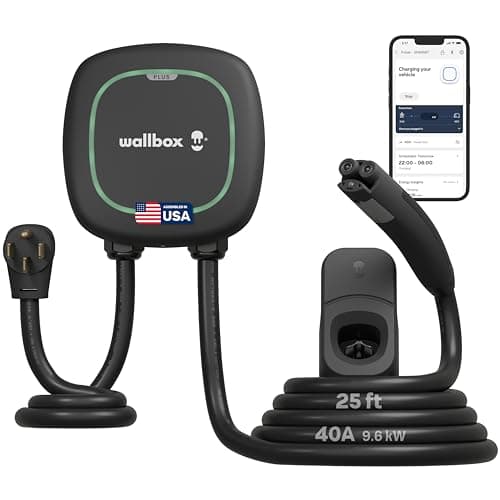
Wallbox Pulsar Plus 40 A NACS
Wallbox Pulsar Plus 40 A NACSThe compact Pulsar body with a NACS handle at 40 A — the sensible version for a Tesla on a 50 A circuit, which is what most retrofits actually get.
A small-footprint NACS install on a 50 A circuit8.2
8
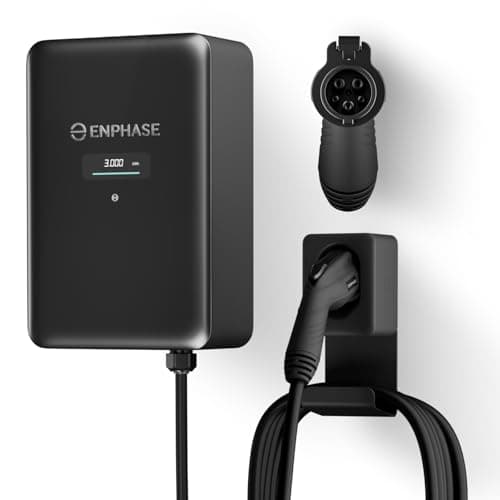
Enphase IQ EV Charger 2 (40 A, NEMA 14-50)
Enphase IQ EV Charger 2 (40 A, NEMA 14-50)The plug-in Enphase: the same 1 A solar tracking on a NEMA 14-50 cord, which gets a solar household charging on surplus without pulling a new circuit.
Solar plus an existing 14-50 outlet8.3
$799.20View on Amazon

$999.00 list · 20% off

9
Lectron Nexus Level 2 Charger (40 A)
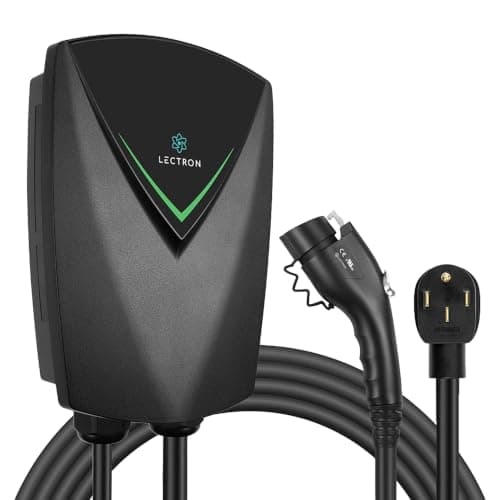
Lectron Nexus Level 2 Charger (40 A)Lectron's wall-mount unit, carrying a UL 2594 certification (ETL listed) and a 23 ft cable — the step up from their portable cordset without stepping into premium money.
A budget unit with a real UL file7.8
10
Lectron Level 2 EV Charger (40 A, NEMA 14-50)
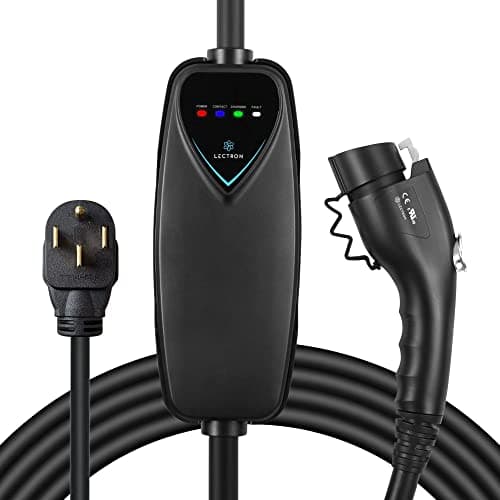
Lectron Level 2 EV Charger (40 A, NEMA 14-50)A 40 A ETL-certified portable charger for roughly half what the smart units cost.
The cheapest charger worth owning7.9

Why 40 amps is the size most houses actually install

Forty amps is not the compromise option. It is what a 50 A circuit delivers, and a 50 A circuit is what a typical 200 A residential service gives up without an argument. It is also the ceiling on every plug-in charger sold in the US, because a receptacle circuit carries only 80% of its rating continuously — 80% of 50 A is 40 A, which is why a plug-in unit advertising a continuous 48 A does not exist.

So most households that start out shopping for 48 A end up here anyway: either the load calculation lands short of a 60 A circuit, or the run to the garage makes 6 AWG copper expensive, or an existing NEMA 14-50 outlet is already on the wall and plugging in beats pulling new wire. All three of those arrive at 40 A.

What 40 A asks of your electrical system, against 32 A and 48 A
32 A40 A48 A
Power at 240 V7.7 kW9.6 kW11.5 kW
Breaker (two-pole)40 A50 A60 A
Copper in conduit, 75 degC8 AWG8 AWG6 AWG
NM-B cable8/28/26/2, or conduit
Plug-in possibleYesYesNo
GFCI breaker neededYes if plug-inYes if plug-inNo — hardwired
Breaker sizes follow NEC 625.41's 125% rule, with EV charging classified as a continuous load by NEC 625.42. Conductor sizes are the 75 degC copper column of NEC Table 310.16; NM-B cable is held to the 60 degC column by NEC 334.80. GFCI protection on a receptacle-fed charger is NEC 625.54. Detail on our breaker size chart and wire size guide.

First: will 40 amps hold your car back?

For a plug-in hybrid, never — every PHEV we cover accepts less than 40 A, so the charger is already ahead of the car. For a battery EV it depends on the onboard charger, and the honest answer is that the gap is smaller than the spec sheets imply.

What 40 A costs you against 48 A, on real vehicles
Vehicle (EPA trim)kWh / 100 mi100 mi at 40 AAt 48 ADifference
Hyundai Ioniq 6 RWD 18in (2025)26.03h 00m2h 31m29 min
Tesla Model Y Long Range AWD (2026)27.53h 11m2h 39m32 min
Ford Mustang Mach-E RWD Ext (2026)30.73h 33m2h 58m35 min
Rivian R1T Dual Large (2026)44.45h 08m4h 17m51 min
GMC Hummer EV Pickup 3X (2025)65.17h 32m6h 17m1h 15m
EPA combined kWh per 100 miles from the US DOE / EPA fueleconomy.gov web service. Hours calculated at 90% charging efficiency. The saving scales with how inefficient the vehicle is — which is why we point truck owners at 48 A and are relaxed about 40 A for sedans and crossovers.

Read the right-hand column as what happens at 2am. If the car sits on the charger for eight hours and needs five, 40 A and 48 A are indistinguishable. If you are a two-shift household putting 200 miles a day on a Hummer, the extra 1.9 kW is a real hour and you should go read best 48 amp chargers instead. And if your car tops out at 32 A — most Jeep 4xe trims, the Model 3 Standard RWD, the Audi Q4 35 — then even 40 A is capacity you cannot use, and best 32 amp chargers is the right page. Check yours on onboard charger limits by model.

What we ranked on

At 40 A the charging electronics are a commodity. These ten units will put the same 9.6 kW into the same car. So the ranking is built on the four things that still differ, in this order:

  1. Cable length. 16 ft to 25 ft across this list. This single specification decides more purchases than every app feature combined, and no firmware update lengthens a cable.
  2. Whether the amperage survives the software. A unit whose output is set by a physical switch keeps that setting through an app outage, a new phone, a dead Wi-Fi router and a change of owner. A unit that needs an account to be commissioned does not.
  3. Enclosure and temperature range. NEMA 4 is the floor for anything near a garage door. Cast aluminum and a -40 degF rating are a real difference on an unheated wall in the north, and the rating spread across this list is wide.
  4. Install type, and what it drags along. Hardwired has no receptacle in the current path and needs no GFCI breaker. Plug-in needs both, and a GFCI breaker feeding a charger is the commonest source of nuisance tripping owners report. It also moves house with you, which is the whole point if you rent.

Load management barely features here, and that is deliberate: a 50 A circuit is a load most 200 A services can carry outright. If yours cannot, you are on the wrong page — chargers for a 100 amp panel ranks on exactly that criterion instead.

The full comparison

All ten 40 A chargers, specification by specification
ChargerCableConnectorInstallEnclosureOutput set byWarranty
Grizzl-E Classic24 ftJ1772Hardwired or plug-inNEMA 4 cast aluminum, IP67Physical switch3 years
Autel MaxiCharger AC Lite25 ftJ1772Plug-inNEMA 4, -40 degF to +131 degFApp, 6-40 A in 1 A steps36 months
ChargePoint Home Flex (plug-in)23 ftJ1772Plug-in (14-50 or 6-50)Outdoor ratedApp, 16/24/32/40 AManufacturer published
EVIQO 40 A plug-in25 ftJ1772Plug-inIP66 / NEMA 4App3 years
Leviton Smart 40 A25 ftJ1772Plug-inIndoor/outdoorAppManufacturer published
Grizzl-E Classic ConnectManufacturer publishedJ1772Hardwired or plug-inNEMA 4 cast aluminumPhysical switch, plus app scheduling3 years
Wallbox Pulsar Plus 40 A NACSManufacturer publishedNACSHardwiredNEMA Type 4App3 years
Enphase IQ EV Charger 2 (40 A)Manufacturer publishedJ1772Plug-inNEMA 4App, 1 A steps5 years
Lectron Nexus 40 A23 ftJ1772Plug-inIndoor preferredAppManufacturer published
Lectron 40 A16 ft plus leadJ1772Plug-inPlastic, indoorFixedManufacturer published
Every figure was checked against the manufacturer's own published documentation on the date at the top of this page; the source link sits on each product card below. Where a manufacturer does not publish a figure prominently we write "manufacturer published" rather than estimating it. Prices are not in this table because they are not static — they render live beside each buy button.

Measure the cable run before you read another word

Who should buy which

Matching the unit to the situation
Your situationBuyWhy
Outdoor wall or a driveway post, cold wintersGrizzl-E ClassicCast-aluminum NEMA 4 / IP67 body, and a switch-set amperage that cannot be lost in a software migration
Unheated garage in the far north, or a load calculation at an odd numberAutel MaxiCharger AC Lite-40 degF rating and 1 A adjustment steps from 6 A to 40 A — nothing else here does either
A correctly wired NEMA 14-50 outlet is already on the wallChargePoint Home Flex (plug-in)Plug it in, no electrician, and the largest installed base in the US behind the app
Longest possible reach on a plug-in budgetEVIQO 40 A or Leviton Smart 40 A25 ft of cable for plug-in money; Leviton if brand support matters more to you than price
You want the metal box and time-of-use schedulingGrizzl-E Classic ConnectThe Classic's enclosure with Wi-Fi scheduling added, if your car cannot schedule itself
A Tesla, hardwired, on a 50 A circuitWallbox Pulsar Plus 40 A NACSA NACS handle with no adapter to lose, in the smallest body on this list
Rooftop solar and an existing 14-50Enphase IQ EV Charger 2 (40 A)Charges on measured solar surplus in 1 A steps, with the longest warranty here
Cheapest thing worth owningLectron 40 AETL-certified 9.6 kW for roughly half what the smart units cost — accept the short reach and the plastic body

Hardwired or plug-in at 40 amps

This is the one real fork on this page, because 40 A is the only amperage where you genuinely get to choose. Seven of these ten units are plug-in only, two will do either, and one is hardwired only.

  • Plug in if there is already a sound NEMA 14-50 on the wall, or if you rent, or if you expect to move within a few years. You are accepting a GFCI breaker under NEC 625.54 and a receptacle sitting in the current path of a continuous 40 A load — so spend the extra on an industrial-grade receptacle rather than a builder-grade one. Our NEMA 14-50 guide names the ones worth buying.
  • Hardwire if you own the house and the circuit is being pulled anyway. No receptacle to loosen, no GFCI breaker, no nuisance trips, and the cheapest path if the electrician is already in the panel. The trade is that the charger stays with the house.

If that decision is still open, hardwired vs plug-in works through it with the code references and the cost difference.

A note on what is not on this list

Three deliberate exclusions, because the omissions in a roundup are as informative as the picks.

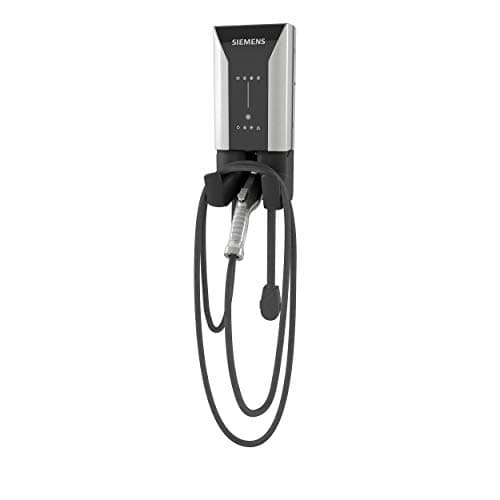
  • The Siemens VersiCharge AC. Good industrial hardware from the company that probably made your load center, a NEMA 4 body and a three-year warranty — but at its current price it sits well above every unit on this page while delivering the same 9.6 kW on a shorter 20 ft cable. We could not justify ranking it above ten cheaper units that charge identically. Our Siemens VersiCharge review sets out the narrow case where it still makes sense.
  • Unbranded 40 A units at a third of the Lectron's price. Some are probably fine. We will not put a buy button next to a continuous-duty 240 V device from a brand whose North American support status we cannot establish, because the warranty is a large part of what you are buying and an unreachable company has not sold you one.
  • 48 A units throttled down to 40 A. Several 48 A chargers can be set to 40 A, and if you already own one, do that. But buying 48 A of hardware in order to run it at 40 A means paying for a ceiling you have decided not to use — and the plug-in versions of those units are 40 A anyway, which is how several of them ended up on this page in the first place.

What 9.6 kW costs to run

A 40 A charger draws 9.6 kW while it is charging, and the number on your bill is set by your utility rate and your car's efficiency, not by the charger. What it costs to charge an EV at home does the arithmetic with your own rate, and how much a Level 2 charger adds to your power bill shows the same thing as a monthly delta against your current bill.

One thing worth doing before you buy: check whether your utility pays a rebate on a networked charger. Several do, and on this list that is the difference between buying the cheapest unit and buying a better one for the same net outlay. EV charger rebates in 2026 tracks what is available.

How we picked

Every unit here is currently purchasable, carries a real UL or ETL certification to an EVSE standard, and comes from a brand with an identifiable North American support path. We verified each one's published specifications against the manufacturer's own documentation on the date shown at the top of this page. We verify specifications; we do not bench-test chargers, and our methodology says so in plain terms. Ranking order is fit for the stated use case first, then price, then warranty and support — commission rate plays no part in it. For this page we also required that each unit's 40 A rating be its continuous output rather than a peak figure, and we excluded anything we could not resolve to a current, in-stock listing — a recommendation you cannot act on is not a recommendation.
In detail

Every pick, assessed

Top pick · An outdoor install, and anyone who distrusts apps

Grizzl-E Classic

Grizzl-E Classic charger

8.5/ 10

$299.99View on Amazon

$399.00 list · 25% off

#ad Price as of October 9, 2026. How we make money

Our verdict

A cast-aluminum 40 A charger with dip switches instead of a cloud account. Nothing about it is clever, which is exactly why it is the unit to buy for a driveway post in a cold climate.

What works

  • Cast-aluminum NEMA 4 body is the most physically robust enclosure in this price class
  • Amperage set by physical switch, so the setting survives an app outage, a new phone and a sold house
  • 24 ft cable at a 40 A price
  • ENERGY STAR certified

What doesn't

  • 40 A ceiling — a 48 A car leaves ~2 kW on the table
  • No scheduling, no energy reporting, no load management; if you need time-of-use scheduling you are doing it in the car
  • Changing amperage means opening the unit, which most people will do exactly once
Grizzl-E Classic specifications
Max output40 A / 9.6 kW continuous
Adjustable output16, 24, 32 or 40 A via physical switches
Breaker50 A dedicated 2-pole for 40 A output
Cable24 ft, 8 AWG output cord
ConnectorJ1772
EnclosureNEMA 4 cast aluminum, IP67, fire resistant
ProtectionOver-current, over/under-voltage, missing diode, ground fault, over-temperature
Warranty3 years

Specifications checked against United Chargers Grizzl-E specifications. We verify published specifications; we do not bench-test hardware — how we assess products.

How it scored

Weather and build
9.8
Charge rate
7.6
Cable and reach
9.6
Smart features
3.0
Simplicity
9.6
Value
9.4
Pick 2 · Cold climates and 1 A output tuning

Autel MaxiCharger AC Lite (40 A)

Autel MaxiCharger AC Lite (40 A) charger

8.6/ 10

$375.99View on Amazon

$470.00 list · 20% off

#ad Price as of October 9, 2026. How we make money

Our verdict

The widest output adjustment range here — 6 A to 40 A in the app — plus an operating range down to -40 degF, which makes it the practical pick for an unheated garage in the north.

What works

  • 6-40 A in 1 A steps is the finest adjustment of any unit here — genuinely useful when a load calculation lands at 37 A
  • -40 degF to +131 degF rated, which is a real differentiator in Minnesota or Maine
  • Integrated surge protection, which most units leave to a panel-mounted device
  • 25 ft cable

What doesn't

  • 40 A ceiling
  • Bluetooth, Wi-Fi and Ethernet is more connectivity than a home needs and more surface to go wrong
  • Autel's North American consumer support is newer than ChargePoint's or Tesla's
Autel MaxiCharger AC Lite (40 A) specifications
Max output40 A / 9.6 kW (240 V x 40 A)
Adjustable output6-40 A via the app
Breaker50 A dedicated 2-pole
Cable25 ft, J1772
EnclosureNEMA 4
Operating temperature-40 degF to +131 degF
Protection20 mA CCID ground-fault detection, integrated surge protection
Warranty36 months

Specifications checked against ENERGY STAR certified EVSE listing. We verify published specifications; we do not bench-test hardware — how we assess products.

How it scored

Cold-weather fitness
9.8
Charge rate
7.6
Output adjustability
9.8
Cable and reach
9.2
Weather and build
9.0
Value
8.6
Pick 3 · A garage that already has a 14-50 outlet

ChargePoint Home Flex (NEMA 14-50 plug)

ChargePoint Home Flex (NEMA 14-50 plug) charger

8.4/ 10

$599.00View on Amazon

$657.99 list · 9% off

#ad Price as of October 9, 2026. How we make money

Our verdict

The same charger as the hardwired Home Flex with a NEMA 14-50 input cord, which turns the install into plugging it in — at the cost of a 40 A ceiling, because a 50 A receptacle circuit can only carry 40 A continuously.

What works

  • No electrician needed if a correctly wired 14-50 outlet is already there
  • Unplugs and moves with you, which matters if you rent
  • Same app and the same adjustable amperage as the hardwired unit

What doesn't

  • 40 A ceiling, so a car that accepts 48 A charges ~20% slower than it could
  • Needs a GFCI breaker on the receptacle circuit, and that pairing is the most common source of nuisance tripping
  • The plug and receptacle are the weakest link in the whole run — a cheap receptacle will eventually heat up
ChargePoint Home Flex (NEMA 14-50 plug) specifications
Max output40 A / 9.6 kW on a 50 A receptacle circuit
Adjustable output16, 24, 32, 40 A
InputNEMA 14-50 plug
Cable23 ft
ConnectorJ1772
GFCIRequired — NEC 625.54 applies to every EV charging receptacle

Specifications checked against ChargePoint Home Flex datasheet. We verify published specifications; we do not bench-test hardware — how we assess products.

How it scored

Install simplicity
9.6
Charge rate
7.6
Cable and reach
7.8
Smart features
9.0
Portability
8.6
Pick 4 · A plug-in 40 A unit with a long cable

EVIQO Level 2 EV Charger (40 A, NEMA 14-50)

EVIQO Level 2 EV Charger (40 A, NEMA 14-50) charger

8.1/ 10

$449.99View on Amazon

$510.99 list · 12% off

#ad Price as of October 9, 2026. How we make money

Our verdict

The plug-in EVIQO: 40 A, 25 ft, IP66, into an existing 14-50. A lot of reach for the money.

What works

  • 25 ft cable at a plug-in price
  • IP66 weather rating
  • No electrician if the outlet is sound

What doesn't

  • 40 A
  • GFCI breaker required
  • Newer brand
EVIQO Level 2 EV Charger (40 A, NEMA 14-50) specifications
Max output40 A / 9.6 kW
InputNEMA 14-50 plug
Cable25 ft
EnclosureIP66 / NEMA 4
GFCIRequired on the receptacle circuit — NEC 625.54

Specifications checked against EVIQO charger specifications. We verify published specifications; we do not bench-test hardware — how we assess products.

Pick 5 · Plug-in with Wi-Fi from a known brand

Leviton Smart EV Charger (40 A, NEMA 14-50)

Leviton Smart EV Charger (40 A, NEMA 14-50) charger

8.0/ 10

$499.85View on Amazon

#ad Price as of October 9, 2026. How we make money

Our verdict

Leviton's 40 A plug-in with Wi-Fi and a 25 ft cable — the balanced pick in their range.

What works

  • 25 ft cable
  • Wi-Fi scheduling
  • Mainstream brand support

What doesn't

  • 40 A
  • GFCI breaker required on the receptacle circuit
  • App is functional rather than good
Leviton Smart EV Charger (40 A, NEMA 14-50) specifications
Max output40 A / 9.6 kW
InputNEMA 14-50 plug
Cable25 ft
SmartWi-Fi

Specifications checked against Leviton EV charging product specifications. We verify published specifications; we do not bench-test hardware — how we assess products.

Pick 6 · The Grizzl-E build with scheduling added

Grizzl-E Classic Connect

Grizzl-E Classic Connect charger

8.3/ 10

$349.99View on Amazon

#ad Price as of October 9, 2026. How we make money

Our verdict

The Classic's enclosure with Wi-Fi bolted on, for people who want the metal box and the time-of-use schedule. The charging hardware underneath is identical.

What works

  • Same cast-aluminum shell as the Classic
  • Adds the scheduling the Classic lacks, which is the one thing worth paying for on a time-of-use tariff
  • Still switch-settable amperage underneath

What doesn't

  • Still 40 A
  • The app is the least polished of the units here
  • Costs more than the Classic for a feature your car may already provide
Grizzl-E Classic Connect specifications
Max output40 A / 9.6 kW
Breaker50 A dedicated 2-pole
ConnectorJ1772
EnclosureNEMA 4 cast aluminum
CertificationUL tested and certified, ENERGY STAR
SmartApp scheduling and energy reporting

Specifications checked against United Chargers Grizzl-E specifications. We verify published specifications; we do not bench-test hardware — how we assess products.

Pick 7 · A small-footprint NACS install on a 50 A circuit

Wallbox Pulsar Plus 40 A NACS

Wallbox Pulsar Plus 40 A NACS charger

8.2/ 10

$749.99View on Amazon

#ad Price as of October 9, 2026. How we make money

Our verdict

The compact Pulsar body with a NACS handle at 40 A — the sensible version for a Tesla on a 50 A circuit, which is what most retrofits actually get.

What works

  • NACS handle with no adapter for a Tesla
  • Same small footprint as the 48 A version
  • Cheaper than the 48 A unit and matched to the 50 A circuit most houses can actually give up

What doesn't

  • 40 A, so an 11.5 kW car is throttled
  • J1772 cars need an adapter
  • Hardwired only
Wallbox Pulsar Plus 40 A NACS specifications
Max output40 A / 9.6 kW
Breaker50 A dedicated 2-pole
ConnectorNACS
EnclosureNEMA Type 4
InstallHardwired

Specifications checked against Wallbox Pulsar Plus North America datasheet. We verify published specifications; we do not bench-test hardware — how we assess products.

Pick 8 · Solar plus an existing 14-50 outlet

Enphase IQ EV Charger 2 (40 A, NEMA 14-50)

Enphase IQ EV Charger 2 (40 A, NEMA 14-50) charger

8.3/ 10

$799.20View on Amazon

$999.00 list · 20% off

#ad Price as of October 9, 2026. How we make money

Our verdict

The plug-in Enphase: the same 1 A solar tracking on a NEMA 14-50 cord, which gets a solar household charging on surplus without pulling a new circuit.

What works

  • Solar tracking without an electrician, if the outlet is already correct
  • 5-year warranty
  • Moves house with you

What doesn't

  • 40 A
  • GFCI breaker required, with the nuisance-tripping risk that brings
  • Still expensive for a 9.6 kW charger
Enphase IQ EV Charger 2 (40 A, NEMA 14-50) specifications
Max output40 A / up to 9.6 kW at 240 V
InputNEMA 14-50 plug
ConnectorJ1772
Warranty5 years
GFCIRequired on the receptacle circuit — NEC 625.54

Specifications checked against Enphase IQ EV Charger 2 documentation. We verify published specifications; we do not bench-test hardware — how we assess products.

Pick 9 · A budget unit with a real UL file

Lectron Nexus Level 2 Charger (40 A)

Lectron Nexus Level 2 Charger (40 A) charger

7.8/ 10

$429.99View on Amazon

#ad Price as of October 9, 2026. How we make money

Our verdict

Lectron's wall-mount unit, carrying a UL 2594 certification (ETL listed) and a 23 ft cable — the step up from their portable cordset without stepping into premium money.

What works

  • UL 2594 certified to the EVSE standard, not just a generic electrical mark
  • 23 ft cable at a budget price
  • Wall-mountable rather than a cordset hanging on a hook

What doesn't

  • 40 A
  • Lectron's app ecosystem is thin
  • Support is email-first
Lectron Nexus Level 2 Charger (40 A) specifications
Max output40 A / 9.6 kW
Cable23 ft
ConnectorJ1772
CertificationUL 2594 (ETL listed)

Specifications checked against Lectron Level 2 charger specifications. We verify published specifications; we do not bench-test hardware — how we assess products.

Pick 10 · The cheapest charger worth owning

Lectron Level 2 EV Charger (40 A, NEMA 14-50)

Lectron Level 2 EV Charger (40 A, NEMA 14-50) charger

7.9/ 10

$269.99View on Amazon

#ad Price as of October 9, 2026. How we make money

Our verdict

A 40 A ETL-certified portable charger for roughly half what the smart units cost. It does one thing, it does it at 9.6 kW, and for a household charging overnight on a flat rate that is the whole job.

What works

  • By far the lowest cost per kW of anything we would actually recommend
  • Portable — it travels and it moves house
  • 40 A is enough for every PHEV and most overnight BEV charging

What doesn't

  • No scheduling, no app, no energy data; on a time-of-use tariff you schedule in the car or you overpay
  • Shorter total reach than the 24-25 ft units
  • Plastic enclosure, not metal — keep it out of direct weather
Lectron Level 2 EV Charger (40 A, NEMA 14-50) specifications
Max output40 A / 9.6 kW
InputNEMA 14-50 plug
Cable16 ft extension cord plus the J1772 lead
ConnectorJ1772
CertificationETL certified
GFCIRequired on the receptacle circuit — NEC 625.54

Specifications checked against Lectron Level 2 charger specifications. We verify published specifications; we do not bench-test hardware — how we assess products.

How it scored

Value
9.8
Charge rate
7.6
Portability
9.4
Smart features
2.5
Weather and build
6.4

FAQ

Questions people actually ask

Is a 40 amp EV charger enough?

For almost every household, yes. Forty amps is 9.6 kW, which replaces roughly 30-35 miles of range per hour in a typical crossover — around 250 miles over an eight-hour overnight charge. It is more than any plug-in hybrid can accept and more than most people drive in a day. You need 48 A only if you routinely need a full charge in well under eight hours.

What breaker does a 40 amp EV charger need?

A 50 A two-pole breaker on 8 AWG copper in conduit. NEC 625.42 classifies EV charging as a continuous load and NEC 625.41 requires overcurrent protection at not less than 125% of it, so 40 A x 1.25 = 50 A. If the charger plugs into a receptacle, that circuit also needs GFCI protection under NEC 625.54.

Can I run a 40 amp charger on an existing NEMA 14-50 outlet?

Yes, if the outlet is on a dedicated 50 A circuit with conductors rated for it, the receptacle is sound and the circuit has GFCI protection. That combination is exactly why 40 A plug-in chargers exist. Have an electrician confirm the breaker, the wire gauge, the terminations and the equipment ground before you trust an older outlet with a continuous load.

Which 40 amp charger has the longest cable?

The Autel MaxiCharger AC Lite, the EVIQO 40 A and the Leviton Smart 40 A all publish 25 ft. The Grizzl-E Classic is 24 ft and the ChargePoint Home Flex is 23 ft. The Lectron 40 A is the shortest at 16 ft plus its lead, which is the main thing you give up for its price.

Is 40 amps or 48 amps better?

Better is whichever matches your car and your panel. On an efficient sedan charging overnight the difference is around half an hour, and 40 A saves you a breaker size and a wire size. On a large truck driven hard every day the difference can exceed an hour, and 48 A is worth the heavier circuit.

Do 40 amp chargers need a GFCI breaker?

Only if they plug into a receptacle. NEC 625.54 requires GFCI protection for receptacles that supply EV charging equipment, so a plug-in 40 A unit does. A hardwired one does not, because the charger has its own CCID ground-fault protection and there is no receptacle to cover.

Can a 40 amp charger charge a Tesla?

Yes, at 9.6 kW instead of the 11.5 kW a Model Y or Model 3 Premium will accept — about half an hour longer on a 100-mile charge. The simplest routes are the Wallbox Pulsar Plus 40 A NACS, which has a NACS handle built in, or any J1772 unit here plus a J1772-to-NACS adapter on the handle.

Sources

What we checked this against

Read next

Disclosure. Some links on this page are affiliate links. If you buy through one, we earn a commission at no extra cost to you. We are a participant in the Amazon Services LLC Associates Program. Prices come from Amazon's live data and are shown with the date they were checked; where no live price is available we say "check price" rather than show an old number. Commission rate plays no part in which products we recommend or in what order — see our methodology and our full affiliate disclosure.