The short answer
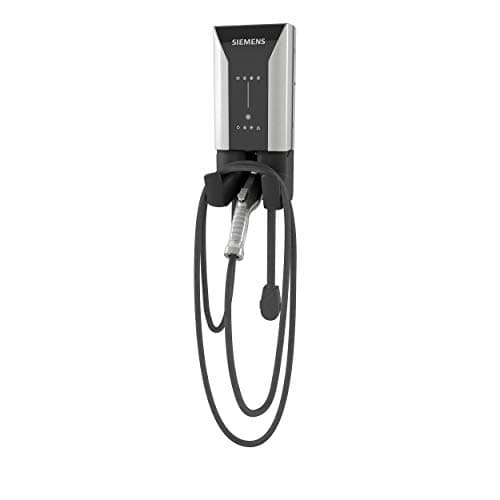
The Siemens VersiCharge AC is a 40 A / 9.6 kW connected charger with a 20 ft J1772 cable, rated for indoor or outdoor mounting, from a company that makes load centers, breakers and switchgear rather than consumer electronics. The hardware and the distribution behind it are genuinely strong. The problem is arithmetic: at the price it currently sells for it is the most expensive way to get 9.6 kW of anything we track, and 9.6 kW is 9.6 kW. Buy it if a single-vendor Siemens install or electrical-distribution availability is worth real money to you. Otherwise a cheaper 40 A unit charges your car at exactly the same speed.
That is a harder verdict than we usually write about well-built equipment, so it is worth being precise about where it comes from. Nothing here is a criticism of the unit. It is a criticism of the unit's position against a market that has gotten dramatically cheaper around it.
What you are actually buying
Siemens is not an EV company that learned electrical engineering. It is an electrical manufacturer that added an EVSE to a catalog that already contained the panel it will hang next to. In practice that buys you three things, and they are all real:
- One vendor across the whole install. If your load center is a Siemens, the breaker feeding this charger can be a Siemens, the surge device can be a Siemens, and the charger can be a Siemens. One manufacturer's warranty covers the chain from the service entrance to the handle. Nobody gets to point at somebody else's component.
- Electrical-distribution availability. This is sold through electrical supply houses, not only through consumer retail. If your electrician buys everything on one account at one counter, the charger arriving on the same truck as the breaker is worth something on install day — and it is a different supply chain from a brand that exists only on a marketplace listing.
- Industrial design conventions. A 40 A continuous load device built by a company whose core business is switchgear, with the mounting, labeling and terminal conventions an electrician already recognizes. This is the least glamorous advantage on the list and the one installers care about most.
What it does not buy you is charging speed. Forty amps on a 50 A circuit is 9.6 kW, and that figure is set by the circuit and your car's onboard charger, not by the badge on the enclosure. Our 40 amp roundup lists ten units that deliver the identical number.
Who should buy it, and who should not
| Your situation | Verdict | Why |
|---|---|---|
| Siemens load center, and you want one warranty over the whole chain | Buy it | This is the case the product exists for, and single-vendor accountability has real value when something goes wrong |
| Your electrician buys through an electrical supply house and prefers it | Reasonable | Availability on the install day is worth more than a spec-sheet advantage you will never notice |
| A commercial or multi-family property with an existing Siemens standard | Buy it | Matching an estate standard is a legitimate reason that has nothing to do with the charger's merits |
| A normal single-family garage, one car, overnight charging | Buy something cheaper | You will pay a large premium for an identical 9.6 kW and a shorter cable than most of the field |
| You need the longest possible cable | Buy something else | 20 ft is shorter than the 24-25 ft units; on a two-car garage that is the difference between reaching and not |
| You want whole-home load management to avoid a service upgrade | Buy something else | That is a specific feature on specific units — see chargers for a 100 amp panel |
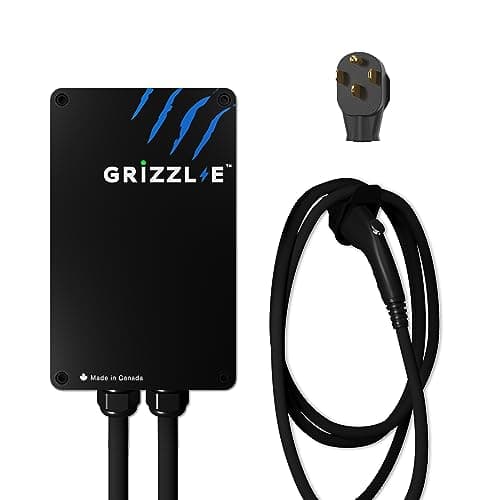
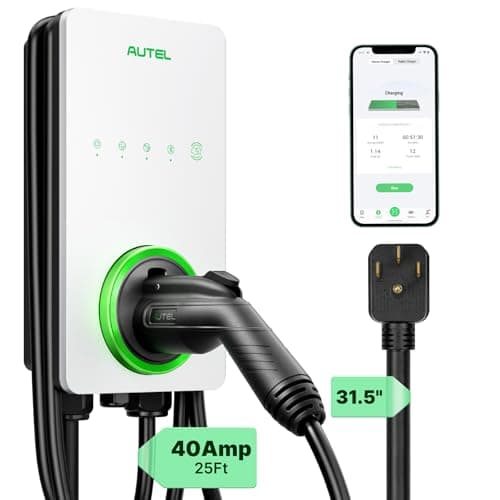
| Cold-climate outdoor post | Look at the alternatives first | The cast-aluminum Grizzl-E and the -40 degF Autel are both built harder for that job, and both cost less |
The honest summary of that table: there is a real customer for this charger and it is not the person who found it by searching for the best home EV charger. It is the person who already owns a Siemens panel, or whose electrician already has a Siemens account.
What this charger needs from your electrical system
| Item | Requirement | Code basis |
|---|---|---|
| Charger output | 40 A / 9.6 kW | Manufacturer published |
| Breaker | 50 A, two-pole | NEC 625.41 — 125% of a continuous load; NEC 625.42 makes EV charging continuous |
| Copper conductor (conduit, 75 degC) | 8 AWG | NEC Table 310.16 |
| GFCI breaker | Required if plug-in; not required if hardwired | NEC 625.54 |
| Install type | hardwired or plug-in | Manufacturer published |
The three things to know before you buy
None of these are defects. They are trade-offs that the price makes harder to accept than they would be on a cheaper unit.
- The cable is 20 ft. That is shorter than the Grizzl-E Classic at 24 ft and the Autel, EVIQO and Leviton units at 25 ft. Measure before you decide — from your intended mounting point to the car's charge port, along the route the cable will actually take, plus three to five feet of slack so it hangs in a loop instead of stretching taut. Twenty feet is plenty on one wall of a single-car garage and marginal across a two-car bay.
- The app is the weakest part of the package. Siemens builds switchgear; the consumer software experience is not where the company competes, and it shows. Scheduling works. It is not going to feel like a product from a company whose whole business is a phone app. If your car can already schedule its own charging — most can — this matters less than it sounds, because you should be scheduling in the car anyway.
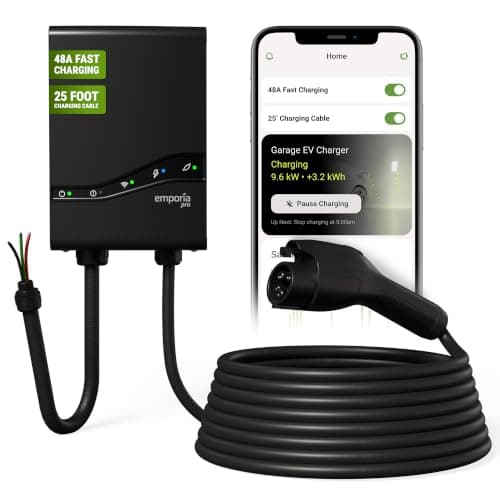
- It is 40 A, not 48 A. On a car that accepts 11.5 kW you are leaving about 1.9 kW on the table, which is roughly half an hour on a 100-mile charge. That is the right trade for most people, and it saves you a breaker size and a wire size — but it is a ceiling, and at this price several 48 A units are cheaper. 40 A vs 48 A has the full arithmetic.
What we could not verify
How it compares to what we recommend instead
Three units cover almost every reason someone lands on this page, and all three cost less at the time of writing. Live prices sit beside each buy button so you can check the gap yourself rather than trusting a number we typed.
| Siemens VersiCharge AC | Grizzl-E Classic | Autel MaxiCharger AC Lite | |
|---|---|---|---|
| Output | 40 A / 9.6 kW | 40 A / 9.6 kW | 40 A / 9.6 kW |
| Cable | 20 ft | 24 ft | 25 ft |
| Enclosure | Indoor or outdoor | NEMA 4 cast aluminum, IP67 | NEMA 4 |
| Operating temperature | Manufacturer published | Manufacturer published | -40 degF to +131 degF |
| Output set by | App | Physical switch | App, 6-40 A in 1 A steps |
| Install | Hardwired or plug-in | Hardwired or plug-in | Plug-in |
| Warranty | 3 years | 3 years | 36 months |
| Price position | Highest of the three | Lowest | Middle |
If you want the sturdiest box for an outdoor post, the Grizzl-E is built harder and costs less — our Grizzl-E Classic review covers it. If you want the finest output control and a genuine deep-cold rating, that is the Autel MaxiCharger. If what you actually want is whole-home load management so a tight panel does not force a service upgrade, neither of those is the answer either — start at can my electrical panel handle an EV charger.
One more thing worth checking first
Several utilities pay a rebate on a networked charger, and some rebate programs list eligible models by name. If a program in your area covers the VersiCharge and not a cheaper alternative, the net cost comparison can invert entirely — which is the one circumstance where the premium disappears on paper. Check EV charger rebates in 2026 against your own utility before you order anything, and read what installation actually costs so you can see the charger as the share of the project it really is.