The short answer
NEMA ratings describe enclosure protection in installed service, including corrosion and external ice. IP ratings describe ingress of solids and liquids on a two-digit scale. They are different systems and a product can honestly carry both. For a home charger, NEMA 4 is the common and sufficient rating; IP66 or IP67 indicates better sealing. Neither says anything about UV, which is what actually ages an outdoor charger's finish.
NEMA ratings
| Rating | Protects against | Where it appears |
|---|---|---|
| NEMA 3R | Rain, sleet, snow; external ice damage | Junction boxes, disconnects and enclosures on an outdoor run |
| NEMA 4 | The above, plus windblown dust and hose-directed water | The charger body itself — the common rating |
| NEMA 4X | The above, plus corrosion resistance | Coastal installs, outdoor-mounted surge panels |
The ratings you will actually encounter: NEMA 4 on the charger, and NEMA 3R or better on any junction box in an outdoor run. NEMA 4X matters if you are within reach of salt air.
IP ratings
A two-digit code. The first digit is protection against solids, the second against liquids. Higher is more protected in each case.
| Rating | Solids | Liquids | Where it appears |
|---|---|---|---|
| IP65 | Dust-tight | Protected against water jets | Some chargers and enclosures |
| IP66 | Dust-tight | Protected against powerful water jets | Better-sealed charger bodies |
| IP67 | Dust-tight | Protected against temporary immersion | Handles and connectors — which do end up in puddles |
How the two systems compare
They do not map cleanly onto each other, and any chart claiming an exact equivalence is simplifying. The rough relationship:
| NEMA | Roughly comparable IP | What NEMA adds |
|---|---|---|
| NEMA 3R | about IP14 | External ice damage |
| NEMA 4 | about IP66 | Ice, and testing in installed service |
| NEMA 4X | about IP66 plus corrosion | Corrosion resistance |
What no rating covers
The other thing no rating covers: the handle lying on the ground. An IP67 connector resists immersion, which is excellent, and it does not stop the handle being driven over. Cable holders and holsters are the answer to that, and they cost under twenty dollars.
What ratings to look for, by situation
| Your situation | Charger | Other equipment |
|---|---|---|
| Dry attached garage | Any rating; NEMA 4 is normal anyway | Standard indoor boxes |
| Damp or unheated garage | NEMA 4 | Standard indoor boxes |
| Exterior wall, under an eave | NEMA 4 | NEMA 3R or better on junctions |
| Exposed exterior wall or post | NEMA 4, ideally IP66 or IP67 | NEMA 3R or better, correct fittings |
| Coastal, salt air | NEMA 4X where available | NEMA 4X on outdoor-mounted panels |
The marketing claims to be skeptical of
- “Weatherproof” with no rating given. It means nothing. Ask for NEMA or IP.
- “IP68” on a charger. IP68 is continuous immersion, which is not a condition a wall-mounted charger is in. A claim that high on this kind of product is worth questioning.
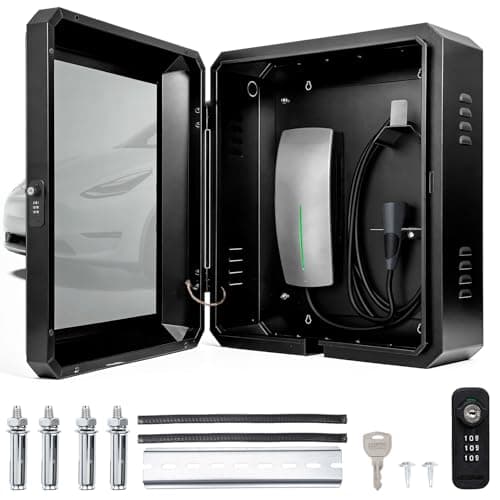
- An enclosure claiming to upgrade a charger's rating. It does not. A NEMA 4 charger in a box is still a NEMA 4 charger, and the box may now be restricting its ventilation.
- “NEMA rated” without a number. NEMA 1 is an indoor enclosure. The number is the whole claim.
What to buy
Chargers with published ratings worth having outdoors
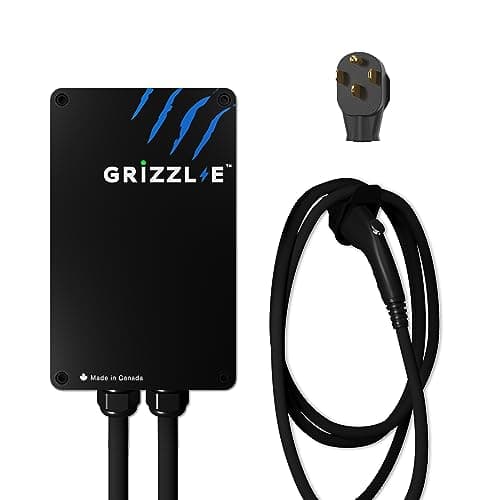
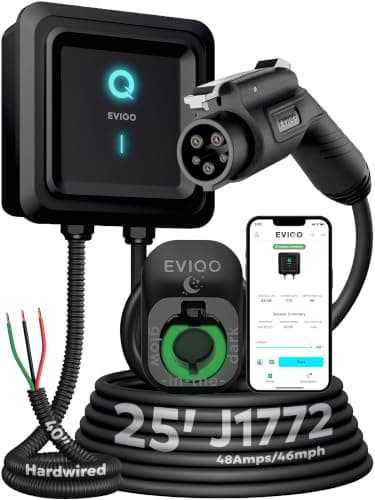
The Grizzl-E publishes NEMA 4, IP67 and fire resistance on a cast-aluminum body. The EVIQO publishes IP66 and NEMA 4 for considerably less. Both are specific rather than vague.
An outdoor install, and anyone who distrusts apps
Grizzl-E Classic
A cast-aluminum 40 A charger with dip switches instead of a cloud account. Nothing about it is clever, which is exactly why it is the unit to buy for a driveway post in a cold climate.
48 A on a budget
EVIQO Level 2 EV Charger (48 A, hardwired)
The cheapest way to get a genuine 11.5 kW hardwired install, with IP66/NEMA 4 weatherproofing and an internal switch for 16/32/40/48 A. The trade is a younger brand with a shorter support record.
A junction or disconnect on an outdoor run
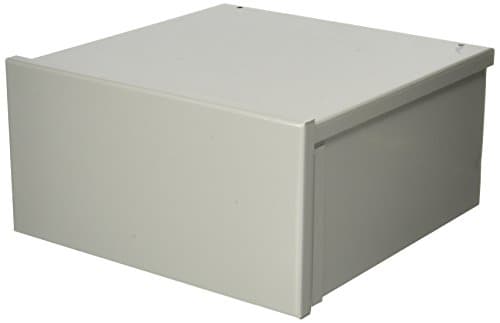
Hoffman NEMA 3R Enclosure (12 x 12 x 6)
A proper NEMA 3R box for the junction, disconnect or splice an outdoor charger run often needs. This is the part that keeps an outdoor install from being a plastic box full of water in three years.
#ad Price as of October 5, 2026. How we make money
We earn commission on qualifying purchases at no cost to you. Affiliate disclosure.