The short answer
The Grizzl-E Classic is the best outdoor charger: a NEMA 4 cast-aluminum, IP67, fire-resistant body with physical amperage switches that cannot be lost to an app outage. The Autel MaxiCharger AC Lite wins in genuinely cold regions, rated -40 degF to +131 degF. Both are 40 A; if you need 48 A outdoors, the Emporia Pro or EVIQO 48 A are the picks.
Quick picks
Ranked by fit for the stated use case first, then price, then warranty and support. Tap any row to jump to the full assessment. Commission rate plays no part in the order.
| # | Product | Best for | Score | Price |
|---|---|---|---|---|
| 1 | 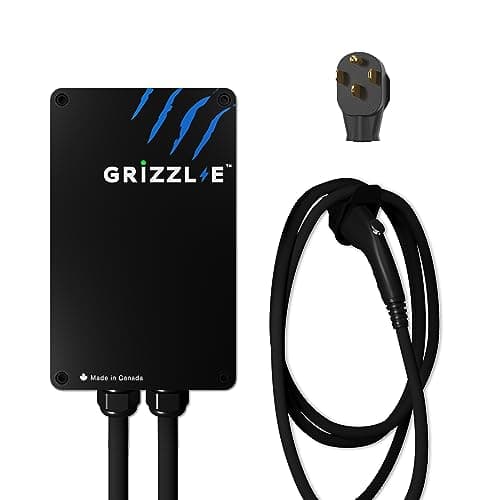 Grizzl-E ClassicA cast-aluminum 40 A charger with dip switches instead of a cloud account. | An outdoor install, and anyone who distrusts apps | 8.5 | $299.99View on Amazon $399.00 list · 25% off |
| 2 | 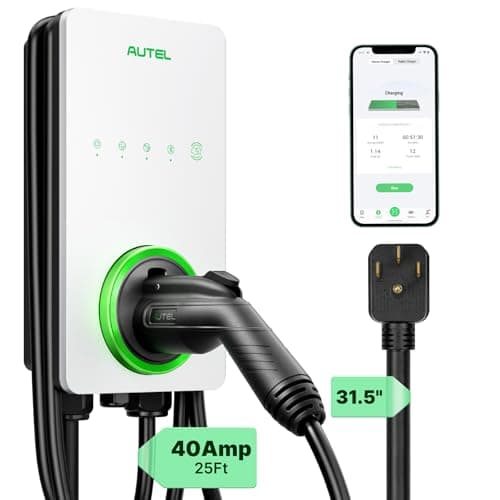 Autel MaxiCharger AC Lite (40 A)The widest output adjustment range here — 6 A to 40 A in the app — plus an operating range down to -40 degF, which makes it the practical pick for an unheated garage in the north. | Cold climates and 1 A output tuning | 8.6 | |
| 3 | 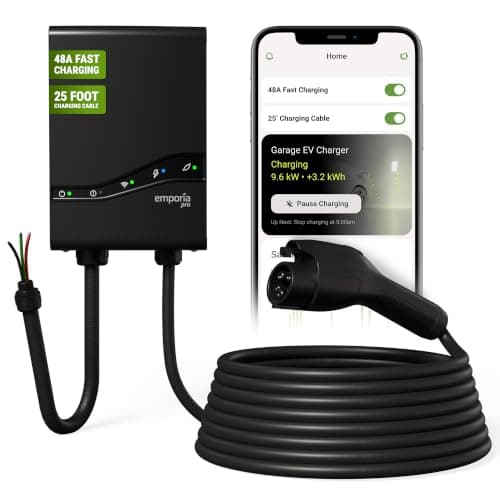 Emporia Pro Level 2 EV ChargerThe best-balanced 48 A charger for a typical US house: full 11.5 kW hardwired, and the only unit at this price that ships with a whole-home energy monitor so its load management is reading your actual panel rather than guessing. | Most households, and anyone with a tight panel | 9.0 | |
| 4 | 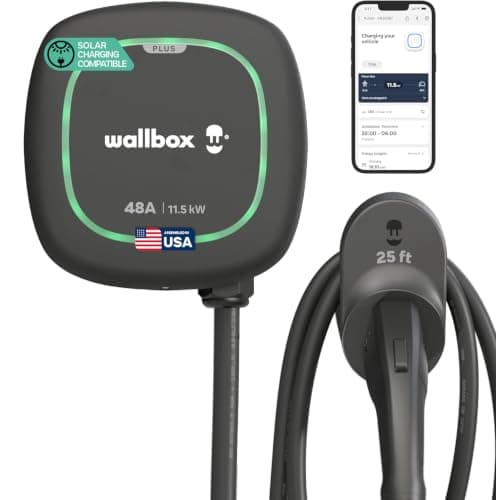 Wallbox Pulsar Plus 48 AA genuinely small 48 A charger — under 8 inches square — which is the deciding factor when the only spot left is a narrow strip of wall beside the panel. | The smallest 48 A unit on a wall | 8.5 | |
| 5 | 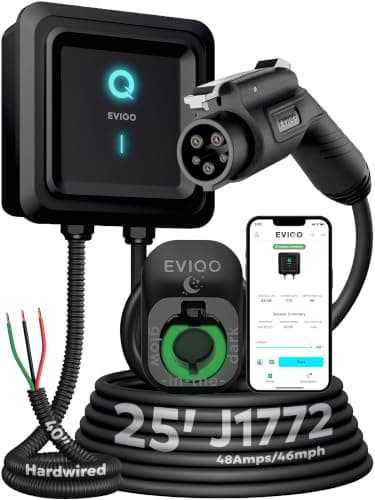 EVIQO Level 2 EV Charger (48 A, hardwired)The cheapest way to get a genuine 11.5 kW hardwired install, with IP66/NEMA 4 weatherproofing and an internal switch for 16/32/40/48 A. | 48 A on a budget | 8.4 | $449.99View on Amazon $510.00 list · 12% off |
Most chargers are already rated for outdoors
Worth saying before the picks, because the common question has a boring answer. Almost every home charger sold in the US is NEMA 4 rated, which covers rain, sleet, snow, windblown dust and hose-directed water. So “can I put this outside?” is usually yes, check the manual.
What actually separates chargers outdoors is everything else a post does to equipment: UV degradation, physical knocks, deep cold, and the handle ending up on wet ground. That is what this page ranks on.
What we ranked on
- Enclosure material and rating. Cast aluminum with IP67 beats molded plastic with NEMA 4, even though both are “outdoor rated”.
- Operating temperature range, where the published figures vary by 18 degrees at the cold end.
- Whether the settings survive without a cloud service, because an outdoor charger is the one you least want to be debugging in the rain.
- Cable length, since an outdoor post is often further from the car than a garage wall.
- Whether hardwiring is available, because outdoors a receptacle is one more path for water.
Ratings, where manufacturers publish them
| Charger | Output | Enclosure | Temperature range | Settings survive offline? |
|---|---|---|---|---|
| Grizzl-E Classic | 40 A | NEMA 4 cast aluminum, IP67, fire resistant | Manufacturer published | Yes — physical switches |
| Autel MaxiCharger AC Lite | 40 A | NEMA 4 | -40 degF to +131 degF | App-dependent |
| Emporia Pro | 48 A | NEMA 4 | Manufacturer published | App-dependent |
| Wallbox Pulsar Plus 48 A | 48 A | NEMA Type 4 per UL 50E | -22 degF to 104 degF | Bluetooth works offline |
| EVIQO 48 A | 48 A | IP66 and NEMA 4 | Manufacturer published | Internal physical switch |
Hardwire it, outdoors especially
The hardwired-against-plug-in argument is stronger outdoors than anywhere else. A receptacle outdoors needs an extra-duty in-use cover — the kind that closes over the plug, not a flip-lid that only seals when empty — and it adds a connection that water can find.
Hardwiring removes the receptacle, the cover and the GFCI breaker that NEC 625.54 requires on a receptacle circuit. It also gets you the full 48 A rather than 40. The full comparison.
What the conductors must be, outdoors
The two cheap things every outdoor install needs
Neither is included with any charger, and both matter more outdoors than in. The handle and cable are what the weather actually degrades — the box is already rated.
The handle and the cable, off the ground
A holster so the handle is never in standing water or road salt, a steel hook because 25 ft of cable sags a plastic one, and a dust cap for the contacts on an idle handle.
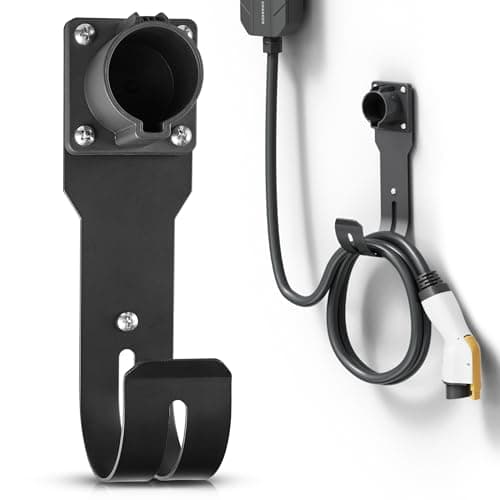
Getting the handle and the cable off the floor
MECMO J1772 Holster Dock and J-Hook
A holster for the handle plus a hook for the loop. The cheapest meaningful upgrade to any charging setup, because a handle that lives on the floor gets stepped on, driven over and eventually fails.
#ad Price as of October 5, 2026. How we make money
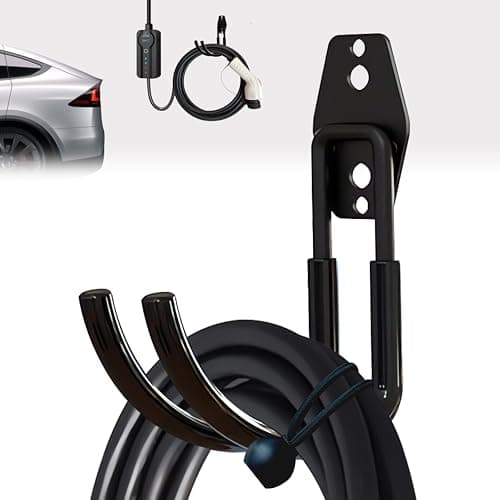
A heavy 25 ft cable that bends plastic hooks
Nexoroot Heavy-Duty Steel EV Cable J-Hook
Steel rather than plastic, which matters with 25 feet of 8 AWG cable hanging on it — the full loop of a premium charger's lead is heavier than people expect.
#ad Price as of October 5, 2026. How we make money
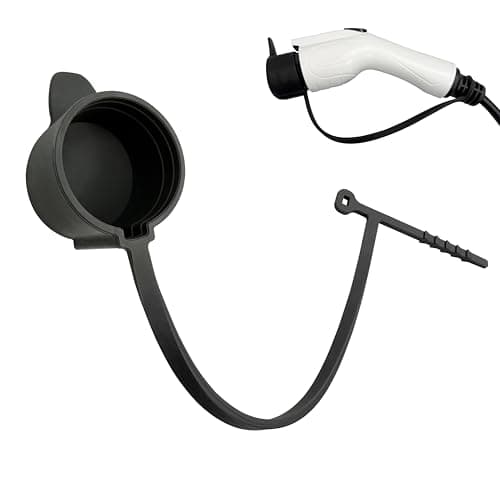
An outdoor handle that sits idle all day
Nexoroot J1772 Waterproof Dust Cap
A silicone cap over the contacts. Trivially cheap, and it addresses the one thing that genuinely degrades an outdoor J1772 handle: grit and salt in the pins.
#ad Price as of October 5, 2026. How we make money
We earn commission on qualifying purchases at no cost to you. Affiliate disclosure.
Cold weather is a specification, not a vibe
If your charger will live outside in a cold region, the operating temperature range should be the spec that decides your purchase — not the app. The Autel's -40 degF and the Wallbox's -22 degF are both honest published figures and they are 18 degrees apart.
The cable stiffens regardless of the charger's rating, which is a handling problem rather than a reliability one — and an argument for a shorter cable and a better-placed charger. Cold weather EV charging covers it properly.
How we picked
Every product here is currently purchasable and, where a safety certification applies, carries one we could verify in the manufacturer's own published material on the date at the top of this page. We verify specifications; we do not bench-test — see our methodology. Ranking is fit for the stated use first, then build quality, then price. Commission rate plays no part in it.