The short answer
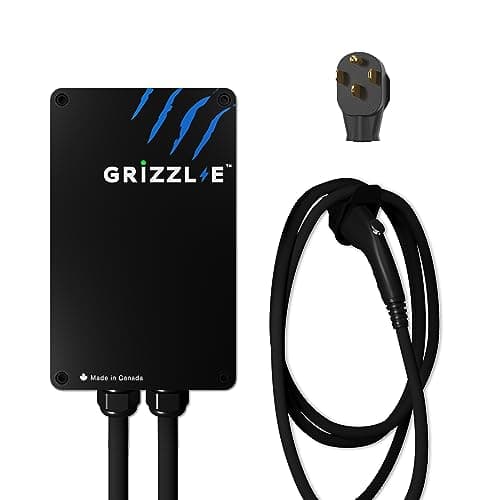
The Grizzl-E Classic is a 40 A / 9.6 kW charger in a NEMA 4 cast-aluminum, IP67, fire-resistant enclosure, with a 24 ft cable and amperage set by physical switches (16, 24, 32 or 40 A) rather than an app. It is ENERGY STAR certified with a three-year warranty. There is no scheduling, no energy reporting and no load management — and for an outdoor post in a cold climate, that absence is the product.
Every other charger on this site has a feature argument. This one has a durability argument, and it is the only unit here where the enclosure is the reason to buy.
Who this is for
- An outdoor install, particularly an exposed post or a wall with no eave. Cast aluminum, NEMA 4 and IP67 is the most physically robust package at this price by a wide margin.
- Anyone who distrusts cloud dependencies. The amperage setting is a physical switch inside the unit. It survives an app outage, a new phone, a company's server migration and a house sale.
- A flat electricity tariff, where scheduling buys nothing.
- A car that schedules its own charging, which is most of them — then the charger's app is duplicate functionality.
- Anyone who wants a long cable on a budget. 24 ft at this price is unusual.
Who should buy something else instead
- You have a 48 A car and the circuit for it. The Grizzl-E is 40 A. On a Rivian or an F-150 Lightning that is a real loss — see 40 A vs 48 A.
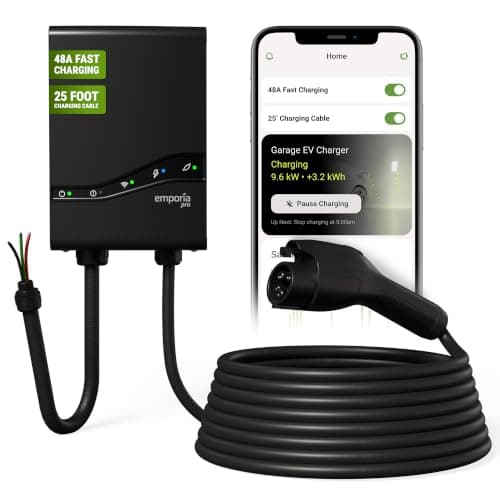
- You are on a time-of-use tariff and your car cannot schedule. There is no timer here at all. The ChargePoint Home Flex or Emporia Pro enforce a window.
- Your panel is tight. No load management. The Emporia Pro's measured throttling is what avoids service upgrades.
- You want energy data. None. A standalone monitor is the answer if you want both this charger and the data.
- You expect to change amperage more than once. Changing the setting means opening the unit, which most people will do exactly once.
The enclosure, which is the whole case
| Property | Grizzl-E Classic | Typical charger at this price |
|---|---|---|
| Enclosure material | Cast aluminum | Molded plastic |
| NEMA rating | NEMA 4 | NEMA 4 or unrated |
| Ingress protection | IP67 | IP54-IP66 where stated |
| Fire resistance | Stated by the manufacturer | Rarely stated |
| Protections | Over-current, over/under-voltage, missing diode, ground fault, over-temperature | Varies |
| Output cord | 24 ft, 8 AWG | 16-25 ft |
The honest counterpoint: in a dry attached garage, a plastic enclosure is fine and you are paying for robustness you will not use. The Grizzl-E's case is specifically outdoors, or a damp unheated garage, or a workshop where things get knocked.
Switches instead of an app
Amperage is set by physical switches: 16, 24, 32 or 40 A. That is genuinely valuable for two reasons that have nothing to do with preferring buttons.
- The setting cannot be lost. No account, no firmware update, no cloud service, no phone. In ten years the switch will still be in the position someone set it to.
- It is visible. An electrician can see the setting and match the circuit to it, rather than trusting that an app value is what someone says it is.
The cost: changing it means opening the enclosure, which is an electrician job rather than a tap. If you expect to raise the output after a panel upgrade, an adjustable smart unit is the better fit.
What this charger needs from your electrical system
| Item | Requirement | Code basis |
|---|---|---|
| Charger output | 40 A / 9.6 kW | Manufacturer published |
| Breaker | 50 A, two-pole | NEC 625.41 — 125% of a continuous load; NEC 625.42 makes EV charging continuous |
| Copper conductor (conduit, 75 degC) | 8 AWG | NEC Table 310.16 |
| GFCI breaker | Required if plug-in; not required if hardwired | NEC 625.54 |
| Install type | hardwired or plug-in | Manufacturer published |
Known issues, from owner reports
- No scheduling at all. Not a defect, but it surprises people who assumed any modern charger has a timer. Schedule in the car, or buy a different unit.
- The Classic Connect adds Wi-Fi, and owners describe its app as the least polished of the units here. If scheduling matters, that is a reason to look elsewhere rather than to step up within the range.
- Cable stiffness in deep cold, which is true of every 24 ft EV cable rather than specific to this one — though it is the trade for the reach.
- It is heavy. Cast aluminum plus 24 ft of 8 AWG cable needs solid anchors, and a plastic cable hook will sag under the loop. Use a steel one.
What to add for an outdoor Grizzl-E install
A steel hook rather than plastic, because the cable is heavy, and a holster so the handle never reaches the ground.
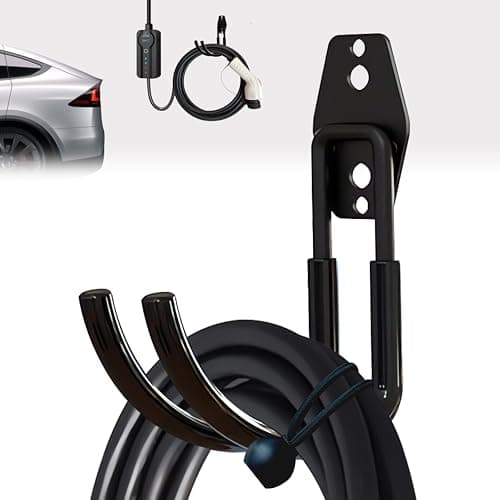
A heavy 25 ft cable that bends plastic hooks
Nexoroot Heavy-Duty Steel EV Cable J-Hook
Steel rather than plastic, which matters with 25 feet of 8 AWG cable hanging on it — the full loop of a premium charger's lead is heavier than people expect.
#ad Price as of October 5, 2026. How we make money
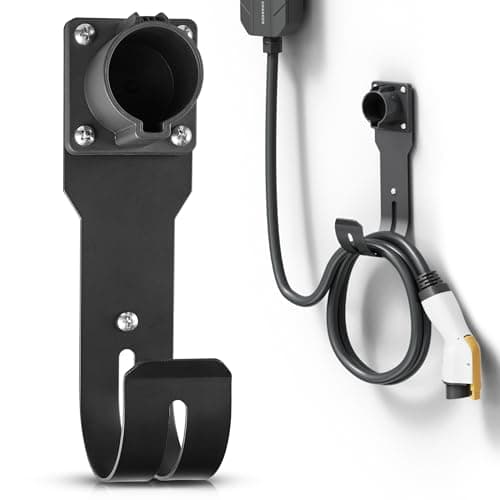
Getting the handle and the cable off the floor
MECMO J1772 Holster Dock and J-Hook
A holster for the handle plus a hook for the loop. The cheapest meaningful upgrade to any charging setup, because a handle that lives on the floor gets stepped on, driven over and eventually fails.
#ad Price as of October 5, 2026. How we make money
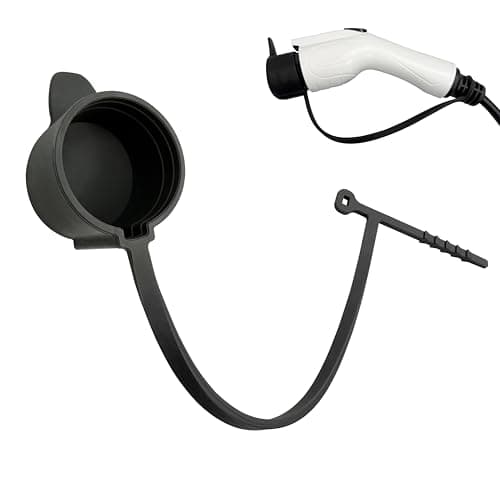
An outdoor handle that sits idle all day
Nexoroot J1772 Waterproof Dust Cap
A silicone cap over the contacts. Trivially cheap, and it addresses the one thing that genuinely degrades an outdoor J1772 handle: grit and salt in the pins.
#ad Price as of October 5, 2026. How we make money
We earn commission on qualifying purchases at no cost to you. Affiliate disclosure.
What the install needs
A 50 A two-pole breaker and 8 AWG copper for 40 A output, per NEC 625.41 and Table 310.16. It can be hardwired or plug-in; hardwiring avoids the GFCI breaker that NEC 625.54 requires on a receptacle circuit, which for an outdoor install also removes a receptacle and an in-use cover from the job.
Outdoors, remember that NM-B cable is not permitted in wet locations — an outdoor run is THWN-2 in conduit. Our outdoor installation guide covers the rest.