The short answer
The Autel MaxiCharger AC Lite is the closest alternative for most people: the same 40 A, a comparable outdoor-rated enclosure, ENERGY STAR certification the Classic's base model does not carry, and an app for scheduling. If you are leaving the Grizzl-E because 40 A is not enough, take the Emporia Classic or the EVIQO 48 A — both deliver the full 11.5 kW hardwired. If the reason is a tight electrical panel, the Emporia Pro is the one, because it ships with the energy monitor its load management reads. And if you want the Grizzl-E's no-app simplicity for less money, the Lectron 40 A is a plug-in cordset at the same 9.6 kW.
Quick picks
Ranked by fit for the stated use case first, then price, then warranty and support. Tap any row to jump to the full assessment. Commission rate plays no part in the order.
| # | Product | Best for | Score | Price |
|---|---|---|---|---|
| 1 | 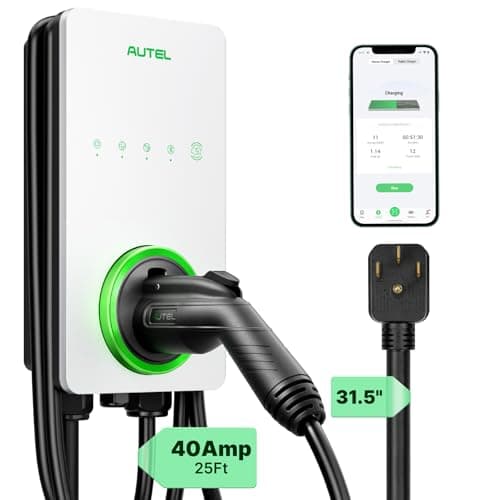 Autel MaxiCharger AC Lite (40 A)The widest output adjustment range here — 6 A to 40 A in the app — plus an operating range down to -40 degF, which makes it the practical pick for an unheated garage in the north. | Cold climates and 1 A output tuning | 9.3 | $424.00See the Autel MaxiCharger AC Lite $470.00 list · 10% off |
| 2 | 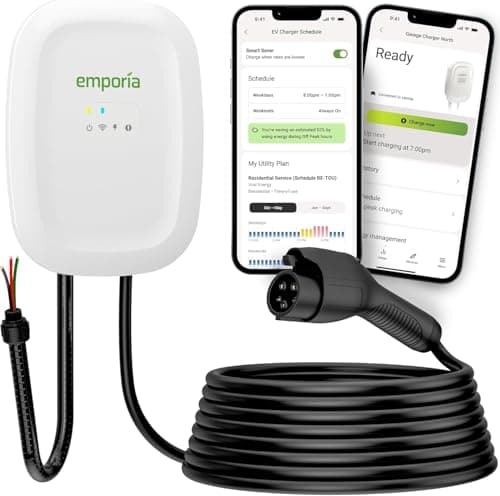 Emporia Classic Level 2 EV ChargerThe same 48 A hardware and the same 25 ft cable as the Pro, minus PowerSmart load management and minus the money. | The cheapest way into real 48 A charging | 9.4 | |
| 3 | No image EVIQO Level 2 EV Charger (48 A, hardwired)The cheapest way to get a genuine 11.5 kW hardwired install, with IP66/NEMA 4 weatherproofing and an internal switch for 16/32/40/48 A. | 48 A on a budget | 9.2 | |
| 4 | 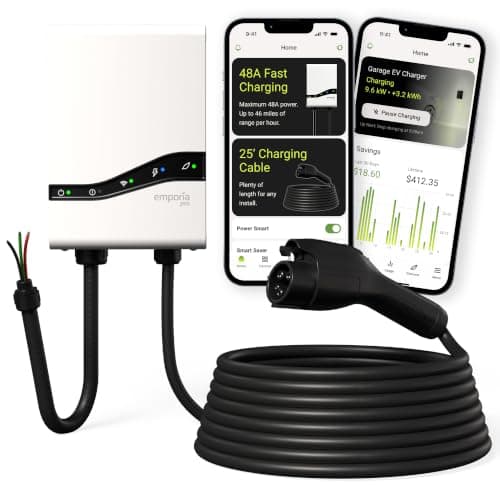 Emporia Pro Level 2 EV ChargerThe best-balanced 48 A charger for a typical US house: full 11.5 kW hardwired, and the only unit at this price that ships with a whole-home energy monitor so its load management is reading your actual panel rather than guessing. | Most households, and anyone with a tight panel | 9.5 | |
| 5 | 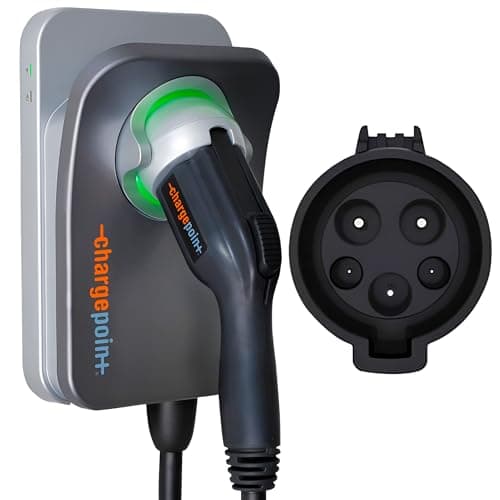 ChargePoint Home Flex (hardwired, 50 A)The most adjustable charger on this page: output steps through 16, 24, 32, 40, 48 and 50 A in the app, so one unit fits almost any panel and can be turned up later if you upgrade the service. | A house whose panel headroom is uncertain | 9.5 | |
| 6 | 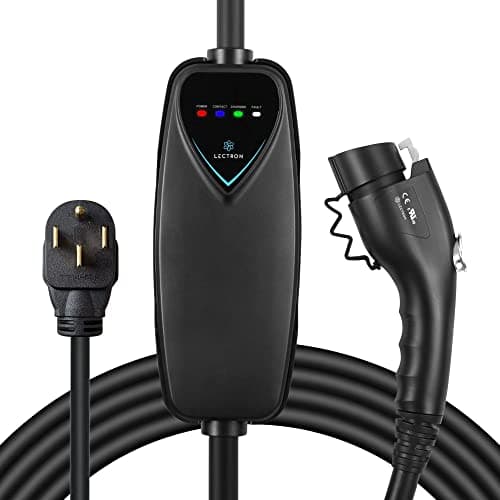 Lectron Level 2 EV Charger (40 A, NEMA 14-50)A 40 A ETL-certified portable charger for roughly half what the smart units cost. | The cheapest charger worth owning | 8.8 |
What the Grizzl-E is known for
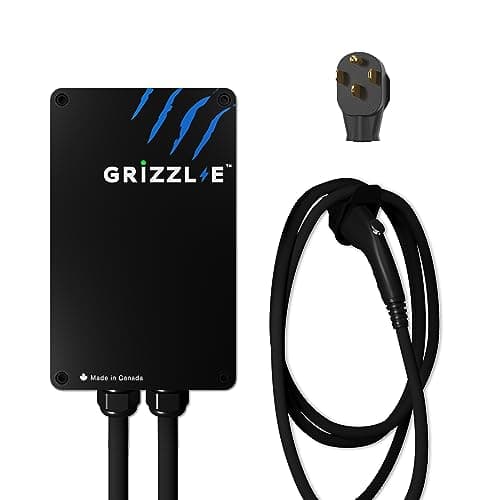
Worth stating up front, because it is the standard the alternatives have to clear. The Grizzl-E Classic is a cast-aluminum NEMA 4 enclosure, IP67 rated and fire resistant, with a 24 ft 8 AWG output cord — a heavier cable than most units in its class carry. Its output is set to 16, 24, 32 or 40 A with physical switches inside the unit, so the amperage is a hardware fact rather than a setting in an account that could change. It is UL tested and certified, it carries a three-year warranty, and United Chargers builds it in Canada.
The result is a charger with an unusually small list of things that can go wrong. There is no cloud service to deprecate, no app to stop being updated, and no network radio to lose a connection. For a driveway post in a cold climate, that list is the entire value proposition, and it is a real one. Our Grizzl-E Classic review goes through the unit in detail.
The three reasons people look elsewhere
- They want 48 A. The Classic stops at 40 A and 9.6 kW. A car that accepts 11.5 kW on AC will charge about 20% faster on a 48 A unit, and the Grizzl-E line does not offer one.
- They want scheduling. No app means no time-of-use schedule, and on a utility plan with a cheap overnight window that is money. Grizzl-E's own answer is the Classic Connect; there are others.
- They need load management. The switches let you set a lower output once, which satisfies the same code provision, but nothing in the Classic watches the rest of the house and backs off in real time.
Notice what is not on that list: reliability, build quality or safety. Those are the Grizzl-E's strengths, and the alternatives below were chosen to hold them rather than trade them away.
How we picked
Every unit on this page is currently purchasable, carries a real UL or ETL certification to an EVSE standard, and comes from a brand with an identifiable North American support path. Published specifications were checked against the manufacturer's own documentation on the date shown at the top of this page, and we credit a charger only with capabilities its own documentation describes. Ranking order is fit for the stated use case first, then price, then warranty and support — commission rate plays no part in it, and our methodology sets out the whole standard criterion by criterion.
On top of that, every unit here had to keep the two things a Grizzl-E buyer is actually buying: an enclosure rated for permanent outdoor mounting, and an adjustable output so the charger can be set down to fit the panel you have. Units that only work indoors, or that run at a single fixed amperage, are not alternatives to this charger whatever else they do.
The six, by the reason you are switching
Six alternatives to a Grizzl-E
Each one is the best answer to a specific reason for leaving the Classic. The first is the closest overall match.
Cold climates and 1 A output tuning
Autel MaxiCharger AC Lite (40 A)
The widest output adjustment range here — 6 A to 40 A in the app — plus an operating range down to -40 degF, which makes it the practical pick for an unheated garage in the north.
$470.00 list · 10% off
#ad Price as of November 18, 2026. How we make money
The cheapest way into real 48 A charging
Emporia Classic Level 2 EV Charger
The same 48 A hardware and the same 25 ft cable as the Pro, minus PowerSmart load management and minus the money. If your panel has room for a 60 A breaker without any juggling, this is the one to buy.
#ad Price as of November 18, 2026. How we make money
48 A on a budget
EVIQO Level 2 EV Charger (48 A, hardwired)
The cheapest way to get a genuine 11.5 kW hardwired install, with IP66/NEMA 4 weatherproofing and an internal switch for 16/32/40/48 A. The trade is a younger brand with a shorter support record.
#ad Price shown at EVIQO. How we make money
Most households, and anyone with a tight panel
Emporia Pro Level 2 EV Charger
The best-balanced 48 A charger for a typical US house: full 11.5 kW hardwired, and the only unit at this price that ships with a whole-home energy monitor so its load management is reading your actual panel rather than guessing.
#ad Price as of November 18, 2026. How we make money
A house whose panel headroom is uncertain
ChargePoint Home Flex (hardwired, 50 A)
The most adjustable charger on this page: output steps through 16, 24, 32, 40, 48 and 50 A in the app, so one unit fits almost any panel and can be turned up later if you upgrade the service.
#ad Price as of November 18, 2026. How we make money
The cheapest charger worth owning
Lectron Level 2 EV Charger (40 A, NEMA 14-50)
A 40 A ETL-certified portable charger for roughly half what the smart units cost. It does one thing, it does it at 9.6 kW, and for a household charging overnight on a flat rate that is the whole job.
#ad Price as of November 18, 2026. How we make money
We earn commission on qualifying purchases at no cost to you. Affiliate disclosure.
Matched against the Classic
| Charger | Max output | Adjustable | Scheduling | Outdoor rated |
|---|---|---|---|---|
| Grizzl-E Classic | 40 A / 9.6 kW | Physical switches, 16-40 A | No | NEMA 4 cast aluminum |
| Autel MaxiCharger AC Lite | 40 A / 9.6 kW | Yes | App | Yes |
| Emporia Classic | 48 A / 11.5 kW hardwired | Yes | App | NEMA 4 |
| EVIQO Level 2 | 48 A / 11.5 kW | Yes | App | Yes |
| Emporia Pro | 48 A / 11.5 kW hardwired | Yes, plus live load management | App | NEMA 4 |
| ChargePoint Home Flex | 50 A / 12 kW | Six levels, 16-50 A | App | Yes |
| Lectron 40 A | 40 A / 9.6 kW | No | No | Plug-in cordset |
If you want 48 A
Check the car first. A 48 A charger only helps if your EV's onboard charger accepts 11.5 kW on AC, and a large number cap at 9.6 kW or below — in which case the Grizzl-E was never the constraint. EV onboard charger limits by model has the published figure for most current cars.
If the car does take 11.5 kW, the step up also changes the circuit. A 48 A continuous load needs a 60 A breaker and 6 AWG copper under NEC Article 625 and the ampacity table in 310.16, against 50 A and 8 AWG for the Grizzl-E's 40 A. On a long run that is a real difference in the installation invoice, and on a marginal panel it can be the difference between a charger and a service upgrade. Best 48 amp EV chargers ranks the units built for it.
If you want scheduling
The honest first answer is that you may not need the charger to do it. Most EVs schedule charging from the car, by clock time or by departure time, and a car-side schedule works with any dumb charger including the Classic. Buy a smart charger for scheduling when you want the schedule to follow the charger rather than the car — a two-car household, or a rental where the car changes.
When you do want it in the wall box, the Autel MaxiCharger AC Lite and the Emporia units are the cheapest credible routes, and Grizzl-E's own Classic Connect keeps the exact enclosure and adds Wi-Fi. If time-of-use pricing is the reason, work out what the schedule is actually worth first — time-of-use rates and EV charging puts a number on it, and the gap is usually larger than people expect.
If your panel is the constraint
This is the one case where the Grizzl-E genuinely cannot do what you need. Setting the switches to 32 A lowers the calculated load permanently, which is often enough — NEC 625.42 permits an EVSE installation's rating to be limited through controls, so the load calculation uses the set figure. But if you need full output some of the time and your panel cannot support it continuously, you need a charger that measures and throttles.
The Emporia Pro is the pick there, because the whole-home energy monitor its PowerSmart system reads is included in the box rather than sold separately. Run your own numbers through can my electrical panel handle an EV charger? before deciding, and see best EV chargers with load management for the full field.
If you were looking at the Grizzl-E Duo
The Duo is a different product with a different alternative set: two J1772 handles sharing one 40 A circuit, so two cars charge off one breaker. If that is what you are replacing, your options are a dual-cable unit, two chargers that share a circuit in software — Emporia documents load sharing between its own units — or a manual splitter on an existing outlet. All three are covered in charging two EVs at home, and the splitter route is ranked in best EV charger splitters.
The two-car route without a dual-cable charger
A splitter for an existing 240 V outlet, and the charger whose own documentation describes sharing a circuit with a second unit.
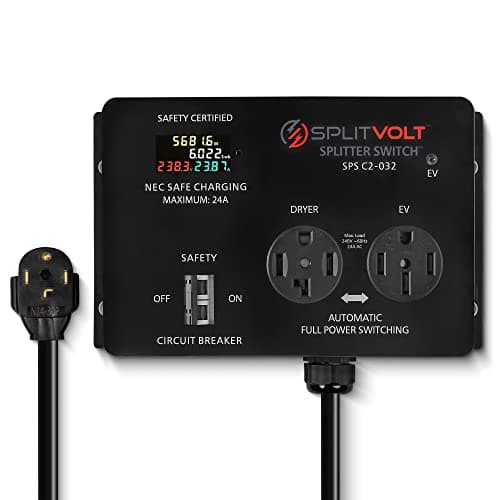
Charging off a dryer outlet without rewiring
Splitvolt NEMA 14-30/14-50 Splitter Switch
A cETLus-certified automatic switch that lets a dryer circuit feed either the dryer or a 24 A charger, never both. This is the one product in this category we would actually put on a dryer circuit — because it is a listed switch, not a splitter that lets you overload the circuit.
#ad Price as of November 18, 2026. How we make money
The cheapest way into real 48 A charging
Emporia Classic Level 2 EV Charger
The same 48 A hardware and the same 25 ft cable as the Pro, minus PowerSmart load management and minus the money. If your panel has room for a 60 A breaker without any juggling, this is the one to buy.
#ad Price as of November 18, 2026. How we make money
We earn commission on qualifying purchases at no cost to you. Affiliate disclosure.
Our recommendation
If you liked everything about the Grizzl-E and only wanted an app, buy the Autel MaxiCharger AC Lite — same output, same outdoor rating, ENERGY STAR certification that matters for some utility rebates, and scheduling. If the reason is power, the Emporia Classic is the cheapest honest route to a genuine 48 A, and the EVIQO 48 A undercuts it. If the reason is a panel that is already close to full, only the Emporia Pro solves it properly. And if what you actually admired was the simplicity, the right move may be to keep the Classic and schedule from the car instead.