The short answer
The Emporia Pro is the closest like-for-like replacement: the same 48 A and 11.5 kW, a longer cable, a NEMA 4 enclosure, and you choose a NACS or a J1772 connector at purchase so it fits whatever you drive next. If you want a NACS handle and six selectable output levels, the ChargePoint Home Flex NACS is the one. If the reason you are here is the price, the Autel MaxiCharger AC Lite at 40 A charges almost any EV overnight for a fraction of the outlay, and the EVIQO 48 A is the cheapest route to a genuine 11.5 kW. The decision that matters more than the brand is the connector: pick the handle that matches the car in the garage, and buy an adapter only for the second car.
Quick picks
Ranked by fit for the stated use case first, then price, then warranty and support. Tap any row to jump to the full assessment. Commission rate plays no part in the order.
| # | Product | Best for | Score | Price |
|---|---|---|---|---|
| 1 | 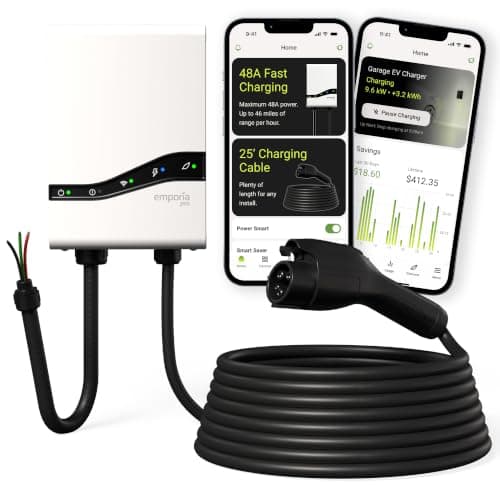 Emporia Pro Level 2 EV ChargerThe best-balanced 48 A charger for a typical US house: full 11.5 kW hardwired, and the only unit at this price that ships with a whole-home energy monitor so its load management is reading your actual panel rather than guessing. | Most households, and anyone with a tight panel | 9.5 | |
| 2 | 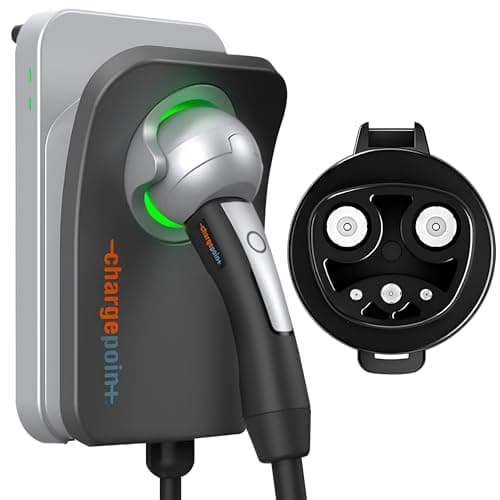 ChargePoint Home Flex NACS (hardwired)A NACS-handled Home Flex: the same adjustable 16-50 A hardware with a Tesla-shaped plug, which removes the adapter from a Tesla owner's daily routine without locking them into Tesla's ecosystem. | A Tesla household that wants a non-Tesla app | 9.4 | |
| 3 | 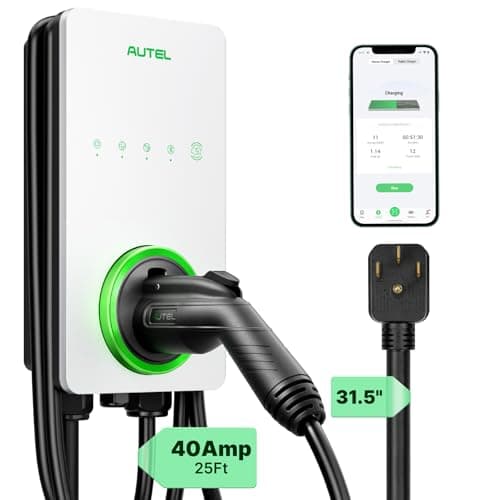 Autel MaxiCharger AC Lite (40 A)The widest output adjustment range here — 6 A to 40 A in the app — plus an operating range down to -40 degF, which makes it the practical pick for an unheated garage in the north. | Cold climates and 1 A output tuning | 9.3 | $424.00See the Autel MaxiCharger AC Lite $470.00 list · 10% off |
| 4 | No image EVIQO Level 2 EV Charger (48 A, hardwired)The cheapest way to get a genuine 11.5 kW hardwired install, with IP66/NEMA 4 weatherproofing and an internal switch for 16/32/40/48 A. | 48 A on a budget | 9.2 | |
| 5 | 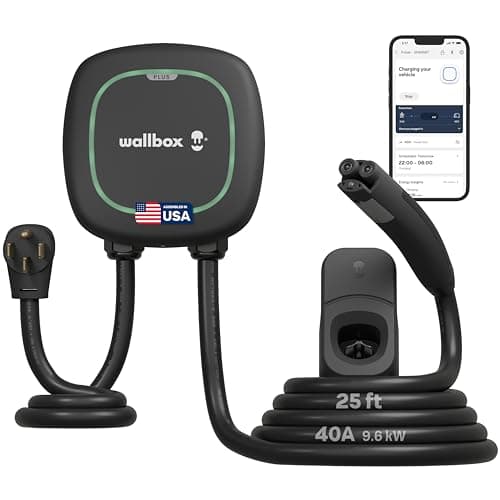 Wallbox Pulsar Plus 40 A NACSThe compact Pulsar body with a NACS handle at 40 A — the sensible version for a Tesla on a 50 A circuit, which is what most retrofits actually get. | A small-footprint NACS install on a 50 A circuit | 9.0 | |
| 6 | 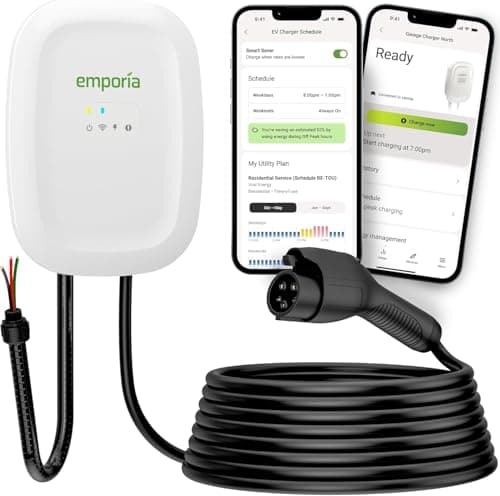 Emporia Classic Level 2 EV ChargerThe same 48 A hardware and the same 25 ft cable as the Pro, minus PowerSmart load management and minus the money. | The cheapest way into real 48 A charging | 9.4 | |
| 7 | 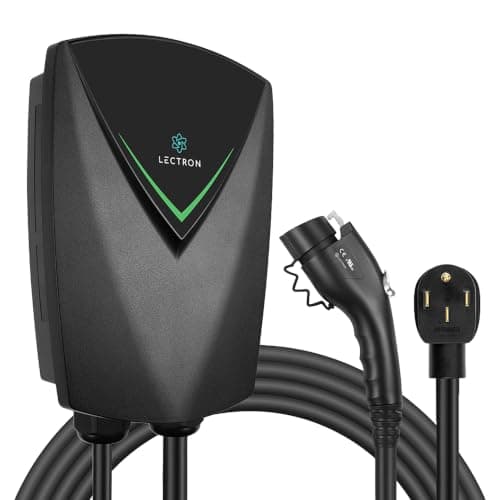 Lectron Nexus Level 2 Charger (40 A)Lectron's wall-mount unit, carrying a UL 2594 certification (ETL listed) and a 23 ft cable — the step up from their portable cordset without stepping into premium money. | A budget unit with a real UL file | 8.8 |
First, what the Wall Connector gets right
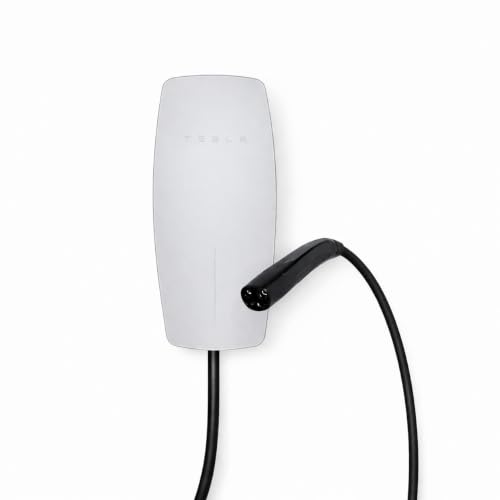
It is worth being straight about this, because a page that pretends the Tesla unit is bad is not useful to anybody deciding between it and something else. The Gen 3 Wall Connector delivers 48 A and 11.5 kW on a 60 A circuit, adjusts down through its whole range from 12 A, and ships with a 24 ft cable — long enough for the large majority of garages. Tesla's own installation manual documents all of it. It is rated for indoor or outdoor mounting, it is slim enough to sit between a garage door track and a wall, and it supports power sharing across multiple units on one circuit, which is a real feature that most of the alternatives here do not have.
Its commissioning is also the simplest in the category: you set the breaker size in the app at install time and the unit holds that limit. Nothing on this page is being recommended because the Tesla is poor hardware. It is not.
So why do people shop away from it?
Three reasons, and they lead to three different answers.
- Price. The Wall Connector sits at the top of the home-charging market, and the Universal version sits above it. Several units match its output and beat its cable length for meaningfully less.
- The connector. The standard Gen 3 is NACS only. If the household runs a non-Tesla EV, you are buying an adapter for every charge, or buying the Universal version to get the J1772 adapter built into the handle.
- Hardwired only. The Gen 3 is a hardwired unit. If you have a NEMA 14-50 receptacle already in the garage and no appetite for an electrician, the Tesla is not the charger that plugs into it.
Work out which of those three you are solving for before you compare specs, because the right alternative is different in each case. If you want the whole background on the two connector standards, NACS vs J1772 covers which plug your car actually has.
How we picked
Every unit on this page is currently purchasable, carries a real UL or ETL certification to an EVSE standard, and comes from a brand with an identifiable North American support path. Published specifications were checked against the manufacturer's own documentation on the date shown at the top of this page, and we credit a charger only with capabilities its own documentation describes. Ranking order is fit for the stated use case first, then price, then warranty and support — commission rate plays no part in it, and our methodology sets out the whole standard criterion by criterion.
We also held every unit to the Wall Connector's own bar on the things that are easy to cut: a cable of at least 23 ft, an enclosure rated for outdoor mounting, and an adjustable output so the charger can be set down to fit a tight panel rather than forcing a service upgrade. Anything that failed one of those is not on this page.
The alternatives, one by one
Seven chargers that replace a Wall Connector
In rank order for a household replacing a Gen 3 Wall Connector. The first is the closest match; the rest are each the best answer to a specific one of the three reasons above.
Most households, and anyone with a tight panel
Emporia Pro Level 2 EV Charger
The best-balanced 48 A charger for a typical US house: full 11.5 kW hardwired, and the only unit at this price that ships with a whole-home energy monitor so its load management is reading your actual panel rather than guessing.
#ad Price as of November 18, 2026. How we make money
A Tesla household that wants a non-Tesla app
ChargePoint Home Flex NACS (hardwired)
A NACS-handled Home Flex: the same adjustable 16-50 A hardware with a Tesla-shaped plug, which removes the adapter from a Tesla owner's daily routine without locking them into Tesla's ecosystem.
#ad Price as of November 18, 2026. How we make money
Cold climates and 1 A output tuning
Autel MaxiCharger AC Lite (40 A)
The widest output adjustment range here — 6 A to 40 A in the app — plus an operating range down to -40 degF, which makes it the practical pick for an unheated garage in the north.
$470.00 list · 10% off
#ad Price as of November 18, 2026. How we make money
48 A on a budget
EVIQO Level 2 EV Charger (48 A, hardwired)
The cheapest way to get a genuine 11.5 kW hardwired install, with IP66/NEMA 4 weatherproofing and an internal switch for 16/32/40/48 A. The trade is a younger brand with a shorter support record.
#ad Price shown at EVIQO. How we make money
A small-footprint NACS install on a 50 A circuit
Wallbox Pulsar Plus 40 A NACS
The compact Pulsar body with a NACS handle at 40 A — the sensible version for a Tesla on a 50 A circuit, which is what most retrofits actually get.
#ad Price as of November 18, 2026. How we make money
The cheapest way into real 48 A charging
Emporia Classic Level 2 EV Charger
The same 48 A hardware and the same 25 ft cable as the Pro, minus PowerSmart load management and minus the money. If your panel has room for a 60 A breaker without any juggling, this is the one to buy.
#ad Price as of November 18, 2026. How we make money
A budget unit with a real UL file
Lectron Nexus Level 2 Charger (40 A)
Lectron's wall-mount unit, carrying a UL 2594 certification (ETL listed) and a 23 ft cable — the step up from their portable cordset without stepping into premium money.
#ad Price as of November 18, 2026. How we make money
We earn commission on qualifying purchases at no cost to you. Affiliate disclosure.
Matched against the Wall Connector, spec for spec
| Charger | Max output | Cable | Connector | Install |
|---|---|---|---|---|
| Tesla Wall Connector (Gen 3) | 48 A / 11.5 kW | 24 ft | NACS | Hardwired |
| Emporia Pro | 48 A / 11.5 kW | 25 ft | NACS or J1772, chosen at purchase | Hardwired or plug-in |
| ChargePoint Home Flex NACS | 50 A / 12 kW | 23 ft | NACS | Hardwired |
| Autel MaxiCharger AC Lite | 40 A / 9.6 kW | 25 ft | J1772 | Hardwired or plug-in |
| EVIQO Level 2 | 48 A / 11.5 kW | 25 ft | J1772 | Hardwired |
| Wallbox Pulsar Plus 40 A NACS | 40 A / 9.6 kW | 25 ft | NACS | Hardwired |
| Emporia Classic | 48 A / 11.5 kW | 25 ft | NACS or J1772, chosen at purchase | Hardwired or plug-in |
The pattern in that table is the useful part. Nothing here is slower than the Tesla in a way you would feel. Three of the seven match it exactly at 48 A, one exceeds it, and the 40 A units give up about 2 kW — which on a typical overnight charge is the difference between finishing at 1am and finishing at 2am. The real differences are the connector, whether the unit can be plugged in rather than hardwired, and how much of your panel it needs.
If the reason is price
Buy output you will actually use. Almost every EV sold in the US accepts between 7.2 kW and 11.5 kW on AC, and a large number of them cap at 9.6 kW or below — a 48 A charger cannot push more into a car than the car's onboard charger will take. The AFDC's charging-levels reference lays out the power bands. If your car caps at 48 A on AC, a 40 A charger costs you a little time; if it caps at 32 A or 40 A, a 40 A charger costs you nothing at all. EV onboard charger limits by model has the figure for most current cars.
The 40 A route also charges the circuit, not just the charger. A 40 A continuous load needs a 50 A breaker and 8 AWG copper; a 48 A load needs 60 A and 6 AWG, under the continuous-load rule in NEC Article 625 and the ampacity table in 310.16. On a long run from a panel at the far end of the house, that difference in wire is not trivial, and it lands on the installation invoice rather than the box price.
If the reason is the connector
This is the decision people get wrong, and it is worth slowing down for. A NACS handle plugs straight into a Tesla and into the growing list of non-Tesla EVs that have moved to the standard. A J1772 handle plugs straight into every other EV sold in the US for the last decade. Adapters exist in both directions and good ones are UL-certified, but an adapter is one more thing hanging off the end of a cable in the rain, and one more thing to lose.
- Household is all Tesla, now and next: buy a NACS unit — the ChargePoint Home Flex NACS or the Wallbox Pulsar Plus NACS.
- Household is all non-Tesla: buy a J1772 unit, and ignore the NACS question entirely.
- Mixed household, or you expect to change cars: buy an Emporia Pro or Classic and pick the connector that matches the car used most, then keep one certified adapter in the glovebox of the other.
Our picks for the adapters themselves are on best NACS to J1772 adapters and best J1772 to NACS adapters. Buy a certified one; this is a part that carries full charging current in weather.
The adapter, if you need one
Two certified adapters that let a J1772 charger serve a Tesla, or a NACS charger serve a J1772 car.
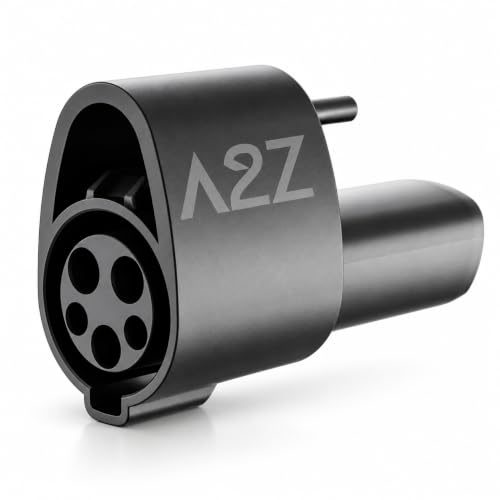
A Tesla on a J1772 charger — the one to buy
A2Z EV Atom Plug J1772 to NACS Adapter
80 A, 240 V, and carrying both UL 2252 and CSA certification, which is the strongest documented safety position of any adapter in this direction at any price.
#ad Price as of November 18, 2026. How we make money
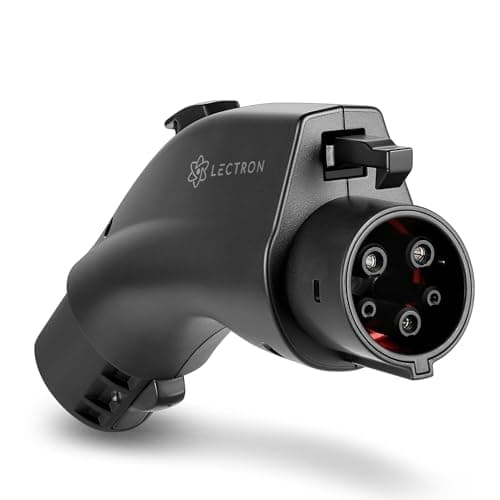
The brand-name pick with certification on paper
Lectron NACS to J1772 Adapter (80 A, UL 2252)
The most widely sold adapter in this direction in the US, rated 80 A / 240 V and certified to UL 2252 — the actual EV coupler standard rather than a generic electrical mark. Real distribution, a real returns path and a published certification make this the safe default for a J1772 car on a Tesla charger.
#ad Price as of November 18, 2026. How we make money
We earn commission on qualifying purchases at no cost to you. Affiliate disclosure.
If the reason is that you want to plug it in
The Gen 3 Wall Connector is hardwired, full stop. If you already have a NEMA 14-50 receptacle in the garage — or you want one, because a receptacle is a cheaper electrician visit than a hardwired run and it leaves the outlet usable for other things — then you want a plug-in unit. The Emporia Pro and Classic, the Autel MaxiCharger AC Lite and the ChargePoint Home Flex are all sold in plug-in form. Note that a plug-in charger is limited to 40 A regardless of what the box can do, because a 50 A receptacle cannot serve a 48 A continuous load. Hardwired vs plug-in sets out the trade in full, and best plug-in EV chargers ranks the units built for it.
What you genuinely give up
Three things, stated plainly so nobody is surprised after the box is open.
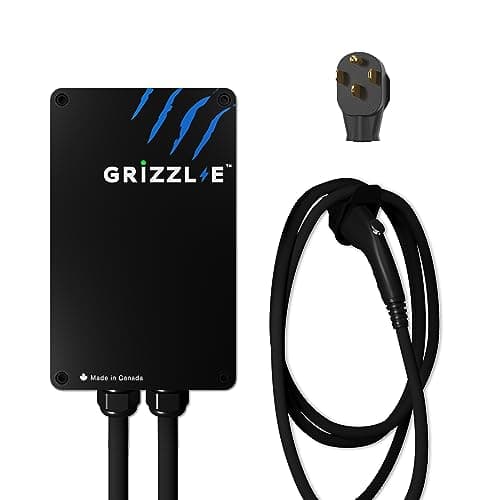
- Tesla-app integration. Charge scheduling, cost tracking and charge status inside the same app you already use for the car is a real convenience, and no third-party charger reproduces it. Every unit here has its own app, or in the Grizzl-E case none at all.
- Multi-unit power sharing. Tesla's Wall Connectors can share one circuit across several units. Emporia documents load sharing between its own units; most of the rest do not do this at all. If you are charging two cars on one circuit, read charging two EVs at home before you buy anything.
- The fit and finish. The Gen 3 is the slimmest unit in this group and the cable is the best-behaved. That is a genuine engineering difference, not marketing, and it is part of what the price buys.
What you do not give up
Charging speed, for all practical purposes. Safety certification — every unit here carries a UL or ETL listing to an EVSE standard, the same bar. Weather rating: the NEMA 4 enclosures on the Emporia and Wallbox units are rated for the same outdoor exposure. Warranty, in two cases, is longer than Tesla's. And on cable length, five of the seven beat the Tesla by a foot.
Our recommendation
For most households leaving the Wall Connector, the Emporia Pro is the answer: it matches the output, beats the cable, offers the connector choice the Tesla's standard unit does not, and includes a whole-home energy monitor that lets its load management read your real panel draw. If the garage is Tesla-only and you want a NACS handle with the widest adjustment range, take the ChargePoint Home Flex NACS. If you are here because of the price and your car tops out at 40 A anyway, the Autel MaxiCharger AC Lite is the one to buy and you will not notice the difference overnight.