The short answer
The Grizzl-E Classic is the best charger you can buy for under $300: a cast-aluminum NEMA 4 enclosure, 40 A and 9.6 kW, and amperage set by physical switches rather than a cloud account. The Lectron 40 A is the cheapest unit here that still delivers the full 9.6 kW, as an ETL-certified cordset you plug into a NEMA 14-50. If you want time-of-use scheduling at this price, the Grizzl-E Classic Connect is the same metal box with Wi-Fi. Renters without a 240 V circuit of their own should take the EVDANCE 16 A, which is about twice the speed of the cordset in the trunk. The one thing to check on every charger in this bracket is a UL or ETL listing to an EVSE standard — plenty of listings at this price do not have one.
Quick picks
Ranked by fit for the stated use case first, then price, then warranty and support. Tap any row to jump to the full assessment. Commission rate plays no part in the order.
| # | Product | Best for | Score | Price |
|---|---|---|---|---|
| 1 | 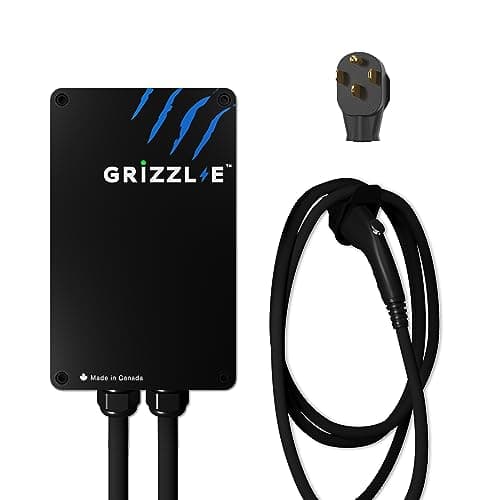 Grizzl-E ClassicA cast-aluminum 40 A charger with dip switches instead of a cloud account. | An outdoor install, and anyone who distrusts apps | 9.2 | $299.99See the Grizzl-E Classic $399.00 list · 25% off |
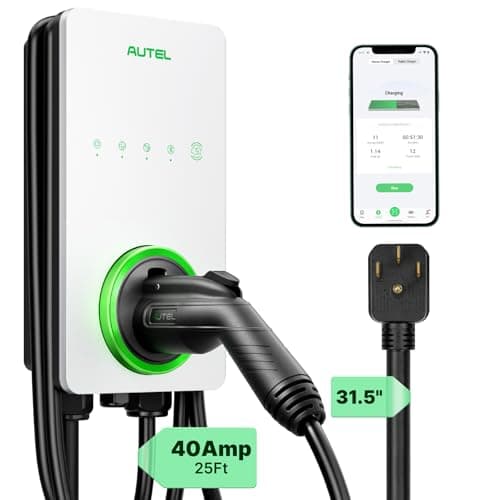
| 2 | 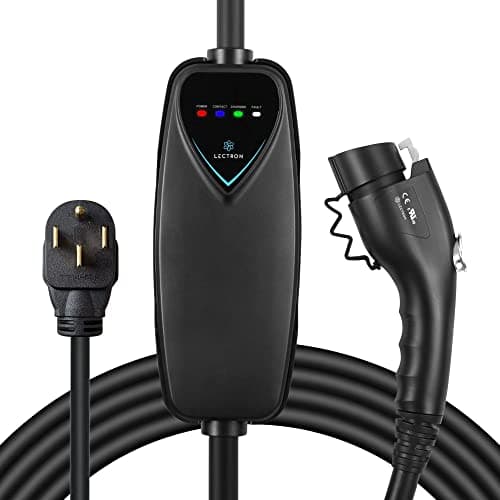 Lectron Level 2 EV Charger (40 A, NEMA 14-50)A 40 A ETL-certified portable charger for roughly half what the smart units cost. | The cheapest charger worth owning | 8.8 | |
| 3 | 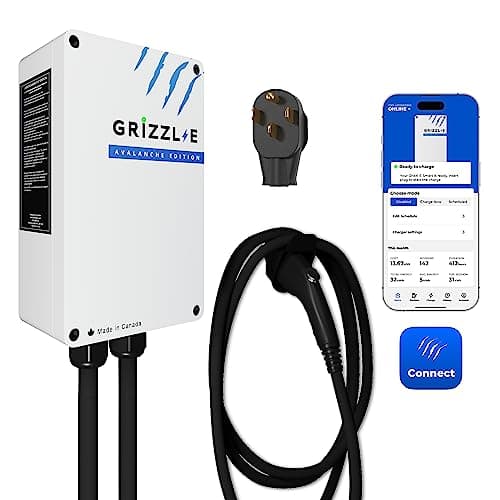 Grizzl-E Classic ConnectThe Classic's enclosure with Wi-Fi bolted on, for people who want the metal box and the time-of-use schedule. | The Grizzl-E build with scheduling added | 9.1 | $299.99See the Grizzl-E Classic Connect $349.99 list · 14% off |
| 4 | 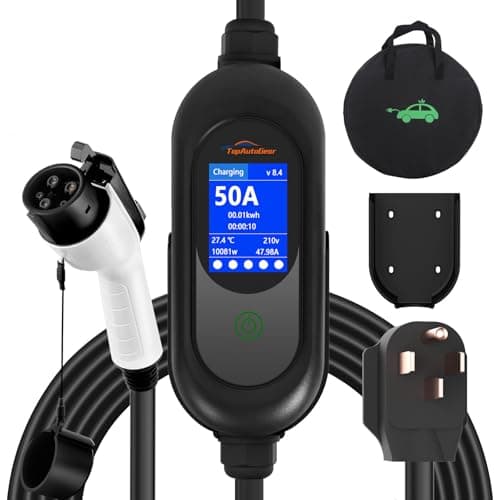 TopAutoGear Portable Level 2 EV Charger (50 A)A portable cordset at up to 50 A, which is unusual — most portables stop at 40. | A renter who has a real 14-50 outlet | 8.5 | $230.62See the TopAutoGear 50 A portable $242.76 list · 5% off |
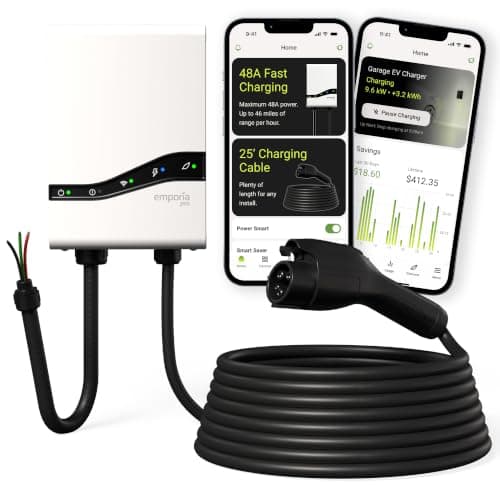
| 5 | 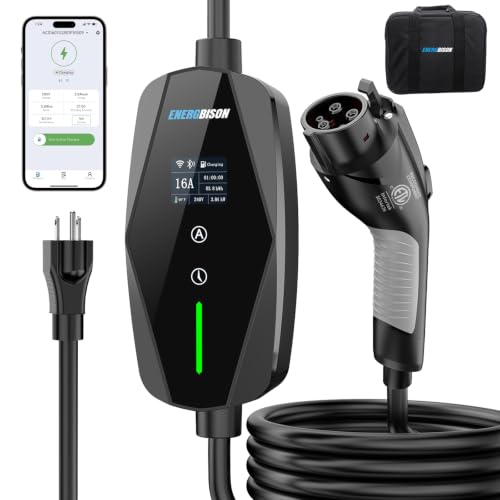 Portable Level 1 & 2 EV Charger with Timer (8-16 A)Adjustable from 8 to 16 A with a built-in timer, which is the right feature set for a circuit you do not own and cannot characterize: dial it down until nothing else on the circuit complains. | A shared or uncertain circuit | 8.4 | |
| 6 | 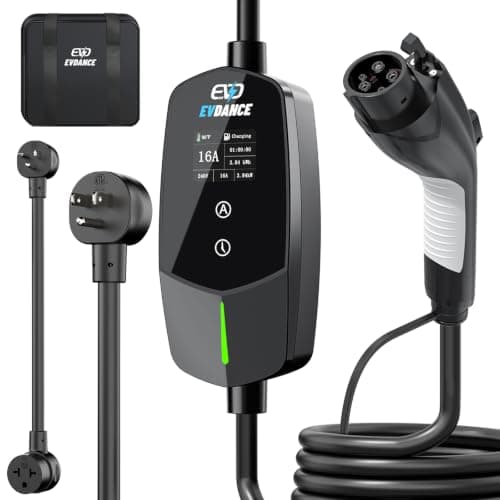 EVDANCE Level 1 & 2 Portable EV Charger (16 A)A dual-voltage 16 A cordset. | A renter with access to a 240 V outlet | 8.7 |
What $300 actually buys in this market
It buys more than most people expect, and the reason is that the expensive part of a home charger is not the charging. A Level 2 EVSE does not convert anything — the car's onboard charger does the AC-to-DC work. The wall unit is a safety-rated switch with a communication pilot, a ground-fault detector and a long cord. That is genuinely not a thousand dollars of hardware, and at $300 you can have all of it, properly certified, at the full 40 A.
What the money above $300 buys is the stuff around the charging: dynamic load management that reads your panel, a polished app, a slimmer enclosure, a longer warranty, cellular or Wi-Fi reliability someone actually maintains, and in some cases ENERGY STAR certification and utility-rebate eligibility. Some households need all of that. Many need none of it.
How we picked
Every unit on this page is currently purchasable, carries a real UL or ETL certification to an EVSE standard, and comes from a brand with an identifiable North American support path. Published specifications were checked against the manufacturer's own documentation on the date shown at the top of this page, and we credit a charger only with capabilities its own documentation describes. Ranking order is fit for the stated use case first, then price, then warranty and support — commission rate plays no part in it, and our methodology sets out the whole standard criterion by criterion.
At this price one criterion does more work than all the others: certification. Every unit on this page carries a UL or ETL listing to an EVSE standard, from a brand with a support path you can reach. That rules out a large fraction of what a price filter under $300 returns — this is the bracket where uncertified cordsets live, and an uncertified device is one that no independent lab has confirmed will open the circuit when it should.
The six, in order
Six chargers under $300
Ranked by what you would actually install, not by price. The first three are for a garage you control; the last three are for a circuit you do not.
An outdoor install, and anyone who distrusts apps
Grizzl-E Classic
A cast-aluminum 40 A charger with dip switches instead of a cloud account. Nothing about it is clever, which is exactly why it is the unit to buy for a driveway post in a cold climate.
$399.00 list · 25% off
#ad Price as of November 18, 2026. How we make money
The cheapest charger worth owning
Lectron Level 2 EV Charger (40 A, NEMA 14-50)
A 40 A ETL-certified portable charger for roughly half what the smart units cost. It does one thing, it does it at 9.6 kW, and for a household charging overnight on a flat rate that is the whole job.
#ad Price as of November 18, 2026. How we make money
The Grizzl-E build with scheduling added
Grizzl-E Classic Connect
The Classic's enclosure with Wi-Fi bolted on, for people who want the metal box and the time-of-use schedule. The charging hardware underneath is identical.
$349.99 list · 14% off
#ad Price as of November 18, 2026. How we make money
A renter who has a real 14-50 outlet
TopAutoGear Portable Level 2 EV Charger (50 A)
A portable cordset at up to 50 A, which is unusual — most portables stop at 40. If a rental genuinely has a 14-50 on its own circuit, this gets close to a wall charger without touching the wall.
$242.76 list · 5% off
#ad Price as of November 18, 2026. How we make money
A shared or uncertain circuit
Portable Level 1 & 2 EV Charger with Timer (8-16 A)
Adjustable from 8 to 16 A with a built-in timer, which is the right feature set for a circuit you do not own and cannot characterize: dial it down until nothing else on the circuit complains.
#ad Price as of November 18, 2026. How we make money
A renter with access to a 240 V outlet
EVDANCE Level 1 & 2 Portable EV Charger (16 A)
A dual-voltage 16 A cordset. On 240 V that is about 3.8 kW — roughly twice the Level 1 cordset that came with the car, from an outlet you may already be allowed to use.
#ad Price as of November 18, 2026. How we make money
We earn commission on qualifying purchases at no cost to you. Affiliate disclosure.
The real split at this price: wall box or cordset
Under $300 the market divides cleanly in two, and the division matters more than the brand on the box.
| Wall box (Grizzl-E Classic) | Cordset (Lectron, portables) | |
|---|---|---|
| Mounts | Bolted to the wall or a post | Hangs on a hook, or lives in the trunk |
| Connects | Hardwired or plugged in | NEMA 14-50 or 120 V plug |
| Max output here | 40 A / 9.6 kW | 16-50 A depending on the unit |
| Enclosure | NEMA 4 cast aluminum, rated outdoors | Weather-resistant, but not a mounted enclosure |
| Travels | No | Yes |
| Best for | A garage you own | A rental, a second home, or a trip |
If you own the garage, buy the wall box. A mounted unit with a cast enclosure survives a decade of weather and a cable that gets stepped on, and it does not get borrowed. If you rent, or the only 240 V outlet is one you are allowed to use rather than one you own, buy the cordset — and read charging an EV in an apartment or condo first, because the outlet is the hard part, not the charger.
What you give up under $300
- Dynamic load management. Nothing at this price watches your whole-home draw and throttles in real time. The Grizzl-E's switches let you set a lower output, which satisfies the same code provision, but it is a one-time setting, not a live one. If your panel is the constraint, best EV chargers with load management is the page you want instead.
- 48 A. Everything here tops out at 40 A or below, so 9.6 kW rather than 11.5 kW. For a car that accepts 48 A on AC that is about an extra hour on a deep overnight charge — and for the many cars that cap at 9.6 kW or less, it is nothing at all.
- A long warranty and a polished app. Three years is the best warranty in this group. Two of the six have no app whatsoever, which some buyers consider a feature.
- Utility rebate eligibility. Several utility programs require an ENERGY STAR certified, network-connected charger. Only the Connect version qualifies on both counts. Check your own program against EV charger rebates for 2026 before you let the price decide.
The circuit still costs what the circuit costs
This is the part a price ceiling cannot help with. A 40 A charger is a continuous load, so under NEC Article 625 it needs a 50 A breaker and 8 AWG copper, and the ampacity table in 310.16 is what sets that. Running that circuit to a detached garage or across a finished basement can cost several times the charger. A plug-in unit on an existing, correctly sized NEMA 14-50 avoids all of it — which is exactly why the cordsets on this page are worth considering even for a homeowner.
If you are adding a receptacle rather than hardwiring, the receptacle itself matters more than its price suggests: a cheap 14-50 on a continuous 40 A load is the most common failure point in home charging. Best NEMA 14-50 receptacles covers the industrial-grade ones, and EV charger installation cost covers what the electrician's half of this runs.
If you are plugging in rather than hardwiring
The receptacle and breaker a 40 A plug-in charger should be landing on.
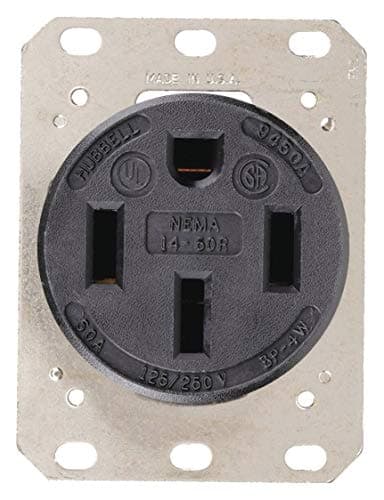
The one part not to save money on
Hubbell HBL9450A NEMA 14-50 Receptacle (industrial)
An industrial-grade 14-50 receptacle. An EV draws 40 A continuously for hours, which is a duty cycle the cheap builder-grade receptacles were never designed for — this is the part that stops a plug-in install from browning its own contacts.
$64.99 list · 8% off
#ad Price as of November 18, 2026. How we make money
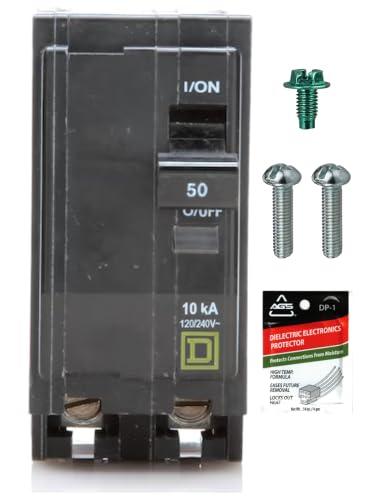
A 40 A charger or a 14-50 receptacle circuit
Square D QO250 50 A Double-Pole Breaker
50 A two-pole: the breaker for a 40 A charger (40 x 1.25 = 50) and for a NEMA 14-50 receptacle. Note that a receptacle circuit also needs GFCI protection under NEC 625.54.
#ad Price shown at Amazon. How we make money
We earn commission on qualifying purchases at no cost to you. Affiliate disclosure.
Is a cheaper charger slower?
Only where the amperage is lower, and amperage is printed on the box. A 40 A charger from a $300 unit and a 40 A charger from a $900 unit deliver the same 9.6 kW into the same car. There is no quality of electricity. What differs is everything around it — the enclosure, the cable's cold-weather behavior, the app, the support line and the warranty. The 16 A portables are genuinely slower, and that is a specification, not a corner cut.
| Output | Power at 240 V | Roughly added in 8 hours |
|---|---|---|
| 16 A | 3.8 kW | about 100 miles |
| 32 A | 7.7 kW | about 200 miles |
| 40 A | 9.6 kW | about 250 miles |
| 48 A | 11.5 kW | about 300 miles |
Read the bottom two rows together: for a household driving a normal amount, 40 A already finishes the job overnight, which is why the $300 ceiling costs most people nothing real. Work out your own number with the EV charging cost calculator if you want the energy and the dollars rather than the miles.
Our recommendation
Buy the Grizzl-E Classic if you have a garage and an electrician. It is the one unit here that will plainly still be working in ten years, it sets its own amperage with a switch instead of an account, and nothing above it in price charges a car any faster than it does. Buy the Lectron 40 A if you already have a NEMA 14-50 and would rather not call anybody — same 9.6 kW, no installation. Buy the EVDANCE 16 A if the outlet you have access to is not yours; it is the budget pick on this page and it is roughly double what the cordset in the trunk delivers.
If none of those fit because you want a smart unit with load management, the next bracket up is the honest answer rather than a stretch at this one: best budget EV chargers runs to $500 and picks up where this page stops.