The short answer
The Lectron Level 2 (40 A) is the best portable Level 2 EV charger for most people: an ETL-certified 9.6 kW cordset that plugs into a NEMA 14-50 outlet, costs a fraction of a wall unit and moves house with you. If your outlet is genuinely on its own 50 A circuit and you want every amp of it, the TopAutoGear 50 A goes further. If the circuit is shared or unknown — the normal case in a rental garage — buy the 8-16 A adjustable unit instead and dial it down until nothing else on the circuit complains.
Quick picks
Ranked by fit for the stated use case first, then price, then warranty and support. Tap any row to jump to the full assessment. Commission rate plays no part in the order.
| # | Product | Best for | Score | Price |
|---|---|---|---|---|
| 1 | 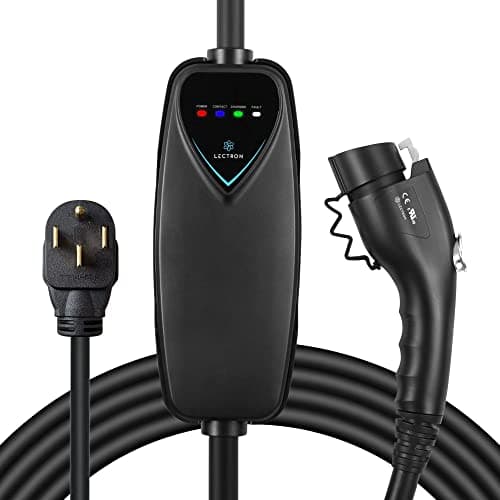 Lectron Level 2 EV Charger (40 A, NEMA 14-50)A 40 A ETL-certified portable charger for roughly half what the smart units cost. | The cheapest charger worth owning | 7.9 | |
| 2 | 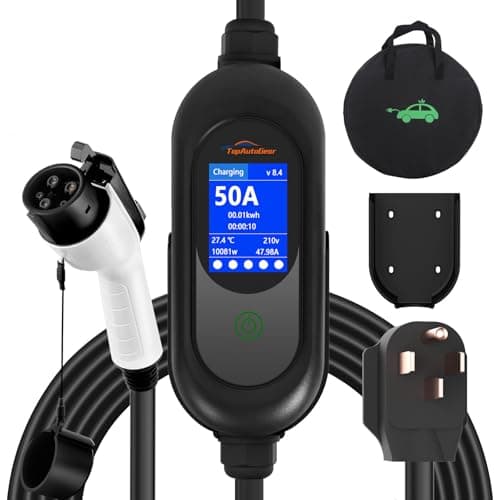 TopAutoGear Portable Level 2 EV Charger (50 A)A portable cordset at up to 50 A, which is unusual — most portables stop at 40. | A renter who has a real 14-50 outlet | 7.4 | $218.48View on Amazon $242.76 list · 10% off |
| 3 | 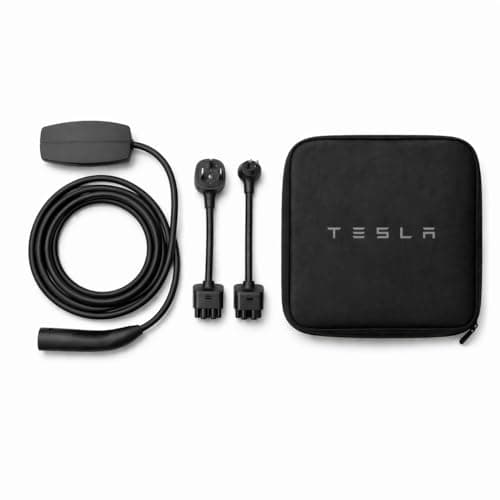 Tesla Mobile Connector bundleA portable 32 A cordset, not a wall charger. | A Tesla owner who rents, or a second car that barely drives | 7.6 | |
| 4 | 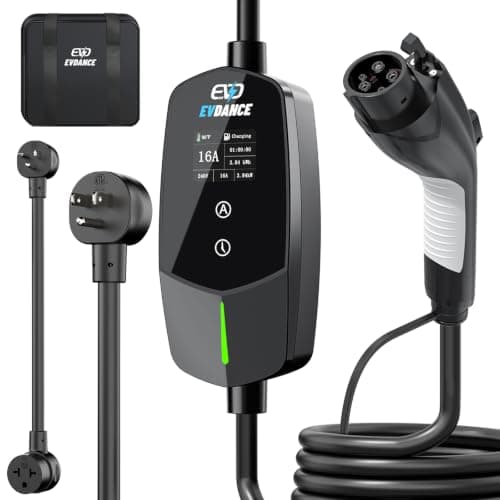 EVDANCE Level 1 & 2 Portable EV Charger (16 A)A dual-voltage 16 A cordset. | A renter with access to a 240 V outlet | 7.6 | |
| 5 | 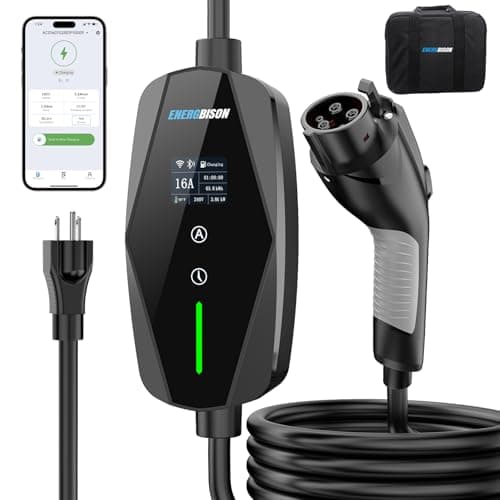 Portable Level 1 & 2 EV Charger with Timer (8-16 A)Adjustable from 8 to 16 A with a built-in timer, which is the right feature set for a circuit you do not own and cannot characterize: dial it down until nothing else on the circuit complains. | A shared or uncertain circuit | 7.2 | $116.97View on Amazon $159.99 list · 27% off |
What "portable" actually buys you
A portable Level 2 charger is the same electrical device as a wall charger with the mounting bracket left off: it is an EVSE with a plug on the supply end instead of a hardwired connection. The reason to want one is not convenience in the garage — a wall unit is better at that — it is that nothing permanent changes about the building. No permit conversation with a landlord, no hole in a wall you do not own, and the unit leaves with you.
The speed difference against the cordset that shipped with your car is the whole point. The US DOE puts Level 1 at about 1.9 kW in its own charging-time tables; a 40 A Level 2 cordset on 240 V is 9.6 kW.
240 V x 40 A = 9,600 W; 9,600 / 1,900
about 5x the power
The 1.9 kW Level 1 figure is the assumption the US DOE AFDC uses in its charging-time tables. Real delivered energy is lower than nameplate on both.
The number that decides which one you can use
Not the charger's rating. The circuit behind the outlet. A portable unit set to 40 A pulls 40 A continuously for hours, which is exactly the load NEC Article 625 classes as continuous and requires a dedicated circuit rated at 125% of it to carry. A 14-50 outlet in a rental garage that was installed for a welder used twice a year is not the same thing as a 50 A circuit sized for nightly charging.
| Charger | Max output | Needs | Power at 240 V |
|---|---|---|---|
| Lectron Level 2 | 40 A | NEMA 14-50 on a dedicated 50 A circuit | 9.6 kW |
| TopAutoGear | Up to 50 A | NEMA 14-50, circuit sized for the setting | Up to 12 kW |
| Tesla Mobile Connector | 32 A | 240 V receptacle plus the matching adapter | 7.7 kW |
| EVDANCE 16 A | 16 A | Any 120 V or 240 V outlet | About 3.8 kW |
| Adjustable 8-16 A | 8-16 A | A shared or uncharacterized circuit | Up to 3.8 kW |
The picks
1. Lectron Level 2 (40 A) — the one most people should buy
The cheapest charger worth owning
Lectron Level 2 EV Charger (40 A, NEMA 14-50)
40 A / 9.6 kW, ETL certified, NEMA 14-50 plug, for roughly half what a comparable wall unit costs.
#ad Price as of October 28, 2026. How we make money
It does one thing: 9.6 kW into the car, overnight, from an existing outlet. There is no app, no scheduling and no energy reporting, which matters only if you are on a time-of-use tariff and your car cannot schedule its own charging — and almost every car built since 2020 can. The plastic enclosure is the real limitation: keep it out of direct weather or buy a wall unit rated for outdoors instead.
2. TopAutoGear 50 A — the fastest portable, with a caveat
A renter who has a real 14-50 outlet
TopAutoGear Portable Level 2 EV Charger (50 A)
Up to 50 A, which no mainstream portable matches, on a NEMA 14-50 plug.
Most portables stop at 40 A because that is the most a 50 A receptacle circuit should carry continuously. This one goes higher, which is useful only if the circuit behind the outlet was built for it. Buy it for a 14-50 you had installed and know the rating of; do not buy it to push an unknown rental circuit. The certification claims are also thinner than the mainstream brands', and we say so rather than glossing it.
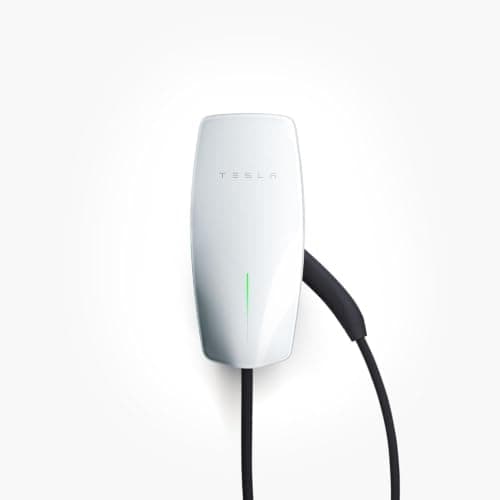
3. Tesla Mobile Connector — the Tesla-specific answer
A Tesla owner who rents, or a second car that barely drives
Tesla Mobile Connector bundle
32 A over NACS with a 20 ft cable, so a Model 3 RWD charges at its full onboard limit with nothing mounted.
#ad Price as of October 28, 2026. How we make money
32 A is the exact AC ceiling of a Model 3 RWD and of most plug-in hybrids, so nothing is wasted. On a Model Y it costs you about a third of the available rate — the Wall Connector comparison has the arithmetic. Adapters beyond the included plug are sold separately, which is the hidden cost of this one.
4 and 5. The 16 A units, for a circuit you do not control
When the honest answer is to draw less
A 16 A cordset on 240 V is about 3.8 kW — twice Level 1, from an outlet nobody will object to. The adjustable version goes down to 8 A, which is the setting that lets you charge off a circuit that genuinely cannot take more.
A renter with access to a 240 V outlet
EVDANCE Level 1 & 2 Portable EV Charger (16 A)
A dual-voltage 16 A cordset. On 240 V that is about 3.8 kW — roughly twice the Level 1 cordset that came with the car, from an outlet you may already be allowed to use.
#ad Price as of October 28, 2026. How we make money
A shared or uncertain circuit
Portable Level 1 & 2 EV Charger with Timer (8-16 A)
Adjustable from 8 to 16 A with a built-in timer, which is the right feature set for a circuit you do not own and cannot characterize: dial it down until nothing else on the circuit complains.
We earn commission on qualifying purchases at no cost to you. Affiliate disclosure.
These are the right purchase far more often than people expect. If you drive 30 miles a day, 3.8 kW for eight hours is more than double what you need, and it loads a shared circuit less than a hair dryer. The adjustable unit's built-in timer also works when the car cannot schedule — relevant on older PHEVs. Our renters' guide to portable Level 2 charging covers the landlord conversation.
What we did not include
- Level 1-only cordsets. Your car came with one. Buying a second is not an upgrade.
- Portable units with no certification mark at all. A cordset that carries 40 A for six hours a night is a fire-safety device, and we will not list one with no UL or ETL file behind it.
- NEMA 10-30 and 14-30 dryer-outlet cordsets as a headline pick. That is a real option, but it belongs with the dryer-outlet guide and the splitter switches that make it safe.
How we picked
Every unit here is currently purchasable, carries a real UL or ETL certification to the relevant standard, and comes from a brand with an identifiable North American support path. We verified each one's published specifications against the manufacturer's own documentation on the date shown at the top of this page. We verify specifications; we do not bench-test hardware, and our methodology says so in plain terms. Ranking order is fit for the stated use case first, then price, then warranty and support — commission rate plays no part in it. On this page we rank by what the supply circuit can safely carry rather than by the cordset's headline amperage, because the limiting factor in a rental or a borrowed garage is almost never the charger.