Skip to content
EV & Charger

Our picks

Best Plug-In EV Chargers

Capped at 40 amps and needing a GFCI breaker — and the right choice anyway if you rent, might move, or already have the outlet.

By Mike M.Published Last verified

A wall-mounted Level 2 EV charger installed on the exterior wall of a house

The short answer

A plug-in charger on a NEMA 14-50 outlet is capped at 40 A / 9.6 kW — 80% of a 50 A circuit, because EV charging is a continuous load — and requires a GFCI breaker under NEC 625.54. In exchange it needs no hardwiring and it comes with you when you move. The ChargePoint Home Flex plug-in version is our pick; the Lectron 40 A is the budget choice. And spend money on the receptacle: it is the component that fails.

Quick picks

Ranked by fit for the stated use case first, then price, then warranty and support. Tap any row to jump to the full assessment. Commission rate plays no part in the order.

#ProductBest forScorePrice
1
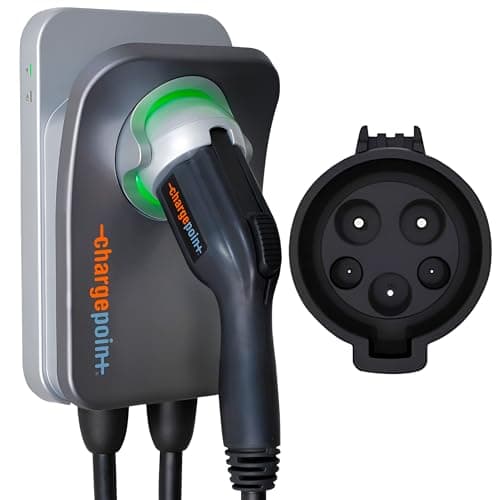
ChargePoint Home Flex (NEMA 14-50 plug)
ChargePoint Home Flex (NEMA 14-50 plug)The same charger as the hardwired Home Flex with a NEMA 14-50 input cord, which turns the install into plugging it in — at the cost of a 40 A ceiling, because a 50 A receptacle circuit can only carry 40 A continuously.
A garage that already has a 14-50 outlet8.4
$599.00View on Amazon

$657.99 list · 9% off

2
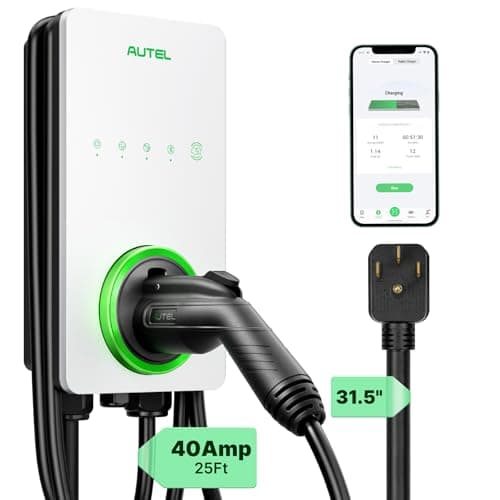
Autel MaxiCharger AC Lite (40 A)
Autel MaxiCharger AC Lite (40 A)The widest output adjustment range here — 6 A to 40 A in the app — plus an operating range down to -40 degF, which makes it the practical pick for an unheated garage in the north.
Cold climates and 1 A output tuning8.6
3
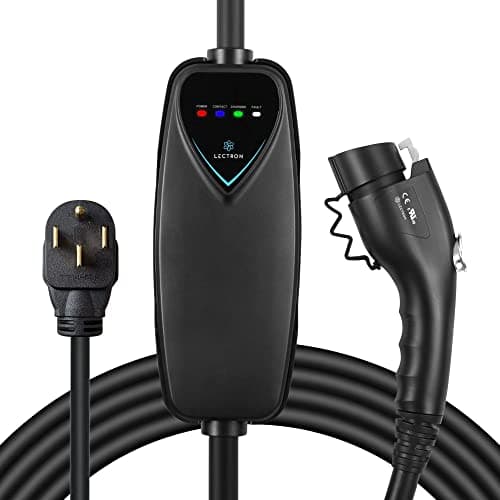
Lectron Level 2 EV Charger (40 A, NEMA 14-50)
Lectron Level 2 EV Charger (40 A, NEMA 14-50)A 40 A ETL-certified portable charger for roughly half what the smart units cost.
The cheapest charger worth owning7.9
4
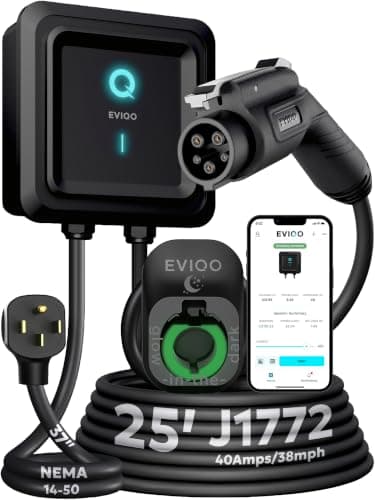
EVIQO Level 2 EV Charger (40 A, NEMA 14-50)
EVIQO Level 2 EV Charger (40 A, NEMA 14-50)The plug-in EVIQO: 40 A, 25 ft, IP66, into an existing 14-50.
A plug-in 40 A unit with a long cable8.1
$449.99View on Amazon

$510.99 list · 12% off

5
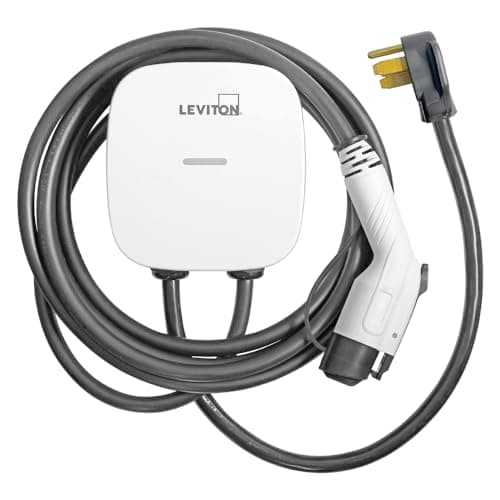
Leviton Smart EV Charger (40 A, NEMA 14-50)
Leviton Smart EV Charger (40 A, NEMA 14-50)Leviton's 40 A plug-in with Wi-Fi and a 25 ft cable — the balanced pick in their range.
Plug-in with Wi-Fi from a known brand8.0
6
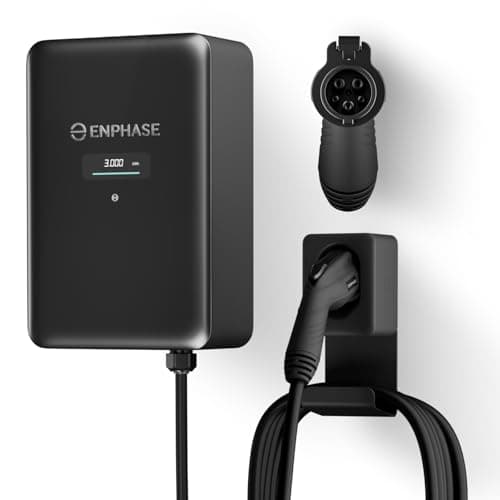
Enphase IQ EV Charger 2 (40 A, NEMA 14-50)
Enphase IQ EV Charger 2 (40 A, NEMA 14-50)The plug-in Enphase: the same 1 A solar tracking on a NEMA 14-50 cord, which gets a solar household charging on surplus without pulling a new circuit.
Solar plus an existing 14-50 outlet8.3

Who should buy plug-in

  • Renters. The charger is yours; the circuit stays with the property. See portable chargers for renters.
  • Anyone who might move within a few years. A hardwired charger is a fixture you leave behind.
  • Households with a correctly wired 14-50 already in place. Then the install is plugging it in — after an electrician verifies the circuit.
  • Owners of cars that accept 40 A or less. Every plug-in hybrid, the entry Model 3 RWD. The 40 A ceiling costs them nothing.
  • Anyone who wants to be able to swap the charger without calling an electrician.

The two real costs of plugging in

1. The 40 amp ceiling

A NEMA 14-50 receptacle is a 50 A device, but a circuit may carry only 80% of its rating continuously and EV charging is continuous under NEC 625.42. So a 14-50 outlet means a 40 A charger, full stop — regardless of what the charger is capable of.

On a car that accepts 48 A that costs you 1.9 kW, which is roughly half an hour on replacing 100 miles. On a car that accepts 40 A or less it costs nothing at all.

2. The GFCI breaker, and what it brings with it

NEC 625.54 requires GFCI protection for all receptacles installed for EV charging in the 2020 and 2023 editions. A two-pole GFCI breaker costs several times a standard one — and it is also the most common source of nuisance tripping in home charging.

Your charger already contains ground-fault protection, commonly at 20 mA. A Class A GFCI breaker trips at 5 mA. Normal capacitive leakage from a long cable, especially damp, can reach that. Some charger and breaker combinations simply do not get along, and there is no setting that fixes it. Our GFCI page covers the fixes.

The receptacle is the thing to get right

The receptacle and breaker a plug-in install needs

The Hubbell is the part electricians specify by name for EV service. The GFCI breaker is required rather than optional — check which brand your panel takes.
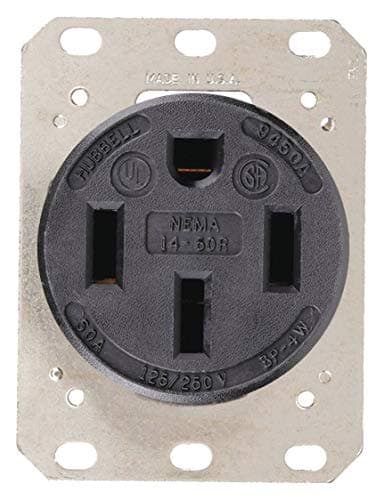
Hubbell HBL9450A NEMA 14-50 Receptacle (industrial)

The one part not to save money on

Hubbell HBL9450A NEMA 14-50 Receptacle (industrial)

An industrial-grade 14-50 receptacle. An EV draws 40 A continuously for hours, which is a duty cycle the cheap builder-grade receptacles were never designed for — this is the part that stops a plug-in install from browning its own contacts.

$64.99View on Amazon

#ad Price as of October 5, 2026. How we make money
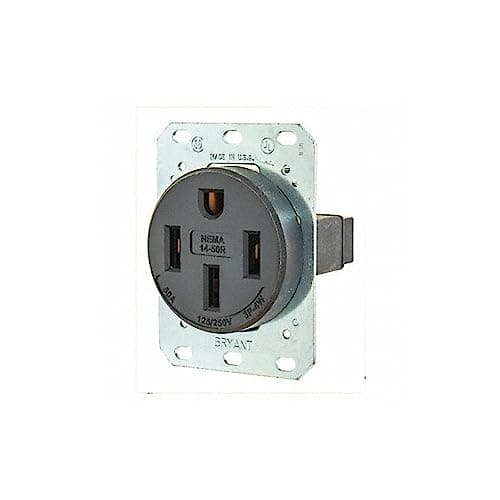
Bryant 9450FR NEMA 14-50 Receptacle

The same quality, slightly cheaper

Bryant 9450FR NEMA 14-50 Receptacle

Bryant is Hubbell's sister brand and the 9450FR is the same class of part for a little less — the sensible alternative when the Hubbell is out of stock.

$56.64View on Amazon

#ad Price as of October 5, 2026. How we make money
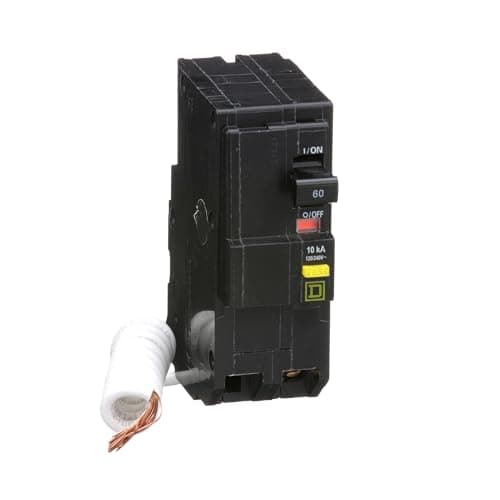
Square D QO260GFI 60 A 2-Pole GFCI Breaker

A plug-in charger on a 14-50 receptacle circuit

Square D QO260GFI 60 A 2-Pole GFCI Breaker

If your charger plugs into a receptacle, NEC 625.54 requires GFCI protection on that circuit, and this is the part that provides it. It is also the single most common cause of nuisance tripping in a home charging install.
$139.99View on Amazon

$157.72 list · 11% off

#ad Price as of October 5, 2026. How we make money

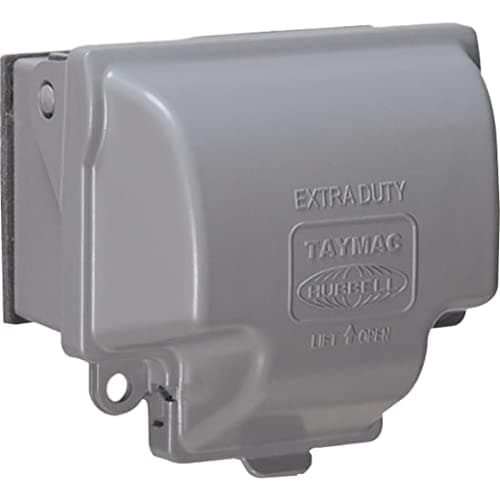
TayMac MX3300 RaynGuard Metal Weatherproof In-Use Cover

An outdoor 240 V receptacle with a charger plugged in

TayMac MX3300 RaynGuard Metal Weatherproof In-Use Cover

An outdoor receptacle with a plug in it needs an extra-duty in-use cover that closes over the plug — a flip-lid cover is not compliant and not weatherproof once something is plugged into it.

$16.29View on Amazon

#ad Price as of October 5, 2026. How we make money

We earn commission on qualifying purchases at no cost to you. Affiliate disclosure.

What we ranked on

  • A genuine plug-in configuration with a NEMA 14-50 cord, not a hardwired unit with an adapter.
  • Cable length, which on this list runs from 16 ft to 25 ft.
  • Output adjustability, because a plug-in charger may move to a different outlet on a different circuit.
  • Portability and build, since the whole point is that it can be unplugged and moved.
  • Price, because a 40 A plug-in unit should not cost what a 48 A hardwired one does.

Checking an outlet that is already there

Finding a 14-50 in the garage feels like a win. Before you trust it, have an electrician confirm four things — an existing receptacle tells you nothing about the circuit behind it:

  1. The breaker size. A 14-50 on a 30 A or 40 A breaker exists in the wild.
  2. The conductor gauge. Older RV outlets were sometimes wired light for intermittent use.
  3. That it is a dedicated circuit, not shared with anything else.
  4. GFCI protection. An older range or RV outlet will not have it, and NEC 625.54 requires it for EV charging use.

That last point catches a lot of people: an existing 14-50 is not automatically compliant for EV charging just because it is the right shape. Full detail on the NEMA 14-50 outlet.

Outdoors

A 14-50 outdoors with a plug in it needs an extra-duty in-use cover — the kind that closes over the plug — not a flip-lid that only seals when empty. This is also an argument for hardwiring outdoors: no receptacle means no cover and one fewer path for water.

How we picked

Every unit here is currently purchasable, carries a real UL or ETL certification to an EVSE standard, and comes from a brand with an identifiable North American support path. We verified each one's published specifications against the manufacturer's own documentation on the date shown at the top of this page. We verify specifications; we do not bench-test chargers, and our methodology says so in plain terms. Ranking order is fit for the stated use case first, then price, then warranty and support — commission rate plays no part in it.
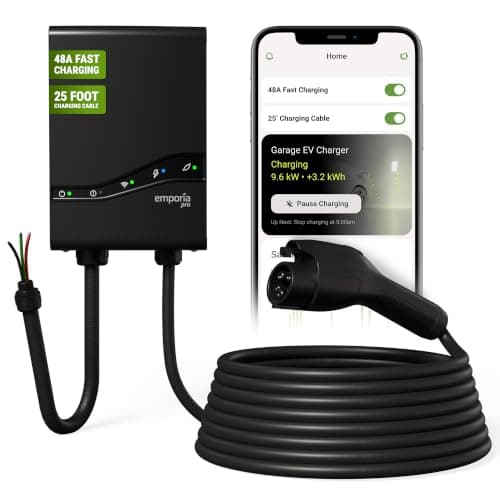
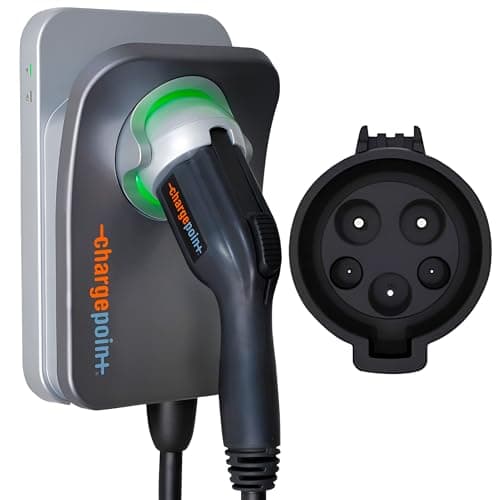
In detail

Every pick, assessed

Top pick · A garage that already has a 14-50 outlet

ChargePoint Home Flex (NEMA 14-50 plug)

ChargePoint Home Flex (NEMA 14-50 plug) charger

8.4/ 10

$599.00View on Amazon

$657.99 list · 9% off

#ad Price as of October 5, 2026. How we make money

Our verdict

The same charger as the hardwired Home Flex with a NEMA 14-50 input cord, which turns the install into plugging it in — at the cost of a 40 A ceiling, because a 50 A receptacle circuit can only carry 40 A continuously.

What works

  • No electrician needed if a correctly wired 14-50 outlet is already there
  • Unplugs and moves with you, which matters if you rent
  • Same app and the same adjustable amperage as the hardwired unit

What doesn't

  • 40 A ceiling, so a car that accepts 48 A charges ~20% slower than it could
  • Needs a GFCI breaker on the receptacle circuit, and that pairing is the most common source of nuisance tripping
  • The plug and receptacle are the weakest link in the whole run — a cheap receptacle will eventually heat up
ChargePoint Home Flex (NEMA 14-50 plug) specifications
Max output40 A / 9.6 kW on a 50 A receptacle circuit
Adjustable output16, 24, 32, 40 A
InputNEMA 14-50 plug
Cable23 ft
ConnectorJ1772
GFCIRequired — NEC 625.54 applies to every EV charging receptacle

Specifications checked against ChargePoint Home Flex datasheet. We verify published specifications; we do not bench-test hardware — how we assess products.

How it scored

Install simplicity
9.6
Charge rate
7.6
Cable and reach
7.8
Smart features
9.0
Portability
8.6
Pick 2 · Cold climates and 1 A output tuning

Autel MaxiCharger AC Lite (40 A)

Autel MaxiCharger AC Lite (40 A) charger

8.6/ 10

$470.00View on Amazon

#ad Price as of October 5, 2026. How we make money

Our verdict

The widest output adjustment range here — 6 A to 40 A in the app — plus an operating range down to -40 degF, which makes it the practical pick for an unheated garage in the north.

What works

  • 6-40 A in 1 A steps is the finest adjustment of any unit here — genuinely useful when a load calculation lands at 37 A
  • -40 degF to +131 degF rated, which is a real differentiator in Minnesota or Maine
  • Integrated surge protection, which most units leave to a panel-mounted device
  • 25 ft cable

What doesn't

  • 40 A ceiling
  • Bluetooth, Wi-Fi and Ethernet is more connectivity than a home needs and more surface to go wrong
  • Autel's North American consumer support is newer than ChargePoint's or Tesla's
Autel MaxiCharger AC Lite (40 A) specifications
Max output40 A / 9.6 kW (240 V x 40 A)
Adjustable output6-40 A via the app
Breaker50 A dedicated 2-pole
Cable25 ft, J1772
EnclosureNEMA 4
Operating temperature-40 degF to +131 degF
Protection20 mA CCID ground-fault detection, integrated surge protection
Warranty36 months

Specifications checked against ENERGY STAR certified EVSE listing. We verify published specifications; we do not bench-test hardware — how we assess products.

How it scored

Cold-weather fitness
9.8
Charge rate
7.6
Output adjustability
9.8
Cable and reach
9.2
Weather and build
9.0
Value
8.6
Pick 3 · The cheapest charger worth owning

Lectron Level 2 EV Charger (40 A, NEMA 14-50)

Lectron Level 2 EV Charger (40 A, NEMA 14-50) charger

7.9/ 10

$269.99View on Amazon

#ad Price as of October 5, 2026. How we make money

Our verdict

A 40 A ETL-certified portable charger for roughly half what the smart units cost. It does one thing, it does it at 9.6 kW, and for a household charging overnight on a flat rate that is the whole job.

What works

  • By far the lowest cost per kW of anything we would actually recommend
  • Portable — it travels and it moves house
  • 40 A is enough for every PHEV and most overnight BEV charging

What doesn't

  • No scheduling, no app, no energy data; on a time-of-use tariff you schedule in the car or you overpay
  • Shorter total reach than the 24-25 ft units
  • Plastic enclosure, not metal — keep it out of direct weather
Lectron Level 2 EV Charger (40 A, NEMA 14-50) specifications
Max output40 A / 9.6 kW
InputNEMA 14-50 plug
Cable16 ft extension cord plus the J1772 lead
ConnectorJ1772
CertificationETL certified
GFCIRequired on the receptacle circuit — NEC 625.54

Specifications checked against Lectron Level 2 charger specifications. We verify published specifications; we do not bench-test hardware — how we assess products.

How it scored

Value
9.8
Charge rate
7.6
Portability
9.4
Smart features
2.5
Weather and build
6.4
Pick 4 · A plug-in 40 A unit with a long cable

EVIQO Level 2 EV Charger (40 A, NEMA 14-50)

EVIQO Level 2 EV Charger (40 A, NEMA 14-50) charger

8.1/ 10

$449.99View on Amazon

$510.99 list · 12% off

#ad Price as of October 5, 2026. How we make money

Our verdict

The plug-in EVIQO: 40 A, 25 ft, IP66, into an existing 14-50. A lot of reach for the money.

What works

  • 25 ft cable at a plug-in price
  • IP66 weather rating
  • No electrician if the outlet is sound

What doesn't

  • 40 A
  • GFCI breaker required
  • Newer brand
EVIQO Level 2 EV Charger (40 A, NEMA 14-50) specifications
Max output40 A / 9.6 kW
InputNEMA 14-50 plug
Cable25 ft
EnclosureIP66 / NEMA 4
GFCIRequired on the receptacle circuit — NEC 625.54

Specifications checked against EVIQO charger specifications. We verify published specifications; we do not bench-test hardware — how we assess products.

Pick 5 · Plug-in with Wi-Fi from a known brand

Leviton Smart EV Charger (40 A, NEMA 14-50)

Leviton Smart EV Charger (40 A, NEMA 14-50) charger

8.0/ 10

$499.85View on Amazon

#ad Price as of October 5, 2026. How we make money

Our verdict

Leviton's 40 A plug-in with Wi-Fi and a 25 ft cable — the balanced pick in their range.

What works

  • 25 ft cable
  • Wi-Fi scheduling
  • Mainstream brand support

What doesn't

  • 40 A
  • GFCI breaker required on the receptacle circuit
  • App is functional rather than good
Leviton Smart EV Charger (40 A, NEMA 14-50) specifications
Max output40 A / 9.6 kW
InputNEMA 14-50 plug
Cable25 ft
SmartWi-Fi

Specifications checked against Leviton EV charging product specifications. We verify published specifications; we do not bench-test hardware — how we assess products.

Pick 6 · Solar plus an existing 14-50 outlet

Enphase IQ EV Charger 2 (40 A, NEMA 14-50)

Enphase IQ EV Charger 2 (40 A, NEMA 14-50) charger

8.3/ 10

$999.00View on Amazon

#ad Price as of October 5, 2026. How we make money

Our verdict

The plug-in Enphase: the same 1 A solar tracking on a NEMA 14-50 cord, which gets a solar household charging on surplus without pulling a new circuit.

What works

  • Solar tracking without an electrician, if the outlet is already correct
  • 5-year warranty
  • Moves house with you

What doesn't

  • 40 A
  • GFCI breaker required, with the nuisance-tripping risk that brings
  • Still expensive for a 9.6 kW charger
Enphase IQ EV Charger 2 (40 A, NEMA 14-50) specifications
Max output40 A / up to 9.6 kW at 240 V
InputNEMA 14-50 plug
ConnectorJ1772
Warranty5 years
GFCIRequired on the receptacle circuit — NEC 625.54

Specifications checked against Enphase IQ EV Charger 2 documentation. We verify published specifications; we do not bench-test hardware — how we assess products.

FAQ

Questions people actually ask

What is the best plug-in EV charger?

The ChargePoint Home Flex plug-in version, for its six selectable output levels and mature app. The Lectron 40 A is the budget choice, and the Autel MaxiCharger AC Lite is the pick for a cold climate with its -40 degF rating.

Why is a plug-in charger limited to 40 amps?

Because a circuit may carry only 80% of its rating continuously and EV charging is a continuous load under NEC 625.42. 80% of a 50 A receptacle circuit is 40 A. 48 A needs a 60 A circuit, which means hardwiring.

Does a plug-in EV charger need a GFCI breaker?

Yes. NEC 625.54 in the 2020 and 2023 editions requires GFCI protection for all receptacles installed for the connection of EV charging, with no amperage exception.

Which NEMA 14-50 receptacle should I use for EV charging?

An industrial-grade one — the Hubbell HBL9450A is the part most commonly specified by name. A builder-grade receptacle was designed for an electric range's intermittent duty, not an EV's continuous 40 A draw, and it is the most documented failure point in plug-in installs.

Can I use an existing dryer or RV outlet?

Possibly, but not on sight. Have an electrician verify the breaker size, conductor gauge, that it is a dedicated circuit, and that GFCI protection is present. A 14-50 receptacle on an undersized circuit is not unusual.

Sources

What we checked this against

Read next

Disclosure. Some links on this page are affiliate links. If you buy through one, we earn a commission at no extra cost to you. We are a participant in the Amazon Services LLC Associates Program. Prices come from Amazon's live data and are shown with the date they were checked; where no live price is available we say "check price" rather than show an old number. Commission rate plays no part in which products we recommend or in what order — see our methodology and our full affiliate disclosure.