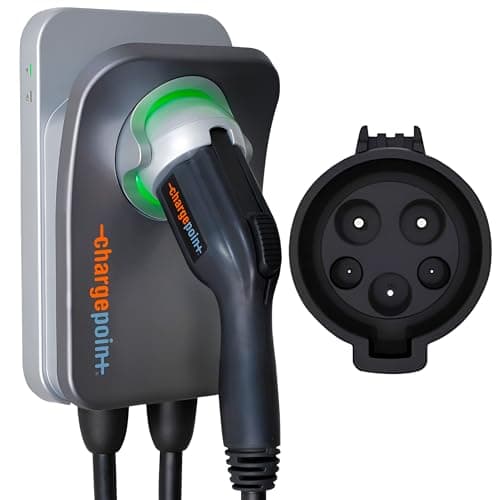
The short answer
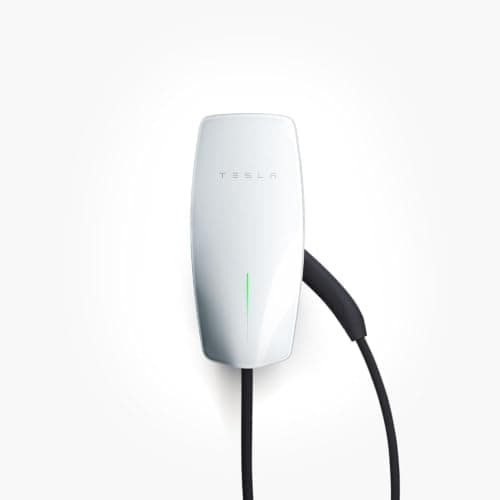
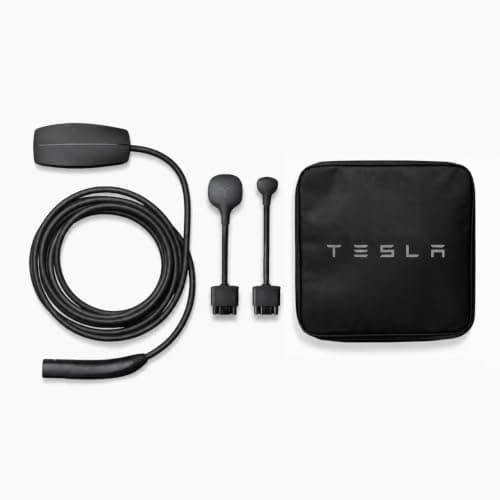
Buy the Wall Connector if you own the home and the car is a daily driver: 48 A / 11.5 kW, a 24 ft cable, and the car's full charge rate. Keep the Mobile Connector for travel, for a rental, or for a second car that barely moves: it is capped at 32 A, which on a Model Y is two thirds of what the car accepts. These are different products rather than two price tiers.
| Wall Connector | Mobile Connector | |
|---|---|---|
| Max output | 48 A / 11.5 kW | 32 A / about 7.7 kW |
| Cable | 24 ft | 20 ft |
| Install | Hardwired, by an electrician | Plug in to a 240 V receptacle |
| Moves with you | No | Yes |
| Needs a GFCI breaker | No — hardwired | Yes — NEC 625.54 |
| Opens the charge port | Yes | No |
| Power sharing | Yes, between two units | No |
| Adapters for other outlets | n/a | Sold separately |
| Works at a relative's house | No | Yes |
What the 32 amp ceiling actually costs you
On a car that accepts 48 A, the Mobile Connector delivers two thirds of the available rate. Here is what that means in hours, using EPA efficiency data.
| Vehicle (EPA trim) | kWh / 100 mi | Wall Connector (48 A) | Mobile Connector (32 A) | Difference |
|---|---|---|---|---|
| Tesla Model Y Long Range AWD (2026) | 27.5 | 3h 59m | 5h 57m | 1h 58m |
| Tesla Model 3 Premium RWD (2026) | 24.6 | 3h 34m | 5h 20m | 1h 46m |
| Tesla Cybertruck AWD (2026) | 42.9 | 6h 13m | 9h 17m | 3h 04m |
On a Model 3 RWD, which accepts only 32 A anyway, there is no difference at all — the car is the limit. That is the one case where the Mobile Connector genuinely matches a wall charger.
Where the Mobile Connector genuinely wins
- You rent. Nothing is mounted and nothing is hardwired, so there is no landlord conversation and nothing left behind. See portable chargers for renters.
- You travel. It works at a relative's house, a holiday rental, or anywhere with a compatible 240 V outlet. A Wall Connector does not.
- A Model 3 RWD or another 32 A car. The ceiling is the car's ceiling, so nothing is lost.
- A low-mileage second car. If the car does 20 miles a day, 32 A replaces it in under an hour.
- You already own one and have a 14-50 outlet. Then the cheapest meaningful upgrade available to you is the adapter, not a new charger.
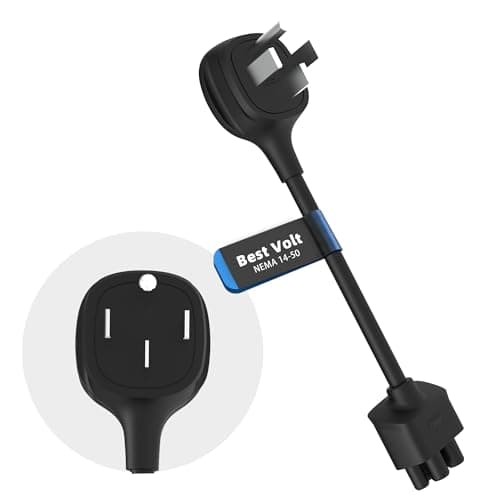
Getting 32 A out of a Mobile Connector
NEMA 14-50 Adapter for Tesla Mobile Connector
Turns a Mobile Connector from a 12 A trickle on a household outlet into a 32 A charger on a 14-50. The single cheapest upgrade in home charging — though note the receptacle still needs GFCI protection under NEC 625.54.
#ad Price as of October 5, 2026. How we make money
Where it does not
As the only charger for a daily-driven Model Y, Cybertruck or Model 3 Premium, the Mobile Connector is leaving a third of the car's capability unused — and it is doing it with a cordset coiled on a garage floor, which wears out faster than a wall-mounted unit.
It is also worth being clear about what a Mobile Connector plugged into a standard 120 V household outlet is doing: Level 1 charging, at roughly 1.4 kW. Per the US DOE, Level 1 adds approximately 5 miles of range per hour. On a Cybertruck at 42.9 kWh per 100 miles that is about 3 miles an hour. It is a trickle, not a charge.
The install difference
| Wall Connector | Mobile Connector | |
|---|---|---|
| Circuit | 60 A two-pole, 6 AWG copper | 50 A two-pole, 8 AWG copper (for a 14-50) |
| GFCI breaker | Not required — hardwired | Required — NEC 625.54 |
| Receptacle | None | Industrial-grade NEMA 14-50 strongly recommended |
| Electrician | Required | Only to fit the outlet, if there isn't one |
| Permit | Yes | Yes, for a new circuit |