The short answer
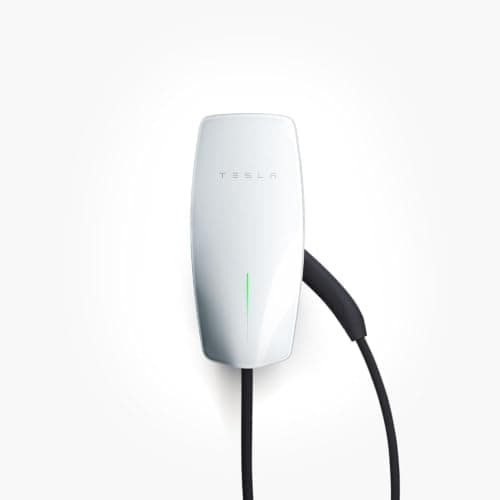
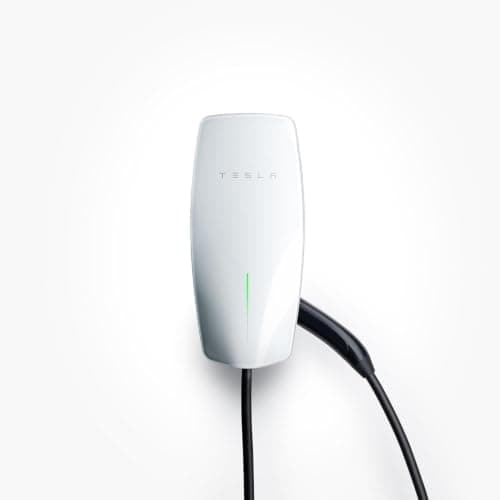
The Gen 3 Tesla Wall Connector is the right charger for a Tesla-only household: 12-48 A output, 11.5 kW maximum, a 24 ft cable, a handle that opens the charge port without touching the car, and power sharing between two units on one circuit. It is NACS-only and hardwired-only, which are the two reasons not to buy it.
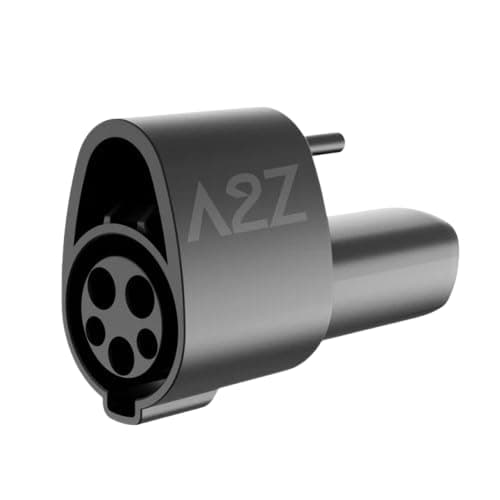
Worth being clear about one thing first: you do not need a Tesla charger for a Tesla. Any 48 A J1772 charger plus a certified J1772-to-NACS adapter charges the car at exactly the same rate. What the Wall Connector buys is not having to fit that adapter every night, and three genuine features nothing else here has.
The three features nothing else offers
- A 24 ft cable, longer than everything except the 25 ft units, and bundled with a handle designed for the car it serves.
- Auto-sensing handle. Approach the car with the handle and the charge port opens. A small thing you do twice a day, which is exactly the kind of small thing that is worth paying for.
- Power sharing. Two Wall Connectors on one circuit negotiate between themselves. For a two-Tesla household this is genuinely cheaper than running a second circuit, and no third-party unit at this price does it.
Who this is for
- Every car in the driveway is a Tesla, now and for the foreseeable future.
- A two-Tesla household, where power sharing avoids a second circuit.
- Anyone who wants the longest practical cable with a handle matched to the car.
- Cybertruck owners interested in Powershare, which runs through Tesla's own hardware path.
Who should buy something else instead
This is the section that matters on this review, because the Wall Connector is genuinely wrong for a lot of people who buy it.
- A J1772 car shares the garage. Then every charge on that car needs an adapter on the handle. Buy the Universal Wall Connector, which docks the adapter in the unit, or buy a J1772 charger and keep one adapter for the Tesla.
- You rent, or might move. It is hardwired-only. A plug-in charger is a possession; this is a fixture.
- Your panel is tight. It has no whole-home load management. The Emporia Pro does, with an energy monitor included, and that is the feature that avoids service upgrades.
- You want a non-Tesla ecosystem. Setup runs through Tesla's app flow. The ChargePoint Home Flex NACS gives you a NACS handle with a different app and adjustable 16-50 A output.
- You have solar. The Enphase IQ EV Charger 2 tracks surplus in 1 A increments; this does not.
The NACS question, honestly
| Tesla Wall Connector | J1772 charger + adapter | |
|---|---|---|
| Charge rate on a Tesla | 11.5 kW | 11.5 kW — identical |
| Daily routine | Plug in | Fit adapter, plug in |
| A J1772 car in the household | Needs a NACS-to-J1772 adapter | Plugs straight in |
| Outdoor theft risk | Nothing loose | An adapter clipped to the handle |
| Choice of units | One | The whole market |
| Load management | No | Available on several units |
The 2025-onwards Hyundai Ioniq 5 complicates this pleasantly: it has a native NACS port, so a Wall Connector now serves an Ioniq 5 and a Tesla with no adapter at all. Which plug does my EV use covers it by model.
What this charger needs from your electrical system
| Item | Requirement | Code basis |
|---|---|---|
| Charger output | 48 A / 11.5 kW | Manufacturer published |
| Breaker | 60 A, two-pole | NEC 625.41 — 125% of a continuous load; NEC 625.42 makes EV charging continuous |
| Copper conductor (conduit, 75 degC) | 6 AWG | NEC Table 310.16 |
| GFCI breaker | Not required — NEC 625.54 covers receptacles | NEC 625.54 |
| Install type | hardwired | Manufacturer published |
Known issues, from owner reports
- Setup runs through Tesla's app even for non-Tesla owners, which some find more involved than a simple Wi-Fi join.
- Hardwired only, so there is no scenario in which it moves with you.
- Cable stiffness in deep cold, which is true of every 24-25 ft EV cable rather than specific to this one.
- No load management. If a load calculation is marginal, the Wall Connector does not help.
What the install needs
A 60 A two-pole breaker and 6 AWG copper for 48 A output, per NEC 625.41. Because it is hardwired, no GFCI breaker is required — NEC 625.54 applies to receptacles, not directly connected equipment — which removes the most common source of nuisance tripping and a non-trivial part cost.
Output is settable from 12 A to 48 A, so a tighter panel can take this charger on a smaller circuit. Our breaker chart has the sizes.