The short answer
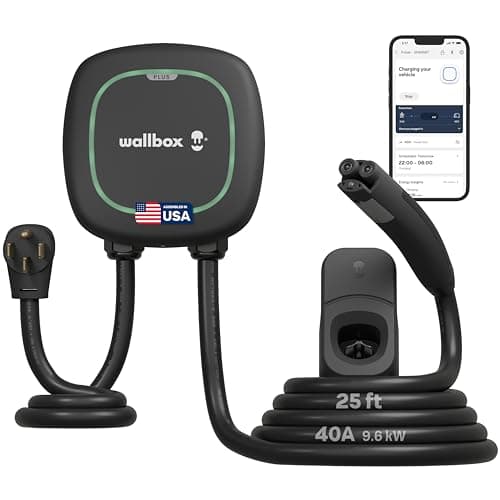
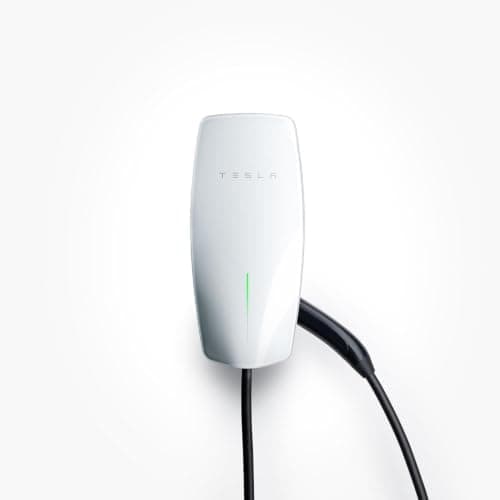
Buy the Tesla Wall Connector if every car in the driveway is a Tesla: NACS native, a 24 ft cable, a handle that opens the charge port, and power sharing across units. Buy the Wallbox Pulsar Plus 48 A if anything in the household is J1772, or if the only wall space left is narrow — it is under 8 inches square with a 25 ft cable. Same 11.5 kW either way.
Quick picks
Ranked by fit for the stated use case first, then price, then warranty and support. Tap any row to jump to the full assessment. Commission rate plays no part in the order.
| # | Product | Best for | Score | Price |
|---|---|---|---|---|
| 1 | 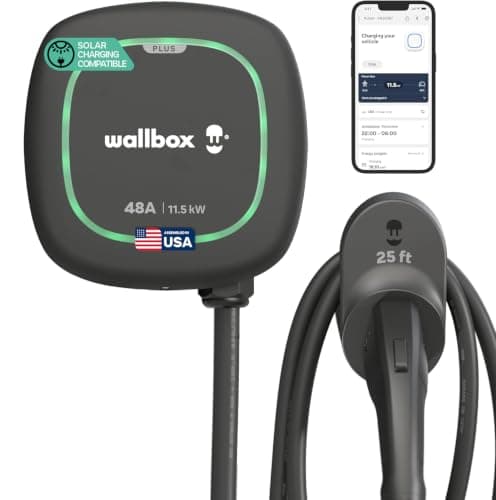 Wallbox Pulsar Plus 48 AA genuinely small 48 A charger — under 8 inches square — which is the deciding factor when the only spot left is a narrow strip of wall beside the panel. | The smallest 48 A unit on a wall | 8.5 | $699.00View on Amazon $799.99 list · 13% off |
| 2 | 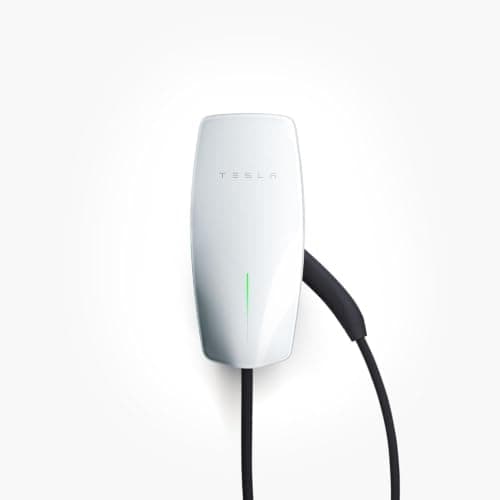 Tesla Wall Connector (Gen 3)If every car in the driveway is a Tesla, this is the cleanest answer: 48 A, a 24 ft cable, and a handle that opens the charge port for you — but it is NACS-only, so a J1772 car needs an adapter every single time. | A Tesla-only household | 8.8 |
The specifications, side by side
| Wallbox Pulsar Plus 48 A | Tesla Wall Connector | |
|---|---|---|
| Max output | 48 A / 11.5 kW | 48 A / 11.5 kW |
| Output range | Set at commissioning | 12-48 A |
| Input | 240 / 208 V | 200-240 V AC single phase |
| Breaker | 60 A two-pole | 60 A two-pole |
| Cable | 25 ft | 24 ft |
| Connector | J1772 | NACS |
| Install | Hardwired | Hardwired |
| Enclosure | NEMA Type 4 per UL 50E | Manufacturer published, indoor or outdoor |
| Published temperature range | -22 degF to 104 degF | Manufacturer published |
| Dimensions | 7.8 in W x 3.9 in D x 7.9 in H | Manufacturer published |
| Power sharing | Dynamic power management | Multiple units on one circuit |
| Offline control | Bluetooth, no internet needed | Wi-Fi, with over-the-air updates |
| Warranty | 3 years limited | Manufacturer published |
The connector decides this for most people
Everything else on that table is a tiebreaker. The Tesla Wall Connector terminates in a NACS handle; the Pulsar Plus 48 A terminates in J1772. Those are physically different plugs, and the adapter question runs in both directions.
- All Teslas, nothing else. The Wall Connector is the clean answer. The handle unlocks and opens the charge port as you walk up, which sounds trivial until you have done it in the rain for a month.
- A J1772 car — most Hyundais, Kias, Fords, Chevrolets, Rivians and BMWs of the last decade. The Pulsar Plus plugs straight in. Putting a Tesla Wall Connector on that wall means a NACS to J1772 adapter hanging off the handle for the life of the car.
- One of each. This is the case where neither unit on this page is the right answer. The Tesla Universal Wall Connector carries both plugs in one body, and our head-to-head against the standard unit covers what that costs.
- A newer EV with a NACS port that is not a Tesla. Increasingly common on 2025 and later models. Either the Tesla unit, or Wallbox's own NACS variant, which is a 40 A plug-in rather than a 48 A hardwired unit.
Our guide to which plug your EV uses settles this in about a minute if you are not sure.
Where the Wallbox wins
- Footprint. At 7.8 by 7.9 inches and under 4 inches deep, it is the smallest 48 A unit we recommend. In a garage where the only free wall is the strip beside the panel or behind a door swing, that is not a cosmetic point — it is whether the charger fits at all.
- It works without the internet. Wallbox exposes scheduling and control over Bluetooth, so an outage or a dead garage Wi-Fi signal does not take your charge schedule with it. Units that route configuration through a cloud account do not degrade as gracefully.
- J1772 native. No adapter, no adapter to lose, no adapter adding an inch of leverage to the handle.
- A published cold figure and a published enclosure standard. NEMA Type 4 to UL 50E and -22 degF to 104 degF are both in Wallbox's North American datasheet, which is more than several competitors put in print.
Where the Tesla wins
- The cable and the handle work together. Both cables are long, but Tesla's is the one that opens the port. For a Tesla owner that combination is meaningfully better ergonomics than any third-party unit achieves.
- Power sharing across multiple units. Several Wall Connectors can share one circuit, dividing current between them. For a two-Tesla household with one spare breaker slot that is a genuinely cheaper answer than a service upgrade — see charging two EVs at home.
- Output steps from 12 A. The Gen 3 unit's commissioning flow sets output anywhere in a 12-48 A range, so it drops onto a small circuit as easily as a big one.
- Installed base and firmware. Tesla has shipped more home chargers in North America than anyone, and the units take over-the-air updates. Problems get found and fixed at a scale a smaller brand cannot match.
What they share
More than the marketing suggests. Both are hardwired only — neither is coming with you out of a rental, and both need an electrician, a permit and an inspection in most jurisdictions. Both want a 60 A two-pole breaker with 6 AWG copper for 48 A output, per NEC 625.41's 125% rule for a continuous load. Neither needs a GFCI breaker, because there is no receptacle in either circuit.
And both deliver exactly 11.5 kW to a car that will take it, which is the onboard limit of most current BEVs. Neither is faster than the other in any way a driver can perceive. Check your own car against the onboard charger limits table before paying for 48 A at all.
If neither is quite right
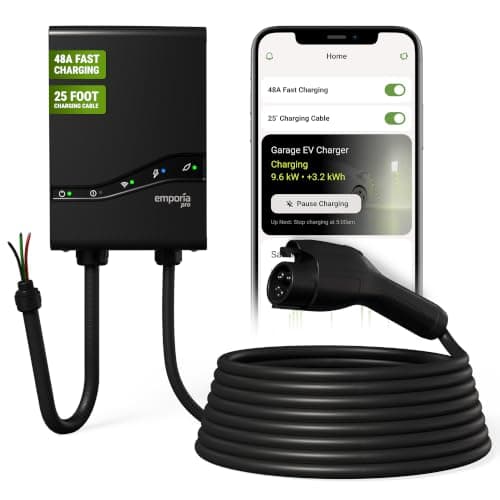
- You want 48 A for less. The Emporia Pro hardwires at the full 11.5 kW and ships with a whole-home energy monitor, which neither unit here includes. Our Emporia against the Tesla Wall Connector head-to-head is the direct comparison.
- You need it to be portable. Both of these bolt to a wall permanently. Best plug-in EV chargers is the page you want.
- It is going outside, fully exposed. Both are rated for outdoor mounting, but if the unit is on a post in the weather rather than under an eave, read best outdoor EV chargers first.
- You have solar. Neither of these tracks surplus production finely. Best EV chargers for solar ranks on output granularity instead of amperage.
What your electrician needs to know
The circuit is identical for both: a 60 A two-pole breaker and 6 AWG copper at 75 degC terminations for 48 A output, no receptacle and no GFCI breaker. Neither unit changes the quote. What does change is the hour after the wiring is done.
- Commissioning. Both units have their maximum output set during setup, and both expect it to match the breaker that was actually installed. Have the breaker size written down before the electrician leaves — more post-install confusion comes from a mismatch here than from anything in the wiring.
- Network access. Tesla's setup flow runs through its app and wants Wi-Fi at the mounting position. Wallbox will complete over Bluetooth. If the garage is a dead spot, that difference turns a 10 minute job into an afternoon.
- Mounting height and reach. Both cables are long enough to be worth planning. Measure from the proposed position to the car's charge port and add slack for the loop — our mounting height guide covers position as well as height, and a cable holder keeps the handle off the floor.
- Permit and inspection. Hardwired EVSE is permitted work in nearly every US jurisdiction. Our permits guide sets out what the inspector looks at.
The verdict, naming a loser
How we compared them
Both units were checked for stock and for a matching manufacturer listing on the date at the top of this page. Every specification here comes from the manufacturer's own published documentation, cited at the foot of the page; where a figure is not published we say so instead of repeating one from a retailer listing. We do not bench-test chargers, and our methodology says so. Prices in the buy rows are live from the retailer and play no part in the ranking.