Skip to content
EV & Charger

Our picks

Best EV Chargers for Solar

With rooftop solar the useful specification is not amperage. It is how small a step the charger can change its output in, because that is what decides whether you charge on surplus or on the grid.

By Mike M.Published Last verified

A wall-mounted Level 2 EV charger installed on the exterior wall of a house

The short answer

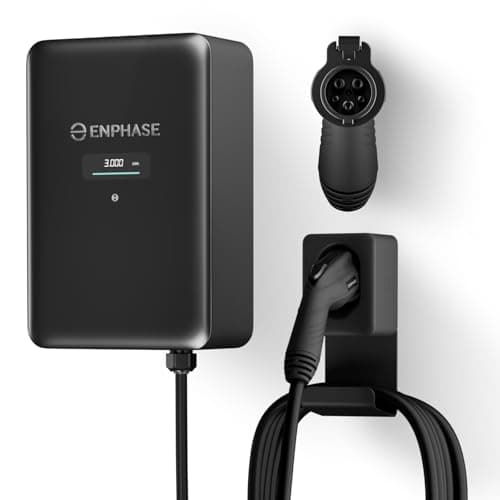
The Enphase IQ EV Charger 2 (48 A) is the best EV charger for a solar home: it adjusts in 1 A increments specifically to track surplus solar, carries a NEMA 4 enclosure and a 5-year warranty, and is the natural choice if the roof is already Enphase. The Emporia Pro is the pick on a mixed-brand roof, because its included whole-home monitor measures net draw regardless of who made the inverters. Both beat a bigger charger that can only step in coarse jumps.

Quick picks

Ranked by fit for the stated use case first, then price, then warranty and support. Tap any row to jump to the full assessment. Commission rate plays no part in the order.

#ProductBest forScorePrice
1
Enphase IQ EV Charger 2 (48 A)
Enphase IQ EV Charger 2 (48 A)The charger to buy if you have solar: it adjusts in 1 A increments to absorb whatever the array is exporting, and it carries a 5-year warranty, the longest here.
A house with rooftop solar8.7
$1,011.60View on Amazon

$1,124.00 list · 10% off

2
Emporia Pro Level 2 EV Charger
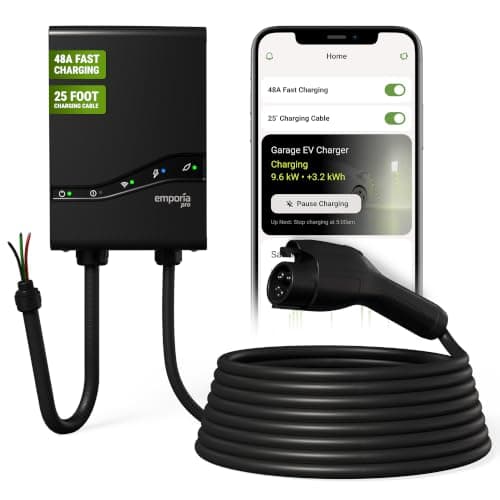
Emporia Pro Level 2 EV ChargerThe best-balanced 48 A charger for a typical US house: full 11.5 kW hardwired, and the only unit at this price that ships with a whole-home energy monitor so its load management is reading your actual panel rather than guessing.
Most households, and anyone with a tight panel9.0
3
ChargePoint Home Flex (hardwired, 50 A)
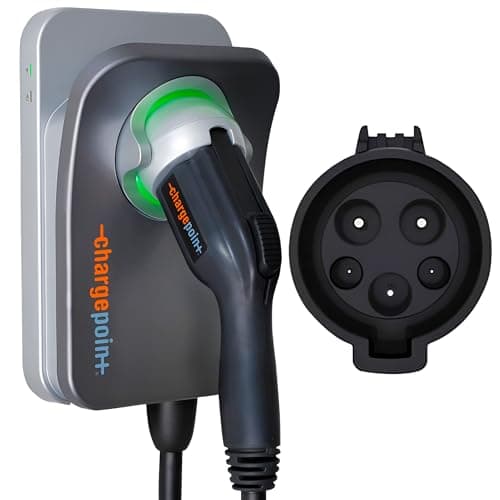
ChargePoint Home Flex (hardwired, 50 A)The most adjustable charger on this page: output steps through 16, 24, 32, 40, 48 and 50 A in the app, so one unit fits almost any panel and can be turned up later if you upgrade the service.
A house whose panel headroom is uncertain8.9
4
Enphase IQ EV Charger 2 (40 A, NEMA 14-50)
Enphase IQ EV Charger 2 (40 A, NEMA 14-50)The plug-in Enphase: the same 1 A solar tracking on a NEMA 14-50 cord, which gets a solar household charging on surplus without pulling a new circuit.
Solar plus an existing 14-50 outlet8.3
$899.10View on Amazon

$999.00 list · 10% off

Why granularity beats amperage on a solar house

A 7 kW array on a mixed October day does not produce 7 kW. It produces 2 kW, then 4.5, then 1.8 as cloud passes. A charger that can only run at 16, 24, 32 or 40 A has four settings to cover that, and any one of them is either wasting export or pulling from the grid. A charger that moves in 1 A steps has thirty-five.

What one amp of granularity is worth

240 V x 1 A = 240 W; 240 W x 4 h

about 1 kWh a session

Arithmetic at 240 V single phase. The point is the tracking error, not the single step: a coarse charger spends most of a variable day several amps away from the available surplus in one direction or the other.

This is also why the honest version of "solar charging" is surplus charging. Unless you have a battery, charging after dark is grid charging whatever the annual net figures say. Our solar EV charging guide works through the economics, and time-of-use rates covers the tariff side.

Output control compared
ChargerOutput stepsMax outputWarranty
Enphase IQ EV Charger 2 (48 A)1 A increments, solar-tracking48 A / 11.5 kW5 years
Emporia ProMeasured whole-home load management48 A / 11.5 kW3 years
ChargePoint Home Flex16, 24, 32, 40, 48, 50 A in the app50 A / 12 kWManufacturer warranty
Enphase IQ EV Charger 2 (40 A, plug-in)1 A increments, solar-tracking40 A / 9.6 kW5 years
Specifications as published by Enphase, Emporia and ChargePoint, checked October 17, 2026. We list what each manufacturer publishes about output control; we do not estimate tracking accuracy, which depends on the whole system.

The picks

1. Enphase IQ EV Charger 2 (48 A) — built for the job

Enphase IQ EV Charger 2 (48 A)

A house with rooftop solar

Enphase IQ EV Charger 2 (48 A)

48 A / 11.5 kW hardwired, NEMA 4, UL certified, 5-year warranty, and 1 A output steps intended to follow surplus solar.

$1,011.60View on Amazon

$1,124.00 list · 10% off

#ad Price as of October 28, 2026. How we make money

Enphase publishes solar tracking as a design intent rather than an add-on, and the 5-year warranty is the longest among the units we cover. The strongest case for it is a roof already running Enphase microinverters, where the charger and the production data live in the same system. On a 60 A two-pole breaker with 6 AWG copper — see the wire size guide. Our full review has the rest.

2. Emporia Pro — the brand-agnostic option

Emporia Pro Level 2 EV Charger

Most households, and anyone with a tight panel

Emporia Pro Level 2 EV Charger

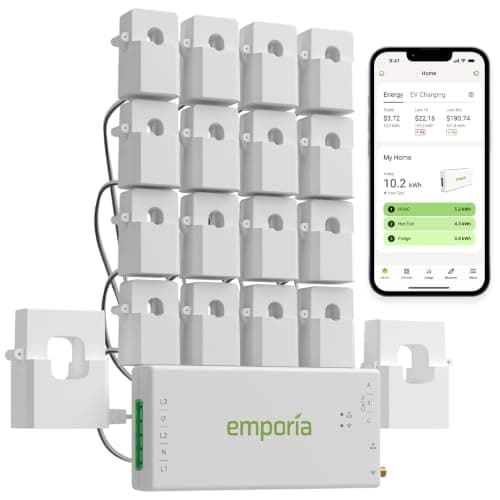
48 A / 11.5 kW, 25 ft cable, NEMA 4, and a whole-home energy monitor in the box that measures net import regardless of inverter brand.

$599.00View on Amazon

#ad Price as of October 28, 2026. How we make money

Measuring at the panel rather than at the inverter is the practical advantage here: it works on a SolarEdge roof, a string-inverter roof or a roof with two generations of hardware on it. It also gives you the per-circuit data that makes a load calculation honest.

3 and 4. Coarser control, lower cost

If 1 A steps are more than you need

The ChargePoint Home Flex steps through six amperage settings in the app, which is enough if your surplus is predictable or you charge mostly at night on a cheap tariff. The 40 A plug-in Enphase keeps the 1 A tracking for a garage that already has a 14-50.

ChargePoint Home Flex (hardwired, 50 A)

A house whose panel headroom is uncertain

ChargePoint Home Flex (hardwired, 50 A)

The most adjustable charger on this page: output steps through 16, 24, 32, 40, 48 and 50 A in the app, so one unit fits almost any panel and can be turned up later if you upgrade the service.

$549.00View on Amazon

#ad Price as of October 28, 2026. How we make money

Enphase IQ EV Charger 2 (40 A, NEMA 14-50)

Solar plus an existing 14-50 outlet

Enphase IQ EV Charger 2 (40 A, NEMA 14-50)

The plug-in Enphase: the same 1 A solar tracking on a NEMA 14-50 cord, which gets a solar household charging on surplus without pulling a new circuit.

$899.10View on Amazon

$999.00 list · 10% off

#ad Price as of October 28, 2026. How we make money

We earn commission on qualifying purchases at no cost to you. Affiliate disclosure.

The plug-in Enphase is the easier retrofit of the two, and a GFCI breaker is required on the receptacle circuit under NEC 625.54. The two units at the top of this page are set against each other directly in Enphase IQ EV Charger 2 vs Emporia Pro.

What we deliberately left out

  • Bidirectional and V2H hardware. A different purchase with a different approval path — our bidirectional charging guide covers it honestly.
  • Chargers whose "solar mode" is a scheduling timer. A timer that charges at noon is not surplus tracking, and we do not rank it as if it were.
  • Any claimed payback period. Export rates, array size and driving patterns decide that, and a number we invented would be worthless.

How we picked

Every unit here is currently purchasable, carries a real UL or ETL certification to the relevant standard, and comes from a brand with an identifiable North American support path. We verified each one's published specifications against the manufacturer's own documentation on the date shown at the top of this page. We verify specifications; we do not bench-test hardware, and our methodology says so in plain terms. Ranking order is fit for the stated use case first, then price, then warranty and support — commission rate plays no part in it. On this page the ranking metric is published output granularity and where the measurement is taken — at the inverter or at the panel — rather than headline amperage.
In detail

Every pick, assessed

Top pick · A house with rooftop solar

Enphase IQ EV Charger 2 (48 A)

Enphase IQ EV Charger 2 (48 A) charger

8.7/ 10

$1,011.60View on Amazon

$1,124.00 list · 10% off

#ad Price as of October 28, 2026. How we make money

Our verdict

The charger to buy if you have solar: it adjusts in 1 A increments to absorb whatever the array is exporting, and it carries a 5-year warranty, the longest here.

What works

  • 1 A solar tracking is a real feature, not a marketing line — it is the difference between exporting at the retail rate and charging for free
  • 5-year warranty, the longest of any unit here
  • Integrates with an existing Enphase system rather than fighting it

What doesn't

  • Most expensive non-Tesla unit here, and the solar feature is worth nothing without an array
  • Hardwired only
  • The integration story is strongest inside the Enphase ecosystem and thinner outside it
Enphase IQ EV Charger 2 (48 A) specifications
Max output48 A / up to 11.5 kW at 240 V
Breaker60 A dedicated 2-pole
ConnectorJ1772
InstallHardwired
EnclosureNEMA 4
CertificationUL certified
Warranty5 years
SolarAdjusts in 1 A increments to track surplus solar

Specifications checked against Enphase IQ EV Charger 2 product documentation. We verify published specifications; we do not bench-test hardware — how we assess products.

How it scored

Solar integration
9.8
Charge rate
9.0
Warranty and support
9.6
Smart features
9.2
Weather and build
8.8
Value
6.2
Pick 2 · Most households, and anyone with a tight panel

Emporia Pro Level 2 EV Charger

Emporia Pro Level 2 EV Charger charger

9.0/ 10

$599.00View on Amazon

#ad Price as of October 28, 2026. How we make money

Our verdict

The best-balanced 48 A charger for a typical US house: full 11.5 kW hardwired, and the only unit at this price that ships with a whole-home energy monitor so its load management is reading your actual panel rather than guessing.

What works

  • Hardwires at the full 48 A for 11.5 kW — matches the onboard limit of most current BEVs exactly
  • PowerSmart load management reads whole-home draw through the included Vue monitor, so it can throttle instead of tripping a breaker
  • 25 ft cable reaches across a two-car garage without an extension
  • NEMA 4 enclosure and a real UL listing, not just an ETL mark

What doesn't

  • The energy monitor has to be installed in the panel to be useful, which means the electrician is in there longer
  • App-dependent for scheduling — there is no physical timer
  • At 40 A on the plug-in version you are paying for 48 A of hardware you cannot use
Emporia Pro Level 2 EV Charger specifications
Max output48 A / 11.5 kW hardwired; 40 A / 9.6 kW on a NEMA 14-50 plug
Breaker60 A dedicated 2-pole for 48 A; 50 A for 40 A
Cable25 ft
ConnectorJ1772 or NACS, chosen at purchase
EnclosureNEMA 4, indoor or outdoor
CertificationUL certified, ENERGY STAR
Warranty3 years
Load managementPowerSmart, with the Vue home energy monitor included

Specifications checked against Emporia Pro sell sheet. We verify published specifications; we do not bench-test hardware — how we assess products.

How it scored

Fit to a typical panel
9.4
Charge rate
9.0
Cable and reach
9.0
Smart features
9.2
Weather and build
8.6
Warranty and support
8.4
Pick 3 · A house whose panel headroom is uncertain

ChargePoint Home Flex (hardwired, 50 A)

ChargePoint Home Flex (hardwired, 50 A) charger

8.9/ 10

$549.00View on Amazon

#ad Price as of October 28, 2026. How we make money

Our verdict

The most adjustable charger on this page: output steps through 16, 24, 32, 40, 48 and 50 A in the app, so one unit fits almost any panel and can be turned up later if you upgrade the service.

What works

  • Six selectable output levels mean one unit fits a 100 A panel today and a 200 A panel after an upgrade
  • 12 kW ceiling is the highest here, which matters only for the handful of cars that accept more than 11.5 kW
  • Mature app with Alexa and Google Home support, and the largest installed base of any home charger in the US
  • Available in both J1772 and NACS, hardwired or plug-in

What doesn't

  • 23 ft cable is the shortest of the premium units — measure before you commit to a mounting spot
  • The adjustable amperage lives in the app, so a phone and a working account stand between you and a setting change
  • Costs more than units that charge at an identical real-world rate
ChargePoint Home Flex (hardwired, 50 A) specifications
Max output50 A / 12 kW (240 V x 50 A)
Adjustable output16, 24, 32, 40, 48, 50 A, set in the app
BreakerDedicated 2-pole rated 125% of the output you set — a 50 A breaker for 40 A output
Cable23 ft
ConnectorJ1772 (a NACS version is sold separately)
InstallHardwired, or NEMA 6-50 / NEMA 14-50 input cord on the plug-in version
Weight13.8 lb

Specifications checked against ChargePoint Home Flex datasheet. We verify published specifications; we do not bench-test hardware — how we assess products.

How it scored

Fit to a typical panel
9.6
Charge rate
9.3
Cable and reach
7.8
Smart features
9.0
Weather and build
8.8
Warranty and support
8.8
Pick 4 · Solar plus an existing 14-50 outlet

Enphase IQ EV Charger 2 (40 A, NEMA 14-50)

Enphase IQ EV Charger 2 (40 A, NEMA 14-50) charger

8.3/ 10

$899.10View on Amazon

$999.00 list · 10% off

#ad Price as of October 28, 2026. How we make money

Our verdict

The plug-in Enphase: the same 1 A solar tracking on a NEMA 14-50 cord, which gets a solar household charging on surplus without pulling a new circuit.

What works

  • Solar tracking without an electrician, if the outlet is already correct
  • 5-year warranty
  • Moves house with you

What doesn't

  • 40 A
  • GFCI breaker required, with the nuisance-tripping risk that brings
  • Still expensive for a 9.6 kW charger
Enphase IQ EV Charger 2 (40 A, NEMA 14-50) specifications
Max output40 A / up to 9.6 kW at 240 V
InputNEMA 14-50 plug
ConnectorJ1772
Warranty5 years
GFCIRequired on the receptacle circuit — NEC 625.54

Specifications checked against Enphase IQ EV Charger 2 documentation. We verify published specifications; we do not bench-test hardware — how we assess products.

FAQ

Questions people actually ask

What is the best EV charger for solar panels?

The Enphase IQ EV Charger 2 (48 A), because it adjusts output in 1 A increments to follow surplus production and is designed around that job. On a mixed-brand solar roof, the Emporia Pro's whole-home monitor measures net import regardless of inverter make.

Can I charge my EV directly from solar panels?

Only from surplus production while the sun is up. A home charger runs on your 240 V AC supply, so it draws whatever mix of solar and grid power is on that supply at the time. Tracking surplus closely is what the better chargers do.

Does a solar EV charger need a battery?

No, but a battery is what lets you charge on solar energy after dark. Without one, charging overnight is grid charging - which may still be the cheapest option on a time-of-use tariff.

Why does output granularity matter more than amperage with solar?

Because array output varies minute to minute. A charger limited to 16, 24, 32 or 40 A spends most of a cloudy day either exporting power you could have used or importing power you did not need to buy. One-amp steps are 240 W apart at 240 V.

Will any smart charger work with my solar system?

Most will charge the car fine. Surplus tracking is the part that depends on integration - either the charger shares a system with your inverters, as with Enphase, or it measures net flow at the panel with its own monitor, as the Emporia Pro does.

Sources

What we checked this against

Read next

Disclosure. Some links on this page are affiliate links. If you buy through one, we earn a commission at no extra cost to you. We are a participant in the Amazon Services LLC Associates Program. Prices come from Amazon's live data and are shown with the date they were checked; where no live price is available we say "check price" rather than show an old number. Commission rate plays no part in which products we recommend or in what order — see our methodology and our full affiliate disclosure.