The short answer
Residential electricity rates vary by more than a factor of three across US states, and again by utility and tariff within a state — so a state average is a poor predictor of your own bill. The reliable number is your total bill divided by the kWh consumed, which gives your all-in rate including delivery charges. Put that into the formula and you have your actual charging cost.
What varies, and by how much
| Layer | Typical spread | Where to find yours |
|---|---|---|
| Between states | More than 3x between the cheapest and most expensive | US Energy Information Administration |
| Between utilities in a state | Often substantial, particularly where municipal and investor-owned utilities coexist | Your own bill |
| Between tariffs within a utility | 2-3x between peak and off-peak on a time-of-use rate | Your utility's rate schedule |
Finding your real rate in two minutes
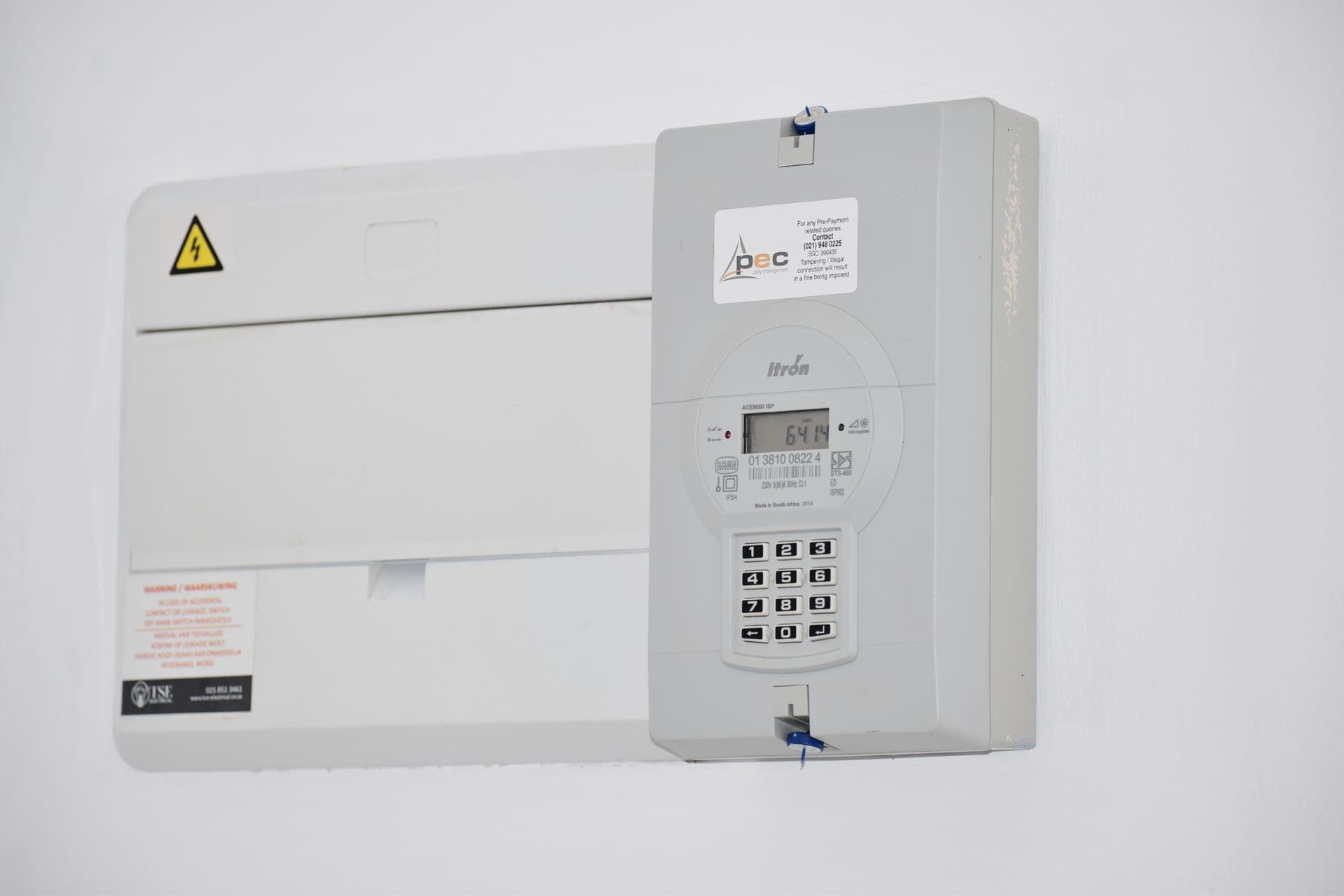
- Take your most recent bill. Find the total amount and the kWh consumed.
- Divide the total by the kWh. That is your all-in rate, including delivery and fixed charges spread across your consumption.
- If you are on a time-of-use tariff, use the off-peak rate from the schedule instead, because that is when a car should charge.
- Note whether there is a fixed monthly charge, because that does not scale with charging and should not be in a per-kWh charging calculation.
The all-in figure is usually higher than the energy charge printed on the bill, sometimes substantially. Using the energy charge alone is the commonest error in these calculations.
What your rate means for charging
| Rate per kWh | Model 3 (24.6) | Model Y (27.5) | Rivian R1T (44.4) | Hummer EV (65.1) |
|---|---|---|---|---|
| $0.10 | $27.33 | $30.56 | $49.33 | $72.33 |
| $0.13 | $35.53 | $39.72 | $64.13 | $94.03 |
| $0.16 | $43.73 | $48.89 | $78.93 | $115.73 |
| $0.20 | $54.67 | $61.11 | $98.67 | $144.67 |
| $0.28 | $76.53 | $85.56 | $138.13 | $202.53 |
| $0.35 | $95.67 | $106.94 | $172.67 | $253.17 |
Two things that table shows. First, the vehicle matters as much as the state: a Model 3 at 35 cents costs about the same as a Hummer EV at 13. Second, the top-left and bottom-right cells differ by roughly nine times — which is the real spread an EV owner in the US faces, and why no average describes it.
What to do if your rate is high
- Ask about a time-of-use or dedicated EV tariff. This is the single biggest lever and it costs nothing to ask. A 2-3x off-peak discount can halve your charging bill.
- Ask about a submeter option. Some territories offer a cheaper rate on a separately metered charging circuit, which suits a household whose other consumption is hard to shift.
- Check for utility rebates, though note that the federal Section 30C credit expired on June 30, 2026. EV charger rebates in 2026.
- Measure rather than estimate. A circuit monitor tells you what you are actually spending, which usually reveals that something else in the house is the bigger problem.
- Consider efficiency when you next buy a car. In a high-rate state, the difference between a 26 and a 44 kWh-per-100-mile vehicle is a large recurring cost.
Knowing what your panel is actually doing
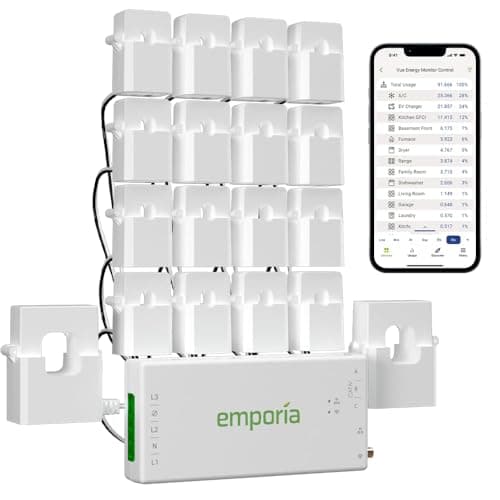
Emporia Vue 3 Home Energy Monitor
Separates the charging circuit from the rest of the house, so you know what the car costs rather than estimating. In a high-rate territory it also tends to reveal which other loads are expensive, which is where the bigger savings usually are.
#ad Price as of October 5, 2026. How we make money
A note on comparing with gasoline
We deliberately do not publish a gasoline comparison, because it requires guessing at two things: current local fuel prices, and the specific vehicle you would otherwise have bought. Both would be assumptions dressed up as arithmetic.
If you want the comparison, you can make it accurately in a minute: take the monthly charging cost from the table above, then take your old vehicle's actual mpg and your local fuel price and compute the same mileage. Your numbers, not ours.
What else varies by state
- Rebate and incentive programs, which differ enormously. Your utility and state energy office are the sources.
- Permit requirements and fees for a charger installation, which are local. Permits and inspection.
- Which NEC edition is adopted, which affects the GFCI requirements that apply to a receptacle-fed charger. Do EV chargers need a GFCI breaker.
- Right-to-charge legislation for renters and condo owners, which exists in some states and not others. EV charging for renters.
- Net metering terms, which decide whether solar charging makes economic sense. Solar EV charging.
Those last three are worth knowing about: they affect your installation and your options, not just your bill.