The short answer
Many 100 amp services will support a 32 A or 40 A charger, and some will support 48 A with load management. The deciding factor is how much of your house is electric: gas heat, a gas range and a gas water heater free up a great deal of headroom, while electric heat plus an electric range usually consumes it. The test is an NEC Article 220 load calculation, not the panel's label.
If you searched for this, you have probably already been told you need a service upgrade. Sometimes that is true. Often it is a quote written before anyone did the arithmetic, and the arithmetic is worth insisting on, because the gap between "a 40 amp circuit" and "a new service" is thousands of dollars.
What a 100 A service looks like in practice
| House | Typical headroom | Realistic charger |
|---|---|---|
| Gas heat, gas range, gas water heater | Substantial | 40 A, sometimes 48 A |
| Gas heat, electric range, gas water heater | Moderate | 32 A, possibly 40 A |
| Gas heat, electric range, electric water heater | Limited | 32 A, or 40 A load-managed |
| Electric heat, electric range | Little to none | Load-managed only, or an upgrade |
| Electric heat, electric range, hot tub | None | Service upgrade |
Why gas appliances matter so much here
An electric range and an electric water heater between them can account for a very large share of a 100 A service's calculated demand. Swap either for gas and that share disappears from the calculation entirely. This is why two houses with identical 100 A panels can get opposite answers, and why "can a 100 amp panel handle an EV charger" has no single answer.
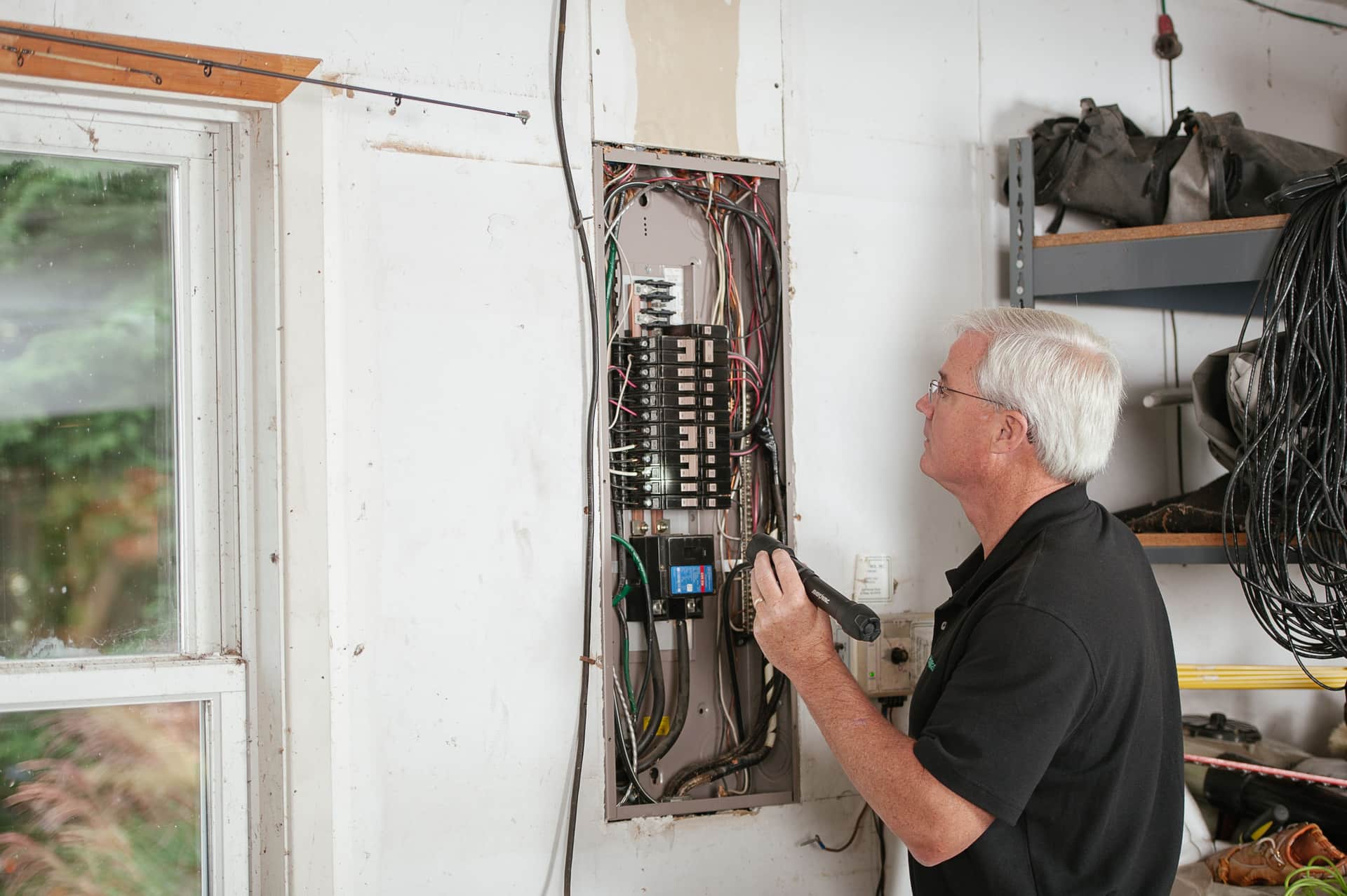
It is also why the first question a good electrician asks is not about your car. It is "what's electric in the house?"
The three levers, in order of cost
Lever one: a smaller charger
A 32 A charger on a 40 A breaker is a dramatically smaller addition to a load calculation than a 48 A charger on a 60 A one. And for a large share of drivers, the practical difference is nil: 32 A delivers 7.7 kW, which adds roughly 25-28 miles of range per hour on an average-efficiency EV. If you drive under 150 miles a day, it refills everything overnight with room left over.
If your car is a plug-in hybrid or an entry Tesla Model 3 RWD, this lever is free — those cars top out at 32 A anyway.
Lever two: load management
This is the lever that has genuinely changed the answer for 100 A houses over the past few years. A charger with whole-home load management watches total consumption and reduces its own draw when the house is busy. NEC 625.42 explicitly permits an installation's overall rating to be limited through controls, which is the code basis for treating a managed charger as a smaller load.
The practical effect: the charger runs at reduced output for the hour the oven is on, and at full output from 11pm. Over a night, you lose very little total energy, and the calculation that was blocking you passes.
Lever three: a load-shedding relay on another circuit
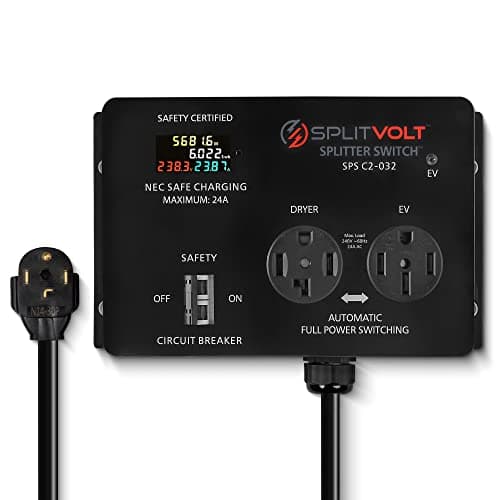
Where load management on the charger is not available, an electrician can fit a relay that disables another large load — commonly the dryer or the water heater — while the car is charging. It is less elegant than charger-side management and it works. It is also a solution an electrician will propose only if you ask, because it involves more of their time than a service upgrade quote does.
Chargers that actually fit this situation
Two properties matter on a 100 A service: the ability to set output low, and load management. Our full roundup for this case is best EV chargers for 100 amp panels; these are the two that matter most.
The two chargers built for a tight service
One measures your house and throttles itself. The other steps down to 16 A, which no load calculation will object to.
Most households, and anyone with a tight panel
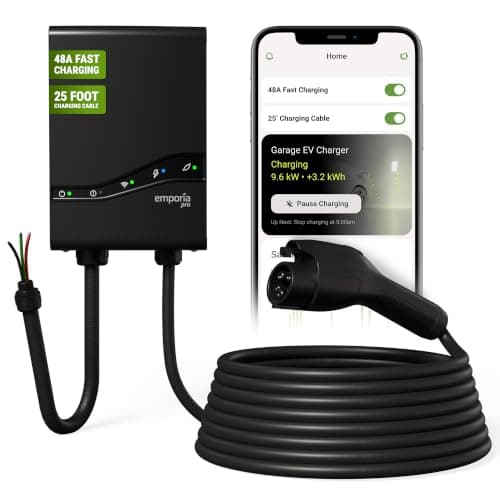
Emporia Pro Level 2 EV Charger
The best-balanced 48 A charger for a typical US house: full 11.5 kW hardwired, and the only unit at this price that ships with a whole-home energy monitor so its load management is reading your actual panel rather than guessing.
#ad Price as of October 5, 2026. How we make money
A house whose panel headroom is uncertain
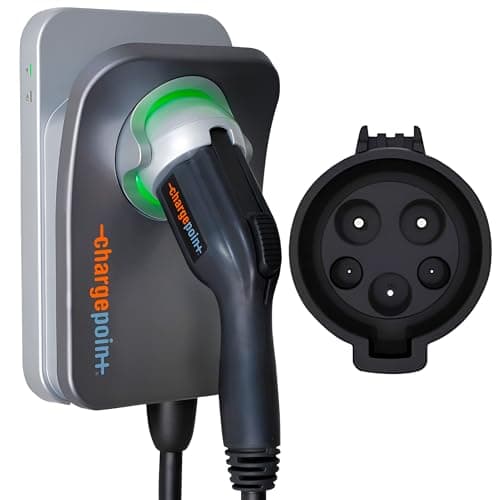
ChargePoint Home Flex (hardwired, 50 A)
The most adjustable charger on this page: output steps through 16, 24, 32, 40, 48 and 50 A in the app, so one unit fits almost any panel and can be turned up later if you upgrade the service.
#ad Price as of October 5, 2026. How we make money
We earn commission on qualifying purchases at no cost to you. Affiliate disclosure.
When an upgrade is genuinely the answer
Be honest about this: if your house has electric resistance heat, an electric range, an electric water heater and a 100 A service, you are already close to the limit before a car enters the picture. Adding a managed charger to that is possible but it will spend a lot of its time throttled, and you may be solving the wrong problem.
In that house, a service upgrade buys you more than EV charging — it buys headroom for a heat pump, an induction range, and whatever comes next. That changes the economics of the decision from "an expensive way to charge a car" to "the electrical work this house needed anyway". See panel upgrade cost.