The short answer
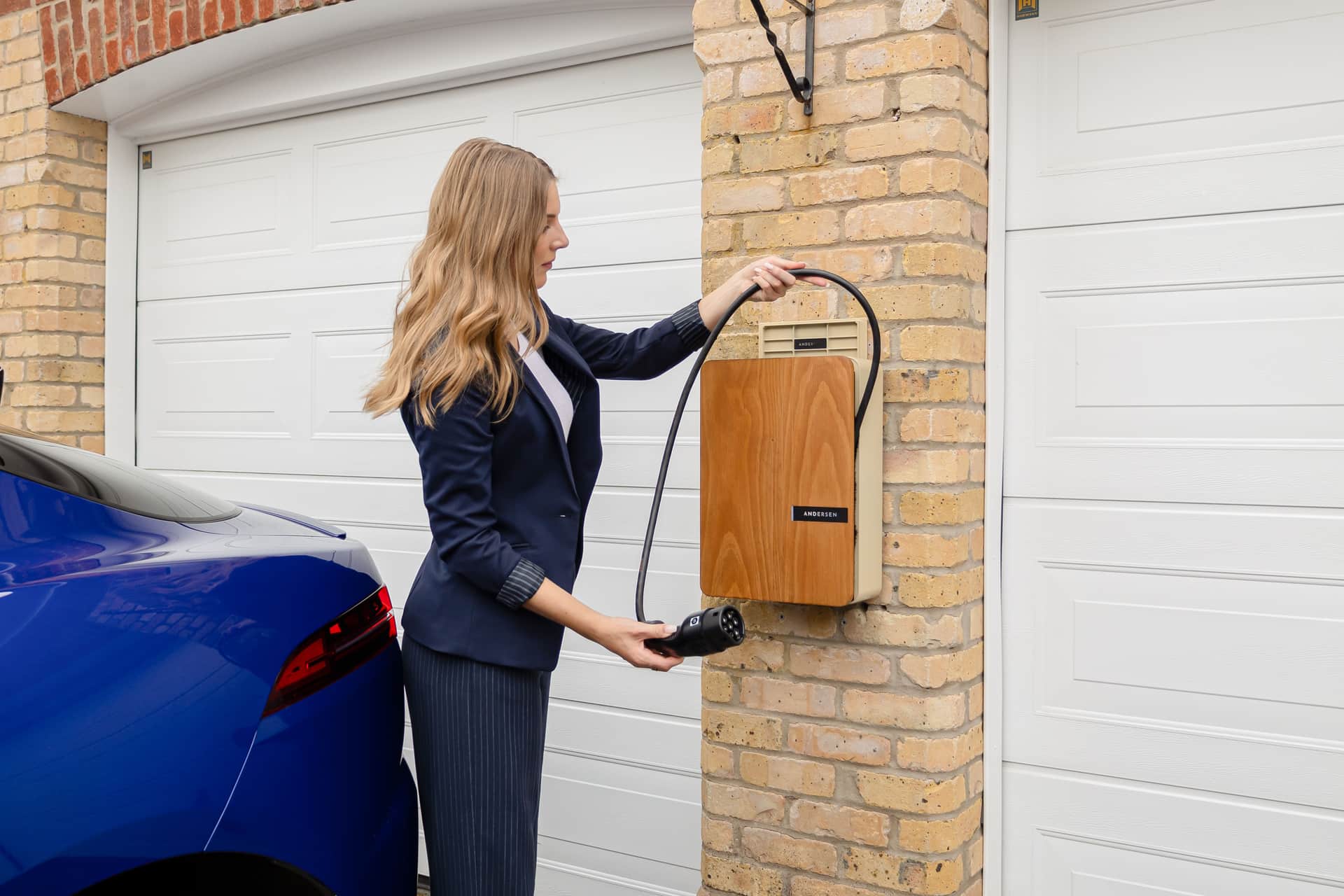
No. DC fast charging — what people call Level 3 — uses a three-phase AC input, and US homes are supplied with single-phase 240 V. The US DOE's own description of DC fast charging puts it at power outputs up to 500 kW on three-phase supply, in a class of equipment built for highway corridors. The fastest thing you can install at a house is a 48 A Level 2 charger at 11.5 kW, which is roughly a tenth of the slowest public DC unit — and still fills a normal commute overnight with hours to spare.
What Level 3 actually means
The naming is a mess, and it is the source of most of the confusion. The US DOE Alternative Fuels Data Center describes three classes of equipment:
- AC Level 1 — a 120 V plug and the cordset that came with the car. The DOE assumes about 1.9 kW in its charging-time tables.
- AC Level 2 — 240 V in homes, 208 V in commercial buildings. The DOE gives the class a range of 2.9 to 19.2 kW, and notes that most residential units run up to 30 A for 7.2 kW.
- DC fast charging, also called Level 3 — "typically a three-phase AC input", with power outputs up to 500 kW.
The critical word is DC. A Level 2 charger is not really a charger at all: it is a switch and a safety interlock that hands AC power to the charger built into your car. A DC fast charger contains the rectifier itself — it converts AC to DC in the cabinet and pushes current straight into the battery, bypassing the car's onboard unit. That is why it is the size of a refrigerator and why it needs an industrial supply.
Why a house cannot supply one
US residential service is single-phase: two 120 V legs that give 240 V between them. Three-phase is a commercial and industrial distribution product, and the DOE lists the common US three-phase voltages as 208/120 V and 480/277 V. Bringing three-phase to a house is a utility project, not an electrician's job.
Even ignoring the phase problem, the arithmetic rules it out.
240 V x 200 A
48 kW, with nothing else running
That is the entire service with the house switched off, against a 50 kW public DC unit at the bottom of its class. Actual continuous capacity available for a charger after the NEC load calculation is a fraction of it.
Why you do not want it anyway
- Overnight is already long enough. A 48 A charger adds roughly 35-40 miles of range per hour to an efficient EV. Eight hours of that is more than a week of average US driving.
- Fast charging is harder on the battery. Manufacturers publish charge-rate tapering and recommend AC charging as the daily default for exactly this reason.
- The cost scale is industrial. A DC unit plus the service work behind it is a commercial capital project.
- You would be paying for power you cannot draw. The car's own DC limit, the service size and the load calculation all bite long before the cabinet's rating does.
What to install instead
The real decision is 32 A, 40 A or 48 A of Level 2 — and the answer comes from your car's onboard limit and your panel, not from ambition. Our what amp EV charger do I need guide does the mileage arithmetic, and EV onboard charger limits by model lists what each car will actually accept. If your car tops out at 7.7 kW, a 48 A charger changes nothing.
The fastest units you can actually install at home
All three are 48-50 A Level 2 chargers — the top of what single-phase residential service supports. Each needs a dedicated two-pole breaker sized at 125% of its output under NEC Article 625.
Most households, and anyone with a tight panel
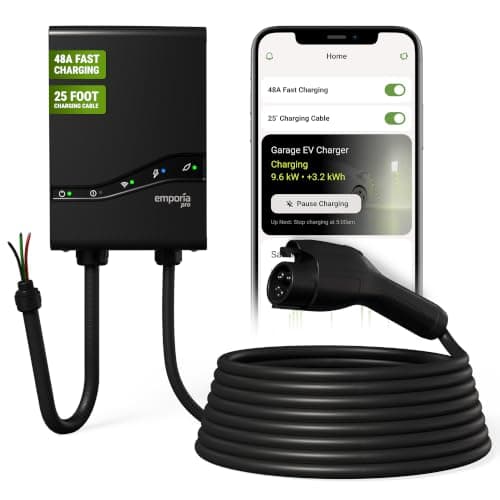
Emporia Pro Level 2 EV Charger
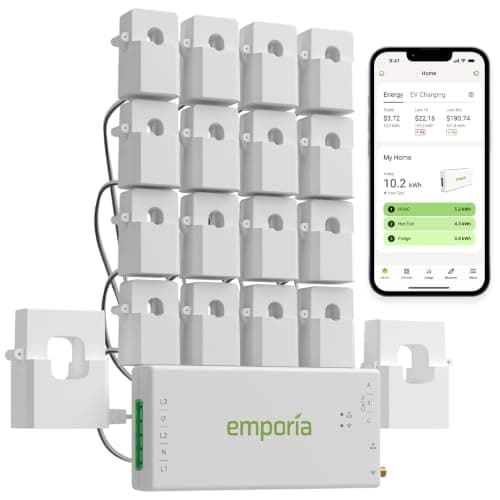
The best-balanced 48 A charger for a typical US house: full 11.5 kW hardwired, and the only unit at this price that ships with a whole-home energy monitor so its load management is reading your actual panel rather than guessing.
#ad Price as of October 28, 2026. How we make money
A Tesla-only household
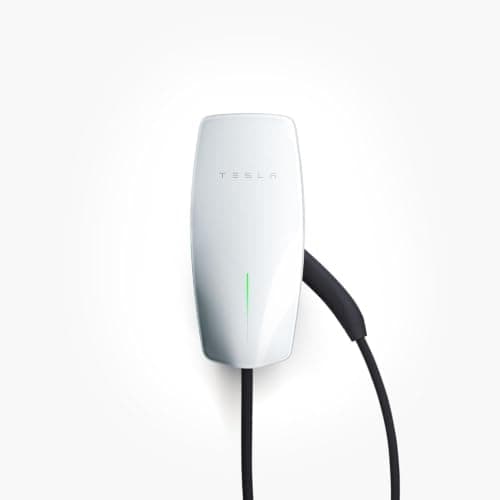
Tesla Wall Connector (Gen 3)
If every car in the driveway is a Tesla, this is the cleanest answer: 48 A, a 24 ft cable, and a handle that opens the charge port for you — but it is NACS-only, so a J1772 car needs an adapter every single time.
#ad Price as of October 28, 2026. How we make money
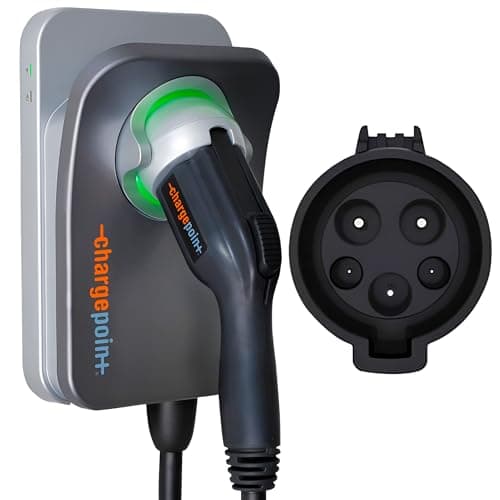
A house whose panel headroom is uncertain
ChargePoint Home Flex (hardwired, 50 A)
The most adjustable charger on this page: output steps through 16, 24, 32, 40, 48 and 50 A in the app, so one unit fits almost any panel and can be turned up later if you upgrade the service.
#ad Price as of October 28, 2026. How we make money
We earn commission on qualifying purchases at no cost to you. Affiliate disclosure.
The Emporia Pro is 48 A / 11.5 kW with a 25 ft cable and load management that watches whole-home draw. The Tesla Wall Connector is the same output over NACS for a Tesla household. The ChargePoint Home Flex goes to 50 A and can be commissioned lower, which is the right hedge when panel headroom is uncertain. More options in our 48 A roundup and the 200 A panel page.
| Equipment | Supply | Typical power | Where it belongs |
|---|---|---|---|
| AC Level 1 cordset | 120 V single phase | About 1.9 kW | Any outlet, as a backup |
| AC Level 2 home charger | 240 V single phase | 7.2 to 11.5 kW | A house, on a dedicated circuit |
| DC fast charging (Level 3) | Typically three-phase AC | Up to 500 kW | Highway corridors and commercial sites |
The one case where the answer changes
A commercial building with genuine three-phase service — a workshop, a farm, a small business premises with a residence attached — is a different question, and there DC equipment is at least physically possible. It is still a six-figure conversation and it still needs utility coordination. For a house on a 100 A or 200 A single-phase service, the answer is simply no, and the load calculation explains why 48 A is the real ceiling.